
 简体中文
简体中文 English
Website review
This review may include AI-generated content and is not individually verified. Domain, certificate and other facts come from the observed data on this page.
What is Draftss?
Draftss is a subscription-based creative and marketing service that gives you an ongoing remote team rather than a single freelancer or a one-off project quote. According to its own site, one plan covers graphic design and illustration, web and app UI, motion graphics and video editing, website development, digital ads, SEO and content, and growth marketing tasks. You submit requests, and the team works through them for a flat recurring fee.
What the service actually covers
Draftss positions itself as a "Creative & Marketing Agency On Subscription." The task list on its page is broad:
- Brand and graphic design: logos, full brand identity, stationery, packaging, pitch decks, brochures, social media images, infographics, banners, and print items such as menus and signage.
- Web and app UI: landing pages, website redesigns, mobile app UI, and dashboard UI.
- Video and motion: explainer videos, logo animations, animated ads, Instagram Reels, YouTube Shorts, and UI animations.
- Development: WordPress, Webflow, Shopify, HTML/CSS, React.js, and common page builders including Elementor, Divi, and WooCommerce.
- Marketing: SEO, content strategy, performance marketing, email and lifecycle marketing, conversion rate optimization, and PR or outreach.
The page also cites a 7-day free trial, a claimed 2-minute setup, cancel-any-time terms, and 560,200+ hours of creative work delivered across 70+ countries since 2018.
Who it suits, and where it fits less well
This model tends to work for startups, small brands, and agencies that have a steady stream of small-to-medium creative tasks but not enough volume to justify full-time hires. If you regularly need social assets, landing pages, ad variations, and short videos, a subscription can be cheaper and faster than briefing a new freelancer each time.
It fits less well if you need one highly specialized deliverable, strict regulatory or security review, or a named senior designer embedded in your team. Subscription services optimize for throughput across many task types; deep specialization in a single niche is a different purchase.
How to decide
Use the free trial as a real test: send two or three tasks that resemble your actual workload, including one with a tight deadline, and judge turnaround, revision handling, and communication quality. Compare the monthly fee against what those same tasks would cost at your current freelance or agency rates, then decide whether the breadth of the task list matters more to you than specialist depth.
For alternatives with a similar on-demand model, you can compare Design Pickle and ManyPixels.
How does Draftss's subscription model work for unlimited design requests?
Draftss sells access to a creative team rather than a fixed number of design files. You subscribe, then submit requests one at a time or in a queue; the team works through them and delivers designs, with revisions handled inside the same subscription. The site frames it as "one flat fee" for "any task, all tasks," covering graphic design, web and app UI, motion graphics and video editing, website development, and marketing work such as ads, SEO and email. A 7-day free trial is advertised, with "cancel any time" and a claimed setup time of about two minutes.
How the workflow typically looks
- You sign up and complete a short onboarding brief about your brand, preferences and goals.
- You add requests to a queue or board, usually with references, dimensions and copy.
- Designers pick up the next request, deliver a first version, and you request revisions until it is right.
- Work is delivered in batches rather than all at once, so the practical limit is your review speed and how many active requests the plan allows.
What "unlimited" means in practice
"Unlimited" refers to the number of requests you can submit over time, not simultaneous delivery. Most subscription design services, including this one, work on a queue: one or two active tasks at a time per subscriber, with the rest waiting. If you need five landing pages by Friday, a subscription will not behave like five parallel freelancers unless your plan explicitly allows multiple concurrent requests. Check the pricing page for the number of active requests, seats and turnaround expectations before committing.
Who gets the most value
| Situation | Fit |
|---|---|
| Steady stream of social, ad and brand assets | Strong — repetitive work benefits from a retained team |
| Startup needing logo, deck, site and launch videos | Strong — one subscription covers several disciplines |
| Occasional one-off project | Weak — a single freelancer or fixed-scope project may cost less |
| Highly specialized work (complex 3D, regulated UX) | Mixed — confirm relevant portfolio work first |
| Fast, high-volume campaign spikes | Mixed — queue limits matter more than the headline promise |
Practical next step
Before starting the trial, list your next 10–15 requests with deadlines, then compare that list against the plan's active-request limit and typical turnaround. During the trial, submit two real tasks — one simple (social graphics) and one complex (a landing page or explainer video) — to judge quality, communication and revision speed. For background on the subscription-design category, Design Joy and ManyPixels describe similar models, and Draftss itself is the place to confirm current plan limits and trial terms.
What types of projects can Draftss handle beyond graphic design?
Draftss is positioned as a subscription creative and marketing team, so its scope extends well past static design work. Based on the service categories listed on its site, projects fall into five broad areas.
Web and product design
- Landing page design and full website redesigns
- Mobile app UI and dashboard UI design
- Web development, with listed tooling that includes WordPress, Webflow, Shopify, HTML/CSS, Elementor, React.js, WooCommerce and several page builders
This suits a startup that needs a marketing site and a product interface handled by the same team, or an agency that wants overflow capacity without hiring. The trade-off is that a subscription team works through a queue, so a large build benefits from being broken into discrete tasks rather than handed over as one open-ended brief.
Video and motion
- Explainer videos, demo videos and tutorial or e-learning videos
- Logo animations, typography animation and simple character animation
- Animated ads, UI animations, GIFs and text overlays
- Social formats such as Instagram Reels, YouTube Shorts and audiograms
A practical use case: a SaaS company launching a feature can request a short demo video, a set of animated ad variants and social cutdowns in one place instead of briefing three separate freelancers.
Marketing and growth
- Performance marketing, digital ads and product launch campaigns
- SEO and content strategy, plus analytics and reporting
- Email and lifecycle marketing, conversion rate optimisation
- Outreach and PR
These are ongoing retainers in most organisations, so the subscription model fits teams that want continuous output rather than a one-off campaign. The caveat is strategic ownership: someone in-house should still set positioning and channel priorities, because a production team executes briefs rather than defining them.
Branding and print
- Full brand identity, logo design, stationery and packaging
- Presentations and pitch decks, brochures, flyers and catalogues
- Signage, vehicle wraps, tradeshow banners, rollup and standee banners
- Merchandise, T-shirt, sticker and label design
Illustrations and niche assets
- Character design, mascots, icon packs and infographics
- Ebook covers, podcast covers, newsletter and email templates
- Photo manipulation, Google Display Ads and billboard design
How to decide
Match the request type to how you would brief it. Repeatable, well-specified tasks such as social images, ad variants or UI screens are the easiest fit. Work needing deep discovery, such as a brand repositioning or a complex web application, needs a clear scope document before it enters the queue.
A useful next step is to list your next quarter of creative needs, split them into design, video, web and marketing, and check whether each can be described as a concrete deliverable. Draftss publishes its plan details at Draftss, and for comparison of the subscription-design model more broadly, Design Pickle and ManyPixels are established alternatives.
Is Draftss suitable for a startup that needs both design and development?
Yes. Draftss is positioned as a subscription creative and marketing team rather than a design-only service, and its listed capabilities span both design and front-end website development, which fits a startup that wants one vendor for branding, product UI and a marketing site.
Where it fits a startup
- Design breadth: branding and logo work, illustration, social and ad graphics, presentations and pitch decks, plus web and app UI including landing pages, dashboards and redesigns.
- Development scope: the page lists website development with WordPress, Webflow, Shopify, HTML/CSS, React.js and several page builders (Elementor, Divi, WP Bakery, Beaver Builder, Oxygen, WooCommerce).
- Motion and video: explainer videos, logo animations, animated ads, reels and shorts — useful if your launch needs promo assets alongside the site.
- Marketing add-ons: the same subscription is described as covering copywriting, SEO, paid campaigns and lifecycle email, so early-stage founders can avoid hiring separate freelancers for each channel.
The practical appeal is queue-based, flat-fee access: you submit tasks and a team works through them, instead of managing contracts with a designer, a developer and an editor separately. The page mentions a 7-day free trial, so the low-risk move is to test it with one real deliverable rather than a sample brief.
Trade-offs to weigh
| Need | Subscription team | Dedicated hire or agency |
|---|---|---|
| Multiple disciplines at once | One vendor, one fee | Several contracts or one senior salary |
| Speed on small, repeatable tasks | Strong — continuous queue | Depends on availability |
| Deep, complex engineering | Limited to listed stacks and front-end work | Better for backend, infrastructure, custom apps |
| Brand consistency | Good if you keep one point of contact | Stronger with a long-term in-house owner |
| Cost predictability | Flat monthly fee | Variable or salary-plus-benefits |
Decision criterion
Choose Draftss if your startup needs a steady stream of marketing-site pages, product UI screens, brand assets and short videos, and your engineering needs are mostly front-end or CMS-based. Look elsewhere for a backend-heavy product build, a complex web app, or work requiring a single senior engineer embedded in your team.
A useful first step: run the free trial on two tasks at once — one design task (for example, a landing page) and one development task (turning that page into a working WordPress or Webflow build). That tests handoff quality between the design and dev sides, which is where multi-service subscriptions usually succeed or fail. For comparison, you can also review what a dedicated freelance marketplace offers at Upwork or how a design-focused subscription works at Design Pickle.
How does Draftss compare to hiring an in-house creative team?
Draftss sells a subscription-based creative and marketing team rather than a single freelancer or a traditional agency retainer. The core trade-off against in-house hiring is simple: you get a broad set of skills immediately, without recruiting, benefits or long-term commitments, but you give up direct control over who does the work and how quickly context is built.
What the subscription model gives you
From the site, Draftss positions one subscription as covering graphic design, web and app UI, motion graphics and video editing, website development, digital ads, SEO and growth marketing. It advertises a 7-day free trial, a two-minute setup, cancellation at any time, and says it has delivered over 560,200 hours of creative work for customers across 70+ countries since 2018. It also cites a 4.8 out of 5 rating and more than 1,567 startups, brands and agencies reviewing it on Trustpilot, G2 and ProductHunt.
That breadth is the main advantage over a single in-house hire. A small company rarely needs a full-time illustrator, video editor, SEO specialist and WordPress developer at once, but it often needs all of them occasionally. A subscription lets those skills sit on the sidelines until a project appears.
Where in-house still wins
An in-house designer or developer knows your product, your brand voice and your internal stakeholders. They can join a planning meeting, iterate on a whiteboard and ship a fix the same afternoon. With an external subscription team, every new request starts with a brief, and quality depends on how well you communicate context. If your work is highly confidential, deeply integrated with proprietary systems, or requires constant real-time collaboration, in-house is usually the better fit.
A practical comparison
| Factor | Draftss subscription | In-house creative team |
|---|---|---|
| Time to start | Trial and setup advertised as very fast | Weeks to months of recruiting and onboarding |
| Skill range | Design, UI, development, video, marketing in one plan | Limited to the roles you hire |
| Cost pattern | Flat recurring fee, cancellable | Salaries, benefits, equipment, management time |
| Brand context | Built through briefs and feedback | Built daily through proximity |
| Control over workload | Shared queue with other clients | Direct and immediate |
| Best for | Variable, multi-discipline project flow | Constant, specialized, confidential work |
How to decide
List the creative tasks you expect over the next six months. If they span several disciplines and arrive in bursts, a subscription is likely cheaper and faster than hiring. If one discipline dominates and the work is continuous, hiring that person usually pays off. A common middle path is to keep one in-house generalist for day-to-day work and use a service like Draftss for overflow or specialist tasks.
Before committing, run the advertised free trial on a real brief, not a test project. Give the team a task with the same ambiguity and feedback loop you would use internally, then judge turnaround, revision quality and how much management time it consumed. Those three signals will tell you more than any plan comparison.
For a broader view of subscription design services, you can also look at Design Pickle and ManyPixels.
What is the process for requesting and receiving designs with Draftss?
Draftss is a subscription-based creative service: you pay a recurring fee, then submit design requests to a dedicated team rather than hiring freelancers one project at a time. The page describes it as a "Creative & Marketing Agency On Subscription" with a 7-day free trial, a roughly 2-minute setup, and the ability to cancel anytime.
How the request-and-delivery loop typically works
- Sign up and pick a plan. The site points to a free trial and monthly subscription tiers; the exact limits (number of active requests, turnaround, seats) live on the pricing page rather than the homepage.
- Submit a request. You send a brief for the task — for example a logo, landing page, explainer video, or social media graphics. The page lists dozens of supported deliverables across graphic design, web/app UI, video, development, and marketing.
- Get matched with the right specialist. Because the subscription includes graphic designers, UI designers, developers, video editors, and marketers, your request is routed to whoever handles that category.
- Review and revise. You receive a draft, give feedback, and the team iterates until it's approved.
- Queue the next task. With unlimited requests, you keep adding work as previous items are completed.
A concrete scenario
A startup founder needs a pitch deck, a logo refresh, and a set of Instagram ads before an investor meeting. Instead of briefing three separate freelancers, they submit all three requests through one subscription and track them in a single queue. The trade-off is that you're working within an agency's process and capacity rather than directing one person full-time.
What to check before committing
- Turnaround time per request — "unlimited" usually means unlimited requests, not unlimited speed.
- Active request slots — many subscription services let you have only one or two tasks in progress at once.
- Revision policy — how many rounds are included before extra charges.
- Ownership and source files — confirm you receive full rights and editable files.
- Scope fit — the page advertises development and marketing alongside design; verify the specific stack or channel you need is covered.
For a fuller picture of the model, the official Draftss pricing page is the place to confirm plan limits, and Trustpilot or G2 carry the reviews the site cites.
 Cloudflare
 Google Workspace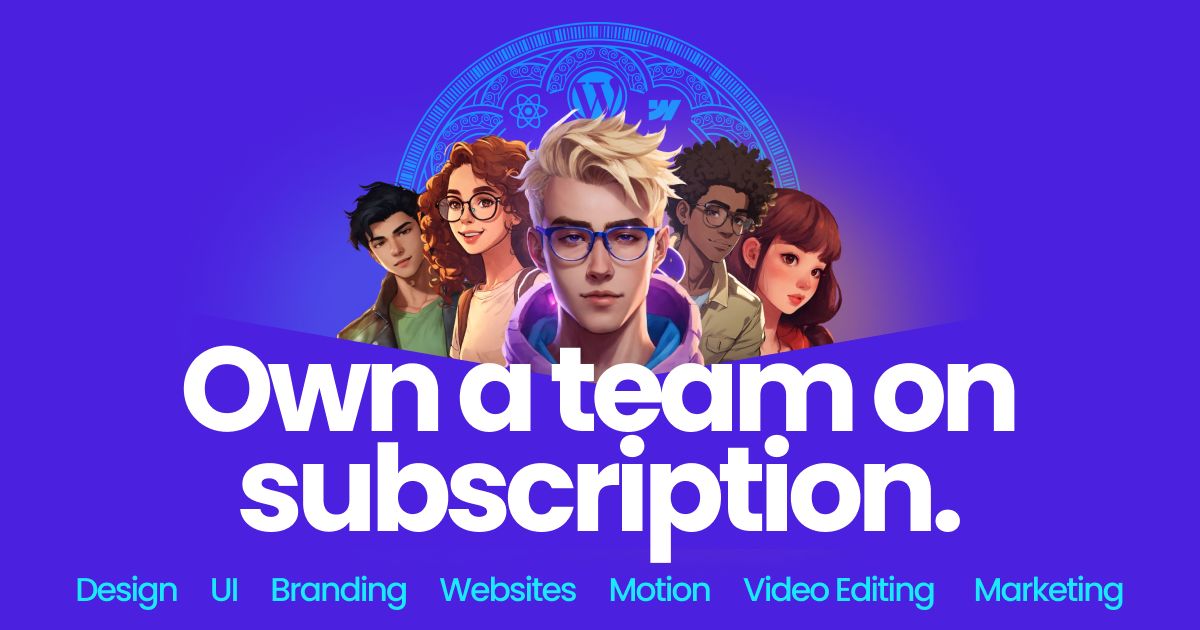

User reviews (0)