
 简体中文
简体中文 English
Website review
This review may include AI-generated content and is not individually verified. Domain, certificate and other facts come from the observed data on this page.
What is ManyPixels?
ManyPixels is a subscription-based graphic and web design service. Instead of hiring a full-time designer or commissioning each project separately, you pay a recurring fee and submit design requests, which are handled by an assigned designer with support staff behind them. The site positions it as "creative as a service" for teams that need a steady flow of design work without building an in-house team.
What it covers
The service spans a broad range of creative output, including:
- Marketing and advertising visuals
- Custom illustrations and icons
- Web and landing page design
- Motion graphics and video editing
- Brand and identity work, including logos
- Print and presentation design
- Social media graphics and display ads
How the process works
The workflow is deliberately simple, which is the main appeal for non-designers:
- You submit a request with references and brand assets.
- ManyPixels matches it with a suitable designer and starts work.
- You leave feedback directly in the platform and request revisions.
- Final files arrive in the formats you need.
Who it suits
This model fits startups, marketing teams and small businesses with a continuous but unpredictable design workload — the kind of organization that would otherwise juggle freelancers. It is less suited to work needing deep strategic ownership or a single dedicated senior designer embedded in your team.
What to weigh
A subscription makes sense when your monthly design volume is high enough that the flat fee beats per-project pricing. If your needs are occasional, a freelance marketplace or one-off commission may cost less. Before committing, check the current plan tiers and turnaround expectations on the pricing page, and consider a trial project to judge whether the output matches your brand standards.
For comparison, 99designs runs contests and one-off projects, while Canva covers simple self-serve design — both are different trade-offs against a managed subscription.
How does ManyPixels' subscription pricing compare to hiring a full-time designer?
ManyPixels uses a flat monthly subscription for on-demand design work, while a full-time designer is a salaried employee with benefits, equipment and management overhead. The subscription model is generally cheaper at low-to-moderate design volumes and easier to scale up or pause; a full-time hire becomes more economical when you need someone embedded in the team every day.
Where the subscription model wins
- Predictable cost, no hiring cycle. You pick a plan and start submitting requests, rather than recruiting, interviewing and onboarding.
- Variable workload fit. Marketing teams with bursts of social graphics, display ads, landing pages, presentations or illustrations can queue work without paying for idle time.
- Breadth of skills. The page lists marketing and advertising, illustration, web design, motion and video, brand and identity, and print and presentation — useful when no single generalist covers everything.
- Simple process. Submit a request with references and brand assets, a matched designer works on it, you comment in the platform, and files are delivered in the formats you need.
Where a full-time designer wins
- Deep context. An in-house designer learns your product, tone and internal stakeholders continuously, which matters for complex, high-stakes brand work.
- Real-time collaboration. Whiteboard sessions, quick pivots and cross-team input happen faster with someone in the room.
- Ownership. Long-term design systems, brand governance and mentoring sit more naturally with an employee.
Practical comparison
| Factor | ManyPixels subscription | Full-time designer |
|---|---|---|
| Cost structure | Flat monthly rate | Salary, benefits, tools, workspace |
| Commitment | Monthly, can scale or pause | Long-term employment |
| Speed to start | Days | Weeks to months |
| Skill range | Multiple disciplines via a team | One person's specialisms |
| Best for | Variable, multi-format output | Continuous, deeply contextual work |
A useful next step
List your monthly design requests and estimate hours per item. If the total is part-time and spans several formats, a subscription is likely the better fit; if it exceeds a full workload and needs daily collaboration, hire. Many teams start with a subscription and add an in-house lead once volume and complexity justify it. For a second opinion on subscription design services, Design Pickle and Penji are worth comparing on turnaround and scope.
What is the process for requesting and receiving designs from ManyPixels?
ManyPixels runs on a four-step request-and-delivery loop: submit a brief, get matched with a designer, give feedback in the platform, then receive final files in the formats you need. The workflow is built for ongoing requests rather than one-off projects, so most of the practical detail lives in how you write the brief and how you handle revisions.
The four steps
- Submit your request. You describe what you need, share reference material, and upload brand assets such as logos, fonts and colour files. Quality here determines how few revision rounds you need.
- Designer assignment. ManyPixels matches the project to a designer with relevant skills. The page lists specialisms including UI, brand design, illustration, video editing and graphic design, so a motion or video request should route differently from a print piece.
- Feedback in-platform. You leave comments directly in the tool rather than by email, and the designer iterates until it is right.
- Delivery. Final designs arrive in the formats you ask for, ready for the channels you named.
What to put in a brief
- Deliverable and dimensions: "1080×1080 Instagram carousel, three slides" beats "social media graphics."
- Brand assets up front: logo files, fonts, colour codes, and any existing templates.
- References: two or three images showing the direction you want, plus one showing what to avoid.
- Copy: final text, or a clear note that placeholder text is fine for a first pass.
- Format on delivery: editable source, PNG, PDF, MP4, or platform-ready exports.
Matching the workflow to your situation
| Your situation | How the loop suits you |
|---|---|
| Steady stream of social, ad and web assets | Requests queue naturally; you batch briefs instead of briefing each asset separately |
| One-off logo or brand identity | Workable, but you carry the strategy decisions yourself |
| Video editing and motion | Supported per the service list; expect to supply raw footage and a clear edit direction |
| Tight, same-day turnaround | Depends on plan tier and queue depth — confirm before relying on it |
Practical trade-offs
The subscription model rewards volume and continuity: the more you brief in parallel, the more value you get per month. It suits marketing teams, founders and agencies that always have creative work in flight. It is a weaker fit if you need a single complex project with deep strategic discovery, or if you want to speak with the same designer on a call every week — the platform is asynchronous by design.
Before your first request, check the plan tiers and turnaround terms on the pricing page, since queue priority and revision limits usually vary by tier: ManyPixels. For a second opinion on the service from people who have used it, the customer reviews section of the same site is a reasonable starting point.
Can ManyPixels handle both graphic design and web design projects?
Yes. ManyPixels is set up as a single subscription covering both graphic and web design, with motion and video, illustration, brand identity, and print work listed alongside them. If your team currently splits small design jobs between a freelancer for social assets and a separate web person for landing pages, this is the kind of setup that consolidates both.
What the service covers
The page names these categories: marketing and advertising, illustrations, web design, motion and video, brand and identity, and print and presentation. Specific deliverables called out include presentation design, landing page design, brand identity, social media graphics, illustration, print, web design, logo design, motion graphics, video editing, display ads, and icon design.
How a project actually runs
- You submit a request with references and brand assets.
- A designer is matched to the work and starts.
- You leave feedback in the platform and iterate.
- Final files arrive in the formats you need.
The site reports 150,000+ designs completed, 2,000+ customers, and operation since 2018, and it lists named specialists by discipline — including a video editor, brand designers, illustrators, and UI designers.
Where the trade-off sits
A flat monthly subscription suits a steady flow of small-to-mid requests: ad variations, social templates, landing page sections, logo refreshes, illustration sets. It is a weaker fit for large one-off builds with heavy engineering — a full e-commerce replatform, a design system with a component library, or anything needing front-end code, CMS integration, or ongoing A/B testing infrastructure. Those usually need a dedicated web agency or in-house developer working alongside the designer, and the page does not claim development work.
A practical test before subscribing
Take one graphic task and one web task you already need — say a campaign banner set and a landing page layout — and submit both in the first cycle. That tells you whether one subscription realistically absorbs both queues, or whether the web side needs a separate route. Compare the plan tiers on ManyPixels against your monthly volume before committing, and if you want a second reference point for subscription-based design, Design Pickle runs a similar model.
How fast is the turnaround time for design requests on ManyPixels?
ManyPixels does not publish a single, fixed turnaround time that applies to every request. Its site describes a subscription design service where you submit a request, get matched with a designer, review work in the platform, and receive final files — but the stated workflow stops short of promising a specific number of hours or days per deliverable. The practical answer is that speed depends on the type and complexity of what you ask for: a social media graphic or display ad is typically much faster than a full website design, brand identity system, or motion/video edit.
What the process implies about speed
The published workflow has four stages: submit your request with references and brand assets, the designer starts, you leave feedback in the platform, and files are delivered. Each feedback round adds time, so the realistic turnaround for any single item is a function of:
- Scope of the request — a single icon or ad variation versus a multi-page landing page.
- How complete your brief is — brand assets, references and copy supplied up front reduce back-and-forth.
- Number of revision rounds — the site says work is iterated until it is right, which means each round extends the clock.
- Queue position — subscription services typically work through multiple client requests in parallel, so demand at any given moment can affect when your item starts.
How to get a concrete number
Because ManyPixels sells plans rather than per-project quotes, the fastest way to a real answer is to ask before you commit. Book a call or contact the team and describe two or three actual deliverables you need — for example, "ten social media graphics and one landing page" — then ask what turnaround they would commit to for each, and whether that is measured in business days or calendar days. You can also check the pricing page to see which plan tier corresponds to your expected volume, since higher tiers are generally designed for faster or more concurrent output. For comparison, other subscription design services such as Design Pickle and Penji publish their own turnaround expectations, which can help you benchmark what is normal in this category.
A useful decision criterion
If your need is same-day or next-day production work — routine social posts, ad variations, resizing — ask specifically whether the service supports that cadence and how many requests can run at once. If your need is a one-off website or brand identity, treat turnaround as a project timeline rather than a subscription speed feature, and get a written estimate for that specific deliverable.
What types of businesses or teams benefit most from using ManyPixels?
ManyPixels suits organizations that need a steady flow of creative work but don't want to recruit, contract and manage individual freelancers. Its subscription model and on-demand design team are aimed at recurring output rather than one-off projects, so the best fit is a business with a continuous pipeline of design requests.
Who gets the most value
- Startups and small businesses without an in-house designer. A founder or marketer can submit briefs, share brand assets and receive finished files without hiring a full-time creative.
- Lean marketing teams. If your team already knows what it needs — social graphics, display ads, landing pages, presentation decks — the platform works as an overflow design function.
- Agencies and consultancies. Teams producing client-facing marketing visuals, brand assets and web pages on tight cycles can use it to absorb peaks without adding headcount.
- E-commerce and content-driven brands. Frequent needs like social media graphics, illustrations, icons and ad creative fit the recurring-request pattern well.
- Companies needing brand consistency across many assets. A dedicated designer and a single platform for feedback help keep logos, identity and campaign visuals aligned.
Who may be less well served
Businesses with occasional, unpredictable design needs may find a subscription less economical than hiring per project. Teams with highly regulated or deeply technical design work — for example, complex product UI or compliance-heavy materials — should confirm the designer's relevant experience before committing. Very fast, same-day turnarounds are also worth testing early, since the workflow includes briefing, design, feedback and delivery stages.
A practical next step
List your design requests for the next month and group them by type: social graphics, web pages, illustrations, video editing, brand assets. If that list is long and recurring, a subscription is likely to pay off; if it is short and sporadic, a per-project arrangement is usually the better comparison. ManyPixels publishes its scope of services and pricing plans on its site, so check those against your list before deciding.
 Cloudflare
 Google Workspace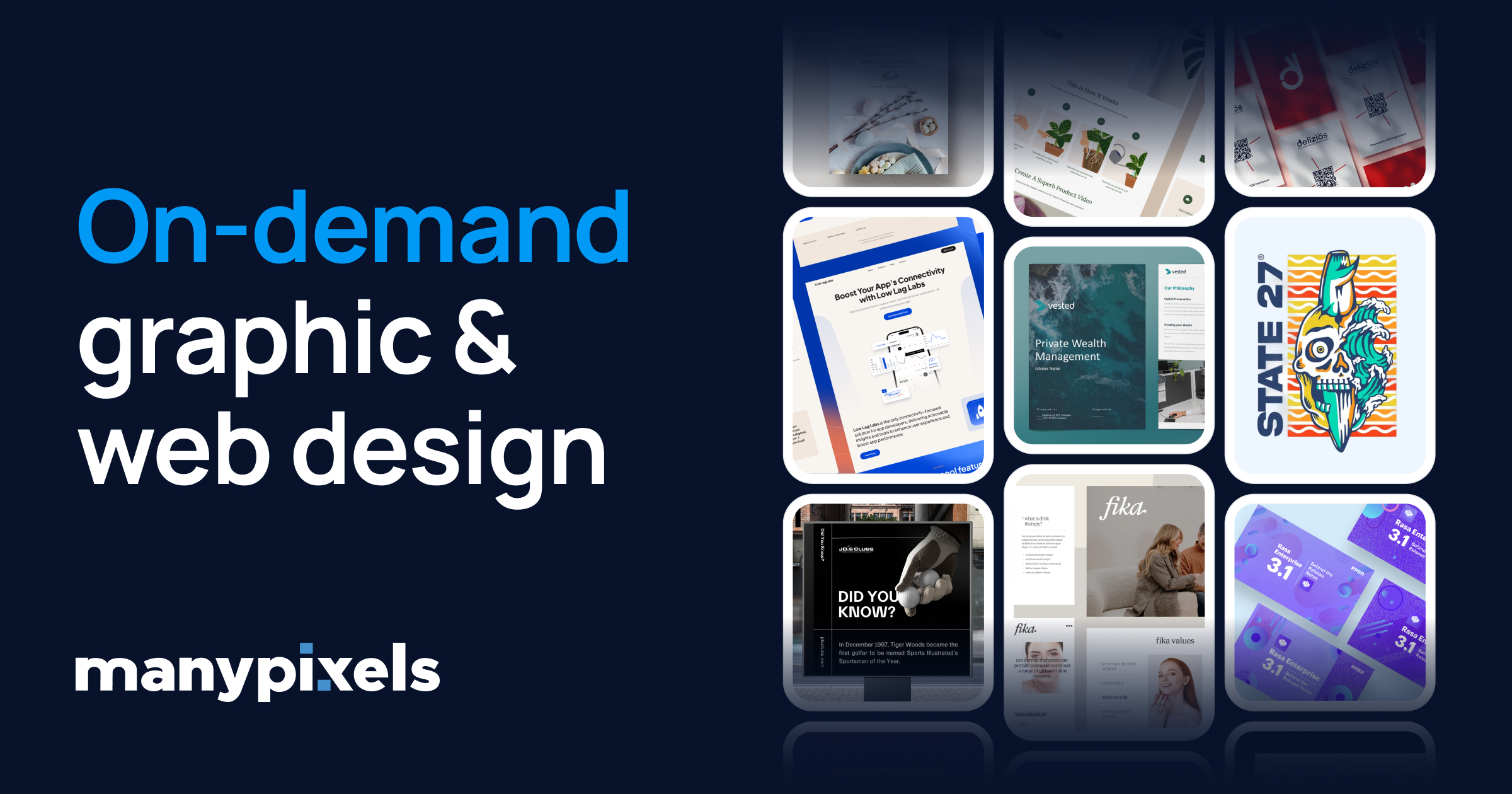
User reviews (0)