
 简体中文
 English
Website review
This review may include AI-generated content and is not individually verified. Domain, certificate and other facts come from the observed data on this page.
What is Graeme Borland's itch.io page?
Graeme Borland's itch.io page is a personal catalog of small, browser-playable games and prototypes, mostly made in short experimental bursts. The page is organized around a main grid of finished-feeling games and a separate "Prototypes and Experiments" section the author describes as "small projects or prototypes that I don't really consider 'finished', but are still playable." A "Collabs" heading suggests some entries are collaborations.
What stands out is the range within a compact scope. Titles span action (Twilight Beacon, NXTWPN10), puzzle (Vault of Stars, A Tale of Six Rites, CrystalLine), strategy (Blade & Wheel, Crowding Cavern), simulation (Sort the Court!), and adventure (SUNWARD). Many are one-idea games: NXTWPN10 changes your weapon every ten seconds; CrystalLine asks you to twist a line of crystals into matching sets; The Messenger Assist casts you as a ship's computer keeping someone alive. That makes the page a good browse for someone who wants quick, self-contained ideas rather than a long commitment.
If you're deciding where to start, pick by the kind of session you want. For a fast score-chase, try Parcel Blaster 2099 or Polydrone. For a slower puzzle, Vault of Stars or A Tale of Six Rites. For something with a social or management hook, Sort the Court! or Crowding Cavern. Since most run in the browser, you can sample several in a sitting and judge them by feel rather than by trailers.
The trade-off is polish and depth: prototypes and jam-scale games often explore one mechanic and stop, so expect brevity and rough edges rather than long campaigns. That's the appeal if you like seeing ideas tested quickly. For updates and other work, the page links to graemeborland.com and the @graebor handle.
Which Graeme Borland games can I play directly in my browser?
Most of the titles listed on Graeme Borland - itch.io are browser-playable; itch.io marks them with a "Play in browser" button. The page evidence confirms that label for these:
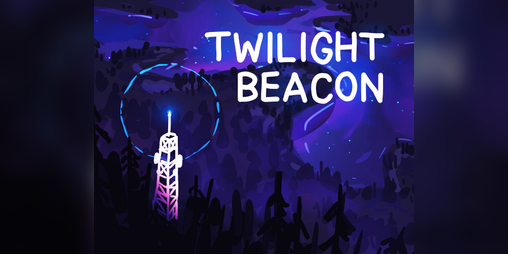
- Twilight Beacon – action: intercept radio signals before the beacon is overwhelmed.
- Vault of Stars – puzzle: rescue stars from the Collector's vault.
- NXTWPN10 – action: your weapon changes every 10 seconds.
- A Tale of Six Rites – puzzle: a short story told through rites and puzzles.
- CrystalLine – puzzle: twist a line of crystals into matching sets for a high score.
- Sort the Court! – simulation: rule by yes/no decrees and grow the kingdom.
- Crowding Cavern – strategy: cast spells to defend your cavern from adventurers.
- Parcel Blaster 2099 – action: a fast cannon-based package delivery run.
- Polydrone – action: reshape drones to battle enemies and chase a high score.
- SUNWARD – adventure: ritual sacrifice in a burning world.
- Fehu – puzzle: unbind trapped souls after a disaster.
A few others on the page — Blade & Wheel, The Messenger Assist, Watcher's Woods, My Magical Friend…, Saturnalia, Block Drop Monster Chop, and Downhill Deathrace — are listed without the browser label in the supplied excerpt, so check each title's page for a play option. The "Prototypes and Experiments" section (including Slaughtering Can and Seven Doorways) describes small, unfinished but playable projects, which may or may not run in-browser.
If you want a quick starting point: try Sort the Court! for a light management loop, NXTWPN10 for a short action burst, or Vault of Stars if you prefer puzzles.
How does the wheel-based battle system work in Blade & Wheel?
The page does not explain how the wheel-based battle system in Blade & Wheel actually works. The listing describes it only as a strategy game in which you "journey to defeat the guardian using a unique wheel-based battle system," and marks it as playable in the browser. There is no breakdown of turn order, wheel segments, or how blades and the wheel interact.
What this means for you
- If you want the mechanics before playing: the itch.io page won't give them to you. The fastest route is to launch the browser build and play the first battle, since the game is listed as playable in-browser.
- If you're comparing it to other Graeme Borland games: the same page shows the range of his work — puzzle games like Vault of Stars and A Tale of Six Rites, action games like NXTWPN10 and Parcel Blaster 2099, and strategy titles like Crowding Cavern. Blade & Wheel sits in the strategy group, so expect deliberate, tactical decisions rather than reflex-driven play.
- If you're studying the design: treat "wheel-based" as a prompt to observe how the wheel constrains choices — whether it rotates each turn, limits which actions are available, or ties blade attacks to wheel positions. Play a few rounds and note what the wheel adds that a plain menu of actions would not.
A practical next step: open the browser version, play through the first encounter, and write down what the wheel shows you and what changes after each action. That will tell you more about the system than any description on the page. You can find the game on Graeme Borland - itch.io.
What kind of puzzle experience does A Tale of Six Rites offer?
A Tale of Six Rites is a short narrative puzzle game: you perform a sequence of rites to "open the eye," with the story delivered through the puzzles themselves rather than through long stretches of text or dialogue. It's listed on Graeme Borland - itch.io under Puzzle and described as "a short story told in puzzles," and it is playable in the browser.
What that means in practice
- Puzzle-first storytelling. Expect each rite to be a self-contained puzzle that advances the plot; the meaning of the story accumulates as you solve rather than being explained up front.
- Short and focused. The framing as a "short story" suggests a single sitting rather than a lengthy campaign, which suits players who want a complete arc in one evening.
- Ritual theme. The rite structure gives the puzzles a ceremonial logic, so expect ordered steps and symbolic rules rather than freeform sandbox experimentation.
- Low friction. Browser play means no install, which makes it easy to try when you want a compact puzzle break.
Who it suits
Players who enjoy atmospheric, concept-driven puzzles—think ritual sequences, environmental logic and quiet storytelling—will get the most from it. If you mainly want a large puzzle campaign with dozens of hours of content, or a puzzle game with heavy mechanical complexity, this is a deliberately smaller experience.
A useful next step
If you like the idea but want a different flavor of short puzzle from the same catalogue, Vault of Stars is a puzzle game about rescuing stars from the Collector's vault, and A Witch Put Eight Items In A Magic Circle And Now I'm A Skeleton Who Needs To Summon A Friend! leans more comic. Comparing those two alongside A Tale of Six Rites will quickly tell you whether you prefer solemn ritual atmosphere or lighter puzzle premises.
How does the two-player cooperation work in Block Drop Monster Chop?
The page only names Block Drop Monster Chop as a two-player game where both players "work together to defeat enemies and match blocks in this chaotic race for points." It does not explain the mechanics further, so the specifics below are practical inference from that description and genre conventions, not confirmed features of the game.
What the description implies
- Shared combat, separate scoring. Enemies are a common threat, so cooperating on them keeps both players alive; blocks are matched individually, so points are a personal race.
- A tension to manage. Because it is described as a "chaotic race for points," the likely dynamic is deciding when to help clear enemies versus when to chase your own matches.
- Local co-op is likely. Two-player puzzle-action games on itch.io are usually same-screen, keyboard-sharing affairs, but the page does not state this.
How to try it
Open the game page on Graeme Borland - itch.io, check whether it runs in the browser and what controls are listed, then play one short round with a second person at the same keyboard. Within the first minute you will see whether enemies and blocks compete for the same attention.
Decision criterion
Choose it if you want a cooperative session with a competitive scoring edge and quick rounds. Skip it if you need verified online multiplayer or a purely cooperative, score-free experience — neither is confirmed here. For a calmer two-player alternative from the same catalogue, Sort the Court! is a single-player simulation, so it is not a substitute for co-op play.
What are the Prototypes and Experiments on this page and are they finished games?
The Prototypes and Experiments section is a collection of small projects that Graeme Borland explicitly describes as "bits and pieces"—projects he doesn't really consider "finished," but that are still playable. So the short answer is no: these are not finished games, and the page says so directly.
What's in the section
- Slaughtering Can — tagged as a shooter. The description ("If you want to survive, you better start watering the plants") suggests a quirky, experimental premise rather than a polished campaign.
- Seven Doorways — described as "an atmospheric chillout experiment about environments," which signals a mood/exploration piece rather than a game with objectives and progression.
- Field of Fate — "two sides clash in tactical chess-like" combat, i.e., a tactical combat experiment.
How this differs from the rest of the page
The main catalog (Twilight Beacon, Vault of Stars, Sort the Court!, Crowding Cavern, and others) is presented as finished, playable-in-browser games with clear genres. The prototypes are deliberately separated out, which is the useful signal: treat them as sketches of ideas, not as titles to evaluate for completeness.
A practical way to use the section
If you're interested in how this developer iterates—mechanics-first experiments, atmosphere pieces, tactical systems—start with the prototype whose description matches a genre you already enjoy, and judge it as a demo of an idea. If you want something with a defined beginning and end, choose from the main catalog instead; Sort the Court! (a yes/no decree simulation) and Vault of Stars (puzzle) are the clearest examples of complete, browser-playable games listed there.
For context on the developer's broader work, graemeborland.com is linked from the page.
 Cloudflare
 Zoho Mail
User reviews (0)