Website profiles · Technology insights · Alternatives

greenhive.io

The sustainable brands' directory. Find, share and discover the world's best, most progressive and purpose-driven companies that are making a positive impact on our planet. We aim to share their stories with you so that you can discover green products and services.

No paid content found
Visit website
Profile views 8 Outbound visits 1 Normal
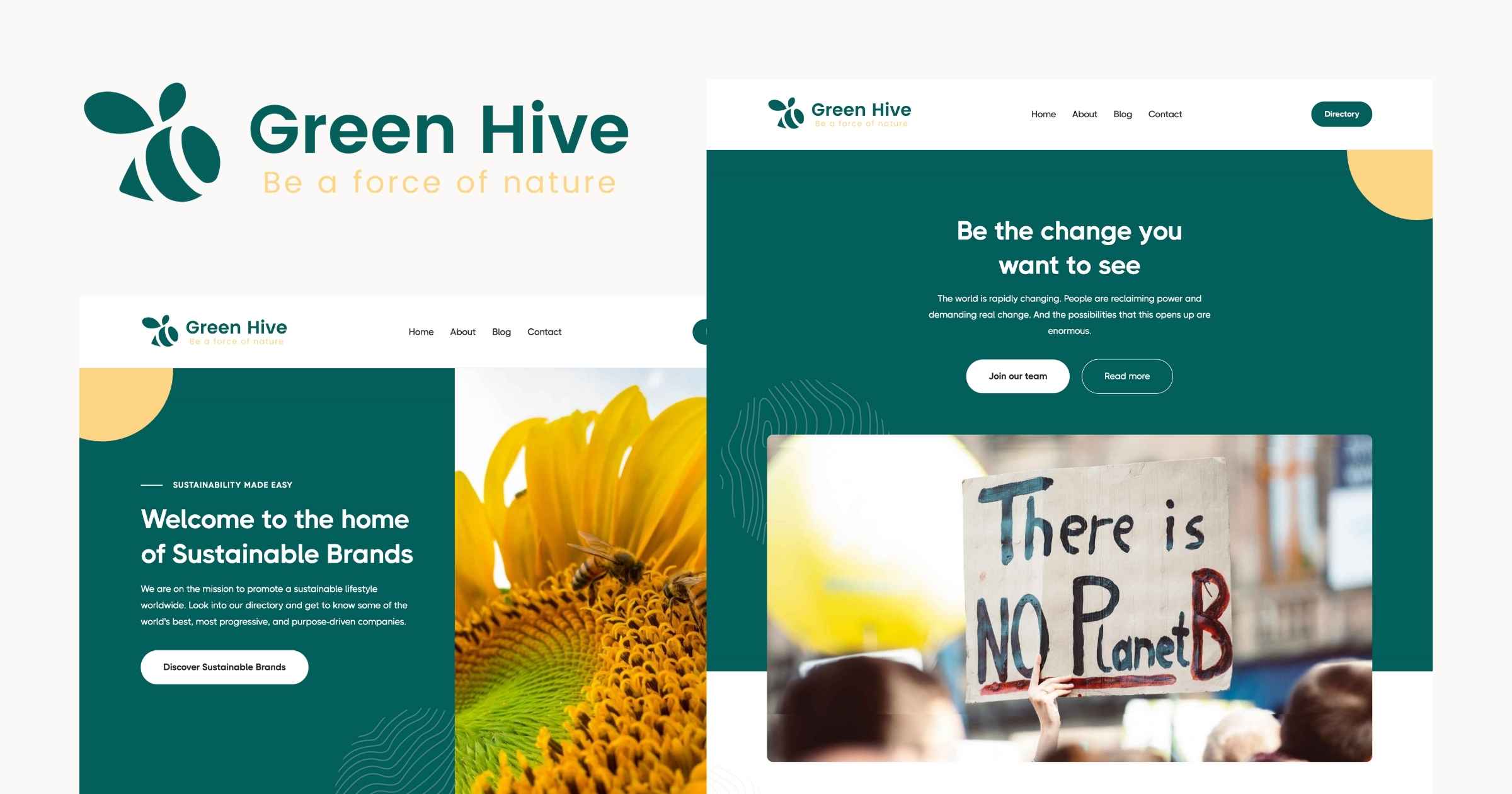
Green Hive Full homepage screenshot

At a glance

Category
Shopping
Language
English
Paid-content signal
No paid content foundObserved
Registered
2021
Hosting
CloudflareInferred
HTTPS certificate trusted
PassedObserved
Last updated

Website review

This review may include AI-generated content and is not individually verified. Domain, certificate and other facts come from the observed data on this page.

What is Green Hive?

Green Hive is a directory and editorial site for finding ethical and sustainable brands, organized by product category. Its stated mission is to help people discover "purpose-driven" companies and green products, and it pairs the directory with blog content about sustainable living and brand spotlights.

What you'll find there

  • A searchable brand directory covering categories such as toys, maternity, kitchen, beauty, clothing, and home.
  • Category pages that describe the kinds of products listed — for example, bamboo plates and organic cotton tea towels under kitchen, or natural and organic makeup and skincare under beauty.
  • Brand spotlight articles that profile a single company's approach, such as a feature on Blueland's home-cleaning products.
  • Blog posts on sustainable-living topics, including a piece arguing that the greenest product is one you never buy.
  • A "How We Rate" page, indicating the site applies its own framework when assessing businesses.

Who it suits

Someone who already knows roughly what they want — a mattress, a baby product, a moisturizer — and wants a shortlist of brands claiming sustainable or ethical practices, rather than a general shopping site. It is less useful if you want to buy directly, since it reads as a discovery layer that points you toward brands rather than a storefront.

How to use it well

Treat the directory as a starting point, not a verdict. The site's own rating framework reflects its criteria, which may weight different things than yours — animal testing, materials, supply-chain transparency, or packaging. When a brand interests you, check its own site for specifics on materials and sourcing before buying, and compare against a broader reference such as Good On You if you want a second opinion on a company's ethics.

How does Green Hive rate and verify the sustainability of the brands in its directory?

Green Hive describes a "How We Rate" element in its navigation and says it uses a "robust framework" to find sustainable businesses. The page itself does not spell out the individual criteria, scoring weights or verification steps, so the specific method is not visible from this evidence alone. What you can infer is that the site positions itself as a curated directory rather than an open marketplace: brands are selected and presented with editorial context, including spotlights and category pages.

That distinction matters if you are using the directory to make a purchase or sourcing decision. A curated listing tells you a brand passed the site's own filter, not that an independent third party audited every claim. For a reader comparing, say, a cleaning brand against a skincare brand, the useful move is to treat the directory as a starting point and then check the brand's own certifications and supply-chain disclosures.

Green Hive is most useful for discovery across categories such as toys, maternity, kitchen, beauty, clothing and home. Its blog content, such as the piece on minimalist Korean skincare, suggests it also covers consumption-reduction angles rather than only product swaps.

To judge any brand you find there, look for named certifications and specific materials rather than general words like "natural" or "eco-friendly". For broader context, you can compare how other directories handle ratings, such as Good On You for fashion-focused brand ratings or Ecolabel Index for understanding what a given certification actually covers.

Which sustainable brands does Green Hive recommend for specific product categories like beauty, clothing, or kitchen?

Green Hive organizes its recommendations by product category rather than publishing a single ranked list of "best" brands. Its directory is split into sections such as Beauty, Clothing, Kitchen, Home, Toys, and Maternity, and each section is meant to surface companies that fit the site's sustainability criteria.

What the page actually shows

  • Beauty: The page spotlights 100% PURE as a featured brand, describing it as nature-powered beauty that is PETA cruelty-free. The blog also includes a piece on minimalist Korean skincare, which suggests the Beauty section leans toward natural and organic makeup, skincare, and haircare.
  • Kitchen: Green Hive points readers toward eco-friendly kitchen supplies, naming examples like bamboo plates, hemp bowls, and organic cotton tea towels.
  • Clothing: The Clothing category focuses on independent brands making high-quality sustainable clothes and positioning themselves against fast fashion.
  • Home: This section covers furniture, mattresses, lighting, and decor made with sustainable materials.
  • Toys and Maternity: Toys are framed around STEM-oriented educational toys plus natural options in organic cotton and wood; Maternity emphasizes organic, sustainable products for changing needs.

How to use it

If you want a specific brand, start with the category closest to your need, then check the site's "How We Rate" page before trusting a listing. That page explains the framework Green Hive uses, which matters because "sustainable" can mean different things across materials, labor, and packaging.

For broader cross-checking, you can compare listings against Good On You for fashion and beauty ratings, or Environmental Working Group for ingredient and product safety data. Treat Green Hive as a discovery directory, not a certification body: it helps you find candidates, while the brand's own disclosures and third-party ratings tell you whether a specific product fits your priorities.

How can I use Green Hive to find eco-friendly alternatives to everyday products I currently buy?

Use Green Hive as a browsing and shortlisting tool: start with the product category closest to what you already buy, then read the brand entries and their stories before deciding whether a swap is worth it.

A practical way to use it

  1. Pick one everyday product area to replace first, not ten. The directory is organised into categories such as Toys, Maternity, Kitchen, Beauty, Clothing and Home, so it maps reasonably well onto routine purchases.
  2. Open the category that matches your current shopping list. If you are replacing cleaning sprays, kitchen wrap or storage containers, the Kitchen section is the natural entry point; for skincare, makeup and haircare, use Beauty.
  3. Compare two or three brands in that category rather than accepting the first result. Look at what materials or ingredients each brand actually uses, what it says it is avoiding, and whether the product form fits your routine.
  4. Read the brand spotlight and blog material for context. The site mixes directory listings with editorial posts, such as its brand spotlight on Blueland's home cleaning approach and a piece on minimalist Korean skincare, which can help you understand the reasoning behind a swap.
  5. Check the "How We Rate" page before treating a listing as a verdict. Knowing the criteria tells you whether a brand is included for materials, ethics, certifications or something else, and whether that matches what matters to you.

What it is good for, and what it is not

Green Hive is a discovery and storytelling directory, not a price comparison engine or a stock checker. It helps you find purpose-driven companies and understand their claims; it does not tell you whether a specific item is cheaper than your current brand, in stock, or available in your country. Treat it as the research stage, then verify availability and cost with the brand itself.

A useful decision criterion: choose the swap where the product is used most often and where the sustainable version performs at least as well as what you buy now. Replacing a daily-use item you are happy with beats replacing a rarely used one you barely notice.

Example

If you currently buy conventional liquid hand soap and plastic-heavy cleaning sprays, browse the Home and Kitchen categories, shortlist two or three brands, read their spotlights, then check the rating criteria. Buy one refillable or concentrate-based option, use it for a month, and only then decide whether to extend the swap to other rooms.

If you want a second reference point for a specific category, cross-check a brand you find here against a broader ethical ratings site such as Good On You or a certification body, so you are not relying on a single directory's inclusion.

What criteria does Green Hive use to define a brand as ethical or purpose-driven?

Green Hive describes a rating framework rather than publishing a simple pass/fail definition. Its own description says it uses a "robust framework to find sustainable businesses," and its navigation includes a "How We Rate" page, so the site presents brands as assessed against stated criteria rather than accepted at face value. The page evidence itself does not list those individual criteria, so the specific standards aren't visible from the homepage content alone.

What the directory signals about the kinds of brands it looks for:

  • Purpose beyond profit: The site repeatedly uses "purpose-driven" and says brands are "making a positive impact on our planet."
  • Progressive practice: It highlights companies it considers "progressive," implying improvement and leadership rather than minimal compliance.
  • Sustainability across categories: Listings span toys, maternity, kitchen, beauty, clothing and home, so the framework is applied to product categories rather than one niche.
  • Verifiable claims: A featured brand, 100% PURE, is tagged "PETA Cruelty Free," suggesting third-party certifications or recognised labels carry weight.

For a practical next step, open Green Hive's "How We Rate" page before relying on a listing. If you are choosing between two similar products, treat a directory entry as a starting point and check the brand's own certification evidence — for example, whether a cruelty-free claim comes from a recognised programme or only from the brand's own marketing.

A concrete scenario: if you are buying eco-friendly toys for a child, Green Hive's directory can narrow the field to brands it has screened, but you would still want to confirm material claims such as organic cotton or FSC-certified wood directly with the brand.

Can I submit or suggest a sustainable brand to be included in the Green Hive directory?

Yes — Green Hive is built as a directory that invites visitors to "find, share and discover" sustainable brands, so suggesting a brand fits how the site presents itself. The page evidence shows a "Directory" section, a category structure (Toys, Maternity, Kitchen, Beauty, Clothing, Home), a "How We Rate" page, and a searchable brand index. That combination matters: a submission is not just a listing request, it is a request to be assessed against the site's own rating framework.

What a submission effectively involves

  • A brand name and official website, so the entry can be verified and linked correctly.
  • Which category it belongs in, or whether it spans several.
  • Evidence for the sustainability claims: materials, certifications, supply-chain information, packaging or repair and take-back schemes.
  • A short description of what makes the company purpose-driven rather than merely "green-looking."

How to judge whether it is worth submitting

If your brand… Likely outcome
Has third-party certifications and published supply-chain detail Strong fit for a ratings-based directory
Uses vague eco language with no verifiable backing Likely to be passed over or listed without a strong rating
Sits in an existing category such as Beauty or Kitchen Easier to place and compare against peers
Is a service rather than a physical product Possible, but check the category list first

A practical next step

Open the "How We Rate" page before submitting, and read it as a checklist rather than a formality. Then look at two or three brands already listed in your category — for example the featured beauty brand spotlighted on the homepage — and note how much evidence their entries present. If your own documentation is thinner than theirs, gather the missing material first; it is faster than a rejected submission and a resubmission.

If you are a consumer rather than a brand owner, the same route works: the site's stated aim is to let people share and discover companies, and a specific suggestion with a reason ("this brand repairs what it sells") is more useful to whoever reviews it than a bare name. For wider context on what credible certification looks like, Green Hive itself and independent references such as B Lab can help you tell a genuine claim from marketing language.

Related questions

More questions →
What Kind of Sustainable Living Content Does the Green Hive Blog Offer?

Green Hive's blog covers sustainable living ideas, eco-friendly products, and emerging trends, with articles that often challenge conventional consumption habits. One example featured on the site is "Minimalist Korean Skincare: The Greenest Product Is the One You Never Buy," which signals the blog's willingness to explore reduction and mindful consumption rather than just promoting purchases. The blog sits alongside Green Hive's brand directory, so it complements brand spotlights with a more practical, lifestyle-oriented perspective.

What the Blog Covers

Based on the site's own description, the blog is positioned as a resource for sustainable living. Its stated aim is to help readers "achieve a more sustainable lifestyle while connecting with some of the most sustainable and purpose-driven companies in the world." In practice, that means content tends to fall into a few broad areas:

  • Sustainable living practices — everyday habits and routines that reduce environmental impact.
  • Eco-friendly products and trends — what's new in green products and which directions the sustainable market is moving.
  • Brand stories and spotlights — deeper looks at specific companies, such as the featured spotlight on Blueland's approach to home cleaning.
  • Critical or minimalist perspectives — pieces that question whether buying more, even if "green," is the right answer.

How It Differs From the Directory

The directory is built for discovery: it lists companies across categories like Toys, Maternity, Kitchen, Beauty, Clothing, and Home, and uses a stated framework to evaluate sustainable businesses. The blog serves a different function — it gives context, opinion, and practical guidance that a listing alone can't provide.

Directory Blog
Browse and discover sustainable brands Read about sustainable living ideas
Organized by product category Organized by topic and article
Brand-focused listings and spotlights Lifestyle, trends, and critical perspectives
Helps you find products Helps you think about whether and how to consume

Together, they let a reader move from inspiration (a blog idea) to action (a brand in the directory), or the reverse.

What This Means for You

If you're looking for sustainable living inspiration rather than a straight product list, the blog is the place to start. It's most useful if you want:

  • Ideas for lowering your environmental footprint in daily life.
  • A sense of which green products and trends are gaining attention.
  • A more skeptical, minimalist angle — for example, the argument that the greenest product is the one you never buy.

If your goal is to find and compare specific brands, the directory will serve you better, and the blog can add background on why a given brand or category matters.

One practical note: the blog's value depends on how regularly it's updated, and the site itself doesn't publish a posting schedule or archive size in the material available. Treat it as a companion to the directory rather than a comprehensive library, and check the current article list directly on greenhive.io to see what's live.

How Green Hive Selects and Rates Sustainable Brands

Green Hive describes its directory as built on a "robust framework" for finding sustainable businesses, and the site includes a dedicated "How We Rate" page as the stated home for its evaluation criteria. That means the selection process is not a simple self-submission list — the site positions itself as actively screening companies before featuring them. The specifics of the scoring criteria live on the "How We Rate" page rather than in the directory listings themselves, so anyone judging whether a brand's inclusion is meaningful should read that page first.

What the directory says about its own method

From the site's own framing, three claims define how brands get in:

  • A framework, not a free-for-all. Green Hive states it "employs a robust framework to find sustainable businesses," implying a defined set of checks rather than open listing.
  • Purpose-driven as a filter. The directory says it promotes "progressive and purpose-driven companies" making "a positive impact on our planet" — so mission and impact are treated as selection criteria, not just product materials.
  • A public rating explainer. The presence of a "How We Rate" link in the main navigation signals that the criteria are documented for visitors, which is the page to consult for the actual dimensions used.

How to use this when judging a brand

If you land on a brand page and want to know whether its presence means anything:

  1. Open the How We Rate page and note which dimensions Green Hive scores (for example, materials, ethics, or company practices — the page is the source of truth here).
  2. Compare those dimensions against what the brand page actually states, rather than against the brand's own marketing claims.
  3. Treat inclusion as a starting signal, not a verdict. The directory aggregates brands across many categories, and a listing tells you a company passed Green Hive's screen — not that it is the best option in its category.

What the directory covers

Green Hive organizes brands into consumer product categories, which is useful context for how broad its screening has to be:

Category Example focus areas named on the site
Toys Eco-friendly, STEM-based educational toys, organic cotton and wood
Maternity Organic products for changing mothers
Kitchen Bamboo plates, hemp bowls, organic cotton tea towels
Beauty Natural and organic makeup, skincare, haircare
Clothing Independent sustainable clothing brands
Home Furniture, mattresses, lighting, decor

Because the criteria have to stretch across toys, skincare, and furniture at once, expect the framework to lean on general sustainability and ethics signals rather than deep category-specific testing.

Where to look for a brand's actual story

Beyond the rating framework, Green Hive says it aims to "share their stories with you" — brand spotlights and blog posts are where that happens. A featured brand page, for example, pairs a short positioning statement with a "Discover the Brand" deep dive. If you want to understand why a company was selected, the spotlight content is usually more informative than the directory card.

Practical takeaway

Green Hive's selection model is a screened directory with published criteria, not an open marketplace. To decide whether a brand's inclusion is trustworthy for your purposes: read "How We Rate" for the criteria, read the brand spotlight for the reasoning, and treat the listing as one input among several rather than a final endorsement.

What Product Categories Does the Green Hive Sustainable Brands Directory Cover?

Green Hive (greenhive.io) organizes its sustainable brands directory into six main product categories: Toys, Maternity, Kitchen, Beauty, Clothing, and Home. Each category groups eco-friendly companies and products for a specific area of daily life, so you can browse by the part of your routine you want to make greener rather than scrolling through one undifferentiated list. The directory also includes a search function and a blog for broader sustainable-living topics.

The six directory categories

Category What it covers Example products listed
Toys Eco-friendly and educational toys for children STEM-based educational toys, natural toys made from organic cotton and wood
Maternity Sustainable, organic products for expecting and new mothers Organic products made with materials chosen to preserve the environment and meet mothers' needs
Kitchen Eco-friendly kitchen supplies Bamboo plates, hemp bowls, organic cotton tea towels
Beauty Natural and organic makeup, skincare, and haircare Products from companies pioneering sustainable and natural beauty
Clothing High-quality sustainable clothing from independent businesses Brands positioned against fast fashion and advocating for change
Home Eco-friendly home products made with sustainable materials Furniture, mattresses, lighting, and decor

How to browse the directory

  1. Go to greenhive.io and use the search directory function, or start from the category listings on the homepage.
  2. Pick the category that matches your need — for example, Kitchen if you want to replace disposable kitchen items, or Beauty if you are looking for natural skincare.
  3. Open a brand page to read its profile. Brand pages include a spotlight write-up; the featured example on the site is 100% PURE, described as creating nature-powered beauty with a PETA cruelty-free designation.
  4. Use the "How We Rate" page if you want to understand the framework Green Hive applies when evaluating whether a business qualifies as sustainable.

What else is on the site

Beyond the category directory, Green Hive publishes a blog on sustainable living. One listed article, "Minimalist Korean Skincare: The Greenest Product Is the One You Never Buy," suggests the editorial angle leans toward reducing consumption rather than only swapping products. The site states it employs a framework to identify sustainable businesses, and it invites brands and readers to connect through its About and Contact pages.

When this directory fits your need

Green Hive is useful if you want to discover purpose-driven companies by product area and read short brand stories before buying. It is a discovery and directory site, not a marketplace with checkout — the site's own framing is "find, share and discover" brands. If you already know the exact product you want and need price or shipping comparisons, you will likely still need to visit each brand's own site after finding it here.

What You Can Learn from Green Hive's Brand Spotlight Features

Green Hive's brand spotlights are short editorial deep dives into individual sustainable companies, and they are most useful when you already have a brand in mind and want to understand its stated sustainability approach before buying. Each spotlight focuses on one company's philosophy and practices rather than ranking products or comparing prices, so treat them as a starting point for your own judgment, not a verdict.

What a spotlight actually contains

Based on the spotlights published on greenhive.io, each feature follows a similar shape:

  • A named brand and its core positioning. For example, the Blueland spotlight is framed around "Blueland's ethical and sustainable approach to home cleaning," and the 100% PURE feature describes a brand that "creates high-performance, nature-powered beauty, crafted to outperform conventional standards and support healthier skin and mindful routines."
  • The values or claims the brand wants associated with it. In the 100% PURE spotlight, this includes a PETA Cruelty Free signal alongside the brand's nature-powered positioning.
  • A link into the wider directory, so you can move from reading about one brand to browsing related companies in the same category.

The site describes the directory as covering categories including Toys, Maternity, Kitchen, Beauty, Clothing, and Home, and states that it uses "a robust framework to find sustainable businesses." The spotlights sit on top of that directory rather than replacing it.

How to use a spotlight when deciding

A spotlight answers "what does this brand say it stands for?" It does not, on its own, answer "is this the right product for me?" To get practical value:

  1. Read the spotlight to capture the brand's stated mission and any certifications it highlights (cruelty-free, organic materials, and so on).
  2. Check which category the brand sits in — a home-cleaning brand and a skincare brand will be evaluated against very different criteria.
  3. Cross-reference the claim against the product page or certification body before you buy, since a spotlight restates the brand's own positioning.
  4. Use the directory to find alternatives in the same category if the spotlight raises doubts.

What the spotlights do not cover

The available page content does not show pricing, ingredient-level breakdowns, or independent lab testing in the spotlight format. It also does not indicate that spotlights include negative findings or comparative scoring. If your decision depends on cost, specific materials, or third-party verification, the spotlight alone will not settle it — you will need the brand's own documentation.

Where the blog fits in

Green Hive also runs a blog on sustainable living, with pieces such as "Minimalist Korean Skincare: The Greenest Product Is the One You Never Buy." That title points to a recurring theme worth noting: the site's editorial angle sometimes argues for buying less rather than switching brands. Read alongside the spotlights, this suggests the content is meant to inform a consumption decision, not simply to promote the featured companies.

Bottom line

Use Green Hive's brand spotlights to quickly understand a sustainable brand's stated philosophy, values, and certifications before you shop. They are best combined with the category directory for finding alternatives and with the brand's own materials for verifying specific claims.

What is Green Hive and what can you find on greenhive.io?

Green Hive is a sustainable and ethical brands directory at greenhive.io. It helps you discover purpose-driven companies and eco-friendly products across categories such as toys, maternity, kitchen, beauty, clothing, and home. You can browse the directory, read brand spotlights, and follow a blog on sustainable living. It is useful if you want to find greener alternatives but don't know which companies to trust or where to start.

What Green Hive offers

The site describes itself as "the sustainable brands' directory" with a mission to promote a sustainable lifestyle worldwide. Its core function is discovery: you look into the directory to get to know companies that are progressive and purpose-driven.

Key sections on the homepage:

  • Directory — the main browsable list of sustainable companies, with a search function.
  • Categories — products grouped by type, so you can shop by need rather than by brand.
  • Featured brand — a spotlight on a specific company. The homepage currently features 100% PURE, described as creating "high-performance, nature-powered beauty" and noted as PETA Cruelty Free.
  • Blog — articles on sustainable living, such as "Minimalist Korean Skincare: The Greenest Product Is the One You Never Buy."
  • How We Rate — a page explaining the framework Green Hive uses to evaluate sustainable businesses.

Browsing by category

Green Hive organizes products into categories so you can start from what you actually need. The categories listed on the homepage are:

Category What you'll find
Toys Eco-friendly toys, including STEM-based educational toys, natural toys made from organic cotton and wood
Maternity Sustainable, organic products for changing mothers
Kitchen Bamboo plates, hemp bowls, organic cotton tea towels, and other eco-friendly kitchen supplies
Beauty Natural and organic makeup, skincare, and haircare
Clothing High-quality sustainable clothing from independent businesses
Home Furniture, mattresses, lighting, and decor made with sustainable materials

Each category links to a curated brand list rather than a single store, so you can compare companies within the type of product you want.

How brands are evaluated

Green Hive states it employs "a robust framework to find sustainable businesses." The site has a dedicated How We Rate page, which is where the specific criteria live. If you want to know why a particular brand is listed, that page is the place to check before trusting a recommendation.

Who it's for

Green Hive is most useful if you:

  • Want to switch to greener products but don't know which brands are credible.
  • Prefer browsing by category (e.g., kitchen or beauty) instead of searching brand by brand.
  • Want to read brand stories and background rather than just product listings.
  • Are looking for a starting point for a more sustainable lifestyle and want editorial guidance alongside the directory.

It is a discovery and reference site, not a marketplace with checkout. The homepage directs you to "Discover Sustainable Brands" and to explore the directory, blog, and rating methodology.

Website Overview

An active inbound-mail setup with incomplete authentication may leave the domain more open to impersonation. Provider hosting alone does not close that gap.

Domain and Registration

Transfer-protection status is present, helping reduce the risk of unauthorized domain transfers. The domain has about 5 years of registration history; its current configuration provides more context than age alone. The registrar is NameCheap, Inc., a widely used domain service provider. The domain uses the common .io extension, which is not an independent safety signal.

DNS and Email

The observed email authentication setup is incomplete: DMARC is missing. Nameservers are provided by Namecheap, indicating managed DNS hosting. MX records point to the Google Workspace email service. TXT records include verification markers for Google. Such markers may also remain after a service stops being used. DNSSEC signatures were not detected, so this additional DNS authenticity protection is not confirmed.

TLS and Certificates

The public key uses EC with 256 bits. The server supplied a complete certificate chain. No organization name is present in the certificate; the available fields are consistent with domain validation. The certificate was issued within the Google Trust Services cloud or CDN ecosystem. The certificate's total validity is about 90 days, consistent with a short renewal cycle.

HTTP and Browser Security

The response lacks these common security headers: X-Content-Type-Options, Referrer-Policy, Permissions-Policy. No X-Powered-By header was found, reducing one common source of backend fingerprinting information. The cf-ray response header indicates a CDN or caching proxy in the delivery path. No obvious internal addresses or debug information were found in the headers. The Server header identifies cloudflare without an exact version.

Technology Stack Analysis

The public page identifies Webflow, Google Analytics, Cloudflare without precise versions, leaving fewer clues for version-specific scanning.

Search and Social Sharing

The meta description has 265 characters and may be shortened in search results. Twitter Card metadata is configured. JSON-LD includes Organization data, helping describe the organization as an entity. The title has 51 characters, within a common display range. The observed directives allow indexing and link following.

Hosting and Email

DNSNamecheap
HostingCloudflare
EmailGoogle Workspace
Approximate IP geolocation (inferred; a CDN or proxy may differ from the origin server) United States flagUnited States Inferred 198.202.211.1

Registration details

RDAP / WHOIS

RegistrarNameCheap, Inc.
Registered2021-10-13
Expires2028-10-13
Domain statusclientTransferProhibited https://icann.org/epp#clientTransferProhibited
Nameserversdns1.registrar-servers.com、dns2.registrar-servers.com
DNSSECunsigned

DNS records

DNS

TypeNameValueTTLPriority
Acdn.webflow.com198.202.211.1300—
AAAAcdn.webflow.com2620:cb:2000::1300—
MXgreenhive.ioaspmx.l.google.com18001
MXgreenhive.ioalt1.aspmx.l.google.com18005
MXgreenhive.ioalt2.aspmx.l.google.com18005
MXgreenhive.ioaspmx2.googlemail.com180010
MXgreenhive.ioaspmx3.googlemail.com180010
NSgreenhive.iodns1.registrar-servers.com1800—
NSgreenhive.iodns2.registrar-servers.com1800—
TXTgreenhive.iogoogle-site-verification=1Z-95L9PoC5II0nGzFFwOHl_Af-IGsuVLsB2RCZVCo4300—
TXTgreenhive.iogoogle-site-verification=LNajskM8vFIleqq0mwvWIaBfhTJNnWQESnIH_e3SEX4300—
TXTgreenhive.iomailerlite-domain-verification=705c30e52cfeb01174a8073438ad82acc2fa3944300—
TXTgreenhive.iov=spf1 a mx include:_spf.mlsend.com ?all300—
CNAMEwww.greenhive.iocdn.webflow.com300—

TLS and certificates

TLS / SSL

AssessmentNormal configuration
Supported protocolsTLSv1.2、TLSv1.3
Negotiated protocolTLSv1.3
Certificate subjectwww.greenhive.io
IssuerGoogle Trust Services
Valid until2026-11-27T10:59 · Remaining when checked: 55 days
Verification detailsCertificate trust: Passed · Hostname match: Passed

HTTP response headers

HTTP

HeaderValue
content-typetext/html; charset=utf-8
servercloudflare
strict-transport-securitymax-age=31536000
content-security-policyframe-ancestors 'self'
x-frame-optionsSAMEORIGIN

Identified technologies

WebflowGoogle AnalyticsCloudflare

Pages, Search and Sharing

Meta descriptionThe sustainable brands' directory. Find, share and discover the world's best, most progressive and purpose-driven companies that are making a positive impact on our planet. We aim to share their stories with you so that you can discover green products and services.
Canonical URLhttps://www.greenhive.io
LanguageEnglish (default)
Twitter Cardsummary_large_image
All bots 0 allowed · 16 disallowed
  • Disallow/sustainable-guides/
  • Disallow/home-pages/
  • Disallow/about-pages/
  • Disallow/blog-pages/
  • Disallow/landing-pages/
  • Disallow/utility-pages/
  • Disallow/template-pages/
  • Disallow/extra-page/
  • Disallow/thrift-stores/
  • Disallow/certifications-sustainable-attributes/
  • Disallow/sustainable-products/
  • Disallow/help-center-category/
  • Disallow/help-center-article/
  • Disallow/service-page/
  • Disallow/css/
  • Disallow/js/

User reviews (0)

  • No reviews yet.