
 Paid content
 Visit website
 Updated: 2026-10-07 07:03
 Language: English (default)
 Access: Normal
 Profile views 7
  Outbound visits 1
 Website Review
What is FL Studio?
FL Studio is a digital audio workstation (DAW) from Image-Line: software for recording, arranging, producing, mixing, and mastering music on Windows and macOS. It is known for its pattern-based sequencer, step sequencer, and piano roll, and it ships with a large set of built-in instruments and effects. One of its distinguishing policies is that a license includes lifetime free updates, and a free trial is available so you can test it before buying. Editions differ in which bundled plugins and features they include, so the right choice depends on what you already own and what you plan to produce.
A practical next step is to compare editions side by side on FL Studio and note which bundled instruments you actually need, since that is usually the main reason to move up a tier rather than a difference in core editing. If you are unsure, start with the free trial, finish one short project, and see whether you hit limits in the plugins or in your own workflow.
How much does FL Studio cost and what's included in each edition?
FL Studio is sold as a one-time purchase with lifetime free updates rather than a subscription, and the official FL Studio pricing page lists a free trial plus several paid editions that differ mainly in which instruments, effects and audio-recording features are unlocked.
How the editions generally differ
| Edition tier | Typical audience | What you gain as you move up |
|---|---|---|
| Entry-level (Fruity) | Beginners, beatmakers working mostly "in the box" | Core sequencing, step sequencer, basic instruments and effects; limited audio recording |
| Producer | Most serious hobbyists and small studios | Full playlist/arrangement workflow, audio recording and editing, more generators and effects |
| Signature / All-Plugins bundles | Producers who want a large built-in sound and effect library | Bundled flagship synths and effects, so fewer third-party purchases |
| Full bundle (Everything) | Professionals and studios | The complete Image-Line instrument and effect collection |
The practical trade-off is upfront cost versus how much you'd otherwise spend on third-party plugins. If you mostly use your own VSTs, an entry or Producer tier is usually enough; if you want a large stock library, the higher bundles can be cheaper than buying equivalents separately. The free trial is the sensible first step, since it lets you test the workflow before choosing a tier.
For current prices and the exact plugin lists per edition, check FL Studio directly, since edition contents and pricing change between releases.
Can I try FL Studio for free before buying it?
Yes. FL Studio offers a free trial you can download and use before paying, and the download page at FL Studio is the official starting point.
H3 What the trial lets you do The trial is the full software, not a cut-down demo. You can produce, arrange, mix and experiment with the included instruments and effects, and projects you save during the trial open normally once you buy. The practical catch is that you cannot reopen saved projects in the trial after closing them, so treat it as a hands-on evaluation rather than a free working environment.
H3 How to get the most from it
- Pick one real task: build a short track from scratch, or recreate a drum pattern you already know.
- Test the parts you will actually rely on — piano roll, step sequencer, mixer routing, automation.
- Check how it feels on your machine: CPU load with several instruments, audio latency with your interface.
- Try your own workflow: recording vocals or guitar, using MIDI controllers, exporting a mixdown.
H3 Who this suits If you write electronic or beat-driven music, the pattern-based workflow tends to click quickly. If you mainly record live bands and edit audio, spend your trial time on the playlist and mixer before deciding — that is where the fit matters most.
H3 Next step Download the trial, give yourself a fixed window (a week or two), and finish one complete track. If you reach the end and only the save limitation is stopping you, that is your signal to buy. Before purchasing, compare editions on the official pricing page at Pricing so you know which tier matches the features you used most.
What is the difference between Producer Edition and Signature Bundle?
The Signature Bundle is the larger package: it includes everything in Producer Edition plus a broader set of instruments, effects and extra content. Producer Edition is the mid-tier option that covers the core workflow — recording, arranging, mixing and mastering — for people who mainly need a capable DAW rather than a big plugin library.
FL Studio publishes a side-by-side comparison of editions on its pricing page, which is the reliable place to confirm exactly which plugins sit in each tier, since bundle contents change between versions.
How to choose
- Pick Producer Edition if you already own third-party instruments and effects, or you mainly record audio and mix. You get the full production environment without paying for plugins you may not use.
- Pick Signature Bundle if you want to start with a wide built-in palette — synths, sample-based instruments and effects — and would otherwise buy several of them separately. Bundling usually works out cheaper than buying the same plugins individually, but only if you'll actually use them.
A practical test: list the specific plugins you need in your first six months. If most of that list falls inside Signature, the bundle is the better buy; if you'd only use one or two of the extras, Producer plus a couple of targeted purchases is leaner.
Both editions sit under the same lifetime free updates policy, so upgrading later is possible — you're not locked out of the higher tier by starting lower. If you're unsure, run the free trial first and note which stock plugins you keep reaching for before committing.
How does the Lifetime Free Updates policy work for FL Studio?
FL Studio’s Lifetime Free Updates policy means a one-time purchase of a license includes ongoing access to future versions of the software, rather than requiring you to buy each major release again. The official site presents this as a core part of the offer, alongside a free trial and paid editions.
In practice, that matters most for people who expect to keep producing over several years. If you buy a license, you can keep using the current version and install later releases when they arrive, without a separate upgrade fee. The main trade-off is that the policy applies to FL Studio itself; it does not automatically include every optional add-on, plugin or third-party product that Image-Line or other companies may sell separately. You still need compatible hardware and an operating system that the newer version supports.
A practical next step is to compare editions on the official pricing page before buying, because the lifetime update benefit is tied to the edition you choose and what it includes. If you are unsure, start with the free trial, learn the workflow, then decide which edition matches the features you actually use. For detailed edition differences, see FL Studio Pricing.
Is FL Studio suitable for beginners or does it require music production experience?
FL Studio is suitable for beginners, but it is not the gentlest starting point. It is a full digital audio workstation (DAW): a program for recording, arranging, editing, mixing and exporting music. New users can learn it without prior production experience, especially with tutorials and the free trial, but they should expect to spend time learning the interface and basic workflow.
The main beginner hurdle is the pattern-based workflow. FL Studio centres on the Channel Rack and Step Sequencer, which makes drum programming quick, but it differs from the track-and-timeline layout of many other DAWs. A complete beginner may initially find that unfamiliar, while someone who has used another DAW will adapt faster.
Who it suits
- Absolute beginners: Workable if you are willing to follow structured tutorials and start with simple beats or loops.
- Bedroom producers and beatmakers: The step sequencer and pattern workflow are well suited to electronic music, hip-hop and loop-based production.
- Users moving from another DAW: Concepts like mixing, MIDI and automation transfer, so the learning curve is shorter.
- People who want to try before committing: The free trial lets you explore the software before deciding whether the workflow suits you.
Practical trade-offs
| Consideration | What it means for a beginner |
|---|---|
| Pattern-based workflow | Fast for beats, but different from linear DAWs |
| Large feature set | Powerful, but potentially overwhelming at first |
| Free trial | Lets you test the interface before buying |
| Edition differences | Features vary by edition, so check what you need before choosing |
If you are unsure, download the free trial and spend a few sessions recreating a simple song: one drum pattern, one bass line and one melody. If that process feels manageable, FL Studio is a reasonable beginner choice. If the pattern system feels confusing, compare it with a more linear DAW before committing. Official details and edition comparisons are available at FL Studio.
 Hosting and Email
 Cloudflare
 Hosting
 Google Workspace
 Location
 United States
 Pages, Search and Sharing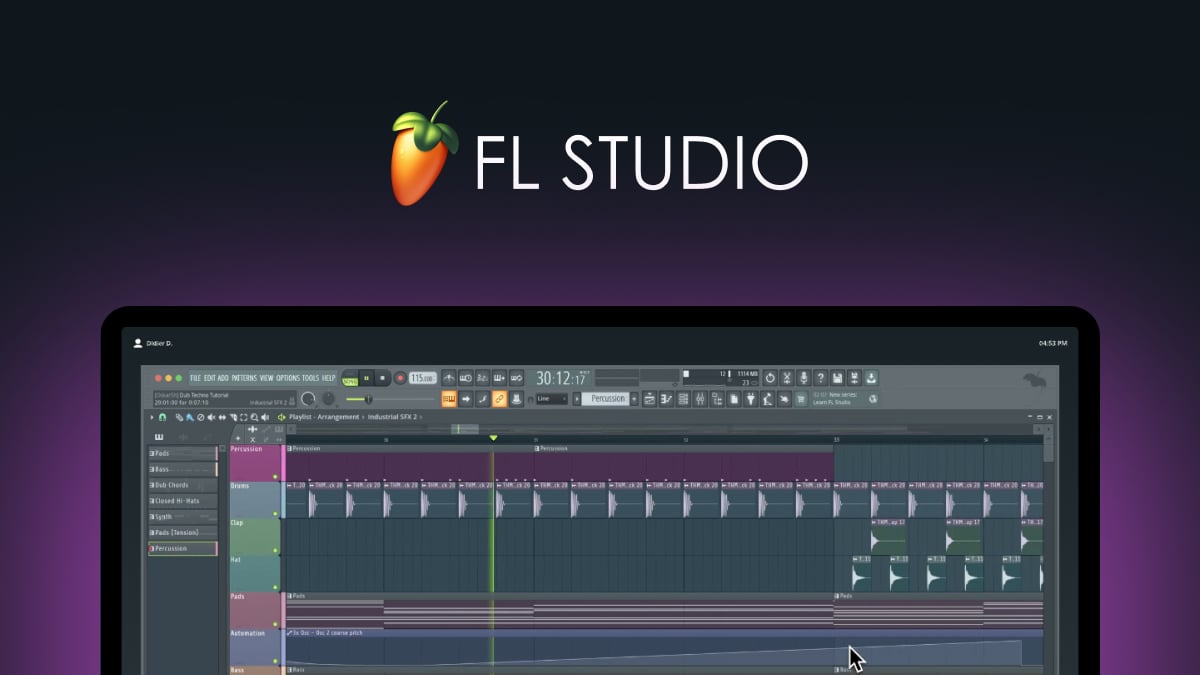


 All bots
 Registration details

 Identified technologies
User reviews (0)