
 简体中文
 English
Website review
This review may include AI-generated content and is not individually verified. Domain, certificate and other facts come from the observed data on this page.
What is Inkwell Ideas?
Inkwell Ideas is a small publisher of tabletop role-playing game tools: software and physical accessories that help game masters prepare worlds, dungeons, characters and encounters. Its catalog sits somewhere between map-making software and print-on-demand props, so it appeals to GMs who want to cut prep time rather than run a full virtual tabletop.
What the catalog covers
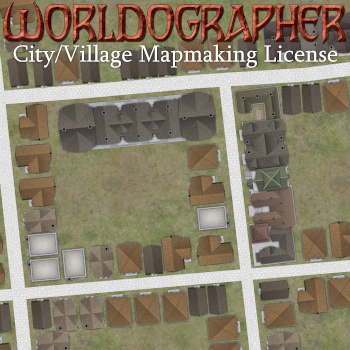
- Worldographer — hex-based world and kingdom mapping software (the successor to Hexographer). According to the site, it can generate maps along with setting details such as cultures, religions and nations, and it also handles city/village maps, dungeons and battlemats, with both automatic and step-by-step generation.
- DungeonMorph Dice, Cards, Tiles and Book — geomorph-style dungeon pieces sold as engraved dice, cards, battlemats or a book of ideas, for building dungeons on the fly.
- 5e Creature Decks — creature cards for the fifth edition of the world's best-known RPG, mixing third-party-licensed official creatures, the company's own monsters, and creatures from Kobold Press books.
- NPC Decks — cards with a portrait on one side and personality, background and quirks on the other, spanning adventurers, henchmen, townsfolk, monsters and science fiction.
- Sidequest Decks — each card is an adventure outline plus a map, with over 50 adventures per deck across several genres and settings.
- Coat of Arms Design Studio — heraldry software with hundreds of built-in graphics and import support, for characters, organizations or historical arms.
- Monster Stand-Ins — cardstock miniatures, described as over 600 minis with 16 stands and a matching PDF, plus optional extra stands and an organizer box.
Who it suits
The common thread is improvisation support. A GM running a sandbox campaign can roll a DungeonMorph die when players wander off the map, pull an NPC card when they talk to a stranger, and drop a Sidequest card when they ask what's happening in the next town. Worldographer serves the opposite need: deliberate, large-scale preparation before a campaign starts.
The trade-off is that these are separate products rather than one integrated suite, and the physical items are analog by design. Groups playing entirely online will get less from the dice, cards and stand-ins than from the software, though the PDF versions cover some of that gap.
A practical next step
Decide which problem you actually have. If prep time is the issue, start with the card decks that match your genre and see whether drawing a random prompt fits your style. If you need a persistent map of a homebrew world, look at Worldographer first at Inkwell Ideas and check its export options against whatever virtual tabletop or printer you use.
Which Inkwell Ideas product should I use to create a hex-crawl world map versus a city or dungeon map?
For a hex-crawl world map, use Worldographer; for city, village, dungeon and battlemat maps, the same tool covers those needs too. Inkwell Ideas describes Worldographer (also called Hexographer 2) as map-making software that quickly creates hex-style world and kingdom maps, can generate world information such as cultures, religions and nations, and also builds city/village maps and dungeons or battlemats, with both automatic and step-by-step generation. So the real decision is less "which product" and more which mode within Worldographer fits your session.
Choosing by map type
| What you need | Best fit | Why |
|---|---|---|
| Hex-crawl world or kingdom map | Worldographer, hex world/kingdom mode | Purpose-built for hex maps, with optional generation of cultures, religions and nations |
| City or village map | Worldographer, city/village mode | Auto-generate or build step by step and edit as you go |
| Dungeon or battlemat | Worldographer, dungeon/battlemat mode | Quick creation plus auto-generated dungeons, inns and shops |
| Dungeon content on the fly, without software | DungeonMorph Dice, Cards, Tiles or Book | Physical random dungeon pieces for table use |
| Quick adventure hooks with maps | Sidequest Decks | Each card is an adventure outline and map |
A practical scenario: a GM prepping a sandbox campaign needs a continent hex map with named nations, then a starting town, then a small dungeon for the first session. Worldographer handles all three in one workflow, which keeps scale and style consistent. A GM running improvisational sessions at the table might prefer DungeonMorph pieces for dungeons and keep Worldographer for the world map prepared in advance.
Decision criterion: if the map lives on a screen and needs editing or generation, start with Inkwell Ideas' Worldographer; if you need instant physical dungeon layouts or adventure prompts during play, the dice, cards and decks are the better match.
How do the DungeonMorph dice, cards, tiles, and book differ for building dungeons on the fly?
DungeonMorph products all serve one purpose—generating a dungeon layout quickly—but they differ in format, physical footprint, and how much guidance they add. On Inkwell Ideas, the line is described as a way to "create a never-ending dungeon on the fly," offered as 1" engraved dice, 2.5" cards, 10" battlemats, and a book of ideas to fill the dungeons.
What each format is best for
- Dice (1" engraved): The most portable option. Roll a handful, place them face-up, and the engraved faces form connected dungeon sections. Best for a GM who wants randomness at the table with almost no setup and can work at a small scale—useful for sketching a layout or resolving "what's behind this door" mid-session.
- Cards (2.5"): Larger than dice faces, so easier for a group to read across the table. You draw and lay out cards to build a map, and they can be shuffled for variety or dealt deliberately. Good for tables where players should see the layout as it grows, and easier to sort or stack than dice.
- Battlemats (10"): The tabletop-scale version. These suit groups using miniatures, where the map needs to be big enough to place figures on. The trade-off is space and portability—great for a planned session, less convenient to carry.
- Book: Adds the "fill the dungeons" layer—ideas for what goes in the rooms rather than just the geometry. Useful when the map is easy but the content is the bottleneck.
Choosing between them
| Need | Better fit | |---|---|---| | Maximum portability, random rolls | Dice | | Readable shared layout, shuffleable variety | Cards | | Miniatures on a full-size map | Battlemats | | Room contents and encounter ideas | Book |
A practical next step: decide whether your bottleneck is layout or content. If you can improvise rooms but freeze on floor plans, start with dice or cards. If you can draw a map but stall on what's inside, the book earns its place first. Many GMs combine a layout tool with the book, since the formats are complementary rather than substitutes.
For a concrete scenario: a GM running a pickup session with no prep can roll dice to produce a dungeon, then consult the book for room ideas—fast, and it fits in a bag. A group that plays with miniatures on a fixed table would get more from the 10" battlemats, accepting that setup takes longer and travel is bulkier.
Are the 5e Creature Decks compatible with official D&D monsters, and what does each deck contain?
Yes, at least partly: Inkwell Ideas describes its 5e Creature Decks as including some decks covering official creatures that third parties are permitted to use, alongside decks of its own creatures and decks drawn from Kobold Press monster books. So compatibility means the cards reference monsters you may already know, but the range is not a complete, official deck of every D&D monster.
What each deck contains
The page groups the decks into three kinds rather than listing every deck name:
| Deck type | Contents |
|---|---|
| Official-creature decks | Cards for official 5th Edition creatures that third parties can use |
| Original decks | Creatures created by Inkwell Ideas |
| Kobold Press decks | Creatures taken from Kobold Press's monster books |
Each is a deck of creature cards for 5th Edition, intended as table references. The page does not give card counts, stat block detail or deck titles, so check an individual deck's listing before buying if you need a specific monster.
A practical way to use them
If you run published adventures and want quick references for monsters you already use, start with the official-creature decks and treat the original and Kobold Press decks as extra variety. A game master running a homebrew campaign with an emphasis on unusual foes may get more from the Kobold Press decks, while a new group may prefer the original creatures for simple, unfamiliar encounters.
For world and encounter preparation around these cards, Inkwell Ideas also offers Worldographer map-making software and Sidequest Decks of adventure outlines.
How can I use the Sidequest Decks and NPC Decks to prepare a session with minimal prep time?
Use the Sidequest Decks as the session's spine and the NPC Decks as its cast: draw one adventure card for the situation, draw a few NPC cards for the people involved, and spend your limited prep time connecting them rather than inventing either from scratch. Both are card-based tools from Inkwell Ideas, and the page describes Sidequest cards as each holding an adventure outline and a map, with NPC cards showing a portrait on one side and personality, background and quirks on the back.
A low-prep routine
- Pick one Sidequest card that fits your setting or genre. Read the outline and map, then decide only two things: where it starts and what happens if the players do nothing.
- Draw three to five NPC cards. Assign roles the adventure needs — a patron, someone with information, an obstacle, and a bystander who can become an ally. The back-of-card personality notes do the characterization work for you.
- Write one sentence per NPC linking them to the adventure: why they care, what they want, what they hide. Use the card's quirks as written and change nothing else.
- Note two clues that point players toward the map's key location, so the session can move even if the group misses the obvious hook.
- Prepare one complication from a second Sidequest card — a rival, a delay, or a twist — and keep it in reserve for when the table stalls or finishes early.
Where each deck earns its place
| Need | Sidequest Decks | NPC Decks |
|---|---|---|
| Session structure | Adventure outline plus map on one card | Not their job |
| People and voices | Not their job | Portrait, personality, background, quirks |
| Best moment | Choosing what tonight's session is about | The instant a player asks "who is this?" |
| Main trade-off | You still supply the connections between scenes | You still supply their place in the plot |
The trade-off is real: cards give you fragments, not a plot. The prep you save on invention you partly spend on stitching, which is why limiting yourself to one Sidequest and a handful of NPCs matters. If you draw six NPCs and two quests, you will spend the evening improvising links instead of running the game.
A concrete example
A GM with thirty minutes before play draws a Sidequest card showing a small settlement and a nearby ruin. She draws four NPCs: a nervous merchant, a retired soldier, a curious child, and a hostile official. She decides the merchant hired the party to recover goods from the ruin, the soldier knows the ruin's layout but wants payment, the child has seen who really took the goods, and the official wants the matter dropped. Two clues — a torn cloak matching the official's guard and a fresh trail on the map — point to the truth. That is four sentences of linking and a clear opening scene.
Decision criteria
Choose this approach when you can improvise dialogue and pacing but freeze on setup. If your group prefers deep political intrigue with interlocking factions, a single adventure card will feel thin and you will need your own web of relationships. If you run long campaigns, use the cards as between-arc filler and keep your ongoing plot in your own notes, so the decks stay a tool rather than a substitute for continuity.
What do I get with the Monster Stand-Ins Cardstock Minis, and how do the physical minis compare to the PDF version?
The Monster Stand-Ins set is a physical cardstock miniatures kit: the page describes over 600 cardstock minis, 16 stands, and a matching PDF. Extra stands and an organizer box are sold separately, and the PDF can also be bought on its own.
Physical set vs. PDF
| Cardstock minis + stands | PDF only | |
|---|---|---|
| What you get | Printed minis, 16 stands, matching PDF | Digital files you print and mount yourself |
| Table readiness | Cut out and play; stands included | Needs printing, cardstock, cutting, and your own bases |
| Portability | Bulky but durable; store in the organizer box | Travels on a laptop or drive; reprint losses |
| Best for | GMs who want minis now and reuse them weekly | Crafters, budget-minded GMs, or replacing individual pieces |
The practical difference is setup time and durability. Physical minis suit a group that plays often and wants to pull figures straight from a box; the PDF suits someone who prefers to print only what a session needs, or who wants a cheap way to test the art style before committing to the printed set. The included PDF with the physical set means you can reprint damaged or extra copies.
A useful next step: count how many distinct monster types your next few sessions need. If it's dozens and you want them ready instantly, the physical set with its stands and organizer makes sense; if it's a handful, print from the PDF and skip the storage question.
 Toronto, Ontario, Canada

User reviews (0)