
 简体中文
简体中文 English
Website review
This review may include AI-generated content and is not individually verified. Domain, certificate and other facts come from the observed data on this page.
What is Insyghtful?
Insyghtful is a live-call execution layer for B2B sales teams. Rather than recording a call and analyzing it afterward, it works during the conversation: it listens in on calls a rep is already running, detects signs of deal risk as they appear, and shows the rep short cues about what to ask, flag, or confirm before the call ends. According to its own site, the goal is to shift deal reviews from post-mortems on lost opportunities to interventions while the outcome can still change. Insyghtful
What it actually does
- Real-time cues: A brief prompt appears on the rep's screen mid-call — the prospect doesn't see it — suggesting the next question or commitment to secure.
- Live deal signals: Stakeholders, budget, timing, risks, and commitments are captured from what was said and written to the CRM, instead of relying on rep-entered notes after the fact.
- Methodology enforcement: Teams can define what good discovery looks like and have Insyghtful apply their MEDDICC, SPIN, or Challenger framework in the moment.
- Deal health from the call: Managers see which deals are genuinely advancing based on conversation content, not optimistic CRM updates.
Who it fits
It's aimed at sales organizations with live calls as the main selling motion — mid-market and enterprise B2B teams where deal slippage happens quietly inside conversations and coaching arrives too late to matter. The main trade-off is attention: real-time prompting only helps if reps can absorb a cue without breaking conversational flow, and it's most valuable for teams that already have a defined qualification framework worth enforcing. Teams without one may find the cues generic.
A practical first step: pick one live deal currently in your pipeline that has gone quiet, and ask what a cue at minute 14 of the last call would have needed to say to change it. If you can answer that, you know what to configure.
How does Insyghtful detect deal risk during a live sales call?
Insyghtful listens to the call your rep is already running and flags risk as it appears, rather than reconstructing it afterward. According to the site, it detects signals such as a cooling champion, a missing decision-maker, or a vague close "the second it happens on the call," then pushes a short, specific cue to the rep's screen—what to ask, what to flag, what to lock in—without the prospect seeing it. Deal health is read from what was actually said (stakeholders, budget, timing, risks, commitments) and written to your CRM, instead of relying on rep-entered notes. It also enforces your chosen methodology (MEDDICC, SPIN, Challenger, etc.) in the moment.
The practical distinction is timing. CRM and call-recording tools document a deal after the conversation ends; Insyghtful intervenes while the rep can still change the outcome. That matters most in mid-to-late-stage calls where a single missed budget confirmation or unanswered objection decides the deal.
A realistic scenario: a rep is 20 minutes into a demo, the economic buyer never joined, and the "next step" is drifting toward a polite exit. A live cue could prompt the rep to ask who signs off and to secure a concrete follow-up before hanging up.
Next step: pick one recurring failure mode—say, unconfirmed budget—and ask for a demo showing how the cue fires and what lands in your CRM. Also ask how cues are configured against your qualification framework and how false positives are tuned down, since noisy alerts erode rep trust quickly.
Does Insyghtful integrate with existing CRM and call tools?
Insyghtful is positioned as a live execution layer that sits on top of the tools a sales team already uses, rather than replacing them. According to its site, it "joins the call your rep was already running" and writes captured deal signals — stakeholders, budget, timing, risks, and commitments — "to your CRM," explicitly contrasting this with rep-entered notes. So the intended model is: keep your existing call and CRM systems, and let Insyghtful listen live and push structured data into the CRM afterward or in parallel.
What the page actually states
- It listens in on live calls rather than requiring a separate call workflow.
- Deal signals are written to "your CRM," sourced from the conversation instead of manual entry.
- It enforces your chosen methodology (MEDDICC, SPIN, or Challenger) in the moment.
What it does not state
The page evidence does not name specific CRM vendors, call platforms, or integration methods (native app, API, middleware). It also does not list pricing details beyond a pricing page link. Treat "integrates with your CRM and call tools" as the product's stated intent, not a confirmed connector list.
How to evaluate this for your stack
- Ask which CRMs and call platforms have native, supported connectors versus custom or API-only setups.
- Confirm write behavior: which fields get updated, whether it overwrites rep-entered data, and how it handles conflicts.
- Check whether it can join calls without changing the rep's existing meeting links and dialer.
- Test one live call end to end and inspect what lands in the CRM record.
If you run Salesforce or HubSpot alongside Zoom or Teams, the practical question is not whether integration exists in principle but how much setup and admin work it takes. Compare against dedicated conversation-intelligence tools such as Gong or [[site:chili Piper.com|Chili Piper]] only if you know their official domains; otherwise verify directly with Insyghtful's team via its pricing page at Insyghtful before committing.
How much does Insyghtful cost and what pricing plans are available?
Insyghtful does not publish its prices or plan tiers on the page we reviewed. The site lists a Pricing page, but the page evidence only names it as a link — no dollar amounts, seat fees, usage limits, or plan names appear. So there is no reliable way to state a figure or a plan structure from the available information.
What the page does make clear is the kind of product you would be pricing: a live-call execution layer for B2B sales that listens in during calls, surfaces deal risk as it happens, and gives reps real-time cues. That context matters for budgeting, because tools in this category are usually sold per seat or per rep, sometimes with an annual contract, and the cost scales with how many people are on calls and how many calls you run.
If you are evaluating it, treat pricing as a scoping conversation rather than a list-price decision:
- Ask whether pricing is per rep, per seat, or based on call volume.
- Ask what happens on calls outside the rep's native stack — dialer, video, or conferencing tool.
- Ask what CRM write-back and methodology configuration are included versus extra.
- Ask whether onboarding, admin seats, and support are bundled or billed separately.
A practical next step: go to Insyghtful and use the "Talk to Us" route to request a quote, then compare that quote against the cost of the deals you currently lose after the call ends. If the tool prevents even one mid-sized deal from slipping per quarter, the math often works — but you cannot confirm that until you have an actual number in hand.
How does Insyghtful enforce sales methodologies like MEDDICC or SPIN?
Insyghtful enforces your sales methodology by turning it into live, in-call cues rather than a checklist reviewed afterward. You define what good discovery and qualification look like in your own framework — the page names MEDDICC, SPIN and Challenger as examples — and Insyghtful listens to the live call and prompts the rep on what to ask, flag, or lock in before the call ends. The prospect doesn't see the cue, so the rep stays in the conversation.
The practical difference is timing. Most methodology enforcement happens in CRM fields, call recordings, or coaching sessions days later, when the gaps are already baked in. Insyghtful's stated approach is to detect the gap as it appears — a champion going quiet, an unconfirmed budget, a missing decision-maker, a vague next step — and surface it while the rep can still do something about it. It also captures stakeholders, budget, timing, risks and commitments from what was actually said and writes them to your CRM, so the methodology evidence comes from the conversation instead of rep-entered notes.
A concrete scenario: a rep is 20 minutes into a discovery call and has covered pain and metrics but never asked who signs off on budget. In a review-based process, that surfaces in Friday's pipeline meeting, after the prospect has already stalled. Here, the cue appears mid-call and the rep can ask before hanging up.
How to decide if this fits your team
| Situation | What matters |
|---|---|
| Reps know the framework but skip steps under pressure | In-call prompting targets the gap directly |
| Managers want cleaner CRM data without more admin | Conversation-captured fields reduce rep entry |
| Your methodology is informal or varies by rep | You need a defined framework first; the tool enforces what you specify |
| Reps dislike being monitored or interrupted | Cues are described as short and invisible to the prospect, but reps still need to accept live guidance |
Next step: before evaluating it, write down the three or four qualification questions your team most often skips, then ask a demo to show exactly how those would appear as live cues. If the tool can't map to your specific framework, enforcement becomes generic advice rather than your methodology.
For a broader view of the category, compare with Gong and Chorus by ZoomInfo, which are primarily post-call conversation intelligence platforms — useful for the trade-off between reviewing what happened and intervening while it's happening.
What do customers say about Insyghtful's impact on deal outcomes?
Customers describe Insyghtful's impact mainly in terms of timing: it puts guidance and risk detection inside the live call, when a rep can still change the outcome, rather than in post-call review. The customer quote on the site comes from Doug Clendenin, EVP Strategy at Gutenberg Technology, who says its AI assistance and live coaching dashboard keep both human and pre-built sales training best practices available during every second of a call. That is one named executive's observation, not a broad customer study, so treat it as a directional signal.
What that implies in practice, based on the product's own description: a rep gets short, specific cues about what to ask, flag, or lock in before hanging up, while the prospect sees nothing. Deal signals such as stakeholders, budget, timing, risks, and commitments are captured from the conversation itself and written to the CRM, rather than typed in afterward. The claimed outcome is that managers see which deals are genuinely advancing while there is still time to intervene.
For a concrete scenario: imagine a mid-market SaaS team where a champion goes quiet around minute 14 of a discovery call and the "next step" is vague. A tool that only analyzes recordings flags this on Friday; a live layer could prompt the rep to confirm budget authority or secure a specific follow-up before the call ends. Whether that changes win rates depends on how well the cues match your qualification methodology and how readily reps act on screen prompts without losing conversational flow.
To evaluate the customer-impact claim for yourself, ask for references from companies similar to yours in deal size and sales motion, and request before-and-after data on the specific metrics you care about, such as stage conversion or slipped-deal rate. Compare how Insyghtful positions live intervention against post-call conversation intelligence from Gong and Chorus by ZoomInfo, and check the vendor's own Insyghtful materials for how live cues are configured. The decision criterion is simple: if your losses are usually decided mid-conversation, live guidance is worth piloting; if your problem is forecasting accuracy after the fact, a review-based tool may be the better fit.
 GoDaddy
 Google Workspace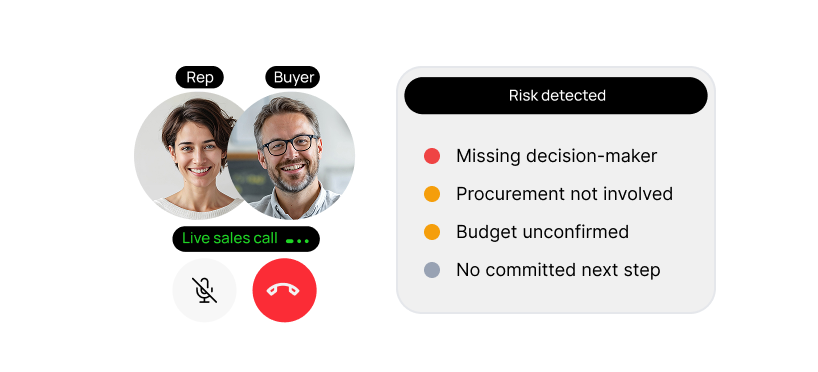
User reviews (0)