Website profiles · Technology insights · Alternatives

korngold-society.org

Originally established in 2001, this website is devoted to the life and music of the Austrian composer, Erich Wolfgang Korngold. Its primary intent is to provide a broad range of information for researchers, performers, and admirers. We additionally hope to promote and encourage performances and recordings of Korngold's compositions, and to help advance research on his life and music. Some of the information on this website includes: Biographical information Details of Korngold's compositional oeuvre A select listing of upcoming events New media releases (books, CDs, etc.) Resources for researchers Links to websites and institutions of related interest Retrospectives of select performances We cannot, and do not, claim to be exhaustive in our presentations and postings. We do, however, attempt to cover the broad sphere and expanding recognition of Korngold's musical legacy. We welcome comments and feedback from visitors and Korngold devotées.

No paid content found
Visit website
Profile views 10 Outbound visits 1 Normal
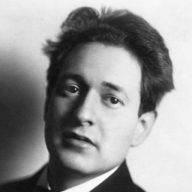
Erich Wolfgang Korngold – b. 29 May 1897 – d. 29 November 1957 Full homepage screenshot

At a glance

Category
Music & Audio
Language
English
Paid-content signal
No paid content foundObserved
Registered
2001
Hosting
Hetzner Online GmbHInferred
HTTPS certificate trusted
PassedObserved
Last updated

Website review

This review may include AI-generated content and is not individually verified. Domain, certificate and other facts come from the observed data on this page.

What is Erich Wolfgang Korngold?

Erich Wolfgang Korngold (1897–1957) was an Austrian-born composer, later a naturalized American citizen, whose career bridged late-Romantic concert music and Golden Age Hollywood film scoring. A child prodigy praised by figures such as Mahler and Strauss, he wrote operas, orchestral works, chamber music and songs before emigrating in the 1930s.

His reputation rests on two connected bodies of work:

  • Opera and concert music – notably the operas Die tote Stadt and Das Wunder der Heliane, plus a violin concerto and a symphony that remain in the repertoire.
  • Film scores – lush, symphonic Hollywood soundtracks, including The Adventures of Robin Hood, for which he won an Academy Award; his style influenced later film composers.

The website Erich Wolfgang Korngold – b. 29 May 1897 – d. 29 November 1957 is a society page for researchers, performers and admirers. It gathers biography, an overview of his oeuvre, event listings, new media releases, research resources and related links. It states that it is not exhaustive but aims to reflect his expanding legacy, and it invites feedback.

The site is suited to anyone seeking a starting point for study or performance information. Because it is maintained by an enthusiast society rather than a commercial publisher, its listings may be selective; cross-checking with libraries or academic sources is sensible for scholarly work.

What are the most famous operas by Erich Wolfgang Korngold?

Korngold completed relatively few operas, but two are central to his reputation.

The two best-known operas

  • Die tote Stadt (1920): A psychological music-drama set in Bruges, based on Georges Rodenbach's novel Bruges-la-Morte. It was an international sensation in the 1920s and remains his most performed opera, largely through the orchestral interlude and the tenor aria "Glück, das mir verblieb" ("Marietta's Lied").
  • Violanta (1916): A one-act opera premiered in Munich with Bruno Walter. It is a compact, dramatically intense work that shows the young Korngold's gift for rich late-Romantic orchestration and sweeping melody.

Other operas worth knowing

  • Der Ring des Polykrates (1916): A one-act comic opera premiered alongside Violanta; lighter and more neoclassical in tone.
  • Das Wunder der Heliane (1927): A grand, mystical opera that followed Die tote Stadt. It has been revived more often in recent decades, but it is less frequently staged than Die tote Stadt.

Where to research further

The Korngold Society site Erich Wolfgang Korngold provides biographical information, details of his compositional oeuvre, event listings, media releases and research resources. It is suited to performers, researchers and admirers who want a broad overview rather than a single definitive catalogue. For a fuller list of works, the site's opera entries are a useful starting point.

How did Erich Wolfgang Korngold influence the development of film music in Hollywood?

Erich Wolfgang Korngold helped shape the sound of Hollywood's Golden Age by treating film scores as full symphonic music rather than background filler. His lush orchestration, long melodic lines and harmonic language, rooted in late Romantic European concert music, gave adventure, romance and drama a continuous musical voice that many later composers absorbed or reacted against.

At Erich Wolfgang Korngold – b. 29 May 1897 – d. 29 November 1957, researchers and listeners can explore his life, works and legacy, including resources that place his film output within his wider compositional career. The site is suited to performers, students and admirers who want biographical detail, work lists and updates on recordings and events.

Key aspects of his influence include:

  • Symphonic scoring. He wrote for large orchestras, making the score a central dramatic element.
  • Leitmotif technique. Themes could follow characters, places or ideas across a film.
  • Prestige and awards. His Hollywood work brought critical recognition to film composition.
  • A model for successors. Composers of epic and romantic cinema may be heard as extending, varying or rejecting his approach.

Trade-offs exist: his style can feel opulent and firmly tonal, which suits grand studio-era pictures but may seem less aligned with later minimalist or experimental film scoring. The society site is a focused starting point, though it does not claim to be exhaustive.

What are some recommended recordings of Korngold's music?

For listeners exploring Erich Wolfgang Korngold’s music, the official society site is a useful starting point because it gathers news of media releases alongside biographical and repertoire information. It does not function as a shop or a review database, so it is best treated as a hub that points toward recordings rather than a place to stream or buy them.

Erich Wolfgang Korngold – b. 29 May 1897 – d. 29 November 1957

How to approach the recordings

  • Opera: Die tote Stadt is the most widely recorded stage work and often the easiest entry point; Das Wunder der Heliane and Die Kathrin appeal to listeners already comfortable with late-Romantic opera.
  • Orchestral works: The Violin Concerto and the Symphony in F sharp are staples of the discography, while the Sursum Corda and Much Ado About Nothing suites suit those who prefer shorter forms.
  • Chamber and piano music: The String Sextet and Piano Quintet reward listeners interested in his earlier, more chromatic style.
  • Film scores: The Adventures of Robin Hood and The Sea Hawk are frequently represented, often in reconstructions rather than original soundtrack releases.

Because the society site lists selected new releases rather than ranking recordings, performers and researchers may prefer to cross-check its postings against library catalogues or specialist classical retailers. Availability and preferred interpretations vary considerably, so comparing several recordings of the same work is usually more informative than relying on a single recommendation.

Where can I find resources for researching Korngold's life and compositions?

For research on Erich Wolfgang Korngold, start with the composer’s dedicated society site: Erich Wolfgang Korngold. Established in 2001, it gathers biographical information, details of his compositional oeuvre, researcher resources, media releases, event listings, and links to related institutions. It is suited to performers, scholars, and admirers who want a broad starting point rather than a complete catalogue; the site itself notes that its postings are not exhaustive.

What to expect there

  • Overviews of Korngold’s life and works
  • A selective events calendar and new recordings or books
  • Research links and performance retrospectives
  • Feedback channels for Korngold enthusiasts

How to use it

Treat the site as a hub: use its bibliography and link sections to locate scores, recordings, archives, and specialist collections elsewhere. For deeper scholarly work, cross-check its claims against library catalogues, music encyclopedias, and institutional archives, since a society site typically curates rather than publishes exhaustive primary documents. Its strength is convenience and focus; its limitation is selectivity.

What upcoming performances or events related to Korngold are listed on this site?

Erich Wolfgang Korngold – b. 29 May 1897 – d. 29 November 1957 includes a selective listing of upcoming events among its resources. The site is maintained by a society devoted to Korngold's life and music, so the events section is aimed at performers, researchers and admirers who want to know where his works are being programmed.

Because the listing is described as selective rather than exhaustive, it may cover notable concerts, opera productions or festival appearances without claiming to document every performance worldwide. Visitors should therefore treat it as a curated starting point rather than a complete international calendar.

Who it suits

  • Concertgoers checking whether a Korngold work is being performed nearby
  • Performers looking for repertoire in active circulation
  • Researchers tracking performance activity around anniversaries or new recordings

Trade-offs

  • Coverage is intentionally limited, so smaller or local events may not appear
  • Event details can age quickly; confirm dates and venues with the presenting organisation
  • The site pairs events with news of media releases and research resources, so it works best as part of a broader visit rather than as a standalone ticketing service

For anyone exploring Korngold's renewed presence in concert halls, this page is a practical reference point, though not a definitive schedule.

Related questions

More questions →
Where to Start with Korngold Beyond the Film Scores: A Listener's Guide to His Operas and Concert Works

If you know Erich Wolfgang Korngold only through his Hollywood scores, start with the Violin Concerto and the Symphonic Serenade, then move to the Symphony in F-sharp and the Piano Quintet, before tackling the operas Die tote Stadt and Das Wunder der Heliane. That order gives you his late-Romantic voice in concentrated form before you commit to full-length dramatic works. Korngold (1897–1957) was a child prodigy in Vienna who became a celebrated opera composer long before he wrote for Warner Bros., and his concert catalogue rewards the same listener who responds to the lush orchestration of The Adventures of Robin Hood or The Sea Hawk.

Why Korngold Is More Than a Film Composer

Korngold was already famous in Europe when Max Reinhardt brought him to Hollywood in the 1930s. By then he had written operas that were staged at the Vienna Court Opera and elsewhere, plus orchestral and chamber music performed by leading conductors and ensembles of the day. The film work grew out of that career rather than replacing it. After the Second World War he returned to absolute music, producing the Violin Concerto, the Symphony in F-sharp, and the Symphonic Serenade. His style sits at the end of the Romantic line: long-breathed melody, rich and often chromatic harmony, and orchestration that treats the ensemble as a source of color and drama.

The Major Operas

Die tote Stadt (The Dead City), Op. 12

Completed in the early 1920s, this is the opera that made Korngold's international name. It is a psychological drama set in Bruges, built around memory, grief, and a dreamlike confrontation with the past. The score is generous with melody, and the orchestral writing is vivid without overwhelming the voices. For a newcomer, it is the most approachable of the operas: the dramatic arc is clear, and the music offers immediate rewards.

Das Wunder der Heliane (The Miracle of Heliane), Op. 20

Written later in the 1920s, Heliane is more ambitious and more demanding. It is a symbolic, quasi-mystical work with a large orchestra and a score that pushes harmonic language further than Die tote Stadt. It rewards repeated listening, but it is not the place to begin. If you enjoy the Symphony in F-sharp, you will recognize a similar density and intensity here.

Other Stage Works

Korngold also wrote shorter stage pieces and operettas, including Der Ring des Polykrates and Violanta, which are useful for hearing his lighter and more compact dramatic writing. They are worth exploring once you know the two major operas.

Key Orchestral and Chamber Works

Violin Concerto in D major, Op. 35

Written in the late 1940s, this is the single most direct bridge between Korngold's film and concert worlds. It is lyrical, brilliantly scored, and structurally clear. Many listeners find it the easiest entry point.

Symphony in F-sharp, Op. 40

Completed in the 1950s, this is his most substantial orchestral statement. It is darker and more contrapuntal than the concerto, and it shows how he absorbed the upheavals of the mid-twentieth century without abandoning tonality.

Symphonic Serenade, Op. 39

A warm, approachable work for string orchestra. It is a good choice if you want Korngold's lyricism without the scale of a symphony.

Piano Quintet in E major, Op. 15

A chamber work from his early period, full of youthful confidence and sweeping melody. It is an excellent way to hear his harmonic language in an intimate setting.

Other Useful Starting Points

  • Much Ado About Nothing suite, drawn from his incidental music
  • Sursum Corda, a short orchestral piece
  • The Baby Serenade and other lighter orchestral works

A Practical Listening Order

Step Work Why start here
1 Violin Concerto, Op. 35 Immediate melody, clear structure, film-adjacent color
2 Symphonic Serenade, Op. 39 Accessible string writing, no dramatic commitment
3 Piano Quintet, Op. 15 Chamber intimacy, early style
4 Symphony in F-sharp, Op. 40 Larger scale, darker harmonic language
5 Die tote Stadt First full opera, strong dramatic arc
6 Das Wunder der Heliane More demanding, symbolic, harmonically dense

If you prefer to begin with opera, start with Die tote Stadt and treat Heliane as a second stage. If you prefer orchestral music, the concerto and serenade will carry you a long way before you need the symphony.

Stylistic Threads That Connect the Catalogue

Across the operas and concert works you will notice several recurring traits:

  • Lyricism first. Korngold writes melodies that behave like vocal lines even in instrumental works.
  • Lush orchestration. He uses the orchestra for color and atmosphere, a habit that carried directly into his film scores.
  • Extended tonality. His harmony is chromatic and expressive but rarely abandons a tonal center.
  • Dramatic instinct. Even his abstract music has a sense of scene and character.

These traits explain why listeners who come from the films often find the concert music familiar rather than foreign.

Using the Korngold Society as a Resource

The Erich Wolfgang Korngold Society website (korngold-society.org) is a natural next stop. It provides biographical information, details of his compositional oeuvre, selected upcoming events, news of media releases such as books and recordings, and resources for researchers. For a listener working through the repertoire, its listings of performances and recordings are the most practical sections to check, since they can point you toward available versions of the works discussed here. The society describes its aim as covering the broad sphere of Korngold's legacy rather than claiming to be exhaustive, so treat it as a starting map rather than a final catalogue.

A Note on Versions and Recordings

Availability of recordings and performances changes over time, and the society's site is the better place to check current listings than any static guide. When choosing a recording, look for complete versions of the operas rather than excerpts if you want the full dramatic shape, and for the Symphony in F-sharp prefer a reading that balances its darker passages with the lyrical ones. Specific catalogue numbers, release dates, and pricing are not fixed here; verify them through the society's resources or a retailer before purchasing.

What Did Erich Wolfgang Korngold Compose Besides Film Scores?

Erich Wolfgang Korngold (1897–1957) is often remembered today for his Hollywood film scores, but that was only one part of a much larger career. Before he ever set foot in California, he was celebrated in Vienna as a child prodigy and a serious composer of opera, orchestral music, chamber works, and songs. His film music grew directly out of that concert-hall craft, not the other way around. If you know him only from The Adventures of Robin Hood or The Sea Hawk, there is a substantial body of concert and stage music waiting to be explored.

A Career in Two Worlds

Korngold was born in Brno and raised in Vienna, the son of the influential music critic Julius Korngold. He studied with Alexander von Zemlinsky and was championed early on by figures such as Gustav Mahler and Richard Strauss. By his teens he had already written works that were performed by major orchestras.

In the 1930s he began working in Hollywood, and from 1938 he settled in the United States, partly because of the political situation in Europe. He continued to write concert music alongside his film work, and in his final years he returned to abstract instrumental forms. Understanding this arc helps explain why his concert music and his film music share the same harmonic language and dramatic instinct.

Opera and Stage Works

Opera was central to Korngold's early reputation. His stage works show a gift for orchestral color and psychological drama.

  • Der Ring des Polykrates (1916) — a one-act comic opera, an early success written while he was still a teenager.
  • Violanta (1916) — a one-act tragedy, often paired with Polykrates.
  • Die tote Stadt (1920) — his best-known opera and the most common entry point for newcomers. It is a full-length work about memory, grief, and illusion.
  • Das Wunder der Heliane (1927) — a more ambitious, lushly scored opera that has been revived with growing frequency.
  • Die Kathrin (1939) — a later opera, first performed after his move to America.

If you want to understand Korngold as a dramatic composer, Die tote Stadt is the natural starting place.

Orchestral Music

Korngold wrote for orchestra throughout his life, and these works often bridge his Viennese and American periods.

  • Sinfonietta (1912) — an early work that shows his precocious command of large forces.
  • Schauspiel-Ouvertüre (1911) — a concert overture.
  • Symphony in F sharp (1952) — his only numbered symphony, written late in life and dedicated to the memory of Franklin D. Roosevelt.
  • Violin Concerto in D major (1945) — one of his most performed concert works, written for Jascha Heifetz and drawing on themes from several of his film scores.
  • Cello Concerto in C major (1946) — a single-movement work, also connected to film material.
  • Piano Concerto in C sharp major (1923, for the left hand) — written for Paul Wittgenstein.

The Violin Concerto is a good gateway for listeners coming from film music, since it reworks ideas from his scores in a purely concert setting.

Chamber Music

Korngold's chamber works are among his most personal and are well worth seeking out.

  • Piano Trio in D major (1910) — written when he was about thirteen.
  • String Sextet in D major (1917).
  • Piano Quintet in E major (1921).
  • String Quartets No. 1 in A major (1923) and No. 2 in E flat major (1933).
  • Suite for two violins, cello, and piano (left hand) (1930).

These pieces reward close listening and are often programmed by ensembles interested in early twentieth-century repertoire.

Songs and Piano Music

Korngold wrote a significant number of songs, or Lieder, settings of poetry for voice and piano. These are intimate works that show a different side of his writing than the large orchestral canvases. He also wrote piano music, including sonatas and shorter character pieces, much of it from his youth.

Film Scores as Part of the Whole

It is worth noting that Korngold's film scores are not a separate category from his concert music. He approached them with the same technical training, and he later reused material from them in concert works such as the Violin Concerto. Two of his best-known scores are:

  • The Adventures of Robin Hood (1938) — an Academy Award-winning score.
  • The Sea Hawk (1940).

Seeing these as part of a continuous output, rather than a detour, gives a fuller picture of his achievement.

Where to Go Next

If you want to explore further, the Erich Wolfgang Korngold Society website (korngold-society.org) is a useful resource. It offers biographical information, details of his compositional oeuvre, listings of upcoming events, news of media releases such as books and recordings, and links for researchers. It is a good place to check for performances and recordings rather than relying on any single recommendation.

A practical path for a newcomer might be: start with Die tote Stadt for opera, the Violin Concerto for orchestral music, and one of the string quartets for chamber music. From there, the society's resources can guide you toward the wider catalogue.

Which Operas Did Erich Wolfgang Korngold Write?

Erich Wolfgang Korngold completed three operas, and they trace an unusually compressed arc: a teenage sensation, a mature psychological drama, and a grand historical spectacle that premiered as the world around him was collapsing. In chronological order they are Der Ring des Polykrates (1916), Violanta (1916), and Die tote Stadt (1920). A fourth stage work, Das Wunder der Heliane (1927), is also a full-length opera and belongs in any serious list, which brings the count of major completed operas to four. Beyond those, there are unfinished or abandoned projects, most notably Der Schneemann (a ballet-pantomime, not an opera) and various sketches that never reached the stage.

The Four Major Operas at a Glance

Opera Premiere City Librettist Character
Der Ring des Polykrates 28 March 1916 Munich (Nationaltheater) Leo Feld, after a play by Heinrich Teweles One-act domestic comedy
Violanta 28 March 1916 Munich (Nationaltheater) Hans Müller-Einigen One-act tragic drama
Die tote Stadt 4 December 1920 Hamburg and Cologne (simultaneous) Paul Schott (a pseudonym used by Korngold and his father, Julius) Three-act psychological opera
Das Wunder der Heliane 7 October 1927 Hamburg Hans Müller-Einigen Three-act symbolic/mystical opera

The 1916 double bill is the key fact for anyone new to Korngold's stage music: Der Ring des Polykrates and Violanta premiered on the same evening in Munich, conducted by Bruno Walter. Korngold was nineteen. That single night established him as the most talked-about young opera composer in German-speaking Europe.

Der Ring des Polykrates (1916)

A one-act comedy in a light, lyrical idiom. The title refers to the Greek legend of the fortunate ring, and the plot is a domestic intrigue about a composer who fears his own good fortune will be punished. It is the gentlest and least performed of the four, closer in spirit to late Romantic Singspiel than to the harmonic density of Die tote Stadt. Useful as a starting point if you want to hear Korngold before the heavy orchestration and chromaticism of his mature style.

Violanta (1916)

A one-act tragedy set in fifteenth-century Venice during Carnival. A woman plots to murder the man she believes destroyed her sister, and the piece moves quickly toward a violent resolution. The score is more overtly dramatic than Polykrates, with a large orchestra and a soprano role that demands both power and agility. It is often paired in performance with Der Ring des Polykrates, preserving the original double-bill format.

Die tote Stadt (1920)

The best-known Korngold opera and the one most likely to be staged today. Based on Georges Rodenbach's novel Bruges-la-Morte, it follows Paul, a man grieving his dead wife Marie, who becomes obsessed with a dancer named Marietta. The opera's famous set piece is "Glück, das mir verblieb" ("Marietta's Lied"), one of the most recorded arias of the twentieth century.

Two practical points for listeners:

  • The work exists in a three-act version and in a reduced two-act arrangement; productions vary, so check which version a recording or staging uses.
  • The orchestration is lush and demanding, which is part of why the opera fell out of the repertory after the 1920s and only returned to wide circulation in the late twentieth century.

Das Wunder der Heliane (1927)

A three-act opera on a symbolic, quasi-religious subject: a queen accused of adultery, a stranger who may be a messiah figure, and a ruler who condemns them. The score is the most harmonically adventurous of the four and the most expensive to stage. It premiered in Hamburg in 1927 to a mixed reception, and its fortunes were further damaged by the political upheavals of the following decade. It has been revived more often since the 1990s, but it remains the least familiar of the major operas.

What Is Not an Opera

Several Korngold stage and dramatic works are sometimes miscategorized:

  • Der Schneemann (1910) is a ballet-pantomime, not an opera, though it was a childhood success.
  • Die stumme Serenade (1954) is a musical comedy, written late in his life, and sits outside the operatic canon.
  • Various unfinished operatic projects and sketches exist; they are of scholarly interest but are not part of the performing repertory.

If you are compiling a listening list, the four works in the table above are the ones that matter.

From Vienna to Hollywood

The operatic career and the film career are connected, not separate. Korngold's European reputation rested on these stage works, and the skills they demanded — large orchestral writing, long-breathed melodic lines, dramatic pacing across a scene — transferred directly to his Hollywood scores after 1934. When he returned to concert and stage music later in life, the operatic idiom was still his foundation. Understanding the operas therefore helps explain the texture of the film music, and vice versa.

Where to Start

  • New to Korngold: begin with Die tote Stadt, ideally a complete recording, then listen to "Glück, das mir verblieb" on its own.
  • Interested in the early style: take the 1916 double bill, Der Ring des Polykrates and Violanta, as a pair.
  • Ready for the difficult one: approach Das Wunder der Heliane with a synopsis in hand; the plot is symbolic and the musical language is dense.

For scores, discographies, premiere details, and research materials, the Erich Wolfgang Korngold Society website (korngold-society.org) is a sensible first stop. It collects biographical information, a listing of the compositional oeuvre, media releases, and resources for researchers, and it is maintained specifically for performers, scholars, and listeners working on Korngold's legacy. Because recordings and editions change over time, verify current availability through the Society's listings or a library catalog rather than relying on any single fixed list.

Website Overview

Identifiable technologies and additional version or configuration signals make the service easier to fingerprint, which may help targeted scanners narrow their checks. An established domain and managed infrastructure suggest continuity of operations and may support dependable delivery, although neither guarantees service quality.

Domain and Registration

Registered in 2001, this domain has about 25 years of history. That suggests continuity, although ownership and purpose may have changed. Transfer-protection status is present, helping reduce the risk of unauthorized domain transfers. The registrar is NameCheap, Inc., a widely used domain service provider. The domain uses the common .org extension, which is not an independent safety signal.

DNS and Email

Nameservers are provided by centos-webpanel.com, indicating managed DNS hosting. MX records point to the korngold-society.org email service. No CNAME was found; the observed records resolve directly to addresses. SPF and DMARC are configured. DKIM status is unknown. DNSSEC signatures were not detected, so this additional DNS authenticity protection is not confirmed.

TLS and Certificates

The certificate uses an RSA 2048-bit public key, offering broad client compatibility. The server supplied a complete certificate chain. No organization name is present in the certificate; the available fields are consistent with domain validation. The certificate was issued by Let's Encrypt, commonly associated with automated certificate services. The certificate's total validity is about 89 days, consistent with a short renewal cycle.

HTTP and Browser Security

The Server header exposes the software version: Apache/2.4.62 (Unix) OpenSSL/1.0.2k-fips. This makes version-targeted checks easier, but is not proof of an exploitable vulnerability. X-Powered-By exposes backend information: PHP/8.0.30. All six checked browser-security headers are present. Their effectiveness still depends on the policy values and application behavior. No obvious internal addresses or debug information were found in the headers. No explicit CDN or WAF marker was found in the response headers.

Technology Stack Analysis

The public page identifies WordPress 7.1.1, jQuery, Apache 2.4.62, PHP, with exact versions exposed for 2 technologies. These details can narrow vulnerability checks, although exposure alone is not a vulnerability.

Search and Social Sharing

The meta description has 956 characters and may be shortened in search results. The Generator tag identifies WordPress 7.1.1, making the publishing system easier to fingerprint. No homepage canonical URL was detected. If duplicate URLs exist, consolidation may be less explicit. No Open Graph metadata was detected, so social previews may depend on platform inference. The title has 62 characters, within a common display range.

Hosting and Email

DNScentos-webpanel.com
HostingHetzner Online GmbH
Emailkorngold-society.org
Approximate IP geolocation (inferred; a CDN or proxy may differ from the origin server) Finland flagHelsinki, Uusimaa, Finland Inferred 135.181.33.150

Registration details

RDAP / WHOIS

RegistrarNameCheap, Inc.
Registered2001-02-27
Expires2027-02-27
Domain statusclient transfer prohibited
Nameserversns1.centos-webpanel.com、ns2.centos-webpanel.com、ns3.centos-webpanel.com
DNSSECunsigned

DNS records

DNS

TypeNameValueTTLPriority
Akorngold-society.org135.181.33.15086400—
MXkorngold-society.orgmail.korngold-society.org8640010
NSkorngold-society.orgns1.centos-webpanel.com86400—
NSkorngold-society.orgns2.centos-webpanel.com86400—
TXTkorngold-society.orgv=spf1 +a +mx +ip4:135.181.33.150 ~all86400—
DMARC_dmarc.korngold-society.orgv=DMARC1; p=quarantine; rua=mailto:[email protected]; ruf=mailto:[email protected]; adkim=s; aspf=s; pct=100;86400—

TLS and certificates

TLS / SSL

AssessmentNormal configuration
Supported protocolsTLSv1.2
Negotiated protocolTLSv1.2
Certificate subjectwww.korngold-society.org
IssuerLet's Encrypt
Valid until2026-10-23T20:54 · Remaining when checked: 31 days
Verification detailsCertificate trust: Passed · Hostname match: Passed

HTTP response headers

HTTP

HeaderValue
content-typetext/html; charset=UTF-8
serverApache/2.4.62 (Unix) OpenSSL/1.0.2k-fips
strict-transport-securitymax-age=63072000; includeSubDomains
content-security-policyhttps://korngold-society.org:443
x-frame-optionsSAMEORIGIN
x-content-type-optionsnosniff
referrer-policysame-origin
permissions-policydefault-src 'self'; script-src * 'self'; style-src *; img-src *; font-src *; connect-src 'self'; media-src *; object-src *

Identified technologies

WordPress 7.1.1jQueryApache 2.4.62PHP

Pages, Search and Sharing

Meta descriptionOriginally established in 2001, this website is devoted to the life and music of the Austrian composer, Erich Wolfgang Korngold. Its primary intent is to provide a broad range of information for researchers, performers, and admirers. We additionally hope to promote and encourage performances and recordings of Korngold's compositions, and to help advance research on his life and music. Some of the information on this website includes: Biographical information Details of Korngold's compositional oeuvre A select listing of upcoming events New media releases (books, CDs, etc.) Resources for researchers Links to websites and institutions of related interest Retrospectives of select performances We cannot, and do not, claim to be exhaustive in our presentations and postings. We do, however, attempt to cover the broad sphere and expanding recognition of Korngold's musical legacy. We welcome comments and feedback from visitors and Korngold devotées.
Canonical URLNot detected
LanguageEnglish (default)
Twitter CardNot detected

Unknown

Unknown

No sitemaps found

User reviews (0)

  • No reviews yet.