
 简体中文
 English

Website review
This review may include AI-generated content and is not individually verified. Domain, certificate and other facts come from the observed data on this page.
What is Lethal Performance?
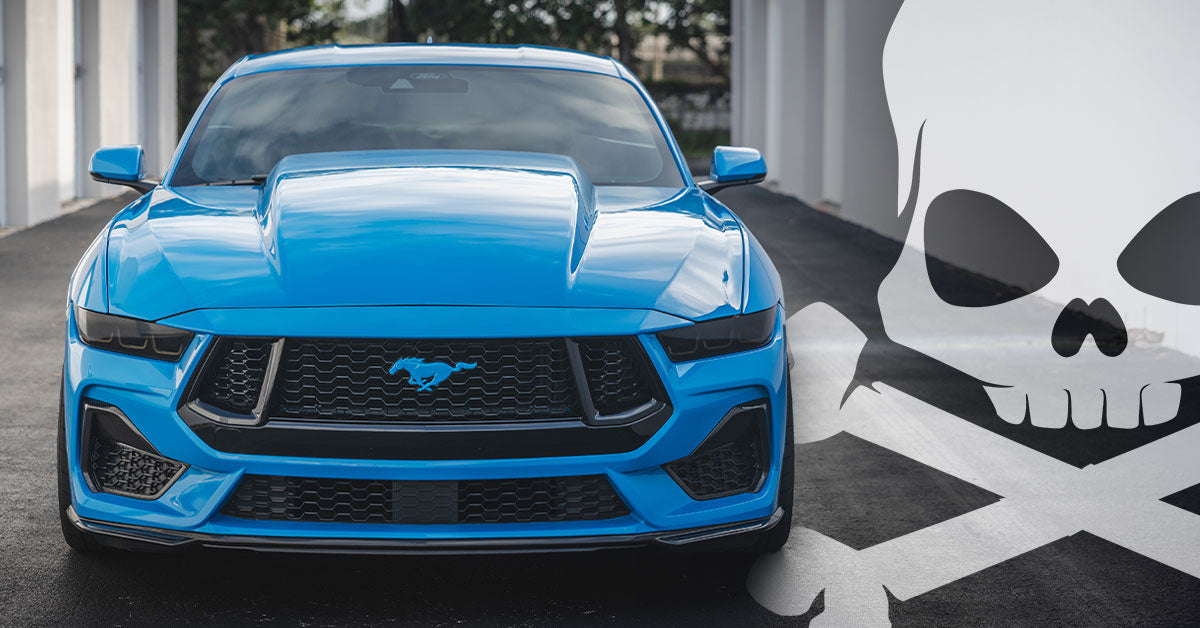
Lethal Performance is a Ford and Mustang performance-parts retailer that also builds, dyno-tests and races the parts it sells. The site is aimed at owners of Mustangs, F-150s, Broncos and GT500s who are upgrading their cars rather than buying basic replacement parts. Its main categories are exhaust, intakes, ECU tuning, supercharger kits, suspension and wheels, plus upgrade kits that bundle components for a build.
What sets it apart
The shop presents itself as an enthusiast builder, not just a catalog. Its pages show its own project cars as proof of concept — a 2024 Dark Horse reported at 8.87 seconds and 1,049 rear-wheel horsepower on a Whipple supercharger, a 2024 GT making over 830 horsepower through a manual transmission, and a lifted 2026 Bronco on 35s. That matters to a buyer because the staff advising on parts are working on the same platforms.
It also leans into build planning. A guide on the site addresses the sequencing questions new owners actually face: exhaust before headers, tune before or after the intake, whether a supercharger makes sense before fuel-system work. That's more useful than a category grid if you're starting from stock.
Practical considerations
- Good fit: a Mustang GT owner planning a staged build who wants advice on order of modifications and parts that are known to work together.
- Less of a fit: someone shopping purely on lowest price, or needing parts for non-Ford vehicles.
- Financing and shipping: the site advertises Affirm monthly payments, Shop Pay installments, free shipping over $199 with oversized-item exclusions, and optional Route package protection and Extend warranties at checkout.
Next step
Decide your build stage first — bolt-ons and tune, or forced induction — then use the site's build guide and project-car pages to match a parts list to that stage. For comparison shopping on the same Ford platforms, American Muscle and LMR cover similar categories, so cross-check part numbers and fitment before ordering.
How do I decide which first upgrades to buy for an S650 Mustang GT build?
Start with breathing modifications and a tune, then decide whether you're building for sound, drag-strip times, or all-around driving—because the S650 GT's Coyote 5.0 responds to almost any bolt-on, but the order matters more than the parts list. Lethal Performance frames this exact problem directly: "Do you go exhaust before headers? Tune before or after the intake?" and notes the real challenge is knowing which parts to buy first and what pairs with what for your budget.
A practical first-upgrade sequence
- Air intake + ECU tune together. These are the highest-value first step on a Coyote because the tune unlocks what the intake provides. Buying one without the other leaves gains on the table. Lethal lists both Air Intake Systems and Computer (ECU) Tuning as core categories.
- Cat-back exhaust for sound and weight; headers later. Exhaust is the satisfying, low-risk first purchase. Long-tube headers pair with a tune and typically come after you've decided you're chasing power, not just tone.
- Suspension and wheels/tires if you care about launching or handling. On a car making stock power, tires and suspension often deliver more real-world improvement than another 20 horsepower.
- Supercharger only after fuel and supporting mods are planned. Lethal's own 2024 Dark Horse reference build made 1,049 rwhp and ran 8.87 seconds on a Whipple—with factory headers and full interior—which shows how far a blower takes you, but also that it's a staged project, not a first purchase.
Match the order to your goal
| Your priority | Buy first | Hold off on |
|---|---|---|
| Sound and daily character | Cat-back exhaust, intake | Headers, blower |
| Drag-strip times | Tune, tires, then blower planning | Cosmetic mods |
| Handling and street feel | Suspension, wheels/tires | Big power adders |
| Maximum power | Intake + tune, fuel system plan, then supercharger | Wheels until power is sorted |
A decision criterion
Set a total budget and split it: roughly half to power (intake, tune, exhaust), half to grip and safety (tires, suspension, brakes). If you can only buy one thing now, buy the tune-and-intake combo—it's the modification every later step builds on.
For platform-specific guidance, Lethal publishes a complete S650 build guide and showcases its own cars, including a 2024 Mustang GT making 830+ rwhp through a manual MT82 that ran 10.67 seconds on three pedals, which is useful if you drive a stick. You can browse those builds and the popular categories at Lethal Performance. For independent owner discussions and install write-ups, Mustang7G and Mustang6G forums are worth reading before you commit to a brand.
Can I finance a supercharger or other big-ticket part with Affirm instead of paying upfront?
Yes. Lethal Performance states that Affirm financing can be used to spread larger builds into monthly payments, and that a payment plan is chosen at checkout. The page also notes that checking payment options takes about a minute and does not affect your credit score. For a supercharger kit or other big-ticket item, that means you would select an Affirm plan during checkout rather than paying the full amount upfront.
A practical next step is to build the cart with the exact supercharger kit and supporting parts you need, then open checkout to see which Affirm terms are offered for that order total. The available plan and cost depend on the order and approval, so compare the monthly payment against paying in full before committing.
For smaller orders, the site separately mentions Shop Pay installments, so the financing route can differ by order size. If you are planning a staged build, price the first phase—such as intake, tuning and exhaust—alongside the supercharger to judge whether financing the whole package or paying for supporting parts upfront makes more sense.
Lethal Performance also lists free shipping on orders over $199, with exclusions for oversized items, and optional Route package protection and Extend warranties at checkout. Those add-ons affect the final amount you would be financing, so review them before confirming a plan.
How do I know which parts fit my specific Ford model like F-150, Bronco, or GT500?
Use the site's vehicle-fitment filters and category navigation to narrow parts to your exact Ford model, then confirm the part number against your vehicle's year, trim and engine before buying. Lethal Performance organizes its catalog around specific platforms—Mustang, F-150, Bronco, GT500 and others—so the practical path is to start from your model rather than browsing a generic category and hoping it fits.
A practical way to check fitment
- Start with your exact vehicle. Note year, model, trim, engine and any factory packages (for example, a Mustang GT versus Dark Horse, or an F-150 with a specific engine). Fitment often changes within a single model year.
- Use the site's model and category structure. On Lethal Performance, popular categories such as exhaust, intakes, tuning, suspension and supercharger kits sit alongside model-specific builds. Enter through your platform, then the category.
- Read the product's fitment notes, not just the title. Listings frequently state exclusions—manual versus automatic, specific engine codes, cab/bed configurations, or whether a tune is required.
- Cross-check the part number with the manufacturer. The brand's own fitment guide is the final authority; a retailer listing is a convenience, not a guarantee.
- Ask before ordering when you're unsure. The site emphasizes that its staff build and race the same platforms, so a quick question about your exact configuration is a reasonable step for expensive items like superchargers or tuning.
Where fitment gets tricky
| Situation | What to verify |
|---|---|
| F-150 | Engine, cab and bed length, drivetrain, and whether the part is for a specific generation |
| Bronco | Trim level, two- versus four-door, and suspension/lift status |
| GT500 | Model year and whether the part is GT500-specific rather than shared with other Mustangs |
| Tuning and intakes | Whether a custom tune is required and whether the intake is legal for your use |
| Exhaust and suspension | Emissions rules in your area and compatibility with existing modifications |
A concrete example
If you own a 2021 F-150 with the 3.5L EcoBoost and want a cat-back exhaust, don't search "F-150 exhaust" and pick the first result. Filter to your generation and engine, open the listing, and confirm the notes mention your cab and bed configuration. Then check the manufacturer's part number against your VIN or door-jamb tag. If the listing is ambiguous, ask the retailer to confirm in writing before checkout—especially since shipping and return policies differ for oversized items.
As general advice rather than a feature of this store: keep a simple build sheet with your VIN, engine code and current modifications. It makes every future fitment question faster and prevents buying a part that conflicts with what's already installed.
What shipping and package protection options apply to my order?
Shipping is free on orders over $199, with oversized items excluded. Every order is also eligible for Route package protection, which covers a package that is lost, stolen or damaged in transit. Lethal Performance publishes these terms on its own shipping policy page, so check that page for the current exclusions before ordering something large such as a wheel set or a supercharger kit.
What each option covers
| Option | What it applies to | What it does |
|---|---|---|
| Free shipping | Orders of $199 or more | Removes the shipping charge; oversized items are excluded |
| Route package protection | Every order, per the site's wording | Covers loss, theft or transit damage, with claims filed through Route |
| Extend warranty | Parts added at checkout | Covers the part itself after installation, separate from shipping protection |
The practical distinction is what is being protected. Route covers the shipment reaching you intact; an Extend warranty covers the part failing once it is on the car. A buyer ordering an exhaust system for a weekend install may want both, while someone ordering small hardware may only care about the free-shipping threshold.
A useful next step
Before checkout, separate your cart into oversized and standard items to see whether the $199 threshold still applies to the whole order. Then decide on Route and any extended warranty at the payment step, since both are selected during checkout rather than added afterward. For build planning around those parts, Lethal Performance organizes its catalog by category, which makes it easier to group an order and reach the shipping threshold.
How do I choose between tuning, intake, and exhaust upgrades for meaningful power gains?
Start with tuning if your car is otherwise stock. On modern Ford platforms, a calibration is the single largest gain per dollar because it unlocks the engine's existing hardware—throttle response, shift behavior, and fueling headroom—rather than adding a restriction or a part. Intake and exhaust are supporting mods: they add modest power alone but become more valuable once a tune can take advantage of the extra airflow. The practical order is tune first, then intake and exhaust as you confirm what your goals and local emissions rules allow.
What each upgrade actually does
| Upgrade | Typical role | Best when | Main trade-off |
|---|---|---|---|
| Tuning | Rewrites calibration for fuel, timing, and response | Car is stock or lightly modified; you want the biggest single gain | Warranty and emissions implications; needs a reputable tuner and proper fuel |
| Intake | Reduces intake restriction; improves induction sound | Paired with a tune, or when you plan forced induction later | Small gain alone; some kits need a retune to avoid lean conditions |
| Exhaust | Frees exhaust flow; changes sound and weight | You want sound and a foundation for headers or a supercharger | Drone, noise limits, and cost; headers often need a tune |
Lethal Performance's own builds illustrate the sequencing logic: its 2024 Dark Horse ran 8.87 seconds at 154 mph with 1,049 rear-wheel horsepower on a Whipple supercharger while keeping factory headers and a full interior, and its 2024 GT makes 830+ rear-wheel horsepower through a manual MT82. Those are shop observations from its build pages, not guarantees for a stock car—the takeaway is that forced induction and calibration do the heavy lifting, while intake and exhaust support the combination. See Lethal Performance for its tuning, intake, exhaust, and supercharger categories and build write-ups.
A concrete decision path
- Daily driver, stock engine, want more punch: tune first; add a cat-back exhaust for sound, and an intake only if the tuner recommends it.
- Planning headers or a supercharger within a year: buy the exhaust now so you don't pay twice, and hold the intake until the forced-induction tune is chosen.
- Emissions-tested area: verify which intakes and tunes carry exemptions before spending; a tune that fails inspection is a costly detour.
- Manual-transmission car: a tune that addresses rev-matching and torque limits matters as much as peak power.
Your next step: call or message a tuner with your exact year, engine, transmission, and fuel (pump 91/93 or E85), and ask which single mod gives the largest safe gain. That answer, not a parts list, should set your order of purchase.
 Cloudflare
 Google Workspace
 Ottawa, Ontario, Canada
User reviews (0)