
 mclarenvale.info
 Paid content
Categories: Travel
McLaren Vale is home to sustainable winegrowing, world-class wines and culinary experiences, as well as pristine beaches, natural attractions and…
 Visit website
 Updated: 2026-09-27 10:08
 Language: English (default)
 Access: Normal
 Profile views 0
 Outbound visits 0
Related questions
More questions →What Is Wine and How Do You Approach Choosing a Bottle?
Wine is fermented grape juice: yeast converts the sugar in grapes into alcohol, and the choices made around that process determine whether the result is red, white, rosé, sparkling, dessert, or fortified. Approaching a bottle gets much easier once you separate two questions — what style you want, and what the label is actually telling you. This guide covers the core variables, how to read a label, a simple tasting method, and where to go next if you want to explore a specific region such as the Rhône.
The main styles of wine
Style is the first filter, because it tells you more about what's in the glass than almost anything else.
| Style | How it's made | Typical character |
|---|---|---|
| Red | Fermented with grape skins | Tannin, darker fruit, more structure |
| White | Fermented without skins (usually) | Crisper to richer, depending on grape and oak |
| Rosé | Brief skin contact | Light fruit, fresh acidity |
| Sparkling | Second fermentation produces CO₂ | Bubbles, ranging dry to sweet |
| Dessert | Sweet grapes, often late-harvest or botrytized | High sweetness, often lower alcohol |
| Fortified | Grape spirit added | Higher alcohol, styles from dry to sweet |
Knowing which of these you're in the mood for narrows the shelf before you read a single producer name.
The variables that actually shape a wine
Four things explain most of what you taste:
- Grape variety — the raw material. A Syrah and a Grenache behave differently even from the same region.
- Region and climate — warm climates generally give riper, fuller fruit; cooler climates give higher acidity and leaner fruit.
- Vintage — the year of harvest. Weather that year shifts ripeness, acidity, and how long the wine will age.
- Winemaking choices — oak aging, skin contact time, fermentation temperature, and blending decisions all leave a mark.
The Rhône Valley is a useful example of how region and variety interact: it's known for Syrah in the north and Grenache-led blends in the south, and those two expressions taste quite different despite sharing a region.
How to read a label and narrow a choice
Labels vary by country, but most carry the same core information. Look for:
- Producer — who made it. This is often the strongest signal of quality.
- Grape or region — some labels name the variety (Syrah), others name the place (Côte-Rôtie), which implies the varieties allowed there.
- Vintage — the year.
- Alcohol level — a rough hint at ripeness and body.
- Appellation or classification terms — regulated naming that tells you where and how the wine was made.
Then match it to the occasion:
- Everyday meal — lean toward a style you already like rather than chasing complexity.
- Food pairing — acidity cuts through rich food; tannin works with fatty meat; sweetness handles spicy or sweet dishes.
- Budget — price and quality aren't the same thing. A well-chosen bottle from a solid producer often beats a famous name at the same price.
Basic tasting: look, smell, taste
You don't need formal training to taste deliberately.
- Look — color intensity hints at grape, age, and style.
- Smell — swirl, then sniff. Fruit, floral, earth, and oak notes are the usual categories.
- Taste — note four things: sweetness (is it dry or off-dry?), acidity (does it make you salivate?), tannin (does it dry your gums?), and body (light like skim milk, heavy like cream?).
Those four markers are the practical vocabulary. Once you can name them, you can describe what you like and ask for it again.
Where to go next
If you want to move from reading about wine to tasting it with context, regional events and seminars are a direct route. Rhône-focused examples include tastings and seminars organized around Rhône varieties, which let you compare producers and styles side by side rather than one bottle at a time. A structured tasting or seminar is especially useful for a region like the Rhône, where the north–south difference is easier to understand in the glass than on a page.
What Is McLaren Vale's Grenache & Gourmet Festival?
Grenache & Gourmet is an 18-day food and wine festival in the McLaren Vale wine region, running 18 September–05 October 2026. It is built around Grenache — the variety the region presents as its signature — and combines fine wine, farm-to-table food, and hands-on experiences. It suits curious palates and travellers who want to go beyond a standard cellar-door visit: expect exclusive tastings, paddock-to-plate long-table feasts, immersive adventures, and meet-the-maker masterclasses. If you prefer a single winery stop over a programmed festival, this is a different kind of trip.
What the festival actually is
The event is presented by the McLaren Vale Grape Wine & Tourism Association and spans the whole McLaren Vale wine region rather than one venue. The through-line is Grenache: served solo, shown in blends, or poured alongside the region's wider range of premium wines. The programme is organised so you can build a visit around your appetite — a long lunch one day, a vineyard walk the next.
The three experience categories
| Category | What it covers | Good for |
|---|---|---|
| Sip & Savour | Paired food-and-wine experiences: long lunches, intimate tastings, seasonal menus with local chefs and cellar door pairings | Anyone who wants the food and wine matched for them |
| Learn & Explore | Vineyard tours, blending sessions, and creative encounters with winemakers and growers | Visitors who want the craft and the people behind the bottle |
| Relax & Unwind | Laid-back, flavour-filled events blending wine, food, and music | A slower pace and casual atmosphere |
Each category is browsable on the festival's own site, grenacheandgourmet.com.au, where individual offerings are listed. The regional site, mclarenvale.info, also carries the festival under its events and "Click. Plan. Go" sections.
How to plan a visit
- Check the dates against your travel window. The festival runs 18 September–05 October 2026. Events are spread across those 18 days, so not everything happens on every date.
- Browse by category first, then by date. Decide whether you want a paired dining experience, a hands-on session, or a relaxed music-and-food event — the three categories above map directly onto those choices.
- Book the specific offerings you want. Individual tastings, feasts, and masterclasses are separate listings, so treat each as its own booking rather than assuming one ticket covers the festival.
- Build in time beyond the festival. McLaren Vale also offers beaches, trails, fresh produce, and artists to discover, so a visit can extend well past the programmed events.
Staying updated
The region runs a mailing list through its subscribe page at mclarenvale.info/subscribe. Joining it is the straightforward way to hear about programme additions and event details as the 2026 dates approach. Note that the site lists this as a subscription to the mailing list; it does not state that festival events themselves are free or that browsing requires an account.
Common sticking points
- Assuming it's one ticketed event. It isn't — it's a programme of separate offerings across many venues, each with its own format.
- Planning around Grenache alone. Grenache is the centrepiece, but the festival explicitly includes McLaren Vale's full spectrum of premium wines, so non-Grenache drinkers still have plenty to choose from.
- Leaving bookings late. Exclusive tastings and long-table feasts are limited-format events; the earlier you browse the programme, the more choice you keep.
What Is the UMass Amherst Center for Agriculture, Food, and the Environment?
The Center for Agriculture, Food, and the Environment (CAFE) at UMass Amherst is the university unit that connects agricultural and environmental research to practical outreach across Massachusetts. It integrates work in agriculture, food systems, and the environment, and it houses three main programs: UMass Extension, the Massachusetts Agricultural Experiment Station, and the Water Resources Research Center. If you are looking for applied research, farmer- and community-facing education, or water and food-system expertise tied to UMass, CAFE is the entry point rather than a degree program or campus dining service.
What CAFE actually does
CAFE's stated role is to integrate research and outreach education in three overlapping areas:
- Agriculture — applied work relevant to farming and growing in Massachusetts.
- Food systems — how food is produced, accessed, and understood, from production through consumption.
- Environment — natural resources, including water, that agriculture and communities depend on.
The center describes itself as the home of UMass Extension, the Massachusetts Agricultural Experiment Station, and the Water Resources Research Center. That combination is the key to understanding it: CAFE is not a single lab or a single major. It is an organizing structure that links university research capacity to outreach — the translation of findings into information people outside the university can use.
The three units, and why they matter
| Unit | What it is | Why it matters to you |
|---|---|---|
| UMass Extension | The outreach arm | Delivers practical, research-based education to farmers, communities, and the public |
| Massachusetts Agricultural Experiment Station | The research station | Supports agricultural and environmental research conducted through the university |
| Water Resources Research Center | Water-focused research center | Addresses water resource questions connected to agriculture and the environment |
For a farmer, grower, or community group, UMass Extension is usually the most directly useful part — it is the mechanism by which research reaches the field. For someone interested in the research side, the Experiment Station and Water Resources Research Center represent the investigation that feeds that outreach.
How CAFE connects research to real-world food and farming issues
The center's model is a loop rather than a one-way pipeline: research informs outreach, and real-world problems in agriculture, food systems, and the environment inform what gets studied. UMass Amherst's broader research portfolio illustrates the kind of food-related questions this work touches — for example, the university highlights projects such as "Food is Medicine" and "Studying the Barriers to Accessing Healthy Food." Those examples sit within the university's research and engagement activity, and they show the territory CAFE operates in: food access, food systems, and the intersection of food with health and environment.
The practical takeaway is that CAFE is where university expertise is meant to become usable — guidance, programs, and findings that serve people working in agriculture, managing water resources, or addressing food access in their communities.
Who CAFE serves
- Farmers and growers — through Extension's research-based practical education.
- Communities and the public — through outreach on food systems, environment, and water resources.
- Students and faculty — through the research enterprise of the Experiment Station and the Water Resources Research Center.
- Anyone seeking applied expertise — on agriculture, food, and environmental questions in Massachusetts.
How CAFE differs from UMass Amherst's academic and dining programs
It is easy to conflate CAFE with other well-known parts of UMass Amherst, so it helps to separate them:
- CAFE is not an academic major or degree program. UMass Amherst offers more than 100 undergraduate majors, minors, and certificates, and students can design their own major through the Bachelor's Degree with Individual Concentration (BDIC) program. Those are academic offerings; CAFE is a research-and-outreach center.
- CAFE is not campus dining. UMass dining is separately recognized — the university notes it is ranked #1 nationally for quality, variety, and sustainability. That is a student-life and food-service operation, not the research and outreach center.
- CAFE is not the general university. UMass Amherst overall is described as the #1 public research university in New England (non-medical school R&D expenditures) and a top-50 public university by U.S. News & World Report. CAFE is one specialized center within that larger institution.
When to look to CAFE
Turn to CAFE when your question is about applied agriculture, food systems, or environmental and water resources in Massachusetts, and you want research-based information rather than a course catalog or a dining guide. If you need a degree program, look at UMass Amherst's academic offerings; if you need campus food services, look at UMass Dining. If you need the university's agriculture, food, and environment research and outreach, CAFE — and especially UMass Extension — is the right place to start.
What Is McLaren Vale and What Can You Do There?
McLaren Vale is a wine region in South Australia known for sustainable winegrowing, world-class wines, and culinary experiences, alongside pristine beaches and natural attractions. It suits travellers who want to combine cellar-door tastings and farm-to-table food with coastal and outdoor time, and who may want to time a visit around a regional festival such as Grenache & Gourmet.
Where McLaren Vale Is and What It's Known For
McLaren Vale is presented by its official regional body, the McLaren Vale Grape Wine & Tourism Association, as home to sustainable winegrowing and world-class wines. The region's identity stretches beyond the vineyard: the same destination offers culinary experiences, beaches, fresh produce, trails, and artists to discover.
That mix matters if you're deciding whether to visit. It means a trip here isn't only about tasting rooms — you can build a day or a longer stay around food, coastline, walking, and creative stops as well.
Grenache: The Signature Variety
Grenache sits at the heart of McLaren Vale's identity. The region describes it as vibrant, fruitful, and unmistakably of McLaren Vale — enjoyable on its own, revealed in a blend, or alongside the region's wider range of premium fine wines.
If you already know you like Grenache, this is a natural draw. If you don't, the region positions it as a variety that brings people together, which makes it a reasonable starting point for tasting rather than something to skip.
Food, Wine, and Cellar-Door Experiences
McLaren Vale's visitor offering is organised around a few recurring themes:
- Wine: world-class wines and a full spectrum of premium fine wines, with Grenache as the signature.
- Food: culinary experiences and fresh produce to sample, including farm-to-table and paddock-to-plate formats.
- Hands-on access: tastings, long-table feasts, immersive adventures, and meet-the-maker masterclasses.
For a first visit, the practical approach is to pick one anchor experience — a tasting, a long lunch, or a maker session — and let the rest of the day fill in around it. The region's own trip-planning entry point is its "Click. Plan. Go" tool, which is the place to start mapping specific stops.
Beyond the Vineyards: Beaches, Trails, and Nature
The region explicitly lists beaches to visit and trails to wander alongside its wine and food offerings. If you're travelling with people who aren't focused on wine, or you want to break up tasting days, these give you a second axis for the trip: coast and outdoors in the same area as the vineyards.
Events: Grenache & Gourmet
The flagship event is Grenache & Gourmet, running 18 September – 05 October 2026 — 18 days of fine wine, farm-to-table food, and immersive hands-on experiences across the region. Its programme is grouped into three formats:
| Format | What it covers |
|---|---|
| Sip & Savour | Paired food-and-wine experiences: long lunches, intimate tastings, seasonal menus, local chefs, cellar-door pairings |
| Learn & Explore | Hands-on access: vineyard tours, blending sessions, encounters with winemakers and growers |
| Relax & Unwind | Laid-back, flavour-filled moments blending wine, food, and music |
The festival is designed for curious palates and thoughtful travellers — people who care about craftsmanship, connection to land, and the stories behind each bottle. If your dates are flexible, planning around this window gives you the widest choice of structured experiences in one trip.
How to Start Planning
- Check the dates against the festival. If Grenache & Gourmet (18 September – 05 October 2026) fits your travel window, build the trip around it; if not, the region's cellar doors, food, beaches, and trails operate independently of the festival.
- Use the official planning tool. The region's "Click. Plan. Go" feature is its own trip-planning entry point — start there to assemble stops rather than piecing together third-party lists.
- Pick your anchor experiences. Choose from Sip & Savour, Learn & Explore, or Relax & Unwind formats if visiting during the festival, or a tasting/lunch/maker session if not.
- Balance wine with the outdoors. Add a beach or a trail day so the itinerary isn't all tasting rooms.
- Follow regional updates. The site publishes Latest News and Upcoming Events, and offers a mailing list sign-up for updates.
One caveat on logistics: the source material covers what the region offers and how to plan, but not pricing, opening hours, or booking requirements for individual experiences. Check those directly with each venue or event before committing to a schedule.
What Are the Grenache & Gourmet Festival Offerings in McLaren Vale?
Grenache & Gourmet runs 18 September–05 October 2026 across the McLaren Vale wine region, and its programme is organised into three offering categories: Sip & Savour, Learn & Explore, and Relax & Unwind. Which one suits you depends on whether you want a seated, chef-led experience, a hands-on session with winemakers and growers, or a casual event built around wine, food and music. All three sit around the same centrepiece — McLaren Vale Grenache — and full details and booking sit with the festival rather than the region's main visitor site.
The three offering categories
Sip & Savour
This is the food-and-wine pairing strand. McLaren Vale's culinary and winemaking people come together for matched experiences — long lunches and intimate tastings among them. The framing is seasonal menus, local chefs and cellar door pairings, all built around how Grenache works with food.
Choose this if you want to sit down, eat well and have someone else make the pairing decisions for you.
Learn & Explore
This strand moves you past the cellar door into hands-on, immersive sessions: vineyard tours, blending sessions, and encounters with the winemakers and growers themselves. The emphasis is on the land, the craft and the people behind each bottle.
Choose this if you are curious about how Grenache is grown and made, and you would rather do something than simply taste something.
Relax & Unwind
The most casual of the three. These are laid-back, flavour-filled events that blend wine, food and music — the region's easygoing side, described as warm, welcoming and unhurried.
Choose this if you are travelling with people who are not wine specialists, or you want an event that does not require a fixed tasting agenda.
Matching an offering to your travel style
| If you want… | Look at | Typical shape of the event |
|---|---|---|
| A seated, chef-driven meal with matched wines | Sip & Savour | Long lunches, intimate tastings |
| To get your hands dirty and meet makers | Learn & Explore | Vineyard tours, blending sessions |
| A low-key afternoon with music and food | Relax & Unwind | Casual wine, food and music events |
Two practical notes. First, the categories describe the style of event, not the price or the level of expertise required — the festival's own listings are where you confirm what a specific event involves. Second, the 18 days are spread across the wider McLaren Vale region, so events are not all in one place; plan travel between venues into your day.
Why Grenache is the through-line
Grenache is the festival's anchor: described as vibrant, fruitful and unmistakably of McLaren Vale. It appears solo, in blends, and alongside the region's other premium fine wines. That matters for choosing offerings — if you already know you like Grenache, a blending session or a varietal-focused tasting will tell you more than a general event. If you do not, a Sip & Savour pairing is the gentler introduction, because the food does some of the explaining.
Before you book
- Check the festival programme for the specific dates, venues and event formats within each category.
- Confirm what is included in an individual event — the category names describe style, not inclusions.
- The region's visitor site offers a mailing list sign-up if you want updates; pricing and booking terms are not stated there, so treat the festival site as the source for those.
The festival site, grenacheandgourmet.com.au, is where the offerings are listed in full and where you go for booking or more detail.
Website Overview
An established domain and managed infrastructure suggest continuity of operations and may support dependable delivery, although neither guarantees service quality. Page metadata, canonical configuration and social previews work together to provide more consistent search and sharing presentation.
Domain and Registration
Registered in 2003, this domain has about 22 years of history. That suggests continuity, although ownership and purpose may have changed. Transfer-protection status is present, helping reduce the risk of unauthorized domain transfers. The domain uses the common .info extension, which is not an independent safety signal.
DNS and Email
Nameservers are provided by Cloudflare, indicating managed DNS hosting. MX records point to the Microsoft 365 email service. CAA records restrict which certificate authorities are authorized to issue certificates. No CNAME was found; the observed records resolve directly to addresses. SPF and DMARC are configured. DKIM status is unknown.
TLS and Certificates
The public key uses EC with 256 bits. The server supplied a complete certificate chain. No organization name is present in the certificate; the available fields are consistent with domain validation. The certificate was issued within the Google Trust Services cloud or CDN ecosystem. The certificate's total validity is about 90 days, consistent with a short renewal cycle.
HTTP and Browser Security
X-Powered-By exposes backend information: Craft CMS, SEOmatic. The response lacks these common security headers: HSTS, CSP, X-Content-Type-Options, Permissions-Policy, clickjacking protection. CORS permits any origin to read this response. This is common for public resources; sensitive responses need narrower handling. The cf-ray response header indicates a CDN or caching proxy in the delivery path. No obvious internal addresses or debug information were found in the headers.
Technology Stack Analysis
The public page identifies SEOmatic, Bootstrap, Google Tag Manager, Cloudflare without precise versions, leaving fewer clues for version-specific scanning.
Search and Social Sharing
The Generator tag identifies SEOmatic, making the publishing system easier to fingerprint. Twitter Card metadata is configured. JSON-LD includes Organization data, helping describe the organization as an entity. The title has 63 characters, within a common display range. A meta description is present, with 146 characters.
 Hosting and Email
 Cloudflare
 Hosting
 Microsoft 365
 Location
 unknown
104.21.0.219
Location
Location unknown
104.21.0.219
 Pages, Search and Sharing
| Meta description | McLaren Vale is home to sustainable winegrowing, world-class wines and culinary experiences, as well as pristine beaches, natural attractions and… |
|---|---|
| Canonical URL | https://mclarenvale.info/ |
| Language | English (default) |
| Twitter Card | summary_large_image |
Social Sharing Preview
19 fields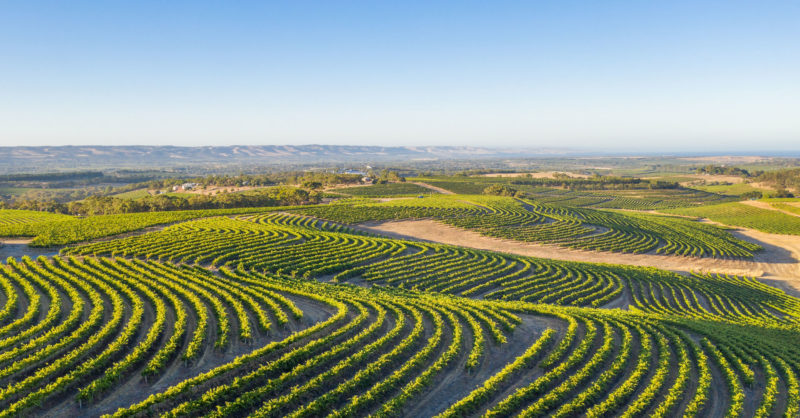

Sharing metadata
| og:url | https://mclarenvale.info/ |
|---|---|
| og:type | website |
| og:image | https://mclarenvale.info/assets/slider/_1200x630_crop_center-center_82_none/SERIO-20190222-0730.jpeg?mtime=1771560390 |
| og:title | McLaren Vale | Official Website of the McLaren Vale Wine Region |
| og:locale | en |
| og:image:alt | Home |
| og:site_name | McLaren Vale |
| og:description | McLaren Vale is home to sustainable winegrowing, world-class wines and culinary experiences, as well as pristine beaches, natural attractions and… |
| og:image:width | 1200 |
| og:image:height | 630 |
| twitter:card | summary_large_image |
| twitter:site | @mclaren_vale |
| twitter:image | https://mclarenvale.info/assets/slider/_800x418_crop_center-center_82_none/SERIO-20190222-0730.jpeg?mtime=1771560390 |
| twitter:title | Official Website of the McLaren Vale Wine Region | McLaren Vale |
| twitter:creator | @mclaren_vale |
| twitter:image:alt | Home |
| twitter:description | McLaren Vale is home to sustainable winegrowing, world-class wines and culinary experiences, as well as pristine beaches, natural attractions and… |
| twitter:image:width | 800 |
| twitter:image:height | 418 |
robots.txt (opens in a new tab)
4 rulesAll bots 0 allowed · 4 disallowed

 All bots

/cpresources//vendor//.env/cache/- Interval
Crawl delay 30 seconds
No matching rules.
Sitemaps
6- https://mclarenvale.info/sitemaps-1-sitemap.xml(opens in a new tab)
- https://members.mclarenvale.info/sitemaps-1-sitemap.xml(opens in a new tab)
- https://mclarenvalewine.au/sitemaps-1-sitemap.xml(opens in a new tab)
- https://grenacheandgourmet.com.au/sitemaps-1-sitemap.xml(opens in a new tab)
- https://summervines.com.au/sitemaps-1-sitemap.xml(opens in a new tab)
- https://grenachechallenge.au/sitemaps-1-sitemap.xml(opens in a new tab)
 Registration details RDAP / WHOIS
| Registrar | Key-Systems GmbH |
|---|---|
| Registered | 2003-12-22 |
| Expires | 2027-12-22 |
| Domain status | client transfer prohibited |
| Nameservers | gwen.ns.cloudflare.com、mark.ns.cloudflare.com |
| DNSSEC | unsigned |
 DNS records
| Type | Name | Value | TTL | Priority |
|---|---|---|---|---|
| A | mclarenvale.info | 104.21.0.219 | 300 | — |
| A | mclarenvale.info | 172.67.128.83 | 300 | — |
| AAAA | mclarenvale.info | 2606:4700:3033::6815:db | 300 | — |
| AAAA | mclarenvale.info | 2606:4700:3036::ac43:8053 | 300 | — |
| MX | mclarenvale.info | mclarenvale-info.mail.protection.outlook.com | 3600 | 0 |
| NS | mclarenvale.info | gwen.ns.cloudflare.com | 86400 | — |
| NS | mclarenvale.info | mark.ns.cloudflare.com | 86400 | — |
| TXT | mclarenvale.info | MS=ms14508307 | 300 | — |
| TXT | mclarenvale.info | google-site-verification=sx_erT8g5glBVU53AqXfWjK2Q5Z7i_HOxyVfPmZCbmY | 300 | — |
| TXT | mclarenvale.info | k=rsa; p=MIGfMA0GCSqGSIb3DQEBAQUAA4GNADCBiQKBgQDMJ0kjYuyMm8IC01e113juQegUpf5Gv7ROMdcN0hL763OqjqnwTgHyHbsES87kFDflCjG8B82iDyjmpduPQTQwMZe57UQDdRk0LK4Nj/RzqMsiZSZItNlsD1J1fuMzUGFoxzZQ2O742EYyAaqNt1M2dmqT6CjPXLYwnFRdfJUbywIDAQAB | 300 | — |
| TXT | mclarenvale.info | v=spf1 mx ip4:119.18.40.0/21 ip4:202.174.41.132 ip4:203.55.21.193 ip4:123.136.46.152 include:cmail1.com include:cmail20.com include:spf.protection.outlook.com include:_spf.createsend.com mx include:wildapricot.org ~all | 300 | — |
| CAA | mclarenvale.info | 0 issue "comodoca.com" | 3600 | — |
| CAA | mclarenvale.info | 0 issue "digicert.com; cansignhttpexchanges=yes" | 3600 | — |
| CAA | mclarenvale.info | 0 issue "letsencrypt.org" | 3600 | — |
| CAA | mclarenvale.info | 0 issue "pki.goog; cansignhttpexchanges=yes" | 3600 | — |
| CAA | mclarenvale.info | 0 issue "ssl.com" | 3600 | — |
| CAA | mclarenvale.info | 0 issuewild "comodoca.com" | 3600 | — |
| CAA | mclarenvale.info | 0 issuewild "digicert.com; cansignhttpexchanges=yes" | 3600 | — |
| CAA | mclarenvale.info | 0 issuewild "letsencrypt.org" | 3600 | — |
| CAA | mclarenvale.info | 0 issuewild "pki.goog; cansignhttpexchanges=yes" | 3600 | — |
| CAA | mclarenvale.info | 0 issuewild "ssl.com" | 3600 | — |
| DMARC | _dmarc.mclarenvale.info | v=DMARC1; p=none; adkim=r; aspf=r; | 300 | — |
 TLS and certificates
| Assessment | Normal configuration |
|---|---|
| Supported protocols | TLSv1.2、TLSv1.3 |
| Negotiated protocol | TLSv1.3 |
| Certificate subject | mclarenvale.info |
| Issuer | Google Trust Services |
| Valid until | 2026-11-06T05:33 · Remaining when checked: 39 days |
| Verification details | Certificate trust: Passed · Hostname match: Passed |
 HTTP response headers
| Header | Value |
|---|---|
| content-type | text/html; charset=UTF-8 |
| cache-control | max-age=600 |
| server | cloudflare |
| referrer-policy | no-referrer-when-downgrade |
| access-control-allow-origin | * |
 Identified technologies
Recent Updates
- Website images
- Screenshots
- Network details
- Website Technologies
- Pages and Search Information
- HTTP Response Information
- TLS and certificates
- DNS Information
- Domain Registration
- Website profile
- Website Description
- Website Name
- Website profile
- Website Description
- Website Name
User reviews (0)