
 简体中文
 English
Website review
This review may include AI-generated content and is not individually verified. Domain, certificate and other facts come from the observed data on this page.
What is Milan Institute?
Milan Institute is a career-training school offering certificate and diploma-style programs in healthcare, beauty and wellness, and skilled trades. It has operated since 1985 and runs campuses across California, Nevada, New Mexico and Texas, with cosmetology-focused locations operating under the Milan Institute of Cosmetology name. The site presents it as a practical route into entry-level work rather than a traditional academic college.
What it offers
Programs fall into three broad areas:
| Area | Example programs | Typical audience |
|---|---|---|
| Healthcare | Medical Assisting, Dental Assistant, Administrative Medical Assistant | People seeking clinical or front-office roles in clinics and dental practices |
| Beauty and wellness | Cosmetology, Advanced Cosmetology, Esthetician, Advanced Esthetician, Barbering, Manicurist & Nail Technology, Massage Therapy | Those aiming for salon, spa or barbering work, often needing hands-on hours |
| Trades | Electrician Technician, HVAC-R | People interested in installation and maintenance work |
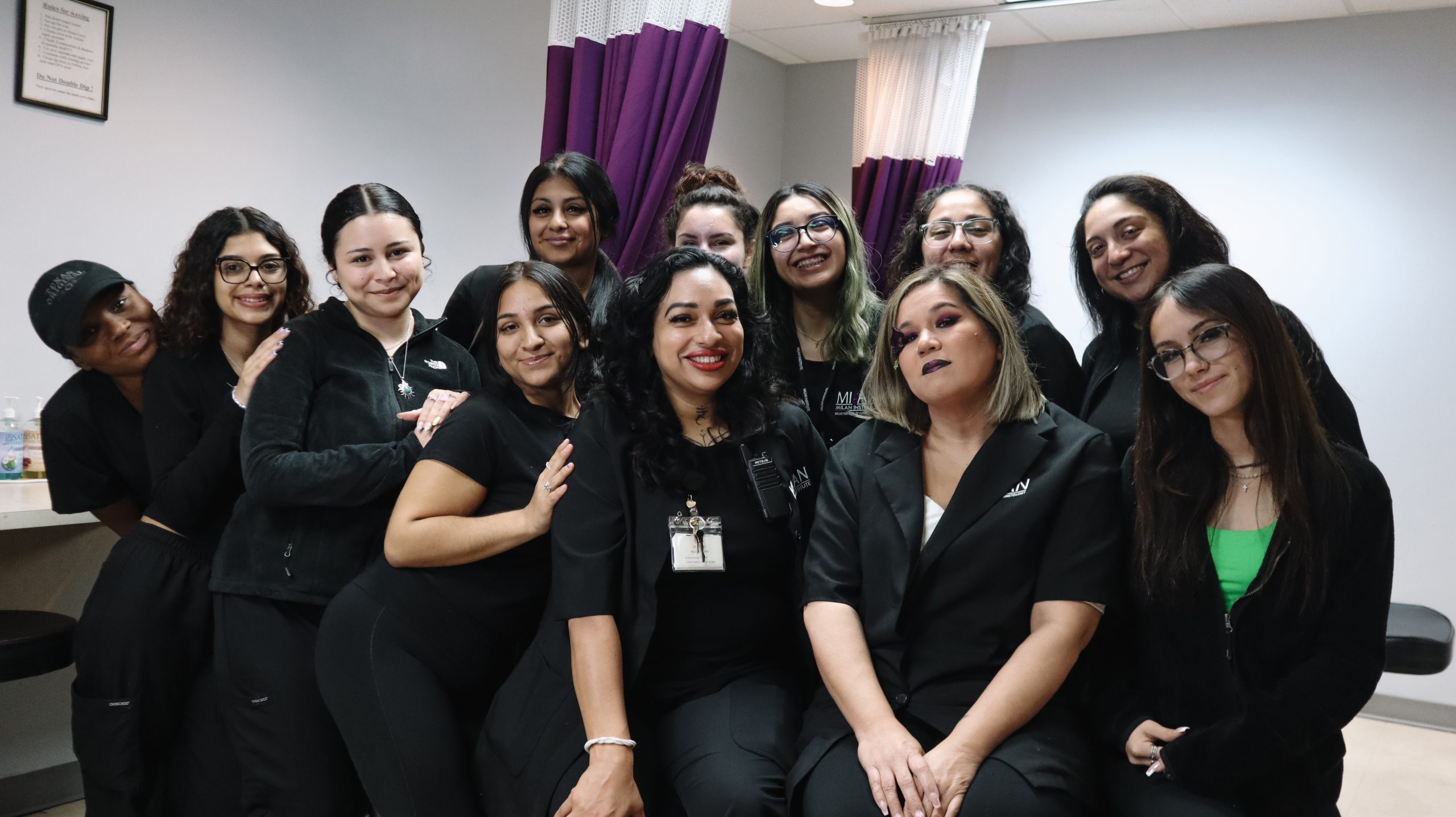
Several campuses also run student salons and spas, where members of the public can book services performed by students under supervision. That detail is useful for two audiences: prospective students who want to see the training environment before enrolling, and local residents looking for lower-cost beauty or massage services.
A concrete way to use the site
Start with the locations list rather than the program list. Your choice is usually constrained by which campus is within commuting distance, and not every program is offered at every location. Once you identify a nearby campus, check which programs it lists, then use the tour-booking option to visit and ask about schedule format, completion time and what the tuition figure covers. The site references tuition scholarships in a $500–$1,500 range; treat that as a starting point for a conversation with admissions rather than a full picture of cost.
How it compares
Milan Institute sits in the same space as other for-profit career schools that emphasize short programs and local employer connections. Its distinguishing features are the breadth of beauty programs, including advanced and barbering options, and the student salon model that gives learners public-facing practice. The trade-off is specialization: a career school is a focused path to a specific job, not a transfer-oriented education. If you want a degree, a broader curriculum or a wide choice of majors, a community college is usually the better fit; if you want to train for a particular role and start working relatively soon, this kind of school is designed for that.
For comparison, you can review accredited public options through California Community Colleges or check program approval and consumer information through your state's licensing board.
Which Milan Institute campus offers the program I want to study?
Program availability varies by campus, so the reliable way to answer this is to check the program page for the specific field you want, then confirm the campus listed there — not to pick a campus first and assume the program exists. Milan Institute's site organizes its offerings as named programs (Medical Assisting, Dental Assistant, Administrative Medical Assistant, Massage Therapy, Cosmetology, Advanced Cosmetology, Esthetician, Advanced Esthetician, Barbering, Manicurist & Nail Technology, Electrician Technician, HVAC-R) across campuses in California, Nevada, New Mexico and Texas, and not every program is taught at every location.
How to match program to campus
- Identify the exact program title, since similar-sounding ones differ: Medical Assisting vs. Administrative Medical Assistant, and Esthetician vs. Advanced Esthetician are separate listings.
- Open that program's page on Milan Institute and note which campuses it names.
- Cross-check against the campus list — for example, several Texas locations are "Milan Institute of Cosmetology" campuses, which signals a beauty-focused program mix rather than healthcare or trades.
- Contact the campus directly to confirm the next start date and whether the program is currently enrolling.
A concrete example
Someone in the Central Valley who wants massage therapy should look at the Fresno and Merced campuses, which appear in the site's student salon and spa listings, rather than assuming the Visalia cosmetology campus covers it. Similarly, a Las Vegas resident interested in HVAC-R or electrical work needs to confirm those trades are offered at the Las Vegas campus, since the Nevada listings also include cosmetology-branded schools in Reno and Sparks.
Decision criteria
- Program first, campus second. The program page is the authoritative signal of where it is taught.
- Commute and schedule. Ask about day vs. evening cohorts; a program offered at only one nearby campus may still work if the schedule fits.
- Hands-on facilities. Beauty and massage programs often include student salon services, which tells you the campus has practice space — useful if supervised client experience matters to you.
- Cost questions. The site references tuition scholarships in a $500–$1,500 range; ask the campus which scholarships you qualify for and how they apply to your specific program.
Next step: call the campus you are considering and ask two questions — "Is [program name] running at this location for the next start?" and "What are the start dates?" That single call resolves most of the ambiguity the website leaves open.
How much does tuition cost at Milan Institute, and what scholarships are available?
Tuition at Milan Institute is not published as a single figure. The site's own page mentions $500–$1,500 tuition scholarships and invites prospective students to book a tour or call for details, so exact program costs are confirmed directly with the campus rather than listed online. Cost varies by program (from shorter certificates like Manicurist & Nail Technology and Barbering to longer ones like Medical Assisting, Dental Assistant, HVAC-R and Electrician Technician) and by location across California, Nevada, New Mexico and Texas.
What the page confirms
- Scholarship range: $500–$1,500 in tuition scholarships, as stated on Milan Institute.
- Programs covered: healthcare (Medical Assisting, Administrative Medical Assistant, Dental Assistant, Massage Therapy), beauty (Cosmetology, Advanced Cosmetology, Esthetician, Advanced Esthetician, Barbering, Manicurist & Nail Technology) and trades (Electrician Technician, HVAC-R).
- Campuses: multiple sites in California, Nevada, New Mexico and Texas, including dedicated Milan Institute of Cosmetology locations.
How to get an actual number
Ask the admissions office at your intended campus for a written cost breakdown covering tuition, fees, kit and supplies, and any licensure exam costs. Then ask two follow-ups: whether the $500–$1,500 scholarship applies to your program, and what the net cost is after federal or state aid for which you qualify. Comparing net cost per program — not sticker price — is the fairest way to judge value, since a $1,500 award matters far more against a short nail technology certificate than against a longer allied-health program.
For context on aid options and program-length differences, the U.S. Department of Education's Federal Student Aid site explains grant and loan eligibility, and the U.S. Bureau of Labor Statistics shows typical entry requirements and pay ranges for fields like dental assisting and massage therapy — useful for weighing cost against likely earnings in your area.
Can I get a discounted salon or spa service at a Milan Institute student salon?
Yes—Milan Institute runs student salons and spas at many campuses, and the page advertises tuition scholarships of $500–$1,500 for career programs. It does not publish salon service prices, so treat any discount as likely rather than confirmed until you check with a specific location.
What the page shows
Student salons appear across California, Nevada, New Mexico and Texas, including Bakersfield, Fresno, Merced, Palm Desert, Vacaville, Visalia, Las Vegas, Reno, Sparks, Las Cruces, Amarillo, Denton, Houston, El Paso, Plano and San Antonio. Some locations are listed as "Student Salon & Spa" or "Student Esthetician & Massage Spa," suggesting services beyond hair, such as esthetics and massage.
What to expect
Student salons typically charge less than professional salons because services are performed by supervised learners. That usually means longer appointments and less predictable results, so they suit budget-conscious clients, simple services, or people willing to be a practice model. The page does not state service menus, supervision arrangements or pricing.
Practical next step
Call the campus nearest you and ask three things: which services are offered, whether a licensed instructor supervises, and the current service price. Start with Milan Institute to find your campus contact, or compare local options through Yelp reviews before booking.
How do I enroll at Milan Institute, and what does the career readiness quiz involve?
Enrollment starts with a conversation, not a form: call the number on the Milan Institute site or book a campus tour, then work with admissions on program choice, schedule, and funding. The site also points to tuition scholarships in the $500–$1,500 range, so ask admissions which awards you may qualify for and what each requires. Before committing, confirm the exact campus for your program, since not every location lists every program, and ask what documentation and start dates apply.
What the career readiness quiz involves
The quiz is a short self-assessment, not an entrance exam. Expect questions about your interests, how you prefer to work, and what you want from training; it then suggests program areas such as healthcare, beauty, trades, or massage. Treat the result as a starting point for a conversation with admissions rather than a verdict.
A practical next step
Write down two or three programs you are considering, then ask admissions three questions for each: which campuses offer it, how long it takes, and what the total cost is after scholarships. If you can, book a tour that overlaps with a student salon or lab session so you see the training environment rather than just a classroom.
For comparison, community colleges often publish full program costs and schedules online before you contact anyone; California Community Colleges is one place to check that route. Milan Institute's approach suits people who want hands-on, career-focused training and a guided admissions process; it is less suited to anyone who wants to compare published costs before speaking to a recruiter.
Does Milan Institute help graduates find jobs through career services and its alumni network?
Yes. Milan Institute presents career services as a standing part of the school, listing Career Services, an Alumni Network, Request Transcripts and Share a Job among its main navigation links. The "Share a Job" entry suggests employers and alumni can pass openings back to the school, and the alumni network is presented as a continuing connection for graduates rather than something that ends at completion.
What that means in practice
- Placement help: Expect help with job-search basics such as résumés, interview preparation and leads, though the site does not state placement rates or guaranteed placement.
- Alumni as a channel: The alumni network is most useful for hearing about openings and referrals from people who trained in the same programs.
- Program-specific paths: Because training spans healthcare, beauty and trades, job support will differ by field—a dental assisting graduate and a barbering graduate face very different hiring routes.
A useful next step
Ask the campus you would attend three direct questions: what job-placement assistance is included, whether it continues after graduation and for how long, and how current students and alumni hear about openings. Then ask for the names of local employers who hire from that program. For comparison, you can also look at community college career centers, such as California Community Colleges, which offer similar services at lower cost but with different schedules and program lengths.
 GoDaddy
 Google LLC
 Microsoft 365

User reviews (0)