

 Multilingual
 Visit website
 Updated: 2026-09-24 04:08
 Access: Normal
 Profile views 1
  Outbound visits 0
 Website Review
What is Max Planck Institute for Mathematics in the Sciences (MPI MiS)?
The Max Planck Institute for Mathematics in the Sciences (MPI MiS) is a research institute in Leipzig, Germany, where mathematics is developed in close contact with the natural and engineering sciences. Its stated focus is the interaction between mathematics and the sciences: mathematicians there search for new structures and methods prompted by fundamental questions from physics, biology, chemistry, materials science and related fields.
MPI MIS
H3 What it offers
- Research groups and topics: the site organizes its scientific profile by research groups, past groups, collaborations and a Mathematics Lab.
- Events: talks, seminars, lectures, workshops, conferences and public events are listed in one overview.
- Publications: institute publications, preprints, a library and a software and data repository are collected together.
- Career information: a job board, postdoctoral mentoring, equal-opportunity information and the IMPRS graduate school are grouped under careers.
- Visitor and applicant routes: dedicated pages exist for guests, schools, applicants and press.
H3 Who it is for
- Researchers and PhD students looking for groups, preprints, seminars or supervision in mathematically oriented science.
- Students and school groups exploring mathematics as a field.
- Journalists and the curious public following news, press releases and public lectures.
- Prospective applicants comparing open positions, the graduate school and postdoc mentoring.
H3 Practical next step
If you are deciding whether it fits your work, start with the research groups page and check whether any group's topics match your own, then look at the preprint repository to see the style and level of the output. If you are considering a stay, the events calendar shows which seminars and workshops are open, and the career pages list positions and the graduate school route.
As a rule of thumb, MPI MiS suits people who want their mathematics driven by a scientific problem rather than by a purely internal mathematical agenda; if your interest is exclusively within one mathematical subfield, compare the group pages carefully before applying.
How can I apply for a PhD or postdoc position at MPI MiS?
Apply through the institute's own Career section, which is where the MPI MiS job board, graduate school information and postdoctoral supervision details live. The site does not present a single generic application form for all PhD and postdoc roles; instead, it directs you to the relevant opening and its stated procedure.
Max Planck Institute for Mathematics in the Sciences: MPI MIS
What to check first
- Job Board: the authoritative list of open positions. If a PhD or postdoc call is not listed there, there is no advertised opening to apply to at that moment.
- Graduate School (IMPRS): the route for doctoral researchers, including structured PhD training and the associated application steps.
- Postdoctoral Mentors: useful for identifying whose group fits your research before you write a proposal or enquiry.
- Equal Opportunity and benefits pages: relevant context on working conditions and support, not application requirements.
A practical application sequence
- Identify a current opening on the job board that matches your area.
- Read the individual advert carefully; it specifies the documents, deadline and contact person.
- Align your research statement with the interests of the named group or mentor rather than sending a generic CV.
- Prepare the usual academic materials: CV, publication list, research statement, transcripts (for PhD applicants) and references.
- Submit exactly as the advert instructs, and only to the stated contact or system.
PhD versus postdoc
| PhD | Postdoc | |
|---|---|---|
| Main entry point | Graduate school / IMPRS and advertised doctoral positions | Job board postdoctoral openings and mentor groups |
| Emphasis | Coursework, supervision structure, thesis project fit | Independent research record, publications, proposed research agenda |
| Best first step | Check IMPRS and the job board together | Identify a mentor group, then check its advertised openings |
If nothing is currently advertised
You can still make a targeted approach, but treat it as an enquiry rather than an application. Write to a specific research group whose work genuinely overlaps with yours, state your stage and funding situation, and ask whether openings are expected. Unsolicited enquiries are far more effective when they name a concrete research topic and a specific person.
For a reader scenario: a master's student in applied analysis should look at the graduate school pages first, then cross-check the job board for a doctoral call in a matching group; a recent PhD in stochastics or geometry should start from the postdoctoral mentor list and the job board, and tailor a short research proposal to one group.
What research groups and topics are currently active at MPI MiS?
The MPI MiS site organizes its current scientific activity under a Research section that lists active research groups alongside their topics and collaborations, with separate entries for former groups. The institute's stated focus is the interaction between mathematics and the natural and engineering sciences, so the group list is the most direct answer to "what is active now," while the former-groups page shows what has recently concluded.
What you can find
- Research Groups — the current roster, each with its own topic page
- Former Research Groups — a way to distinguish ongoing work from past activity
- Mathematics Lab — a distinct unit within the research profile
- Institute Preprints and a Software & Data Repository — outputs tied to the groups' work
- Colloquia, seminar series and conferences — recurring events that reveal which topics are live
Group leaders named in the site's own metadata include Jürgen Jost, Felix Otto, Bernd Sturmfels, László Székelyhidi and Anna Wienhard.
How to use it
If you are choosing where to apply or whom to contact, start from the Research Groups page rather than the news feed: group pages are the stable description of a topic, while news items are announcements. Compare a group's topic page against its preprints to judge whether the current output matches the stated theme, and check the events calendar to see whether the group is running seminars this term — an active seminar series is a practical signal of a working group.
For a concrete case: a graduate applicant interested in the mathematics of data or optimization would open the group pages in that area, read two or three recent preprints from each, then check the Career section's graduate school and postdoctoral supervision pages for how supervision is structured before writing to a specific group leader.
For broader context on the Max Planck Society's institutes and their research orientation, see Max Planck Society.
What conferences, seminars, or public events does MPI MiS host?
MPI MiS runs a broad events program that spans internal research exchange and public-facing talks. Its own site organizes these into an event overview covering conferences, colloquia, lectures, seminar series and event series or anniversaries, with separate pages for conferences, colloquia, lectures and seminar series.
What that means in practice
- Conferences and workshops — larger, multi-day gatherings where external and internal researchers present work and collaborate.
- Colloquia — institute-wide talks, typically aimed at a general mathematical audience rather than a narrow subfield.
- Lectures — individual talks, often by visitors or invited speakers.
- Seminar series — recurring, topic-focused sessions run by research groups, the most common way to follow ongoing work.
- Event series and anniversaries — special recurring formats and one-off commemorative events.
- Public events — the overview explicitly includes public events alongside academic formats, so some programming is open beyond the institute.
Who benefits
A researcher deciding whether to visit or apply can use the seminar and colloquium listings to judge whether the institute's active topics match their own. A student or local resident can watch the public events and colloquium listings for accessible talks. Journalists or partner institutions can use the conferences page to find larger events worth covering or attending.
A practical next step
If you have a specific topic in mind, start with the seminar series pages rather than the general overview: recurring seminars reveal which groups are active and how often they meet, which tells you more about day-to-day research life than a single conference announcement. If you are planning a visit, cross-check the events calendar against the research groups and the job board on the same site, since talks, guest stays and open positions often cluster around the same groups.
For comparison, other Max Planck institutes and major mathematical research centers publish similar event calendars; the useful signal is always the recurring seminar schedule, not the headline conference list.
How do I access MPI MiS preprints, publications, or software repositories?
Use the institute’s Publications section. It is the central entry point for scientific publications, preprints, and the software and data repository, with separate pages for institute publications, preprints, the library, and the software/data repository.
Max Planck Institute for Mathematics in the Sciences: MPI MIS
What to expect
- Institute publications: a broad overview of the institute’s scientific output.
- Institute preprints: early or forthcoming work, typically before final journal publication.
- Software & Data Repository: code and datasets connected to the institute’s research.
- Library: catalogue and local holdings for deeper literature searches.
A practical route
- Start at the Publications overview.
- Choose the specific category you need: preprints, publications, software/data, or library.
- If you are looking for a particular author or research group, combine the Publications pages with the People Directory and Research Groups sections to identify who works on your topic.
- For very recent or unpublished results, check the preprint repository first; for reusable code or data, go directly to the Software & Data Repository.
If you need something that is not openly available, the library or the relevant research group is the sensible next contact.
What services and resources does the MPI MiS library offer to visitors or researchers?
The MPI MiS library page is a gateway rather than a full catalogue: the site's navigation lists a Library entry alongside Institute Preprints and a Software & Data Repository under Publications. That grouping tells you the library is positioned as part of the institute's research infrastructure—useful for finding its own preprint series and code/data outputs, not just purchased books and journals.
What you can realistically expect to find
- Library access information — opening hours, location within the institute, and contact details for library staff, typically reached from the Library page itself.
- Preprints — MPI MiS's own preprint series, which is the most reliable way to read current work by its research groups before or instead of journal publication.
- Software and data — a repository section, relevant if you want to reproduce results or reuse code from institute projects.
- Publication records — an institute-wide publications overview, helpful for tracing who works on what across the research groups.
- On-site services — the navigation's "Services" and "Special Contacts" sections cover practical support such as IT, visitor logistics and administrative contacts, which is what guests usually need first.
Who each part suits
| Reader | Best starting point |
|---|---|
| External researcher hunting preprints | Institute Preprints |
| Visitor needing practical logistics | Services, Special Contacts, Visit Us |
| Prospective PhD student or postdoc | Career, Graduate School (IMPRS) |
| Journalist or curious public reader | News, Press Releases, Events |
| Collaborator wanting to attend a talk | Event Overview, Colloquia, Seminar Series |
Practical next step
If you are planning a visit, open the Library page for hours and access conditions first, then check Visit Us for directions, and finally scan Event Overview to see whether a colloquium or seminar falls during your stay—attending one is often the fastest way to meet the groups whose preprints you have been reading. If you cannot visit in person, treat the preprint and software repositories as the library's remote-facing equivalent, since those are openly reachable from the Publications section.
One caveat: the site describes the institute's structure and research profile in detail, but the library's own holdings, borrowing rules and any external-user policy are not spelled out in the material available here, so confirm those directly with library staff rather than assuming general public access. For broader context on the institute's research orientation, the parent organisation's pages at Max Planck Society describe the Max Planck framework the library sits within.
 Hosting and Email
 Hosting
 Location
 Hanover, Lower Saxony, Germany
 Pages, Search and Sharing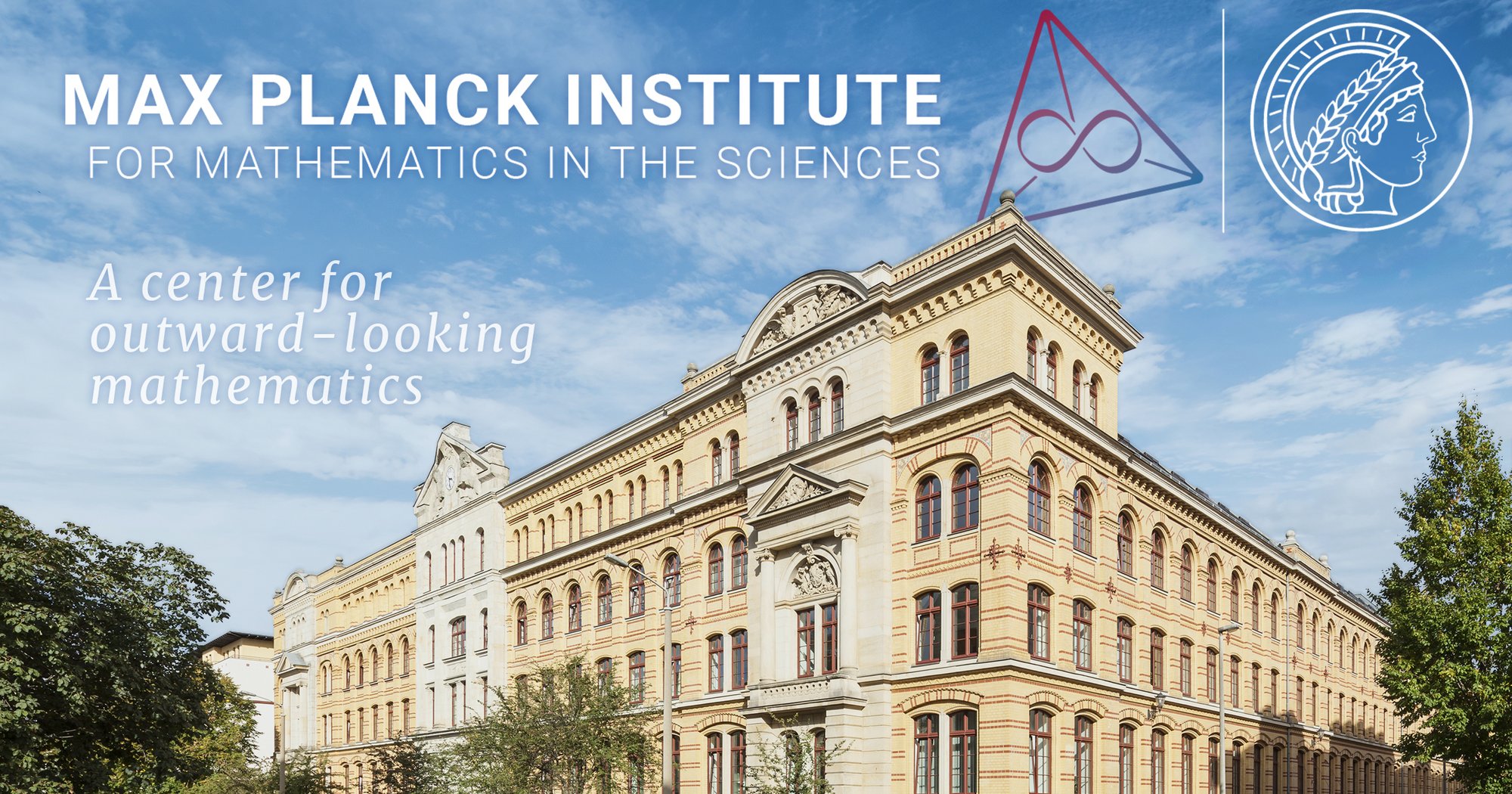


 Registration details

 Identified technologies
User reviews (0)