
 mtmary.edu
No paid content found
mtmary.edu
No paid content found
Categories: Education & Learning
Mount Mary University, a Catholic women's institution, offers undergraduate and graduate degree programs in an engaging, supportive community that fosters creativity and achievement.
 Visit website
 Updated: 2026-09-24 03:18
 Language: English (default)
 Access: Normal
 Profile views 0
 Outbound visits 0
Related questions
More questions →Ole Miss: What the University of Mississippi Offers and Who It's For
Ole Miss is the common name for the University of Mississippi, a public university in Oxford, Mississippi. It fits students who want a large public research university with strong school spirit, a classic Southern college town, and a wide range of majors — and who are ready to weigh in-state versus out-of-state costs. If you prefer a small college, a purely technical curriculum, or a major city campus, it may be a weaker fit.
What "Ole Miss" Actually Means
"Ole Miss" is a nickname, not a separate school. When you see it on apparel, in sports coverage, or in conversation, it refers to the same institution as the University of Mississippi. The main campus sits in Oxford, a small city known for its town square, literary history, and game-day atmosphere.
This matters for your search: if you are comparing schools and only look for "University of Mississippi," you may miss pages, social accounts, and student discussions that use "Ole Miss." Search both terms.
Academics, Majors, and Research
As a public research university, Ole Miss combines undergraduate teaching with graduate programs and faculty research. The site highlights programs, research opportunities, and campus life as its main draws.
When evaluating fit, check these things directly rather than relying on general reputation:
- Your intended major. Confirm it exists, whether it is a full major or a concentration, and how large the department is.
- Research access for undergraduates. Ask whether first- and second-year students can join labs or projects, or whether those spots mostly go to upperclassmen and graduate students.
- Class size in your field. Introductory courses at a large public university are often big; upper-level courses in your major are usually smaller.
- Accreditation for professional programs. For engineering, business, nursing, education, or similar fields, verify the specific program's accreditation if it matters for your career path.
A practical test: find the department page for your top two majors and look for a faculty list, course catalog entries, and any undergraduate research or internship page. If you cannot find those, email the department with specific questions.
Campus Life and Traditions
Ole Miss is known for a traditional campus experience: athletics, Greek life, and game-day culture centered on football weekends in Oxford. That environment is a strong selling point for some students and a mismatch for others.
Questions worth answering before you commit:
- Do you want a dominant sports and social scene? At many Southern public universities, it shapes the weekend calendar and much of campus social life.
- Do you want Greek life, or do you want to avoid it? Look at what share of students participate and what non-Greek housing, clubs, and activities exist.
- Do you prefer a small town or a city? Oxford is a college town, not a metropolis. Internships, nightlife, and cultural options differ from what you would find in a major urban campus.
- How important is warm weather and regional culture? This is part of the experience, not a side detail.
The best way to judge this is a campus visit during a normal academic week, plus a game weekend if athletics matter to you. Talk to current students in your intended major, not just tour guides.
Admissions Basics
Ole Miss is a public university, so admissions expectations differ for in-state and out-of-state applicants, and requirements can change year to year. Rather than rely on secondhand numbers, use the official admissions pages for:
- Application deadlines and whether there are early or priority rounds
- Required materials: application, transcripts, test scores if required, essays or recommendations if requested
- Minimum course requirements (for example, specific high school math or science units)
- Any program-specific requirements, such as auditions, portfolios, or higher standards for certain majors
A workable application sequence:
- Confirm the deadline for the term you want (fall, spring, summer) on the admissions site.
- Check whether your intended major has extra requirements beyond general admission.
- Request transcripts and test scores early — these are the most common cause of incomplete applications.
- Submit the application and then verify your status through the applicant portal.
- Apply for scholarships and financial aid on their own deadlines, which are often earlier than you expect.
Costs, Aid, and Scholarships
Cost is the factor most likely to change your decision, and it varies sharply by residency. Public universities typically charge lower tuition to in-state students and higher rates to out-of-state students, with additional costs for housing, meals, and fees.
Do this instead of guessing:
- Use the university's net price calculator to get an estimate based on your family's finances.
- File the FAFSA to be considered for federal aid and many institutional programs.
- Check scholarship deadlines separately — merit awards often require earlier applications and sometimes a separate form.
- Ask whether out-of-state students can qualify for waivers or residency-based tuition programs.
- Compare your aid offer against other schools using total four-year cost, not just first-year tuition.
The site itself does not list current prices, so treat any figure you see elsewhere as unverified until you confirm it on official pages.
How to Decide If Ole Miss Fits You
Use the same criteria you would apply to any large public university, and score Ole Miss honestly on each:
| Factor | What to check | Fits you if... |
|---|---|---|
| Major strength | Department pages, accreditation, course catalog | Your field is well supported and staffed |
| Research access | Undergraduate research pages, faculty contacts | You can realistically join projects early |
| Campus culture | Greek life share, athletics, clubs | The social scene matches what you want |
| Location | Oxford vs. your preferred setting | You want a college town, not a city |
| Cost | Net price calculator, aid and scholarship pages | The net cost works for your family |
| Outcomes | Career services, internship and job placement info | You can see a path from major to career |
If most rows point the same direction, Ole Miss is worth a serious look. If cost, location, or major fit is a clear mismatch, keep it as a comparison point rather than a top choice.
Next Steps
- Search both "Ole Miss" and "University of Mississippi" to get complete information.
- Go to the admissions site for deadlines and requirements, and the financial aid site for aid and scholarship steps.
- Contact your intended department directly with questions about research, internships, and class sizes.
- Visit campus on a normal class day if you can, and talk to students in your major.
What Is a Faith-Based Catholic Education and How Do You Choose a Catholic School?
A faith-based Catholic education combines academic instruction with formation in Catholic virtues and Gospel values, and it typically involves the parish community alongside faculty and families. Southtowns Catholic School of Saint John Paul II Parish describes itself as a Catholic education community that develops each student to their fullest potential together with the faculty, families, and the parish. This article explains what that model involves and gives you a practical way to evaluate a Catholic school for your child. It applies if you are considering a parish-affiliated Catholic school and want to compare fit, not just test scores.
What "faith-based" actually means in a Catholic school
The phrase is often used loosely, so it helps to separate the parts:
- Catholic virtues and Gospel values are woven into how the school operates — how students are treated, how discipline and service are framed, and what the school says it is trying to form in a child.
- Parish involvement means the school is not a standalone institution. In this model, the parish, faculty, and families share responsibility for the student's development.
- Faith formation is the ongoing religious education a student receives, distinct from but connected to academic subjects.
- Sacramental preparation is the specific preparation for Catholic sacraments. The scope and timing vary by school and parish, so confirm the details directly rather than assuming.
The practical takeaway: a faith-based school is making a claim about formation, not only instruction. Your job when evaluating one is to check whether that claim shows up in daily practice.
How academics, faith formation, and sacramental preparation fit together
These are usually presented as one integrated program rather than separate tracks. A few things to clarify on a tour or in an admissions conversation:
- How religion appears in the timetable — Is it a standalone subject, integrated across the day, or both?
- Who delivers faith formation — Classroom teachers, a dedicated religion teacher, parish staff, or a combination.
- How sacramental preparation is handled — Whether it happens at the school, through the parish, or in partnership, and what the family's role is.
- How the school describes its academic goals — Look for concrete language about student growth rather than general claims.
If a school cannot explain how these pieces connect, that is useful information about how clearly the program is defined.
Key factors to evaluate
Use the same dimensions across every school you consider so the comparison is fair.
| Factor | What to look for | Why it matters |
|---|---|---|
| Accreditation | Whether the school states its accreditation status | Signals external review of academic standards |
| Class size | Stated student-to-teacher ratios or typical class sizes | Affects individual attention |
| Teacher qualifications | How the school describes its faculty | Directly shapes instruction quality |
| Community and parish link | How families and the parish participate | Central to the faith-based model |
| Faith formation approach | How virtues and Gospel values are applied day to day | Distinguishes real formation from marketing language |
| Enrollment conditions | Any parish membership, tuition, or aid requirements | Determines practical access |
Note that the source material for Southtowns Catholic School does not publish accreditation details, class sizes, tuition figures, or financial aid information. Treat those as questions to ask, not assumptions to make.
Questions to ask on a tour or at an open house
Bring a written list and take notes. Good questions include:
- How would you describe the school's approach to faith formation in a typical week?
- How are Catholic virtues and Gospel values reflected in discipline and student relationships?
- What is the relationship between the school and Saint John Paul II Parish?
- How does sacramental preparation work, and what is expected of families?
- What are typical class sizes and student-to-teacher ratios?
- What are the qualifications of the teaching staff?
- Is the school accredited, and by whom?
- What are the tuition costs, and what financial aid is available?
- Does enrollment require parish membership, and if so, how is that verified?
- How do you handle a child who is struggling academically or socially?
The answers matter more than the polish of the presentation. Vague answers to specific questions are a signal.
Tuition, financial aid, and parish membership
These are often the deciding practical factors, and they are also the ones families most often assume rather than verify. The available information about Southtowns Catholic School does not state tuition amounts, financial aid programs, or whether parish membership affects enrollment. Do not assume the school is free, that aid exists, or that membership is required — ask each school directly and get the answer in writing where possible.
When you ask, request specifics: the full cost including fees, the aid application process and deadlines, and any conditions attached to parish or diocesan rates.
Signs a school is a good fit
Fit is about alignment between what the school does and what your child and family need. Consider it a good sign when:
- The school's stated mission matches what you observe in classrooms and hallways.
- Staff can give specific examples of how faith formation works in practice.
- Class sizes and support structures match your child's learning needs.
- The community feels welcoming to families, not just students.
- Costs and enrollment conditions are clear and workable for your household.
Consider it a warning sign when mission language is repeated but never illustrated, when practical questions about cost or support go unanswered, or when the school's values do not match how it treats prospective families.
A short evaluation checklist
- [ ] Confirm accreditation status
- [ ] Ask for class sizes and student-to-teacher ratios
- [ ] Ask how faculty are qualified
- [ ] Ask how faith formation and sacramental preparation are organized
- [ ] Clarify the parish relationship and any membership conditions
- [ ] Get full tuition and fee figures, plus financial aid details
- [ ] Visit during a normal school day if possible
- [ ] Talk to current families
- [ ] Compare answers across at least two schools using the same questions
Working through this list turns a vague sense of "good school" into a decision you can defend.
What Sacramental Preparation and Parish Programmes Does St. Jude Catholic Church in Indianapolis Offer?
St. Jude Catholic Church in Indianapolis is a parish that supports the full range of Catholic sacraments, along with faith formation, outreach and pro-life ministry. If you are a local family or individual considering registering or attending, the practical answer is this: the parish provides sacramental preparation for Baptism, First Reconciliation and First Communion, Confirmation, Marriage, and the Anointing of the Sick, and it runs ongoing programmes for children, adults and the wider community. Because schedules, registration windows and programme details change, always confirm current arrangements through the parish office, the weekly bulletin or the parish calendar rather than relying on a general summary.
The sacraments supported at St. Jude
Catholic parishes typically serve as the ordinary place where the seven sacraments are celebrated. At St. Jude, the sacraments you can expect to enquire about include:
- Baptism – for infants, children and adults entering the Church.
- Reconciliation (Confession) – celebrated on a regular schedule and by appointment.
- First Communion (Eucharist) – usually prepared for children around the age of reason, typically in the second grade or later.
- Confirmation – for young people and for adults who have not yet been confirmed.
- Marriage – with preparation required before the wedding.
- Anointing of the Sick – for those who are seriously ill, facing surgery or in later life.
- Holy Orders – discernment and referral for men considering the priesthood or diaconate.
Each of these has its own preparation path. The sections below explain what that generally involves.
How sacramental preparation usually works
Baptism
For infants, preparation normally involves a session for parents (and often godparents) before the baptism is scheduled. You will usually be asked to provide the child's birth details and to choose at least one practising Catholic godparent. Adult baptism follows the Rite of Christian Initiation of Adults (RCIA), a longer process of formation, usually spanning a full liturgical year, culminating at the Easter Vigil.
First Reconciliation and First Communion
Children preparing for these sacraments typically attend a formation programme, often run alongside or through the parish school or a separate religious education programme. Preparation usually includes:
- Enrolment at the start of the programme year.
- Regular classes or sessions covering Catholic teaching on sin, forgiveness and the Eucharist.
- A retreat or reconciliation service before the first confession.
- Celebration of First Reconciliation, followed later by First Communion.
Confirmation
For young people, Confirmation preparation usually follows First Communion and may run over one or two years. It commonly includes catechesis, service or outreach requirements, a retreat, and the choice of a sponsor. Adults seeking Confirmation can often join the RCIA or a dedicated adult confirmation programme.
Marriage
Couples preparing for marriage in the Catholic Church normally begin by contacting the parish at least six months to a year before the intended date. Preparation typically includes meetings with a priest or deacon, a pre-marital course or programme, and completion of required paperwork. If either party has been married before, additional steps may be needed, so raise this early.
Anointing of the Sick
This sacrament is available to anyone seriously ill, preparing for surgery, or in frail health. Families can contact the parish office, and in emergencies, ask for a priest at any time.
Parish programmes and ministries
Beyond the sacraments, St. Jude describes a range of programmes that support parish life and faith formation. These typically include:
- Faith formation – religious education for children and young people, plus adult faith formation, Bible study or study groups.
- Parish school – St. Jude Catholic School serves families in the parish and wider community, with sacramental preparation often integrated into school life.
- Outreach and social justice – including a Pro-Life Ministry, which is one of the parish's named outreach areas. This ministry generally focuses on prayer, education and support for life issues.
- Liturgical ministries – readers, altar servers, extraordinary ministers of Holy Communion, music ministry and hospitality.
- Community and service groups – depending on the season, parishes often run food drives, bereavement support, and fellowship events.
Programme availability, meeting times and sign-up windows are best confirmed through the parish bulletin and calendar, since these change through the year.
Where Mass and Confession fit in
Mass and Confession are not separate from sacramental preparation — they are the ordinary rhythm of parish life that preparation leads into.
- Mass is celebrated on weekends and on weekdays. Sunday Mass is the central gathering of the parish, and children preparing for First Communion are usually expected to attend regularly.
- Confession is offered on a set weekly schedule, and also by appointment. First Reconciliation preparation culminates in the child's first confession, after which regular confession becomes part of ongoing practice.
If you are new to the parish, attending a weekend Mass is often the simplest first step. You can pick up a bulletin, see the notice boards, and get a feel for the community before making enquiries.
How to enquire or begin preparation
If you want to start preparation for a sacrament or join a programme, the usual route is:
- Check the bulletin and parish calendar for current schedules, registration dates and contact details.
- Contact the parish office by phone or email and state which sacrament or programme you are asking about.
- Ask what documents are needed — for example, a baptism certificate for Confirmation or Marriage, or birth details for Baptism.
- Note the preparation timeline — some sacraments require months of notice, especially Marriage.
- Register as a parishioner if you intend to make St. Jude your regular parish, since some preparation programmes give priority to registered families.
If you are unsure whether you are eligible or where to begin, a short conversation with the parish office will usually clarify the next step.
A practical checklist before you commit
- Confirm the current Mass and Confession times.
- Ask which sacramental preparation programmes are running this year and when they start.
- Check whether registration as a parishioner is required.
- Gather any certificates or documents in advance.
- Note key dates for retreats, first confessions and celebrations.
- Ask about fees, if any, for programmes or materials.
Where to find accurate, current information
Parish details change: Mass times shift with the liturgical season, programme enrolment opens and closes, and ministry contacts are updated. For anything you plan to act on, use the parish's own channels:
- The weekly bulletin, which lists schedules, programmes and announcements.
- The parish calendar, for Mass, Confession, classes and events.
- The parish office, for registration, sacramental enquiries and appointments.
- The parish website, including pages such as the Pro-Life Ministry under social justice and outreach.
St. Jude Catholic Church in Indianapolis offers a full sacramental life and a range of programmes for families and individuals. The most reliable way to move from interest to participation is to check the bulletin or calendar, then speak directly with the parish office about the sacrament or programme you have in mind.
What Does 'Leadership' Coverage Actually Include on a Site Like Forbes?
Forbes leadership coverage focuses on how people run, influence, and develop organizations and teams—not on company financials or startup funding. It spans managing teams, executive decision-making, communication, culture, and personal development, and it appears mainly as contributor columns, interviews, case studies, and lists. Use it when you want practical management ideas or leadership perspectives; treat it as a starting point for your own judgment rather than a prescription, since advice varies by role, company size, and context.
The core topics leadership coverage covers
Leadership content on a business site like Forbes sits alongside business, tech, entrepreneurship, and investing coverage but has its own center of gravity: the human and organizational side of getting work done through others. Common themes include:
- Managing teams — hiring, delegation, feedback, performance conversations, remote and hybrid management.
- Executive decision-making — prioritization, strategy under uncertainty, trade-offs, and how leaders frame choices.
- Communication — how leaders present ideas, run meetings, and handle difficult messages.
- Culture — building and changing team norms, values, and behavior.
- Personal development — self-awareness, habits, resilience, and career growth for people who lead.
The through-line is the practice of leading people, not the mechanics of running a business.
How leadership differs from business and entrepreneurship coverage
These categories overlap, so it helps to separate them by the question each one answers.
| Coverage area | Central question | Typical focus |
|---|---|---|
| Leadership | How do I lead and develop people? | Teams, decisions, communication, culture, personal growth |
| Business | How do companies operate and perform? | Strategy, operations, markets, corporate news |
| Entrepreneurship | How do founders build new ventures? | Starting up, funding, early-stage growth, founder stories |
A founder profile might touch all three, but the leadership angle is the part about how that person manages people and makes decisions—not the funding round or market size.
Common formats you'll encounter
Leadership content shows up in a few recurring shapes, and knowing them helps you read faster:
- Contributor columns — opinion and advice pieces written by practitioners and commentators. Useful for perspective; quality and relevance vary by author.
- Interviews — conversations with executives and managers about how they lead.
- Case studies — narratives of how a specific team or company handled a situation.
- Lists — rankings and roundups, often of leaders, companies, or practices.
Because a large share is contributor-written, treat each piece as one person's view rather than an institutional standard.
How to judge whether the advice fits your situation
Before applying anything, run it through a few filters:
- Match the role. Advice for a C-suite executive may not transfer to a first-time team lead, and vice versa.
- Match the company size and stage. Practices that work in a large, established company can fail in a small or fast-growing one.
- Check the evidence. Is this a described experience, a case study, or a general claim? Weigh accordingly.
- Look for conditions. Good advice usually names when it applies and when it doesn't. If a piece presents one approach as universal, be skeptical.
- Test small. Try an idea in a low-stakes situation before rolling it out broadly.
Applying one idea to a real situation
Say you read a column arguing that leaders should give feedback sooner rather than saving it for a formal review. To apply it:
- Input: pick one recurring behavior on your team you've been deferring feedback on.
- Action: raise it in your next one-on-one, framed as a specific observation rather than a general judgment.
- Expected result: the person understands the issue while it's still small and fixable, and you avoid stockpiling grievances for review time.
- Check: did the conversation stay constructive and did the behavior shift? If not, adjust the timing or framing.
That loop—read, filter for fit, test small, observe—turns leadership coverage from passive reading into something you can actually use.
What History Degree Programs Does UNT Offer?
The University of North Texas (UNT) Department of History offers programs at three degree levels: bachelor's, master's, and doctoral (PhD). The department states that its programs prepare students for careers in higher education, research, or public service. Which level fits you depends mainly on your career goal: the bachelor's works as a broad foundation or as preparation for graduate study, the master's adds research training and subject specialization, and the PhD is the research-intensive route normally aimed at academic or advanced research careers. Details on specific tracks, deadlines, and requirements should be confirmed on the department's official pages, since the source material describes the programs at a general level only.
Degree levels at a glance
| Level | Typical purpose | Best suited to |
|---|---|---|
| Bachelor's | Broad foundation in historical study; preparation for graduate work or entry into fields like education, public service, and related areas | Students starting out, or those who want a history-based liberal arts degree |
| Master's | Advanced coursework and research training with a subject focus | Students preparing for doctoral study, teaching, research support, or public-sector work |
| Doctoral (PhD) | Research-intensive training culminating in original scholarship | Students aiming at academic careers or advanced research positions |
This table reflects the career directions the department itself names — higher education, research, and public service — rather than a ranking of the programs.
How to choose by career goal
If you want to teach or work in higher education
A PhD is the standard credential for faculty positions at universities. A master's can qualify you for some teaching roles, particularly at community colleges, but requirements vary by institution and should be checked with the employers you are targeting.
If you want to do research
The PhD is built around original research. A master's provides research training and can serve as a stepping stone, but if research is the end goal rather than a stage, the doctoral program is the direct path.
If you want to work in public service
A bachelor's or master's is generally the relevant preparation, depending on the role. History training supports work in archives, museums, government, and similar settings, though specific job requirements differ widely and are set by the hiring organizations, not the department.
If you are undecided
Start with the bachelor's program and use coursework and faculty contact to narrow your interests before committing to graduate study. This avoids investing in a graduate degree before you know which subfield or career direction you want.
Admission and application requirements
The source material does not list specific admission criteria, test scores, or deadlines for any of the three levels. Because requirements differ by program and change over time, treat them as something to verify directly rather than assume. When you check, look for:
- Application deadlines for the term you are targeting
- Required materials (transcripts, statements, writing samples, recommendations)
- Any standardized test requirements
- Prerequisites for the master's and PhD that may not apply to the bachelor's
Faculty research areas and department resources
Faculty research areas matter most at the graduate level, where your work is tied to an advisor's expertise. The department describes its programs as supporting higher education, research, and public service careers, but the source does not enumerate specific faculty specializations or resources. To evaluate fit, review the department's faculty listings and research pages directly, and identify at least two or three faculty whose areas overlap with your interests before applying to a graduate program.
Where to find official program details
Use the UNT Department of History site as the authoritative source for:
- Program descriptions and degree tracks
- Application deadlines and requirements
- Faculty research areas
- Contact information for program questions
The department's own framing — preparation for higher education, research, or public service — is the most reliable guide to what each program is designed to do. Anything beyond that, including current deadlines and admission standards, should come from the official pages rather than from summaries.
Website Overview
Several search or sharing settings need attention. Together they may make snippets, preview images or preferred URLs less consistent across platforms.
Domain and Registration
Unknown
DNS and Email
Nameservers are provided by mtmary.edu, indicating managed DNS hosting. MX records point to the Microsoft 365 email service. No CNAME was found; the observed records resolve directly to addresses. SPF and DMARC are configured. DKIM status is unknown. The lowest observed DNS TTL is 1500 seconds.
TLS and Certificates
The certificate uses an RSA 2048-bit public key, offering broad client compatibility. The server supplied a complete certificate chain. No organization name is present in the certificate; the available fields are consistent with domain validation. The certificate was issued by Let's Encrypt, commonly associated with automated certificate services. The certificate's total validity is about 89 days, consistent with a short renewal cycle.
HTTP and Browser Security
The response lacks these common security headers: CSP, X-Content-Type-Options, Referrer-Policy, Permissions-Policy, clickjacking protection. No X-Powered-By header was found, reducing one common source of backend fingerprinting information. No obvious internal addresses or debug information were found in the headers. The Server header identifies Apache without an exact version. No explicit CDN or WAF marker was found in the response headers.
Technology Stack Analysis
The public page identifies Bootstrap, Google Tag Manager, Apache without precise versions, leaving fewer clues for version-specific scanning.
Search and Social Sharing
The meta description has 182 characters and may be shortened in search results. Open Graph is partially configured; og:title, og:description is missing. The title has 28 characters, within a common display range. The observed directives allow indexing and link following. No Generator meta tag is publicly exposed.
 Hosting and Email
 Hosting
 Amazon.com, Inc.
 Microsoft 365
 Location
 United States
 Pages, Search and Sharing
| Meta description | Mount Mary University, a Catholic women's institution, offers undergraduate and graduate degree programs in an engaging, supportive community that fosters creativity and achievement. |
|---|---|
| Canonical URL | https://mtmary.edu |
| Language | English (default) |
| Twitter Card | Not detected |
Social Sharing Preview
4 fields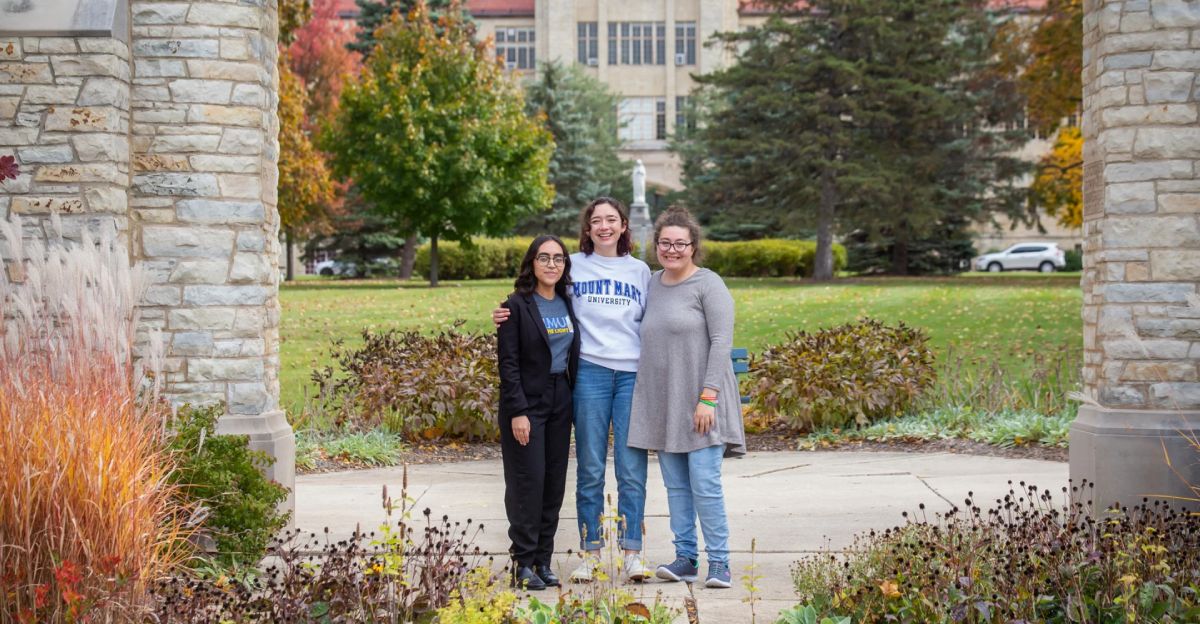
Sharing metadata
| og:url | https://mtmary.edu/ |
|---|---|
| og:type | website |
| og:image | https://mtmary.edu/_files/images/icons/site_preview_image.jpg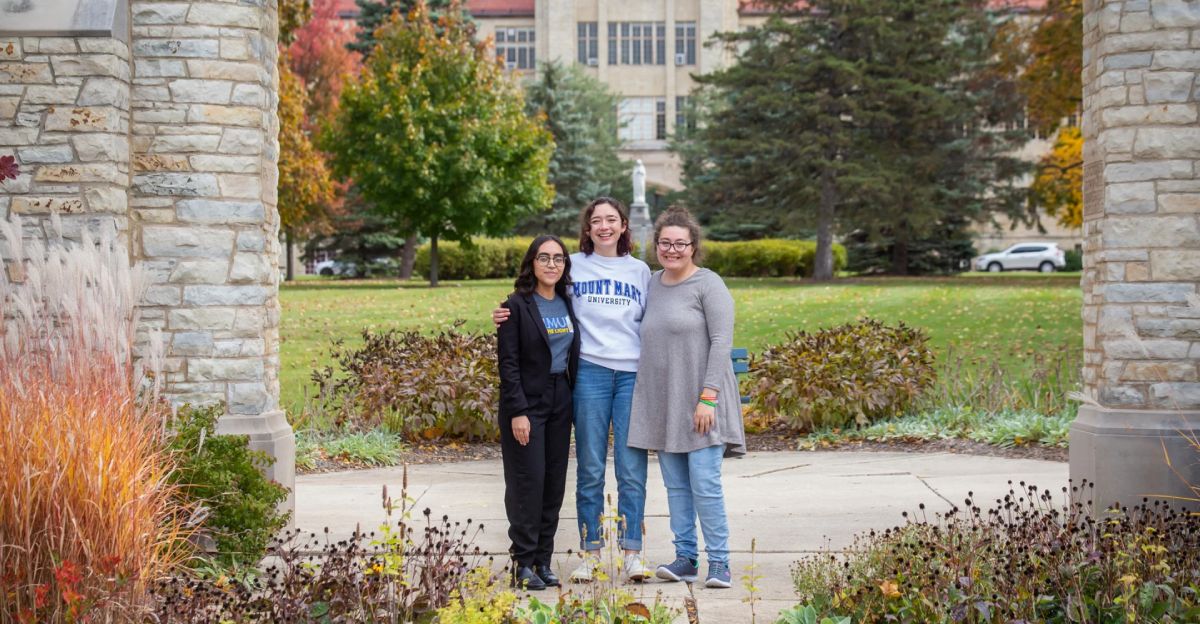 |
| og:site_name | Mount Mary University |
robots.txt (opens in a new tab)
HTTP 404No robots.txt found
Sitemaps
0No sitemaps found
 Registration details RDAP / WHOIS
Unknown
 DNS records
| Type | Name | Value | TTL | Priority |
|---|---|---|---|---|
| A | mtmary.edu | 13.58.236.109 | 1500 | — |
| MX | mtmary.edu | mtmary-edu.mail.protection.outlook.com | 1500 | 10 |
| MX | mtmary.edu | smtp.mtmary.edu | 1500 | 100 |
| NS | mtmary.edu | ns1.mtmary.edu | 1500 | — |
| TXT | mtmary.edu | solarwinds-service0desk-verification=8c9faadcc6afdccfe492cda34c987cd1 | 3600 | — |
| TXT | mtmary.edu | v=spf1 ip4:4.35.99.19 ip4:74.62.87.83 ip4:162.242.166.172 ip4:169.47.152.228 ip4:169.47.152.229 include:spf.protection.outlook.com -all | 3600 | — |
| DMARC | _dmarc.mtmary.edu | v=DMARC1; p=none; | 1500 | — |
 TLS and certificates
| Assessment | Normal configuration |
|---|---|
| Supported protocols | TLSv1.2、TLSv1.3 |
| Negotiated protocol | TLSv1.3 |
| Certificate subject | mtmary.edu |
| Issuer | Let's Encrypt |
| Valid until | 2026-11-27T23:17 · Remaining when checked: 64 days |
| Verification details | Certificate trust: Passed · Hostname match: Passed |
 HTTP response headers
| Header | Value |
|---|---|
| content-type | text/html; charset=UTF-8 |
| server | Apache |
| strict-transport-security | max-age=31536000; preload |
 Identified technologies
Recent Updates
- Website images
- Screenshots
- Network details
- Website Technologies
- Pages and Search Information
- TLS and certificates
User reviews (0)