
 简体中文
简体中文
newslit.org
Get news literacy resources that help you teach media literacy education. Join the News Literacy Project to strengthen critical thinking and spot misinformation
At a glance
- Category
- News
- Language
- English
- Paid-content signal
- Paid contentObserved
- Registered
- 2018
- Hosting
- Automattic, IncInferred
- HTTPS certificate trusted
- PassedObserved
- Last updated
Related questions
More questions →What Is the News Literacy Project?
The News Literacy Project (NLP) is a nonprofit organization that provides news literacy resources to help educators teach media literacy and help students learn to spot misinformation, understand media bias, find reliable sources, and think critically. It is aimed primarily at educators and students, and it says it provides resources to educators in all 50 states. Its core offering is Checkology, a free virtual classroom and digital learning platform.
Who it serves
NLP's stated focus is young people and the educators who teach them. According to the organization, its resources were used during the 2025-26 school year by:
- 22,800+ educators
- 890,000+ students
- 6,000+ school districts
The organization frames its mission around the idea that false information erodes trust, and that news literacy education helps build "the next generation of resilient, independent thinkers."
What Checkology is
Checkology is NLP's digital learning platform, described as a free virtual classroom. It is designed to help students:
- Spot falsehoods
- Understand media bias
- Find reliable sources
- Think critically
Its lessons, activities, infographics, and other resources cover topics including misinformation, conspiratorial thinking, and algorithms.
What educators and students say
NLP publishes testimonials from users. A student, Neveah Rice of Cornell High School in Pennsylvania, said that through Checkology she learned about the First Amendment, journalistic integrity, and deciphering sources, and that it empowered her. A teacher, Beth Holmgren of Negaunee High School in Michigan, called Checkology "one of THE best resources I've used in 25 years of teaching."
How to start
If you are an educator, the entry point is the "Start teaching now" option on the site, which leads to Checkology and the organization's other offerings. The site also notes a subscribe option, so if you want updates or specific communications, check the subscribe page for what it covers.
What to keep in mind
NLP is an education-focused nonprofit rather than a news outlet or a fact-checking service for individual claims. Its value is in curriculum and classroom tools, so it is most relevant if you teach media literacy or want ready-made materials for students. If you are looking for a specific fact-check on a single story, this is not that kind of resource.
How to Start Using News Literacy Project Resources
The News Literacy Project (NLP) at newslit.org gives educators free access to news and media literacy teaching resources. To start, go to the site and use the "Start teaching now" entry point, which leads to Checkology, NLP's digital learning platform. The resources are built for classroom use — lessons, activities, and infographics on misinformation, conspiratorial thinking, algorithms, and related topics — and the site describes the platform as a free virtual classroom. If you mainly want updates rather than teaching materials, use the Subscribe page instead.
Who the resources are for
NLP states it provides educators in all 50 states with resources to help students navigate the digital world. The site's own usage figures for the 2025-26 school year give a sense of scale:
| Metric | Reported figure |
|---|---|
| Educators using resources | 22,800+ |
| Students reached | 890,000+ |
| School districts | 6,000+ |
That context matters if you are deciding whether the materials fit a K-12 classroom setting: the platform is positioned around educators and their students, not independent adult learners.
Step-by-step: getting to the teaching materials
- Go to newslit.org. The homepage is the starting point; the primary call to action is "Start teaching now."
- Follow the "Start teaching now" link. This is the entry point to Checkology, described on the site as NLP's digital learning platform and free virtual classroom.
- Explore Checkology's content. According to the site, lessons, activities, infographics, and other resources cover misinformation, conspiratorial thinking, algorithms, and more. The stated goal is helping students spot falsehoods, understand media bias, find reliable sources, and think critically.
- Use the video walkthrough if you want an overview first. The page includes a "Watch the Video" option to see how the platform can help before you commit classroom time to it.
- Verify what account setup your situation requires. The site does not state in the provided material whether creating an account is required to access Checkology. Treat that as something to confirm on the platform itself rather than assuming either way.
Expected result: you reach the teaching platform and can review or assign its lessons and activities. If a step asks you to log in or register, that is a platform requirement rather than something described on the homepage.
Subscribing for updates
The site has a Subscribe page at newslit.org/subscribe. Use it if your goal is staying informed about NLP's work — news posts, press releases, and educator features — rather than teaching with the materials directly. The homepage's news section shows the kind of updates involved, such as posts on how news literacy prepares Oklahoma students for civic engagement, commentary from board members on technology in schools, and educator spotlights.
Note that the presence of a "Subscribe" link does not by itself tell you the terms. The provided site material does not specify whether subscribing involves a cost, an email signup, or another mechanism, so check the page directly before assuming it is free or requires payment.
What students actually learn
The curriculum centers on practical skills rather than abstract media theory. Per the site, students work on:
- Spotting falsehoods
- Understanding media bias
- Finding reliable sources
- Thinking critically
- Recognizing misinformation and conspiratorial thinking
- Understanding how algorithms shape what they see
Testimonials on the page reinforce the classroom angle. Student Neveah Rice of Cornell High School in Pennsylvania mentions learning about the First Amendment, journalistic integrity, and deciphering sources. Teacher Beth Holmgren, a CTE business teacher at Negaunee High School in Michigan, calls Checkology one of the best resources in 25 years of teaching. These are promotional quotes from the site, so weigh them as such — but they do indicate the materials are designed to be used directly with students.
Common sticking points
- Assuming it is a self-study course. The framing is educator-led classroom use, so independent learners may find the structure oriented toward a teacher assigning work.
- Skipping the video. If you are short on planning time, the walkthrough is the fastest way to judge fit before building a lesson around the platform.
- Confusing Subscribe with the teaching platform. They serve different purposes: Subscribe is for updates, while "Start teaching now" is the route to instructional content.
- Expecting stated pricing details. The site's provided material describes the virtual classroom as free but does not lay out terms for every feature or for subscribing, so confirm specifics on the relevant page.
Why does news literacy education matter for young people?
News literacy education matters because false information erodes the trust that connects people, and young people are navigating that environment every day. The News Literacy Project (NLP) frames the stakes directly: students need the skills to confidently navigate the digital world, and teaching news literacy helps them become resilient, independent thinkers. The case for it rests on three things: the scale of the problem, what students actually gain, and evidence that those gains extend into civic life.
The problem: false information erodes trust
NLP's own framing is that false information erodes the trust that connects us. That matters for young people specifically because they encounter information through algorithms, social platforms and partisan media before they have had much practice evaluating it. News literacy education is the response: instead of telling students what to believe, it teaches them how to check.
What students gain
According to NLP, news literacy instruction helps students:
- Spot falsehoods
- Understand media bias
- Find reliable sources
- Think critically
The goal is not just media-savviness but durable habits of mind. NLP describes its work as helping educators "shape the next generation of resilient, independent thinkers" — the emphasis is on independence, not on a fixed set of correct conclusions.
The civic payoff
NLP states that students who are taught news literacy are more likely to engage in civic behaviors, including pushing back against misinformation. That link is the strongest argument for treating news literacy as a core skill rather than an optional add-on: the same abilities that let a student evaluate a claim also let them participate in public life with some confidence.
Scale: this is not a niche effort
NLP reports that during the 2025-26 school year, its resources were used by:
| Measure | Number |
|---|---|
| Educators | 22,800+ |
| Students | 890,000+ |
| School districts | 6,000+ |
It also states that it provides educators in all 50 states with resources. For a teacher or administrator deciding whether to invest time, that scale is a signal that materials and peer experience are likely to be available.
What the classroom experience looks like
NLP's digital learning platform, Checkology, is described as a free virtual classroom. Its lessons, activities, infographics and other resources cover misinformation, conspiratorial thinking, algorithms and more. Testimonials on the site come from both teachers and students — a student at Cornell High School in Pennsylvania said Checkology taught her about the First Amendment, journalistic integrity and deciphering sources, and that it empowered her; a business teacher in Michigan called it one of the best resources in 25 years of teaching.
Who this is for
News literacy education is most relevant if you are:
- An educator looking for ready-made lessons on misinformation and media bias
- A school or district leader deciding whether to adopt a news literacy curriculum
- A parent or community member trying to understand what news literacy instruction actually teaches
If you want to see the materials before committing, NLP's site offers a "Start teaching now" entry point and a video walkthrough of Checkology. Note that the site includes a Subscribe link; the page evidence does not state terms, pricing or login requirements for that subscription, so check the site directly rather than assuming.
What Educators and Students Say About the News Literacy Project
The News Literacy Project (NLP) is a nonprofit that provides news and media literacy resources to educators, and the feedback from teachers and students is largely positive: a 25-year teaching veteran calls Checkology "one of THE best resources I've used," and a student says it taught her about the First Amendment, journalistic integrity, and how to decipher sources. If you're an educator deciding whether to bring NLP into your classroom, the testimonials and usage numbers below are the most direct evidence available.
What the News Literacy Project does
NLP describes its mission as helping young people learn to "confidently navigate the digital world." It provides educators across all 50 states with resources to teach students how to spot falsehoods, understand media bias, find reliable sources, and think critically.
Its core offering is Checkology, a digital learning platform described as a "free virtual classroom." Lessons, activities, and infographics cover topics including misinformation, conspiratorial thinking, and algorithms.
What teachers say
The strongest teacher endorsement on the site comes from Beth Holmgren, a CTE Business Teacher at Negaunee High School in Michigan:
"Checkology is one of THE best resources I've used in 25 years of teaching."
This is worth weighing if you're comparing NLP against other media literacy curricula — the value here is longevity of classroom experience, not a first-time impression.
What students say
Student feedback focuses on concrete skills rather than general enthusiasm. Neveah Rice, a student at Cornell High School in Pennsylvania, describes what she took away:
"With Checkology, I learned about the First Amendment, journalistic integrity, deciphering sources. I think that does empower me."
That maps to three distinct competencies — civic knowledge (the First Amendment), understanding how journalism works (integrity), and a practical research skill (evaluating sources).
How the platform is positioned
NLP frames Checkology not just as useful but as "essential for 21st-century learning," a characterization it attributes to journalists, educators, and students collectively. Treat that as the organization's own framing rather than an independent verdict — but it's consistent with the specific testimonials above.
Usage numbers as a credibility signal
NLP reports that during the 2025-26 school year, its resources were used by:
| Metric | Figure |
|---|---|
| Educators | 22,800+ |
| Students | 890,000+ |
| School districts | 6,000+ |
These figures indicate broad adoption, which matters if you want a resource with an established track record and an existing community of users rather than something untested.
How to decide whether to use it
Consider NLP's resources if you want:
- A free digital platform (Checkology) rather than a paid curriculum
- Ready-made lessons on misinformation, media bias, algorithms, and conspiratorial thinking
- Materials already used at scale across U.S. districts
The site also offers a "Start teaching now" entry point and a video walkthrough of Checkology if you want to preview the platform before committing classroom time.
One caveat: the site lists a "Subscribe" link, but the available page evidence does not specify what that subscription covers or whether any features sit behind it. If cost or access terms matter to your decision, verify them directly rather than assuming everything is unrestricted.
What Is Checkology and What Can Students Learn on It?
Checkology is the News Literacy Project's digital learning platform — a free virtual classroom where educators help students learn to spot falsehoods, understand media bias, find reliable sources, and think critically. It is designed for teachers who want ready-made media literacy lessons rather than building a curriculum from scratch, and it is used across all 50 states.
What Checkology actually is
The News Literacy Project describes Checkology as its digital learning platform and "free virtual classroom." In practice, that means educators get a hosted set of lessons, activities, infographics, and other resources they can assign to students, rather than a textbook or a standalone app.
The platform sits inside a broader mission: the organization says it provides educators in all 50 states with resources to help students navigate the digital world confidently. Checkology is the main way that mission reaches classrooms.
What students learn
The topic list is the clearest answer to "what can students learn on it?" According to the News Literacy Project, Checkology's lessons and materials cover:
- Misinformation — how to spot falsehoods and false information
- Conspiratorial thinking — how conspiracy-style reasoning works and why it misleads
- Algorithms — how recommendation and distribution systems shape what people see
- Media bias — how to recognize bias in coverage
- Finding reliable sources — how to evaluate and locate trustworthy information
- Critical thinking — the underlying skill the platform is built to strengthen
One student quoted on the site, Neveah Rice of Cornell High School in Pennsylvania, described learning about the First Amendment, journalistic integrity, and "deciphering sources" through Checkology, and said it left her feeling empowered.
Who it is for
Checkology is built for educators, not for students signing up on their own. The site frames it as a tool for teachers to use with their classes, and the resource types — lessons, activities, infographics — are classroom materials.
The reported reach gives a sense of the scale:
| Metric | Figure (2025–26 school year) |
|---|---|
| Educators using the resources | 22,800+ |
| Students reached | 890,000+ |
| School districts | 6,000+ |
A CTE business teacher quoted on the site, Beth Holmgren of Negaunee High School in Michigan, called it "one of THE best resources I've used in 25 years of teaching."
How to start
The site's call to action is "Start teaching now," pointing educators toward exploring Checkology and its offerings. If you are a teacher considering it, the practical path is to look at the platform's lesson topics against what you already teach — civics, history, English, or a media/technology course — and see where a ready-made lesson replaces something you would otherwise have to build.
The News Literacy Project also publishes news and educator spotlights, including an "Insider Spotlight" series featuring teachers such as Dave Dallas, a middle school U.S. history teacher in New Jersey, which can give a sense of how others fold the material into existing courses.
What to keep in mind
The site describes Checkology as free and as a virtual classroom, but it does not spell out account requirements, grade-level bands, or device needs on the material available here — so confirm those details on the platform itself before planning a unit around it. The pricing signals on the site point to a "Subscribe" link, which is the organization's general sign-up rather than a stated fee for Checkology; treat cost and access terms as something to verify directly rather than assume.
Website Overview
Identifiable technologies and additional version or configuration signals make the service easier to fingerprint, which may help targeted scanners narrow their checks. An established domain and managed infrastructure suggest continuity of operations and may support dependable delivery, although neither guarantees service quality.
Domain and Registration
Registered in 2018, this domain has about 8 years of history. That suggests continuity, although ownership and purpose may have changed. Transfer-protection status is present, helping reduce the risk of unauthorized domain transfers. The registrar is NameCheap, Inc., a widely used domain service provider. The domain uses the common .org extension, which is not an independent safety signal.
DNS and Email
Nameservers are provided by Cloudflare, indicating managed DNS hosting. MX records point to the Microsoft 365 email service. No CNAME was found; the observed records resolve directly to addresses. SPF and DMARC are configured. DKIM status is unknown. TXT records include verification markers for Google. Such markers may also remain after a service stops being used.
TLS and Certificates
The public key uses EC with 256 bits. The server supplied a complete certificate chain. No organization name is present in the certificate; the available fields are consistent with domain validation. The certificate was issued within the Google Trust Services cloud or CDN ecosystem. The certificate's total validity is about 89 days, consistent with a short renewal cycle.
HTTP and Browser Security
The response lacks these common security headers: CSP, X-Content-Type-Options, Referrer-Policy, Permissions-Policy, clickjacking protection. No X-Powered-By header was found, reducing one common source of backend fingerprinting information. No obvious internal addresses or debug information were found in the headers. The Server header identifies nginx without an exact version. No explicit CDN or WAF marker was found in the response headers.
Technology Stack Analysis
The public page identifies All in One SEO Pro (AIOSEO) 5.0.2, WordPress, Google Tag Manager, nginx, with exact versions exposed for 1 technologies. These details can narrow vulnerability checks, although exposure alone is not a vulnerability.
Search and Social Sharing
The Generator tag identifies All in One SEO Pro (AIOSEO) 5.0.2, making the publishing system easier to fingerprint. Twitter Card metadata is configured. JSON-LD includes Organization data, helping describe the organization as an entity. The title has 25 characters, within a common display range. A meta description is present, with 160 characters.
Hosting and Email
 Cloudflare
 Microsoft 365
 San Francisco, California, United States
Inferred
199.16.172.52
San Francisco, California, United States
Inferred
199.16.172.52
Registration details
| Registrar | NameCheap, Inc. |
|---|---|
| Registered | 2018-01-13 |
| Expires | 2027-01-13 |
| Domain status | client transfer prohibited |
| Nameservers | everton.ns.cloudflare.com、sandy.ns.cloudflare.com |
| DNSSEC | unsigned |
DNS records
| Type | Name | Value | TTL | Priority |
|---|---|---|---|---|
| A | newslit.org | 199.16.172.52 | 300 | — |
| A | newslit.org | 199.16.173.58 | 300 | — |
| MX | newslit.org | newslit-org.mail.protection.outlook.com | 300 | 1 |
| NS | newslit.org | everton.ns.cloudflare.com | 86400 | — |
| NS | newslit.org | sandy.ns.cloudflare.com | 86400 | — |
| TXT | newslit.org | google-site-verification=AvT2xoCcWDi8JHkNZUKr-Ar7bVSm9KENrbnCAixC3Mo | 300 | — |
| TXT | newslit.org | v=spf1 include:spf.protection.outlook.com include:_spfprod.ngpvan.com include:mailgun.org include:sendgrid.net include:mail.zendesk.com include:_spfprod.ngpvan.com -all | 300 | — |
| DMARC | _dmarc.newslit.org | v=DMARC1; p=none; rua=mailto:[email protected],mailto:[email protected],mailto:[email protected]; ruf=mailto:[email protected]; sp=none; aspf=r; | 300 | — |
TLS and certificates
| Assessment | Normal configuration |
|---|---|
| Supported protocols | TLSv1.2、TLSv1.3 |
| Negotiated protocol | TLSv1.3 |
| Certificate subject | tls.automattic.com |
| Issuer | Google Trust Services |
| Valid until | 2026-11-24T08:41 · Remaining when checked: 58 days |
| Verification details | Certificate trust: Passed · Hostname match: Passed |
HTTP response headers
| Header | Value |
|---|---|
| content-type | text/html; charset=UTF-8 |
| cache-control | max-age=256, must-revalidate |
| server | nginx |
| strict-transport-security | max-age=31536000 |
Identified technologies
Pages, Search and Sharing
| Meta description | Get news literacy resources that help you teach media literacy education. Join the News Literacy Project to strengthen critical thinking and spot misinformation |
|---|---|
| Canonical URL | https://newslit.org/ |
| Language | English (default) |
| Twitter Card | summary |
Social Sharing Preview
14 fields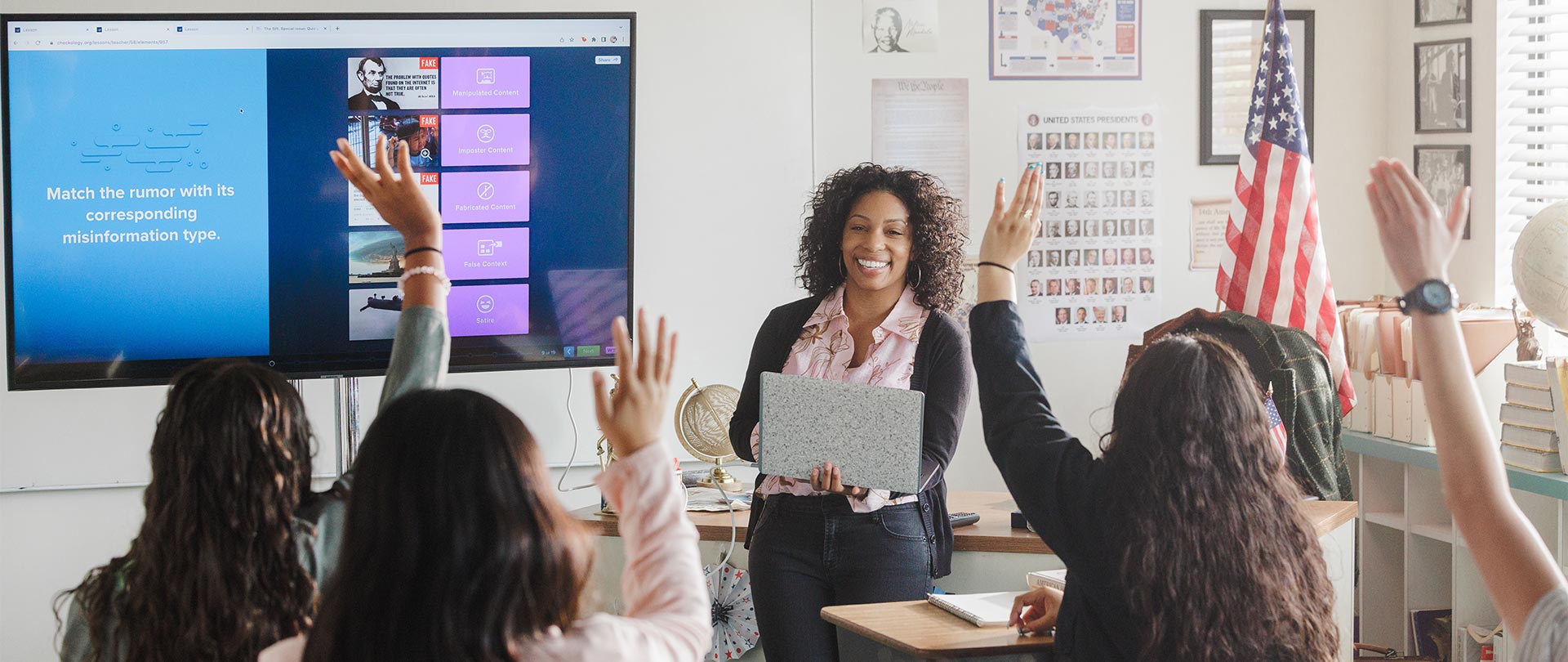

robots.txt (opens in a new tab)
5 rulesAll bots 1 allowed · 4 disallowed
- Allow
/wp-admin/admin-ajax.php - Disallow
/wp-admin/ - Disallow
/?s= - Disallow
/page/*/?s= - Disallow
/search/
No matching rules.
Sitemaps
2Recent Updates
- Website images
- Screenshots
- Network details
- Website Technologies
- Pages and Search Information
- HTTP Response Information
- TLS and certificates
- DNS Information
- Domain Registration
- Website profile
- Website Description
- Website Name
- Website profile
- Website Description
- Website Name
User reviews (0)