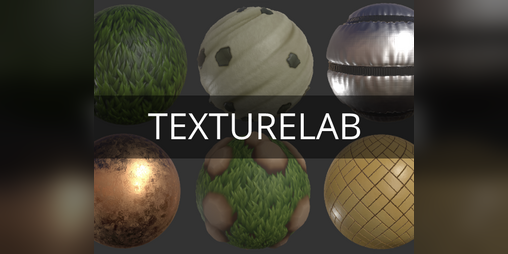
Website profiles · Technology insights · Alternatives

njbrown.itch.io

No paid content found
Visit website
Profile views 1 Outbound visits 1 Normal
njbrown Full homepage screenshot

At a glance

Category
Games & Board Games
Language
English
Paid-content signal
No paid content foundObserved
Registered
Unknown
Hosting
CloudflareInferred
HTTPS certificate trusted
PassedObserved
Last updated

Website review

This review may include AI-generated content and is not individually verified. Domain, certificate and other facts come from the observed data on this page.

What is njbrown on itch.io?

njbrown is an itch.io creator profile whose listed project is TextureLab, described on the page as “Procedural Texture Generation.” In practice, that means this is a small independent developer page rather than a storefront or studio site: the profile itself is thin, and the meaningful content is the project attached to it.

What you can actually expect

TextureLab, based on that description, belongs to the category of tools that generate textures from rules, parameters or noise rather than from hand-painted images. Typical uses for that kind of tool include:

  • Producing seamless or tileable surfaces for 3D assets and game environments
  • Generating variations quickly instead of editing each texture by hand
  • Prototyping material looks before committing to final art

That is general context for procedural texture tools, not a claim about TextureLab's specific feature set — the page evidence only gives the name and the one-line description, so details like supported export formats, node-based versus parameter-based workflows, or licensing terms would need to be checked on the project page itself.

Who it suits

A hobbyist or solo game developer who needs a handful of background materials and does not want to learn a full material-authoring suite is the most plausible audience. A studio pipeline with strict format and naming requirements would want to verify compatibility first.

As a next step, open the TextureLab project page from the profile and check the screenshots or devlog entries — those usually reveal whether the tool is a standalone application or a plugin, and what it outputs. If you are comparing options, itch.io hosts many similar small tools, and general-purpose material authoring is handled by packages like Adobe Substance 3D, though those target a different scale of work.

What is TextureLab and how does it generate procedural textures?

TextureLab is a procedural texture generation tool published by the developer njbrown on itch.io. Instead of painting textures by hand in an image editor, you build them from a node graph: you place generator and filter nodes, wire their inputs and outputs together, and the software evaluates that graph to produce a texture image. Change a parameter, re-evaluate the graph, and you get a new variation of the same texture — which is the practical appeal, since one setup can yield many related maps rather than a single fixed bitmap.

How the procedural approach works in practice

  • Nodes as building blocks. Noise, pattern and shape generators create the raw signal; filters and math nodes modify it; blend and mask nodes combine several signals into one result.
  • Parameters over pixels. Because the output is computed from the graph, you tune values (scale, frequency, contrast, seed) rather than editing individual pixels.
  • Reusability. The same graph can be re-seeded or re-scaled to produce a family of matching textures, useful when you need many surfaces that look like they belong to the same world.
  • Iteration speed. Small parameter changes are cheap to test, so exploration tends to replace careful up-front planning.

Who it suits

It fits indie game developers, technical artists and hobbyists who need tileable materials — stone, metal, fabric, terrain-like noise — without commissioning artwork or learning a full 3D suite. It is less suited to someone who needs a finished, art-directed texture immediately; node graphs reward experimentation and some comfort with abstract thinking about signals and masks.

A concrete starting scenario

Suppose you need a weathered concrete wall for a small project. You would start with a noise generator for the base grain, add a second noise at a different scale for larger blotches, run both through a contrast or curve node, then use a mask to blend in darker patches that read as stains. Once the graph looks right, you export the result and reuse the same graph with a different seed for a second wall that matches the first without being identical.

A practical next step

Before committing, decide what your project actually needs. If you want one specific texture, a hand-painted or photographed source may be faster. If you expect to need dozens of related materials, or you want to tweak a surface repeatedly during development, a node-based generator pays off. Browse njbrown's itch.io profile at njbrown to check the current project page, platform support and any documentation or examples the developer provides, since those details determine how easily the tool fits your pipeline.

Can I use TextureLab textures in commercial game projects?

Commercial use of TextureLab textures depends on the license attached to the asset, not on the tool that generated it. The page listing for njbrown on itch.io identifies TextureLab as "Procedural Texture Generation" but does not state licensing terms, so the license must be confirmed on the specific TextureLab page or download before shipping anything.

What "procedural" changes about licensing

Because TextureLab generates textures from parameters rather than shipping a fixed image file, there are two separate things to license:

  • The software — the right to run TextureLab itself.
  • The output — the textures you generate and bake out.

Some procedural tools grant broad rights to output while restricting redistribution of the software or its presets. Others treat output as fully yours. These are different permissions, and a permissive answer on one does not settle the other.

A practical check before you ship

  1. Open the TextureLab page on njbrown and read the license field and any linked license text.
  2. Look specifically for the words "commercial use," "royalties," and "redistribution."
  3. If the license is silent, message the creator through the itch.io profile and ask directly. Keep the reply.
  4. Record the license version and date in your project's asset manifest.

Where teams get caught out

A common failure is assuming that because a texture was generated rather than downloaded, it is automatically free of restrictions. In practice, a studio that bakes procedural output into a shipped build is redistributing that output, and the license governs whether that is allowed. A second risk is redistributing the generator's presets, node graphs, or seed files as part of a mod kit or asset pack — that is usually treated differently from shipping rendered textures.

For a solo developer making a small commercial release, the practical answer is usually simple once the license is read: either it permits commercial output or it does not. For a studio with legal review, treat TextureLab like any other third-party asset source and get the terms in writing before the asset pipeline depends on it.

If the license turns out to be restrictive, procedural generation still has a fallback: use TextureLab for prototyping and mood boards, then replace baked textures with assets from a source whose commercial terms are explicit.

How does njbrown's procedural texture generation compare to other texture tools on itch.io?

njbrown's itch.io presence is a creator profile rather than a full texture suite; the main drawing card is TextureLab, described as procedural texture generation. That places it in itch.io's niche of small, focused tools rather than the larger asset packs and painting apps that dominate the platform.

What TextureLab appears to be

TextureLab is presented as a procedural texture generator. Procedural tools create textures from rules, noise and parameters rather than from hand-painted pixels, so the workflow is usually: adjust sliders or node settings, preview the result, then export maps for use in a game engine or 3D renderer. That makes it most interesting to developers who need repeatable, tweakable surface materials — stone, wood, metal, fabric — and who value variation over a single fixed image.

How it differs from other itch.io texture options

Option type on itch.io Typical strength Typical trade-off
Procedural generators like TextureLab Endless variation; parameters can be re-tuned after the fact Requires learning the tool's model; output may need post-processing
Hand-painted or scanned texture packs Immediate, art-directed results Fixed resolution and style; less variation without buying more packs
Full 3D/painting applications Broad feature set beyond textures Heavier, steeper learning curve, often paid at a higher tier
Free single-purpose scripts or shaders Lightweight and quick for one effect Narrow scope; less cohesive as a texture pipeline

The practical comparison is not "which is better" but "which stage of work you are in." A procedural generator suits blocking out a level and iterating on materials; a texture pack suits final art direction where a specific look is required.

A concrete decision scenario

If you are building a game with many similar surfaces — tiled floors, brick walls, terrain — a procedural tool lets you generate dozens of variants from one setup and keep them consistent. If you need a single hero texture for a character or a stylised environment, a curated pack or a painting app will usually get you there faster.

Next step

Open the TextureLab page on njbrown and check whether it runs in the browser or needs a download, what export formats it supports, and whether the licence covers commercial game use. Those three details decide more than any feature list. For broader comparison, browse itch.io's "Textures" and "Tools" tags and note which listings include documentation or sample outputs — that is the clearest signal of how usable a small tool will be in practice.

What types of textures can I create with TextureLab for game development?

TextureLab is built around procedural texture generation, so the textures you get are computed from parameters and noise rather than painted by hand. For game development, that makes it best suited to surface materials you need in many variations and at consistent quality.

Practical categories you can expect to produce:

  • Terrain surfaces: grass, dirt, rock, sand, snow and blends between them, useful for landscape shaders and splat maps.
  • Architectural materials: brick, concrete, plaster, tiles, wood planks and metal panels for buildings and interiors.
  • Natural organics: bark, moss, stone, water caustics and cloud-like patterns for skyboxes or foliage cards.
  • Abstract and stylised patterns: stripes, grids, hexagons, camouflage and noise fields for UI backgrounds, VFX masks and sci-fi paneling.
  • Masks and utility maps: roughness, height/displacement, normal, ambient occlusion and edge-wear masks that drive material blending in engines.

How to decide if it fits your project

Procedural tools pay off when you need many variants of the same material, when your art direction is stylised or semi-realistic rather than photoreal, and when you want to iterate on parameters instead of repainting. They are a weaker fit when you need a specific hand-painted look or a one-off hero asset.

A concrete workflow: open TextureLab, build a rock material with layered noise, export the base colour, normal and roughness maps at the resolution your engine targets, then instance that material across several terrain patches with different seed values. One generator gives you a whole set of distinct but coherent surfaces.

If you want to compare options before committing, itch.io hosts many similar small tools, and Godot Engine and Unity both document how imported normal and roughness maps are interpreted, which is worth checking so your exports match your engine's expectations.

Is TextureLab free to download and use on itch.io?

Yes. TextureLab is listed on njbrown's itch.io profile as a free download, so you can get it and use it without paying. The page describes it as "Procedural Texture Generation," which tells you what it does rather than how it is licensed or priced.

What to check before you rely on it

  • Free to download vs. free to use commercially: itch.io pages often show a free download button while the creator's own terms live elsewhere. If you plan to ship assets in a commercial project, look for a license note on the project page or the creator's site.
  • Version and updates: Profile listings can lag behind the actual project page. Confirm the current build and any changelog on the dedicated project page rather than the profile summary.
  • Platform fit: Check the supported operating systems and any runtime requirements before downloading, since a free tool that does not run on your machine is not useful.

Practical scenario

Suppose you are building a small game and need tileable noise, brick or fabric patterns. You can download TextureLab at no cost, generate a set of textures, and keep them in your project folder. If those textures will appear in a released game, spend a minute locating the license statement first; that single check prevents a rewrite later.

As a next step, open the project page from the profile and read the description and any linked license or documentation before you commit the tool to your pipeline. For broader itch.io browsing, itch.io hosts the platform itself.

Related questions

More questions →
What can procedural texture generation like TextureLab be used for?

Procedural texture generation, including the kind of work associated with njbrown's TextureLab on itch.io, is used to create textures from rules, parameters, and algorithms rather than by painting every pixel by hand. It fits best when you need many texture variations, repeatable results, or fast iteration for digital projects such as games, 3D materials, and other visual assets. It is less suited to one-off, highly hand-crafted artwork where direct painting gives you more control.

What procedural texture generation does

Instead of starting with a blank canvas and drawing, you define a process. That process might combine noise, patterns, gradients, and adjustable parameters. The software then produces the texture image.

The key difference from manual painting:

  • Manual painting: you control every stroke and detail directly. Slow to change, hard to reproduce exactly.
  • Procedural generation: you control the rules and parameters. Fast to change, easy to reproduce, and simple to create many variations.

This makes procedural methods useful when a texture needs to be tweaked repeatedly or generated in large numbers.

Common uses

Game assets

Game developers use procedural textures for surfaces like terrain, walls, fabric, metal, and organic materials. Because the texture comes from parameters, you can generate a family of related textures that share a style but differ in detail.

3D materials and rendering

In 3D work, materials often need to tile seamlessly or respond to lighting in specific ways. Procedural approaches can produce tiling patterns and parameter-driven variation that are difficult to achieve consistently by hand.

Rapid iteration and variation

When a project needs many versions of a texture, procedural generation lets you adjust a few values and get a new result. This supports experimentation during development, when the final look is not yet fixed.

Parameter-based adjustment

If a texture is built from parameters, you can tune properties like scale, contrast, or pattern density without repainting. This is helpful when a texture must match a changing art direction or technical requirement.

Who it is for

Procedural texture generation is relevant to:

  • Game developers who need reusable, adjustable surface textures.
  • 3D artists and technical artists who build materials and want controllable variation.
  • Digital creators working on projects where textures must be generated repeatedly or adapted to different conditions.

It is less relevant if your goal is a single, fully hand-painted texture with no need for variation or reproduction.

How to decide if it fits your task

Ask these questions:

  1. Do you need more than one version of a texture, or expect to change it later?
  2. Would you benefit from adjusting a few parameters instead of repainting?
  3. Is the texture part of a digital pipeline, such as a game or 3D scene?

If you answered yes to most of these, procedural generation is likely a good fit. If you need one unique, highly detailed artwork with no reuse, manual painting may be more direct.

Where TextureLab fits

TextureLab is listed on njbrown's itch.io profile under procedural texture generation. Based on that listing, it is a tool in this category rather than a general painting application. For specific features, supported formats, or platform requirements, check the project page directly, since those details are not included in the available profile information.

What is njbrown.itch.io?

njbrown.itch.io is the itch.io creator profile for a user named njbrown. It is where their published projects are listed and where visitors can follow the creator. The profile currently shows a project called TextureLab, described as a procedural texture generation tool. If you are looking for njbrown's releases on itch.io, this is the page to start from.

What you will find on the page

  • Creator identity: the profile is headed simply "njbrown," with the same name repeated in the page's visible text.
  • Published work: the page showcases njbrown's project releases. The one named in the page content is TextureLab.
  • Follow option: the page includes a "Follow njbrown" action, so visitors can subscribe to updates from the creator.
  • Community profile link: the page is labeled as a community profile, which is itch.io's standard format for individual creators.

About TextureLab

TextureLab is listed on the profile as a procedural texture generation project. Procedural texture generation means textures are produced from rules, parameters, or algorithms rather than being painted by hand — useful when you need many variations or want to tweak a texture's look without redrawing it.

The profile page itself does not state a price, platform support, or download format for TextureLab. To check those details, open the project page from the profile rather than relying on the profile listing alone.

Who this page is for

If you want to… This page helps because…
See what njbrown has released It lists their projects in one place
Track future releases You can follow the creator from the page
Find a procedural texture tool TextureLab is named and described here
Confirm the creator exists on itch.io It is their official itch.io community profile

What to do next

  1. Open njbrown.itch.io in a browser.
  2. Scan the project list for TextureLab or any other release.
  3. Click the project title to reach its own page, where pricing, download, and platform details live.
  4. Use Follow njbrown if you want updates when new work is posted.

One thing to keep in mind: a creator profile only shows what the creator has chosen to publish. If the list looks short, it means njbrown has not posted more projects there — not that the page is broken.

How do I find and follow njbrown's projects on itch.io?

Go to njbrown.itch.io. That page is the creator's itch.io profile and the starting point for everything they publish there. From it you can open a listed project such as TextureLab, and you can use the Follow option on the profile to get updates when new work is posted.

What you'll find on the profile

The profile page carries the creator name njbrown and lists their projects. The project named in the page content is:

Project What the page says about it
TextureLab Procedural Texture Generation

The page also includes an itch.io Community profile section, which is where related activity tied to the profile appears.

Steps to find and follow

  1. Open njbrown.itch.io in a browser.
  2. Look at the project list on the profile. Select a project — for example, TextureLab — to open its own page.
  3. Return to the profile and choose Follow. Following is what puts new releases and updates from njbrown into your itch.io feed.
  4. Check the Community profile area on the same page if you want to see activity connected to the profile rather than just the project list.

Expected result: you can reach any listed project from one page, and after following, you don't have to re-check the profile manually to hear about new posts.

Common snags

  • The profile looks sparse. itch.io profiles show only what the creator has published or added, so a short list is normal and not a loading error.
  • You followed but see nothing new. Following changes what appears in your itch.io feed; it doesn't send a separate notification for every profile. If you want updates for one project specifically, follow or subscribe from that project's page as well.
  • You landed on a project page instead of the profile. Project pages and the profile are separate URLs. If you want the full list, go back to the profile root rather than staying on a single project.

What the page does not tell you

The available page content doesn't state pricing, download terms, or whether an itch.io account is required to follow. Treat those as unknown until you see them on the project or profile page itself.

What is TextureLab by njbrown?

TextureLab is a procedural texture generation project listed on the njbrown itch.io profile. It is made for creating textures programmatically rather than painting them by hand, and it is distributed through itch.io as one of njbrown's releases. If you need textures generated by rules, parameters, or code instead of manual drawing, this is the kind of tool to look at; if you need hand-painted art or a full 3D suite, it is not aimed at that.

What the listing tells you

The njbrown itch.io page presents the profile name "njbrown" and lists TextureLab with the description "Procedural Texture Generation." That is the core of what is documented: a project by njbrown, hosted on itch.io, whose stated purpose is generating textures procedurally.

What "procedural texture generation" means here

Procedural generation means the texture is produced from a defined process — parameters, noise functions, patterns, or code — rather than being drawn pixel by pixel. The practical consequences:

  • Repeatable and adjustable. Change an input value and the texture changes with it, instead of repainting.
  • Suited to variation at scale. Useful when you need many related textures (surfaces, materials, patterns) rather than one bespoke image.
  • Not a paint program. It complements hand-authored art; it does not replace drawing tools.

A concrete example: instead of painting a stone wall texture by hand, you define the process that produces stone-like variation, then tune it until the result fits your scene.

How to use the listing

  1. Go to njbrown.itch.io.
  2. Find TextureLab among the releases on that profile.
  3. Read the project page for what it does and how it is delivered.
  4. Follow or check back on the profile for updates, since itch.io profiles are where njbrown's releases are published.

Expected result: you reach the TextureLab project page and can judge from its own description whether it fits your texture workflow.

Common sticking points

  • Assuming it is a general art tool. The listing describes procedural texture generation specifically, so expect a generator, not a drawing canvas.
  • Expecting details the listing does not state. The profile excerpt gives the project name and its one-line purpose; specifics such as platform support, price, or license are not established by that excerpt, so check the project page itself before relying on them.
  • Confusing profile and project. njbrown.itch.io is the profile; TextureLab is the release listed on it.

When it is the right fit

Choose TextureLab if your task is generating textures through a defined process and you want to iterate by adjusting inputs. Look elsewhere if you need manual painting, or if you require documented platform, pricing, or licensing details that the profile listing alone does not provide.

Website Overview

Several search or sharing settings need attention. Together they may make snippets, preview images or preferred URLs less consistent across platforms.

Domain and Registration

Unknown

DNS and Email

Nameservers are provided by Cloudflare, indicating managed DNS hosting. MX records point to the Zoho Mail email service. No CNAME was found; the observed records resolve directly to addresses. SPF and DMARC are configured. DKIM status is unknown. TXT records include verification markers for Google. Such markers may also remain after a service stops being used.

TLS and Certificates

The public key uses EC with 256 bits. The server supplied a complete certificate chain. No organization name is present in the certificate; the available fields are consistent with domain validation. The certificate was issued within the Google Trust Services cloud or CDN ecosystem. The certificate's total validity is about 90 days, consistent with a short renewal cycle.

HTTP and Browser Security

The response lacks these common security headers: HSTS, CSP, Permissions-Policy. No X-Powered-By header was found, reducing one common source of backend fingerprinting information. The cf-ray response header indicates a CDN or caching proxy in the delivery path. No obvious internal addresses or debug information were found in the headers. The Server header identifies cloudflare without an exact version.

Technology Stack Analysis

The public page identifies Google Analytics, Cloudflare without precise versions, leaving fewer clues for version-specific scanning.

Search and Social Sharing

No homepage meta description was detected, leaving snippet selection more dependent on page text. No homepage canonical URL was detected. If duplicate URLs exist, consolidation may be less explicit. No Open Graph metadata was detected, so social previews may depend on platform inference. Twitter Card metadata is configured. The title has 17 characters, within a common display range.

Hosting and Email

DNSCloudflare
HostingCloudflare
EmailZoho Mail
Approximate IP geolocation (inferred; a CDN or proxy may differ from the origin server) Location unknown Inferred 104.26.8.198

Registration details

RDAP / WHOIS

Unknown

DNS records

DNS

TypeNameValueTTLPriority
Anjbrown.itch.io104.26.8.198300—
Anjbrown.itch.io104.26.9.198300—
Anjbrown.itch.io172.67.69.99300—
AAAAnjbrown.itch.io2606:4700:20::681a:8c6300—
AAAAnjbrown.itch.io2606:4700:20::681a:9c6300—
AAAAnjbrown.itch.io2606:4700:20::ac43:4563300—
MXitch.iomx.zoho.com30010
MXitch.iomx2.zoho.com30020
NSitch.iodawn.ns.cloudflare.com86400—
NSitch.ionoah.ns.cloudflare.com86400—
TXTitch.iogoogle-site-verification=6hl42kO3bIWWIu-mf44uXdzQc2ckxn-If90YdNhRUBg300—
TXTitch.iov=spf1 include:mailgun.org include:zohomail.com include:mail.zendesk.com include:spf.mtasv.net -all300—
TXTitch.iozoho-verification=zb14183429.zmverify.zoho.com300—
DMARC_dmarc.itch.iov=DMARC1; p=none; pct=100; rua=mailto:[email protected]; sp=none; aspf=r;300—

TLS and certificates

TLS / SSL

AssessmentNormal configuration
Supported protocolsTLSv1.2、TLSv1.3
Negotiated protocolTLSv1.3
Certificate subjectitch.io
IssuerGoogle Trust Services
Valid until2026-11-18T16:44 · Remaining when checked: 34 days
Verification detailsCertificate trust: Passed · Hostname match: Passed

HTTP response headers

HTTP

HeaderValue
content-typetext/html
servercloudflare
x-frame-optionsSAMEORIGIN
x-content-type-optionsnosniff
referrer-policyno-referrer-when-downgrade
set-cookieRedacted

Identified technologies

Google AnalyticsCloudflare

Pages, Search and Sharing

Meta descriptionNot detected
Canonical URLNot detected
LanguageEnglish (default)
Twitter Cardsummary_large_image
mediapartners-google 0 allowed · 0 disallowed
All bots 0 allowed · 4 disallowed
  • Disallow/*/download/
  • Disallow/*/rh/
  • Disallow/*/rp/
  • Disallow/-/

User reviews (0)

  • No reviews yet.