
 简体中文
简体中文 English
Website review
This review may include AI-generated content and is not individually verified. Domain, certificate and other facts come from the observed data on this page.
What is NJL?
NJL is a litigation support company serving law firms, corporations and insurance companies, primarily in New Jersey and Pennsylvania but also nationwide. It has operated since 1994 and bundles three service areas under one roof: documents, data, and trial support.
What that covers in practice
- Documents: legal copying, scanning and printing, blow-up board printing, X-ray and medical film copying, Bates labeling and endorsing, oversize map and blueprint copying, binding.
- Data: data preservation and eDiscovery, managed document review, document hosting and analytics, data mapping and collection, computer and mobile forensics, social media discovery.
- Trial support: court reporting and transcription, remote Zoom depositions, courtroom playback, legal graphics and 3D animation, PowerPoint and mediation presentations, settlement and day-in-the-life videos, video deposition editing, exhibit call-outs, war room setup.
Its pitch is consolidation: instead of coordinating several legal vendors, a firm makes one call and NJL handles the rest. The site also offers web-based document hosting with unlimited users for searching, culling, reviewing, annotating and producing documents.
Who it fits
A small litigation team preparing for a deposition-heavy case is the clearest fit: they can book a remote deposition, order exhibits, and arrange playback from the same vendor rather than juggling three schedules. Larger firms and insurers may care more about the data side — hosting and managed review — where consolidating vendors reduces handoff risk.
Trade-off to weigh
A single vendor simplifies coordination and billing, but it also concentrates your case work in one provider. If a matter needs a specialized forensic examiner or a niche animation studio, you may still go outside. The practical test is whether NJL's breadth matches your typical matter; if most of your needs fall within those three categories, the one-team model is a real advantage.
Next step: list the tasks on your next case and check which fall outside NJL's three service areas. Anything left over is what you would still need a second vendor for.
How does NJL handle eDiscovery and document review for large cases?
NJL presents eDiscovery and document review as a single, connected service rather than a handoff between separate vendors. Its page describes a web-based review system for searching, culling, annotating and producing documents, with document hosting that supports unlimited users. For a large case, that means the same provider can handle collection, processing, hosting and review instead of coordinating multiple specialists.
What the service covers
- Data preservation and eDiscovery
- Managed document review
- Document hosting and analytics
- Data mapping and collection
- Computer, cellphone and mobile forensics
- Social media discovery
How this plays out on a large matter
A litigation team facing a multi-custodian case would typically use NJL to collect and preserve data, load it into hosted review, run searches and analytics to reduce the set, then manage review and production through the same system. The page also positions NJL as a one-stop option for related needs such as court reporting, remote depositions, legal graphics and trial support, which can simplify vendor management when a case moves from discovery toward trial.
Trade-offs to weigh
A single-vendor approach can mean fewer coordination gaps and one point of contact, which is the benefit NJL emphasizes. The counterweight is that large or unusually complex matters may still call for specialized review counsel, jurisdiction-specific data privacy advice, or a platform with particular analytics your team already uses. The page does not publish pricing or detailed platform specifications, so those need to be confirmed directly for your case size and timeline.
Next step
Ask NJL for a scoped walkthrough using a sample of your actual data: how collection and preservation are handled, how review workflows and permissions are set up for unlimited users, what analytics are available for culling, and how production and trial exhibit needs are managed. If your firm already uses a review platform, ask whether NJL works within it or expects you to use its own Online Review Tool.
For broader comparison, the EDRM framework is a useful reference for structuring the discovery process, and [[site:sedona conference.org|The Sedona Conference]] publishes practical guidance on document review and proportionality.
What court reporting and video deposition services does NJL offer for remote or in-person proceedings?
NJL offers court reporting and video deposition services for both remote and in-person proceedings, along with related trial-support production. The page lists these under its Court Reporting & Video and Trial Support categories.
Court reporting and depositions
- Court reporting and transcription
- Remote Zoom depositions
- Courtroom playback
Video and visual presentation
- Video deposition editing
- Legal graphics and 3D animation
- PowerPoint presentations
- Mediation presentations
- Settlement videos
- Day-in-the-Life videos
- Exhibit call outs
Trial and war room support
- War room set up
- Courtroom playback (listed above, but relevant to live trial presentation)
Who this fits The service is positioned for law firms, corporations, and insurance companies that need litigation support across New Jersey, Pennsylvania, and nationwide. If your matter involves a remote deposition, a settlement video, or a trial presentation with graphics and playback, NJL presents these as one coordinated offering rather than separate vendors.
Next step For a remote deposition, ask NJL to confirm the Zoom setup, exhibit-sharing workflow, and whether the transcript and video can be synchronized and delivered together. For in-person proceedings, ask about courtroom playback and war room setup if you expect to present video or exhibits live. The practical decision criterion is whether you want one vendor to handle reporting, video, graphics, and trial presentation, or whether you prefer to split those across specialists. NJL’s own client testimonials emphasize having a single point of contact, which is the main trade-off to weigh against using separate best-of-breed providers for each service.
When should a law firm use NJL's trial support services like legal graphics or war room setup?
Use NJL's trial support services—legal graphics, 3D animation, courtroom playback, war room setup—when a case's presentation demands more than documents and testimony can carry, and when the cost of a confused jury or an unprepared trial team outweighs the vendor expense. NJL is a litigation support provider serving law firms, corporations and insurance companies, with court reporting and video as its anchor services and trial support as an extension of that work.
Situations that justify trial support
- Complex liability or damages stories. Legal graphics and 3D animation help when the mechanism of injury, a patent, a construction sequence, or a financial flow is hard to explain in words. Use them when a jury must grasp a process, not just a fact.
- High-exposure trials. The larger the verdict range, the easier it is to justify spending on presentation quality. War room setup and exhibit call-outs matter most where weeks of trial and hundreds of exhibits are likely.
- Video-dependent evidence. Deposition editing, courtroom playback, day-in-the-life and settlement videos are worth it when video will be shown repeatedly or when a witness's credibility turns on tone and delivery.
- Mediation and settlement conferences. A settlement video or mediation presentation can resolve a case before trial and is often cheaper than trial preparation.
- Multi-party or multi-counsel trials. A dedicated war room keeps exhibit sets, transcripts and playback equipment coordinated when several firms share a courtroom.
When to skip it
If the case is a short bench trial, a routine motion hearing, or a low-value matter with few exhibits, standard court reporting and document services are usually enough. Graphics work also has a lead time; if trial is weeks away, the realistic scope shrinks to exhibit call-outs and clean playback rather than custom animation.
Practical next step
Build a short list of the three moments in your case that a jury must understand, then ask what format carries each one: a timeline, a 3D sequence, an edited video clip, or live playback. That list tells you whether you need a full trial support package or just one service. NJL presents these services as one coordinated team rather than separate vendors, which suits firms that want a single point of contact—one client testimonial on NJL specifically praises not having to maintain a list of legal vendors.
Decision criteria
| Situation | Likely fit |
|---|---|
| Long trial, many exhibits, multiple parties | War room setup, playback, exhibit call-outs |
| Technical or medical causation dispute | Legal graphics, 3D animation |
| Video depositions central to the case | Deposition editing, courtroom playback |
| Pre-trial settlement push | Mediation presentation, settlement video |
| Short hearing, few exhibits | Court reporting and transcription only |
For comparison, court reporting and trial technology are also offered by national providers such as Veritext, and some firms handle graphics through specialist demonstrative-evidence studios. The trade-off is coordination: a single vendor simplifies logistics, while separate specialists may offer deeper expertise in one narrow area.
How does NJL ensure data security and compliance during forensics and document hosting?
NJL's page describes the services it offers and the workflow it supports, but it does not publish a detailed security or compliance program. So the honest answer is: the page shows what NJL does that touches sensitive data, and the specific safeguards would need to be confirmed directly with the company.
What the page does say
- Forensics and collection: computer forensics, cellphone and mobile forensics, and social media discovery sit under its Data services.
- Hosted review: document hosting with unlimited users in a web-based "Online Review Tool," plus managed document review and document hosting & analytics.
- eDiscovery: data preservation, data mapping and collection, and Bates labeling/endorsing for produced documents.
- Physical documents: legal copy, scan and print, x-ray and medical film copying, and blow-up board printing.
The only security-adjacent language on the page is "our secure and user-friendly 'Online Review Tool.'" That is a marketing claim, not a specification. No certifications, encryption standards, data-residency options, retention schedules or audit rights appear on the page.
What to verify before handing over data
Because forensics and hosting involve privileged, personal and often medical material, treat these as questions for NJL, not assumptions:
| Area | Ask specifically |
|---|---|
| Access control | Who inside NJL can see our matter, and is access role-based and logged? |
| Encryption | At rest and in transit, and how are credentials and keys managed? |
| Hosting location | Where is data stored, and can we keep it in a specific jurisdiction? |
| Forensics chain of custody | How is evidence imaged, hashed and documented for admissibility? |
| Retention and deletion | Default retention period, and how deletion is certified at matter close |
| Compliance posture | Any SOC 2, ISO 27001 or similar report, and willingness to sign a BAA or DPA |
| Subcontractors | Which third parties touch the data, and under what terms |
Practical next step: for a case with PHI or regulated financial data, request NJL's written security overview and a sample business associate agreement or data processing addendum before the first collection. If they cannot produce one, scope the engagement so the most sensitive material stays in your own systems.
A concrete scenario
A mid-size firm in New Jersey handling a personal injury matter needs medical records copied, a treating physician's deposition recorded remotely, and a set of documents Bates-stamped and hosted for review. NJL's pitch — "one team, one solution" — is genuinely useful here: one vendor instead of three, as the Goldmann testimonial notes. The trade-off is concentration risk: a single provider then holds imaging, transcripts and hosted review data. If NJL's security documentation satisfies your insurer and ethics obligations, the consolidation is efficient; if it does not, split the forensic and hosting work to a vendor that will sign the terms you need.
For comparison, court reporting and legal technology providers such as Veritext and DISCO publish more explicit security and certification information, which can help you benchmark what to ask for.
What makes NJL a one-stop litigation support vendor compared to using multiple specialized providers?
NJL positions itself as a single vendor covering the full litigation lifecycle, so a firm can avoid coordinating several specialists for one case. Its page groups services into three buckets: documents (copy, scan, print, Bates labeling, blow-up boards, oversized map and blueprint copying, binding), data (preservation, eDiscovery, managed review, hosting and analytics, collection, computer and mobile forensics, social media discovery), and trial support (court reporting and transcription, remote Zoom depositions, courtroom playback, legal graphics and 3D animation, presentations, settlement and day-in-the-life videos, exhibit call-outs, war room setup).
Where one vendor helps versus where specialists win
| Situation | Single-vendor appeal | Trade-off to weigh |
|---|---|---|
| Small firm or solo handling a case start to finish | One contact, one invoice, consistent formatting from collection through trial exhibits | A narrow specialist may go deeper on one task, such as complex forensics |
| Multi-phase case with tight deadlines | Documents, data and trial teams already share context, so handoffs are internal | You depend on that vendor's capacity during peak periods |
| Unusual technical needs (mobile forensics, 3D animation) | Covered in the same engagement | Confirm in-house capability versus subcontracting before you commit |
A practical scenario: a two-attorney firm in New Jersey has a commercial dispute with a large document set. Instead of hiring a scanning shop, an eDiscovery host, a court reporter and a graphics studio, it can route scanning, Bates labeling, hosted review and deposition video through NJL. The testimonial from Richard Goldmann of Goldmann & Goldmann makes exactly this point — one phone call instead of a vendor list — while John Levy of Montgomery McCracken and Chris Tucci of Connell Foley emphasize consistency and responsiveness. Those are client observations; my read is that the real value shows up in the handoff moments, when a deposition transcript, a video clip and an exhibit set must line up for trial.
Next step: list your case's phases, mark which need specialized depth, and ask NJL which services are performed in-house. For comparison on court reporting specifically, see National Court Reporters Association.
 Cloudflare
 Google Workspace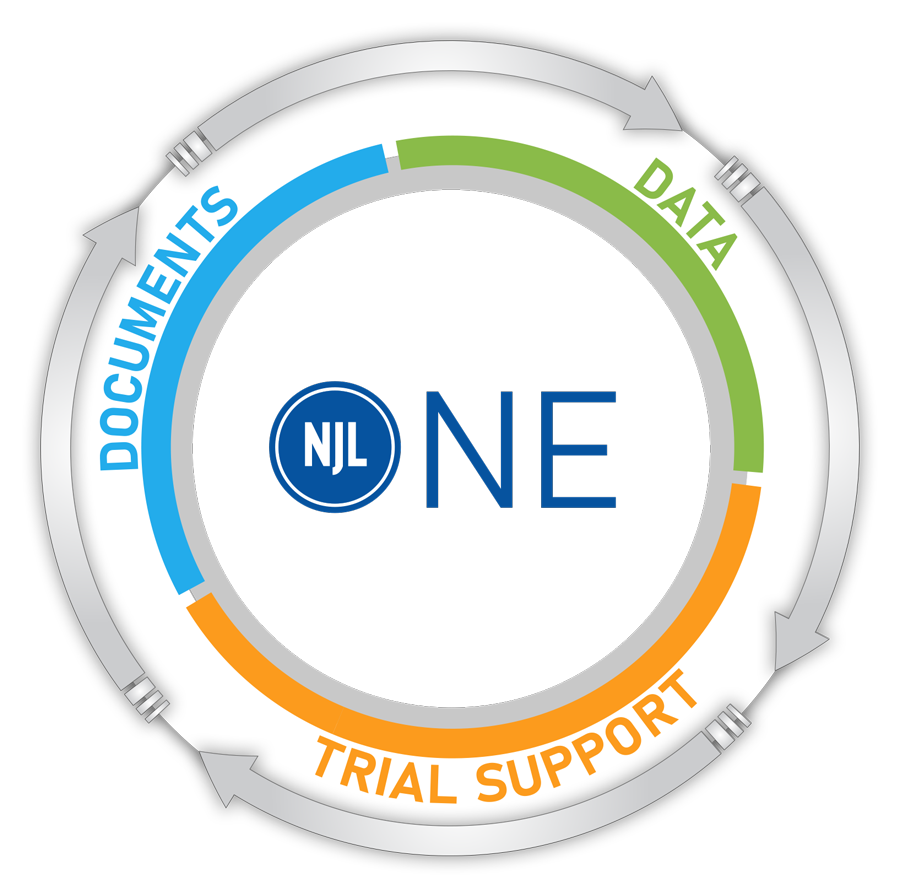
User reviews (0)