
 简体中文
简体中文 English
Website review
This review may include AI-generated content and is not individually verified. Domain, certificate and other facts come from the observed data on this page.
What is the National Scholastic Chess Foundation (NSCF)?
The National Scholastic Chess Foundation is a nonprofit educational organization founded in 1990 that uses chess as a teaching tool for students of all ages. Its stated aim is to develop critical thinkers, and it describes more than 35 years of work showing that chess can build independent study and problem-solving skills while supporting educators' goals in core subjects.
What NSCF actually does
- Scholastic programs: Classes and camps for students, plus tournaments where players test what they've learned.
- Teacher training: Professional development and curriculum to help schools use chess in education.
- Community programs: "Community Chess" for bringing together people across age, language, income and work background, and Juvenile Justice work with incarcerated and at-risk youth focused on better decision-making.
- Scholarships: Need-based support so interested students can take part, plus awards for academic and chess excellence.
- Resources and news: Articles for teachers, suggested book titles from beginner to advanced level, news about schools and players, and endorsements from participants and partners.
Who it's for
The main audiences are K–12 students, parents looking for structured chess activity, schools and teachers who want chess in the classroom, and community or youth-justice organizations. A parent might start with classes or a tournament; a teacher would look at training and curriculum; a program director would look at community or juvenile-justice partnerships.
How to choose
Decide based on your role. If you want your child playing regularly, compare the classes, camps and tournament schedule. If you're an educator, the training and curriculum are the relevant entry point. If you run a community or youth program, ask about partnership models rather than individual enrollment. Cost is the practical unknown here: the site indicates scholarships, but you'll need to contact NSCF directly for current fees and eligibility, since no pricing is published in the material available.
Start at National Scholastic Chess Foundation - NSCF and use the contact route to ask about fees, scholarship criteria and the next tournament date. For comparison, other national bodies such as US Chess publish tournament ratings and membership information, which is useful if you want to understand how scholastic events fit into the wider competitive structure.
How can my child join an NSCF chess class or camp?
Start with the program page for NSCF classes and camps, then contact the organization directly to ask about the next registration window. NSCF describes its classes and camps as ways for students to build independent study and problem-solving skills, and its site lists classes and camps, tournaments, teacher training, community programs, scholarships and resources as separate offerings. Because the site does not show a simple public signup form or posted schedule in the supplied page evidence, the practical route is to ask which class or camp fits your child's age and experience, what the current session dates are, and whether registration is handled by a school, a local program partner or NSCF itself.
What to ask before registering
- Your child's age, grade and playing strength, from beginner to tournament player.
- Whether the class is in person or online, and whether a camp is a half-day or full-day program.
- The session dates, location and what equipment or materials your child needs.
- Whether the program is run at your school or through a community site.
- Whether scholarships are available if cost is a barrier. NSCF states that it offers need-based scholarships and also sponsors scholarships for academic and chess excellence.
A realistic path for a beginner
If your child has never played, ask for an introductory class rather than a tournament-focused group. A parent in your position might email or call NSCF with the child's grade and experience level, then ask to be placed on a notification list for the next beginner class or camp. If your child already plays competitively, ask whether the tournament schedule is the better next step, since NSCF lists tournaments as a way for aspiring players to test their knowledge.
Where to look next
Use the NSCF website's classes and camps page as the main entry point, and check the scholarships page if fees are a concern. For broader context on youth chess programs, the official sites of US Chess and Chess.com publish general information about scholastic chess, but they are not NSCF registration channels.
What types of chess tournaments does NSCF offer for students?
NSCF runs scholastic tournaments designed as a testing ground for students who have learned chess in classes, camps or at home. The organization describes them as "a great way for aspiring players to put their knowledge to the test," which points to a competitive but developmental setting rather than an elite-only circuit. Because the NSCF frames its whole mission around developing critical thinkers, its events are typically pitched at school-age players moving from instruction into real games with clocks, rules and results.
What that means in practice
- Instruction-linked competition: Tournaments sit alongside NSCF classes, camps and teacher training, so a student can learn a skill in a session and then try it under pressure at an event.
- A range of experience levels: The site speaks to "aspiring players" generally, not just advanced ones, which suggests events that accommodate newcomers as well as stronger school competitors.
- Access for families who need it: NSCF states that it offers scholarships based on need so every interested student can participate, and also sponsors scholarships for academic and chess excellence. If entry cost is a barrier, that is the first thing to ask about.
A useful next step
Decide what you want from the event before you register. A first-time player benefits most from a low-stakes, age-grouped section with plenty of other beginners; a player already winning locally may want a stronger section or a multi-round event that runs a full day. Check the current tournament calendar on National Scholastic Chess Foundation - NSCF for dates, sections and eligibility, and confirm whether your school or child qualifies for a scholarship entry.
For broader context on how scholastic chess is organized in the United States, US Chess publishes rating and tournament information that complements what a local foundation like NSCF provides.
How does NSCF support teachers in bringing chess into their classrooms?
NSCF supports teachers through professional development and curriculum rather than by simply handing over a set of boards. The organization describes Teacher Training as a way to increase the use of chess in education, offering educators training and teaching materials they can use in their own classrooms. Alongside that, its Scholastic Programs include classes, camps, tournaments and resources, so a teacher who wants chess to be more than a lunchtime club can connect a school program to outside events and reading lists.
What this looks like in practice
- Training and curriculum: Teachers learn how to teach chess and receive curriculum support, which matters if the goal is classroom instruction rather than an after-school activity run by a volunteer.
- A pathway for students: Classes and camps build skills, tournaments give students a goal to work toward, and resources suggest books for beginners through advanced players.
- Support beyond the classroom: NSCF also runs community chess programs and juvenile justice programs, and offers need-based scholarships so that interested students are not excluded by cost.
Deciding whether it fits your classroom
The strongest use case is a teacher or school that wants chess tied to broader learning goals. NSCF frames chess as a tool for developing independent study, problem-solving and decision-making skills, and says it helps educators reach positive outcomes in core subjects. That makes it most relevant if you need a structured program with training behind it, not just a set of rules.
A practical next step is to identify what you actually need: a one-day introduction for a single teacher, a semester curriculum, or a school-wide program with tournaments. Then look at the Teacher Training and Scholastic Programs sections on National Scholastic Chess Foundation - NSCF and ask directly what training format, grade levels and materials are available. If your school has no budget, ask about the scholarship route early, since NSCF states that scholarships are offered based on need.
Does NSCF offer scholarships for students who cannot afford chess programs?
Yes. The NSCF states that it offers scholarships based on need so that every interested student can participate in its programs, and it also sponsors scholarships for academic and chess excellence. The need-based option is the one aimed at families who cannot afford classes, camps or tournaments; the merit awards are a separate track.
How to use this
If cost is the barrier, ask about the need-based scholarship before registering — mention the specific program (a class, camp or tournament) and your child's situation. If your child is already a strong student or player, ask separately about the excellence scholarships, since those are awarded for achievement rather than financial need.
What to check
- Which programs the scholarship covers: classes and camps, tournaments, or both.
- What documentation or information the application requires.
- Whether awards are full or partial, and any deadlines tied to program start dates.
For general context, the NSCF is a 501(c)(3) non-profit founded in 1990 that runs scholastic classes, camps, tournaments and teacher training, so scholarship decisions sit alongside its wider educational mission rather than being an exception to it.
How does NSCF use chess to help at-risk or incarcerated youth?
NSCF’s juvenile justice work uses chess as a structured way to practice decision-making, according to its site: the organization says it engages incarcerated and at-risk youth in programs that help them develop better decision-making skills. Chess fits that goal because every move is a choice with consequences, and players get immediate feedback without needing a lecture or a punishment.
In practice, a session might look like this:
- Students learn and play in small groups, so turn-taking and patience are part of the activity.
- A coach pauses play to ask why a move was chosen and what else was possible.
- Players review finished games to see where a different decision would have changed the result.
- Repeated games let students test whether slowing down and thinking ahead works better than reacting.
The broader NSCF approach also emphasizes independent study and problem-solving, which are the same habits that matter outside a chessboard. For a program coordinator, the useful question is not whether students become strong players, but whether they can carry “stop, consider, then act” into daily choices. NSCF also offers scholarships based on need, which matters if cost would otherwise keep a student out.
For a concrete next step, ask a local juvenile justice or youth program whether it wants a short chess unit focused on decision-making rather than competition, then look at NSCF’s juvenile justice and community program pages at National Scholastic Chess Foundation - NSCF.
 Google Workspace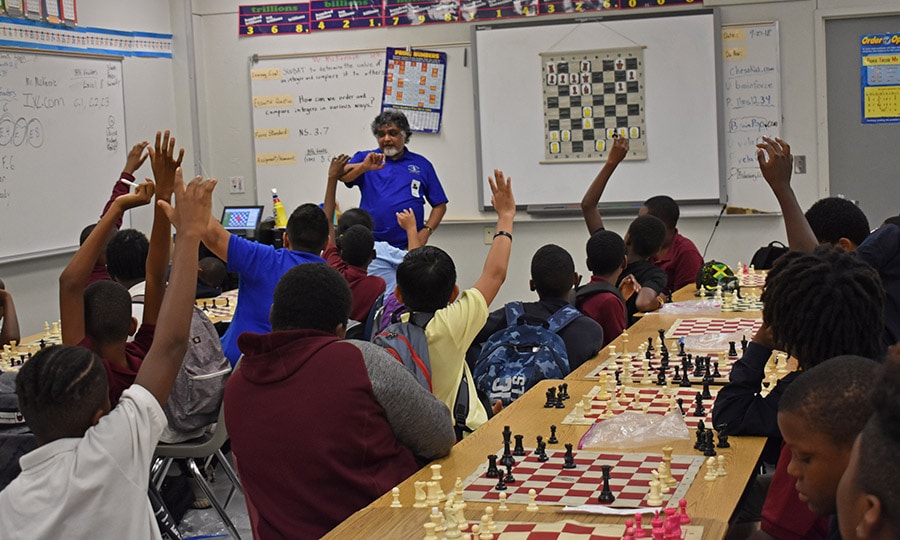
User reviews (0)