Website profiles · Technology insights · Alternatives

ourfamilyhabits.com

A family habit tracker app that builds responsibility, consistency, and character — designed for homeschool families, Charlotte Mason families, and intentional parents.

Paid content
Visit website
Profile views 6 Outbound visits 1 Normal
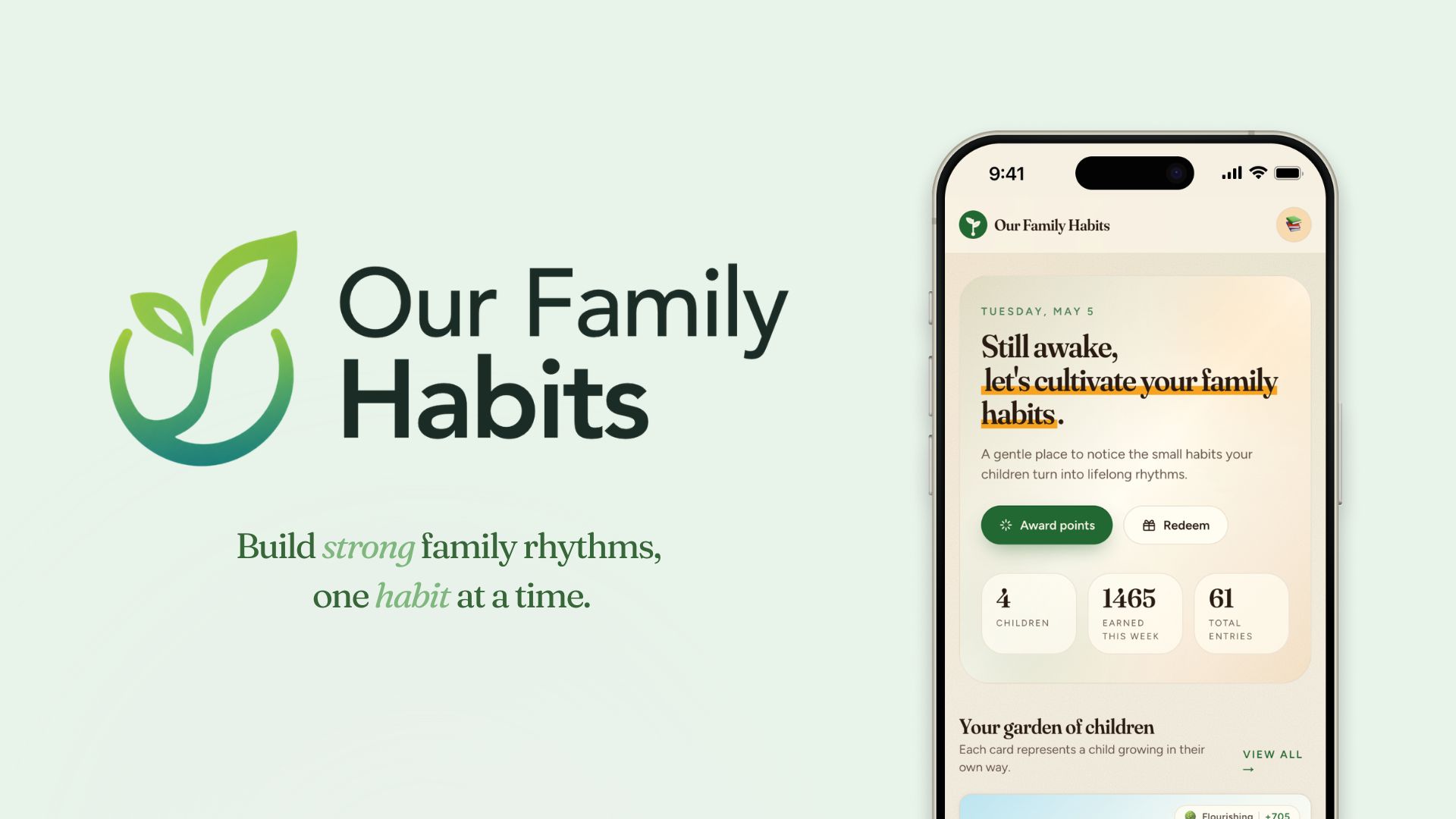
Our Family Habits Full homepage screenshot

At a glance

Category
Productivity
Language
English
Paid-content signal
Paid contentObserved
Registered
2026
Hosting
VercelInferred
HTTPS certificate trusted
PassedObserved
Last updated

Website review

This review may include AI-generated content and is not individually verified. Domain, certificate and other facts come from the observed data on this page.

What is Our Family Habits?

Our Family Habits is a family habit-tracking app that positions itself as a shared “family operating system” rather than a simple chore chart. Its stated focus is building character, consistency and responsibility in children, with habits, chores, routines, rewards and weekly insights in one place. It is explicitly aimed at homeschool families, Charlotte Mason families, blended families and parents who describe themselves as intentional about character formation.

What it actually does

The page describes five connected pieces:

  • Habits and chores — parents define what to celebrate (reading, music practice, chores, kindness) and set the point values themselves.
  • A reward system — children spend earned points on privileges or small treats, with parents approving redemptions.
  • A family kiosk dashboard — a shared tablet screen showing family progress, streaks and points at a glance, so children can check in without being reminded.
  • Weekly insights — a digest and “growth stages” that make progress visible over time rather than day to day.
  • Character framing — the app’s stated goal is reinforcing traits like initiative and consistency, not just completing tasks.

Who it suits, and the trade-off

The design assumes a household with multiple children, a shared device, and parents willing to configure habits and points up front. The page mentions setup in about 10 minutes and a free starting tier with no credit card required, with paid tiers available. The honest trade-off: any points-and-rewards system depends on parents keeping it consistent, and the page itself argues that sticker charts fail once novelty wears off. A shared kiosk reduces nagging, but it also means children see each other’s scores, which can motivate some kids and breed comparison in others.

A practical next step

If you are weighing this against a plain paper chart, run one week with three habits per child and a visible family screen, then ask whether your children checked it unprompted. If the answer is no, the problem is the routine, not the tool. For broader habit-building methods, see Charlotte Mason for the philosophy the app references, or Habitica if you want a gamified alternative for older kids.

How does Our Family Habits work for parents who want to build character instead of just tracking chores?

Our Family Habits is built around the idea that chores are the surface and character is the goal. Instead of a checklist that ends when the task is done, it treats habits, chores, routines, rewards and character as five connected pieces of one family system, so the same structure that gets the dishes done also reinforces kindness, initiative and consistency.

What that looks like in practice

  • You define what gets celebrated. Reading, music practice, chores and kindness can all live in the same place, and you set the point values yourself. That means a parent can weight "helped a sibling without being asked" alongside "emptied the dishwasher."
  • Points turn into privileges, not bribes. Kids earn points, choose what to spend them on, and parents approve. The child is making the decision, which is the part that builds judgment rather than compliance.
  • A shared kiosk screen replaces nagging. A tablet on the counter shows family progress at a glance — streaks, points earned today, who has done what. The screen becomes the reminder, so the parent steps out of the repeating-instructions role.
  • Weekly insights make growth visible. A weekly digest and growth stages are aimed at the habits that are hardest to see day to day: initiative, follow-through, consistency.

Why the sticker-chart problem is the real design brief

The site's own framing is that sticker charts work for a week and then disappear, taking the motivation with them. The practical difference here is that rewards are earned and chosen rather than handed out, and the system is shared rather than one child's private chart. That addresses two common failure modes: reward battles (kids gaming an inconsistent system) and uneven responsibility (some children contributing while others avoid helping).

Who this fits, and who it doesn't

If your family… This approach fits because…
Wants character formation, not just task compliance Habits and character sit in the same system as chores
Has mixed ages or blended dynamics Shared visibility makes contributions even and public
Already runs on rhythms (homeschool, Charlotte Mason, intentional parenting) The vocabulary and structure match how you already think
Mainly needs a fast chore-assignment tool The character and rewards layers may feel like more than you need

A concrete starting scenario

Pick one habit per child that reflects character rather than output — "puts shoes away without being asked," "reads for 20 minutes," "checks on a sibling." Set a point value you actually believe in. Put the kiosk screen somewhere the family passes constantly. At the end of the week, look at the digest together and let each child spend what they earned. The first week tells you whether the point values are calibrated; the fourth week tells you whether the habit has become a rhythm.

A useful next step is to start with the free tier and one habit per person rather than importing your entire chore list at once — setup is described as taking about ten minutes, and the honest test of whether this works for your family is whether the kiosk screen reduces how often you repeat yourself. If it does, add the next layer.

Can I try Our Family Habits for free before paying?

Yes. Our Family Habits has a free starting point: the site says you can “Start free” with no credit card required and set up in about 10 minutes. You can plant a first habit and use the app before deciding whether to pay. The site also points to a separate pricing page for when you want to “level up,” which implies paid tiers exist beyond the free entry point.

What “free” appears to cover

  • Starting with at least one habit, based on the “Plant your first habit — free” wording.
  • No card required at signup.
  • Setup in about 10 minutes, aimed at getting a family running quickly.

The exact limits of the free version — how many habits, children or features — are not spelled out in the supplied page evidence, so check the pricing page before assuming the free tier covers your whole family.

A practical way to test it

Try it for one week with a single routine you already repeat daily, such as a morning routine or reading time. Add one or two children, assign point values, and see whether the family kiosk dashboard and weekly insights actually reduce reminding. If the free version supports that test, you will know whether the paid features matter for your household before spending anything.

Who this fits

The site is aimed at homeschool families, blended families and traditional families who want habits, chores, routines, rewards and character tracking in one place. If you mainly need a simple chore checklist, a free habit start may be enough. If you want shared rewards, a counter tablet dashboard and weekly growth insights across several children, you will likely need to compare the paid tiers.

For broader context on family routine tools, you can also look at Our Family Habits directly and its pricing page.

How does Our Family Habits handle rewards without turning them into bribes?

Our Family Habits separates earning from spending and keeps parents in control of the exchange. Children accumulate points by completing the habits and chores a parent has defined, then spend those points on privileges and small joys the parent has already approved. The framing on the site is "kids earn, kids choose, parents approve" — the child gets real agency over what the points buy, but nothing is handed over automatically.

That structure matters because a bribe is given before the behavior, to secure it, and it is negotiated in the moment when you are least calm. A points balance is earned after the behavior, from a menu set in advance. The site's own critique of sticker charts points at a related failure: stickers are static and lose novelty, so motivation fades. Points that can be saved toward something the child picked themselves stay live longer.

Where the design does the anti-bribe work

  • Parent-set point values. You decide what each habit is worth, so the economy reflects your family's priorities rather than your child's lobbying.
  • Parent approval on redemption. The child chooses, but a parent signs off — which blocks impulse spending and keeps you from being cornered at bedtime.
  • A shared kiosk dashboard. A tablet on the counter shows balances and streaks to everyone. Visible progress is its own reward and reduces the "what do I get?" conversation.
  • Weekly insights and growth stages. Progress is reviewed on a weekly rhythm rather than argued about daily, which shifts attention from the transaction to the pattern.

A concrete scenario

Say you want reading, music practice, and kindness to matter more than dishes. Give reading and practice higher point values than chores, let each child pick a reward from a parent-approved list, and review the week together on Sunday. If a child starts doing only the high-value habits and skipping the rest, that is visible in the weekly view, and you adjust values — not the child's character.

The trade-off to watch

A points economy is still an economy. If every act of kindness has a price, children can learn to ask what something is worth before doing it. Keep the most character-shaped habits — kindness, initiative, helping without being asked — partly outside the ledger, celebrated in words and in the family dashboard rather than paid for. The site itself frames the goal as rhythms and character rather than checklists, so treat points as scaffolding you can thin out as habits take hold.

For families already running a deliberate approach to routines, Simply Charlotte Mason covers the habit-training philosophy that sits behind this kind of tool. If you want to see how the rewards and dashboard fit together before committing, start with one habit for one child for two weeks and watch whether the motivation holds without you prompting.

Is Our Family Habits suitable for homeschool or Charlotte Mason families?

Yes — the product is explicitly designed with homeschool and Charlotte Mason families in mind. The site states it was "built by a homeschool family of 7" and names homeschool families, Charlotte Mason families, and intentional parents as its intended audience. Its emphasis on "rhythms and character that last a lifetime" — responsibility, consistency, initiative, character — aligns with a Charlotte Mason approach that treats habits as formation rather than task management.

How it maps to a Charlotte Mason household

  • Habits over checklists. The stated goal is character and family rhythm, not just getting chores done, which fits the Charlotte Mason view of habit as a foundation for later learning.
  • Parent-set values. You define what to celebrate — reading, music practice, chores, kindness — and set the point values yourself, so short lessons, narration, composer study or nature study can each become a tracked habit.
  • Shared visibility. A family kiosk dashboard on a counter tablet lets children see their own routines instead of waiting to be told, which supports the CM aim of children forming their own good habits.
  • Rewards with parent approval. Kids earn points and choose privileges, but parents approve, so rewards stay under your judgment rather than becoming a bribe system.
  • Weekly insights. A weekly digest and growth stages help you see the long view, useful for a parent educating several children at different levels.

A practical scenario

A family with four children might set habits for morning routine, reading, music practice and scripture memory, each with its own point value. A counter tablet shows everyone's progress; points go toward agreed privileges; a Sunday digest shows who is building consistency and who needs a nudge. That replaces the daily broken-record reminders the site describes.

Trade-offs to weigh

  • It is a tracker, not a curriculum. Nothing here plans lessons, records narration or organises books — it sits alongside your chosen curriculum.
  • Points can distort motivation. A Charlotte Mason parent may want some habits (kindness, attentiveness) tracked without points at all; the site's own critique of sticker charts suggests awareness of this, but you should decide which habits stay unmeasured.
  • Screen-in-the-room requirement. The kiosk model assumes a shared device in a common space, which may not suit every home.
  • Setup cost. The site suggests about 10 minutes of setup, but agreeing on habits and values as a family will realistically take longer.

If you are weighing it against a paper habit chart or a general chore app, a reasonable next step is to start free with one habit per child for a fortnight and see whether the weekly digest actually helps you notice character growth — that, not the feature list, is the test for a Charlotte Mason household. You can compare the approach with general habit-tracking tools such as Habitica or broader homeschool record-keeping in Homeschool Planet, though neither is built around family character formation in the same way.

How long does it take to set up Our Family Habits for my family?

Setup is designed to take about 10 minutes, based on the site's own claim that you can get going "in about 10 minutes," with no credit card required to start free.

What "setup" realistically involves

  • Creating your family and adding members. Each person gets their own profile and point total, so you'll want names and roles decided beforehand.
  • Defining habits and chores. The product lets you set your own point values, so the real time cost is deciding what you want to track: reading, music practice, chores, kindness, and so on.
  • Choosing rewards and approval rules. Kids spend points, parents approve — you'll need at least a rough idea of what privileges are worth what.
  • Deciding on the shared screen. The kiosk dashboard is meant for a tablet on the counter, so setup includes placing a device where everyone can see it.

Where the 10 minutes stops being accurate

The technical setup is quick. The judgment calls are not. A family of two or three with four or five habits will genuinely be running in ten minutes. A larger family with different expectations per child, multiple routines, and a reward economy will spend longer — not because the app is slow, but because agreeing on the rules is the hard part.

Practical approach

Do a deliberately thin first version: one morning routine, one evening routine, and two or three chores per child. Run it for a week before adding anything. The site's own framing supports this — it describes building "one habit at a time" and warns that sticker charts fail because motivation fades, which is an argument against launching with an elaborate system nobody maintains.

If you're comparing options before committing, Our Family Habits is aimed at homeschool, Charlotte Mason, and blended or traditional families who care about character habits rather than pure task-tracking. For a chore-only need, a simpler checklist tool may be enough; for families already using a homeschool rhythm, the routines-plus-character framing is the differentiator worth testing in that first free week.

Related questions

More questions →
How to Start Using Our Family Habits (and Is There a Free Option?)

Yes — you can start Our Family Habits for free, with no credit card required, and the setup takes about 10 minutes. You begin by planting your first habit, then add chores, routines, and rewards as you go. You only move to a paid plan when you're ready to "level up," and pricing is listed on a separate page. This fits families who want to test the habit-and-reward system before committing, and it works whether you're a homeschool, blended, or traditional family.

What "starting free" actually means

The site's own call to action is "Plant your first habit — free, no card," with the note "Start free, pay when you're ready to level up. No credit card required." That tells you two things:

  • You don't need to enter payment details to begin.
  • There's a paid tier above the free starting point, so the free option is a starting point rather than the full product.

Because the page doesn't spell out exactly which features sit behind the paid tier, treat the free start as a way to try the core loop — defining a habit and tracking it — before deciding whether to upgrade.

The 10-minute setup, step by step

The page states setup takes about 10 minutes. Based on how the product is described, here's the sequence that gets you to a working family system:

  1. Plant your first habit. Pick one thing you want to celebrate in your house — reading, music practice, a chore, or kindness. Start with a single habit rather than a full list.
  2. Set the point values yourself. The app lets you decide what each habit is worth, so you control the economy from day one.
  3. Add the people. The dashboard shows multiple family members with individual point totals and streaks, so each person needs their own profile.
  4. Put a shared screen where everyone can see it. The "family kiosk dashboard" is meant for a tablet on the counter — a single view the whole family checks at a glance instead of waiting to be told what to do.
  5. Connect rewards. Kids spend earned points on privileges and small joys; parents approve. This is the step that turns tracking into motivation.

Expected result: after these steps you have one visible habit per person, a shared scoreboard, and a reward path — enough to run for a week and see whether the rhythm sticks.

The five pieces that work together

The product is described as one place for habits, chores, routines, rewards, and character — not just a kids' habit tracker. Here's how each piece maps to a family problem:

Piece What it does Problem it addresses
Habits & Chores Define what to celebrate; you set point values Constant reminders, uneven responsibility
Reward system Kids earn points, choose rewards, parents approve Reward battles, kids gaming the system
Family kiosk dashboard Shared screen the whole family sees No visibility, waiting to be told what to do
Weekly insights Weekly digest and growth stages Character growth feeling invisible
Character focus Tracks responsibility, consistency, initiative, character Sticker charts that stop working

Why this isn't another sticker chart

The page makes a specific argument: sticker charts work for about a week, then the motivation disappears along with the stickers. The stated alternative is a "family habit flywheel" — habits feed points, points feed rewards, rewards feed consistency, and consistency becomes visible as growth stages over time. The weekly digest is what makes the long view possible, which is the part a paper chart can't do.

Who this is built for

The app is designed for homeschool families, Charlotte Mason families, and "intentional parents," and the site notes it was built by a homeschool family of seven. It also lists blended and traditional families as users. If your goal is character and rhythm rather than task management alone, the framing matches; if you only want a chore checklist, the character and rewards layers may be more than you need.

Common sticking points to plan for

  • Don't set up everything at once. The instruction is to plant your first habit. Loading ten habits on day one is the fastest way to recreate the reminder problem you're trying to solve.
  • Decide point values before kids start earning. Since you set the values yourself, inconsistent pricing is what makes rewards feel random.
  • The kiosk needs a home. A shared dashboard only removes nagging if it's actually visible — a tablet left in a drawer changes nothing.
  • Check pricing before you commit to the paid tier. The free start has no card requirement, but the upgrade path and its cost live on the pricing page, so review it when you're ready rather than assuming what's included.

Bottom line: start free with no card, plant one habit, get the shared dashboard running, and give it a week. If the rhythm holds, that's your signal to look at pricing and level up.

What Is Our Family Habits and Who Is It For?

Our Family Habits is a family habit tracker app for kids, chores, and routines. It is built for parents who want to reinforce character and consistency rather than just check off tasks — particularly homeschool families, Charlotte Mason families, blended families, traditional families, and parents who describe themselves as intentional about family rhythms. The app combines habits, chores, routines, rewards, and a shared family dashboard in one place, with a free start and no credit card required.

What the app actually does

The product is organized around five connected pieces, which the site describes as a "family operating system" rather than a simple chore chart:

  • Habits and chores — You define what you want to celebrate in your house (reading, music practice, chores, kindness) and set the point values yourself.
  • Rewards — Kids spend earned points on privileges and small joys; kids choose, parents approve.
  • Family kiosk dashboard — A shared screen (for example, a tablet on the counter) that the whole family can see at a glance.
  • Weekly insights — A weekly digest and "growth stages" that make progress visible over time.
  • Character focus — The stated goal is reinforcing responsibility, consistency, initiative, and character, not just task completion.

Setup is described as taking about 10 minutes.

Who it is designed for

Family type Why it fits
Homeschool families Built by a homeschool family of 7, per the site
Charlotte Mason families Character- and habit-centered approach aligns with the philosophy
Blended families Shared visibility helps even out contribution across children
Traditional families General family rhythm and chore management
Intentional parents Parents who care more about character than checklists

The problems it targets

The site frames the app around a set of familiar household frustrations:

  • Constant reminders — feeling like a broken record
  • Sticker chart chaos — motivation fading after a week
  • Uneven responsibility — some children contributing while others avoid helping
  • No visibility — children waiting to be told what to do
  • Reward battles — rewards feeling random or gamed
  • Invisible character growth — kindness, initiative, and consistency being hard to reinforce

Pricing and getting started

The site states you can start free with no credit card required, and "pay when you're ready to level up." A separate pricing page exists at ourfamilyhabits.com/pricing for the paid tiers. The specific prices and plan limits are not included in the available page content, so check the pricing page directly before deciding.

Who should look elsewhere

If you only need a basic chore checklist with no interest in rewards, character tracking, or a shared family screen, a simpler task app may be enough. Our Family Habits is aimed at families who want the habit-and-character layer, not just task management.

What Family Problems Does Our Family Habits Help Solve?

Our Family Habits is a family habit tracker app aimed at parents who want to build character and consistency rather than just check off chores. Based on the site's own framing, it targets six specific household pain points: constant reminding, sticker-chart burnout, uneven contribution between kids, low visibility into routines, inconsistent rewards, and character growth that's hard to see. It's built for homeschool families, blended families, and traditional families — the site says it was built by a homeschool family of 7. If your main problem is simply assigning and tracking chores, a basic chore app may be enough; this one is positioned around habits, routines, rewards, and character in one shared system.

The problems it names, and what it does about each

The homepage opens with a "Does any of this sound like your house?" section that lists the exact frustrations the app is designed around. Here's how each maps to a feature.

Problem as described on the site What the app offers
Constant reminders — "you feel like a broken record" Family kiosk dashboard: a shared tablet screen the whole family can see at a glance, so kids check it instead of waiting to be told
Sticker chart chaos — works for a week, then motivation disappears A points-based habit and chore system with parent-set point values, instead of disposable stickers
Uneven responsibility — some kids contribute, others avoid helping Shared family system where each member has their own habits and visible progress
No visibility — children wait to be told what to do Kiosk dashboard plus weekly insights and growth stages
Reward battles — rewards feel random, kids game the system Kids earn points, kids choose what to spend them on, parents approve
Character growth feels invisible Habits explicitly include things like kindness and initiative, not just tasks

How the pieces fit together

The site describes five components that work as one system:

  • Habits & Chores — you define what you want to celebrate (reading, music practice, chores, kindness) and set the point values yourself.
  • Reward system — kids spend points on privileges and small joys. The site frames this as "not bribes": kids earn, kids choose, parents approve.
  • Family kiosk dashboard — a shared screen on a tablet, placed somewhere like the kitchen counter.
  • Weekly insights — a weekly digest and "growth stages" that make progress visible over time.
  • Character focus — responsibility, consistency, initiative, and character are named as the real goal, with parenting framed as "more than managing tasks."

The site also references a "family habit flywheel" and a section titled "Why sticker charts stop working," though the excerpt doesn't detail the mechanism behind either.

What the app looks like in use

The homepage shows a sample dashboard: family progress with individual point totals (for example, Loïc 220, Maëla 195, Eva 374, Eden 160), a 7-day streak with day markers, and one child's habit list — morning routine, reading 30 minutes, music practice, scripture memory, bedtime routine. This gives a concrete sense of the daily loop: each child has assigned habits, checks them off, accumulates points, and the family sees it on one shared screen.

Who this fits, and who it may not

Likely a good fit if:

  • You're tired of repeating the same instructions daily and want a screen the kids can consult themselves.
  • You've tried sticker charts and watched motivation fade within a week.
  • You want rewards to feel earned and consistent rather than random.
  • You care about reinforcing traits like kindness and initiative, not just completed tasks.
  • You're running a homeschool, blended, or traditional household and want one shared system rather than several apps.

Probably not the right fit if:

  • You only need a simple chore assignment tool with no interest in habits, points, or character tracking.
  • You don't want a shared screen or tablet in a common area of the home.

Getting started

The site says setup takes about 10 minutes and that you can start free with no credit card required — "start free, pay when you're ready to level up." A pricing page exists at ourfamilyhabits.com/pricing, but the excerpt doesn't include specific prices or plan details, so check that page directly for current numbers. The first step the site suggests is planting your first habit.

How Our Family Habits Differs from a Basic Chore Tracker or Sticker Chart

Our Family Habits is built around character and family rhythms rather than task completion alone. A basic chore tracker or sticker chart answers "did the task get done?" — this app also asks whether responsibility, consistency, and initiative are becoming habits. It's designed for homeschool families, blended families, and traditional families who want a shared system rather than a single child's checklist. If you only need to assign and check off chores, a simpler tool will do; if you want habits, chores, routines, rewards, and character visibility in one place, the differences below matter.

The core difference: task management vs. character growth

The site states the philosophy directly: "Parenting is more than managing tasks. Most family apps track chores. We care about something deeper — the rhythms and character that last a lifetime."

The four qualities it names as the real goal are:

  • Responsibility
  • Consistency
  • Initiative
  • Character

A sticker chart rewards an outcome. Our Family Habits is positioned to reinforce the repeated behavior behind the outcome — the habit itself.

Why sticker charts stop working, according to the app

The site lists a set of familiar household problems that a basic tracker doesn't address:

Problem What it looks like
Constant reminders You repeat the same instructions daily
Sticker chart chaos Motivation fades after about a week
Uneven responsibility Some children contribute, others avoid helping
No visibility Children wait to be told what to do
Reward battles Rewards feel random, kids game the system
Invisible character growth Kindness, initiative, and consistency are hardest to reinforce

A sticker chart typically fails on the last three: it has no shared view, no consistent reward logic, and no way to make character growth visible.

A shared family operating system, not an individual kid tracker

The app describes itself as "a shared operating system for your whole family," with five pieces that work together:

  1. Habits & Chores — define what you want to celebrate (reading, music practice, chores, kindness) and set the point values yourself.
  2. Reward system for kids — kids spend points on privileges and small joys; kids earn, kids choose, parents approve.
  3. Family kiosk dashboard — a tablet on the counter showing a shared screen the whole family sees at a glance.
  4. Weekly insights — a weekly digest and growth stages that make progress visible over the long view.
  5. Character tracking — the habits that matter most are reinforced alongside tasks.

The dashboard example on the site shows each family member's points and habits side by side (morning routine, reading, music practice, scripture memory, bedtime routine), plus a family progress view and a 7-day streak.

Rewards work differently

In a sticker chart, the reward is usually fixed and parent-assigned. Here the stated model is:

  • Kids earn points from habits and chores.
  • Kids choose what to spend them on.
  • Parents approve the redemption.

The site frames this as "spend points on privileges and small joys — not bribes." That distinction is the point: the child has agency in the reward, which is intended to reduce reward battles and system-gaming.

Visibility is a feature, not an afterthought

Two mechanisms make progress visible:

  • The family kiosk dashboard — a shared screen the whole family sees, described as reducing the need for nagging.
  • Weekly insights — a weekly digest and growth stages, so the long view isn't lost.

A sticker chart on a fridge is visible but static; it doesn't summarize a week or show growth over time.

Who built it, and why that matters

Our Family Habits was built by a homeschool family of 7, and the site names homeschool families, blended families, and traditional families as its audience. That background shapes the design toward whole-family rhythms rather than a single child's task list.

When a basic chore tracker or sticker chart is the better choice

Choose a simpler tool if:

  • You only need to assign and check off chores.
  • You have one child and no need for a shared family view.
  • You don't want a points-and-rewards economy.
  • You aren't trying to reinforce character habits over time.

Choose Our Family Habits if you want habits, chores, routines, rewards, and character visibility in one shared system, and you care more about consistency and initiative than about checklists.

Getting started

The site states you can start free with no credit card required and set up in about 10 minutes. Pricing details are available on the site's pricing page; check there for current terms before committing.

What Features Does Our Family Habits Include for Habits, Chores, and Rewards?

Our Family Habits is a family habit tracker app built around five connected pieces: habits and chores with parent-set point values, a points-based reward system, a shared family kiosk dashboard, weekly insights, and a "family habit flywheel" that ties them together. It's designed for parents who want to build character and consistency rather than just check off tasks — the site specifically names homeschool families, Charlotte Mason families, blended families, and traditional families. You can start free without a credit card, and setup is described as taking about 10 minutes.

Habits and Chores with Parent-Set Point Values

The core of the app is defining what you want to celebrate in your house. According to the site, this includes things like:

  • Reading
  • Music practice
  • Chores
  • Kindness

The key detail is that you set the point values yourself. This means the app doesn't impose a fixed economy — a family that values music practice highly can weight it differently than one that prioritizes chores. The site frames this as tracking "habits, chores, routines, rewards, and character" in one place, rather than separating task management from character-building.

Reward System: Kids Earn, Kids Choose, Parents Approve

The reward system is explicitly positioned as not a bribe mechanism. The stated flow is:

  1. Kids earn points by completing habits and chores.
  2. Kids spend points on privileges and small joys.
  3. Parents approve the redemption.

This three-step structure keeps parents in the approval loop while giving kids real choice. The site contrasts this with "reward battles" where rewards feel random and inconsistent, or where kids game the system instead of building habits. By making points visible and redemption parent-approved, the aim is to make the reward economy predictable rather than arbitrary.

Family Kiosk Dashboard

The kiosk dashboard is a shared screen — the site suggests putting a tablet on the counter — that the whole family sees at a glance. The stated purpose is to reduce nagging: instead of a parent repeating instructions, the shared screen shows what's expected.

The page evidence shows what this looks like in practice: a "Today" view with family progress, individual point totals (e.g., Loïc 220, Maëla 195, Eva 374, Eden 160), a 7-day streak indicator, and a checklist of one child's habits (Morning Routine, Reading — 30 min, Music Practice, Scripture Memory, Bedtime Routine). This is the visibility piece — children can see their own routines and progress without being told.

Weekly Insights and Growth Stages

The site notes that "a family habit tracker is only useful if you can see the long view." Two features address this:

  • Weekly digest — a summary of progress over the week.
  • Growth stages — a way to make progress visible over longer timeframes.

The stated problem this solves is that "character growth feels invisible" — the habits that matter most (kindness, initiative, consistency) are the hardest to reinforce. Weekly insights and growth stages are the app's answer to making that invisible growth somewhat visible.

The Family Habit Flywheel

The flywheel is the concept connecting all five pieces. The site describes it as a cycle where habits and chores feed points, points feed rewards, the kiosk dashboard provides shared visibility, and weekly insights show progress — which in turn reinforces the habits. The framing is that these pieces "work together so you don't have to hold it all yourself."

The site also explains why it thinks simpler tools fail: "Sticker charts work for a week and then disappear. So does the motivation." The flywheel is positioned as the alternative — a system where the reward structure, visibility, and long-term tracking reinforce each other instead of relying on novelty.

What the App Is Not

Based on the site's own framing, Our Family Habits is not primarily a chore-tracking app. The site states directly: "Most family apps track chores. We care about something deeper — the rhythms and character that last a lifetime." The four values it names are responsibility, consistency, initiative, and character. If you're looking purely for a task-assignment tool, the character and reward layers may be more than you need. If you want a shared system that connects daily routines to longer-term growth, the five pieces above are the core of what you get.

Pricing details are available on the site's pricing page; the free tier is described as "no card required," with payment only when you're ready to "level up."

Website Overview

Several search or sharing settings need attention. Together they may make snippets, preview images or preferred URLs less consistent across platforms. An active inbound-mail setup with incomplete authentication may leave the domain more open to impersonation. Provider hosting alone does not close that gap.

Domain and Registration

The domain was registered less than a year ago and has limited historical evidence to assess. Transfer-protection status is present, helping reduce the risk of unauthorized domain transfers. The registrar is NameCheap, Inc., a widely used domain service provider. The domain uses the common .com extension, which is not an independent safety signal.

DNS and Email

The observed email authentication setup is incomplete: SPF is missing. The lowest TTL is 60 seconds, supporting rapid record changes at the cost of more frequent lookups. Nameservers are provided by Namecheap, indicating managed DNS hosting. MX records point to the Google Workspace email service. TXT records include verification markers for Google. Such markers may also remain after a service stops being used.

TLS and Certificates

The certificate uses an RSA 2048-bit public key, offering broad client compatibility. The server supplied a complete certificate chain. No organization name is present in the certificate; the available fields are consistent with domain validation. The certificate was issued by Let's Encrypt, commonly associated with automated certificate services. The certificate's total validity is about 89 days, consistent with a short renewal cycle.

HTTP and Browser Security

The response lacks these common security headers: CSP, X-Content-Type-Options, Referrer-Policy, Permissions-Policy, clickjacking protection. CORS permits any origin to read this response. This is common for public resources; sensitive responses need narrower handling. No X-Powered-By header was found, reducing one common source of backend fingerprinting information. No obvious internal addresses or debug information were found in the headers. The Server header contains the custom value Vercel.

Technology Stack Analysis

The public page identifies Next.js, Vercel without precise versions, leaving fewer clues for version-specific scanning.

Search and Social Sharing

The title has 72 characters and may be truncated in search results. The meta description has 168 characters and may be shortened in search results. Twitter Card metadata is configured. JSON-LD includes Organization data, helping describe the organization as an entity. The observed directives allow indexing and link following.

Hosting and Email

DNSNamecheap
HostingVercel
EmailGoogle Workspace
Approximate IP geolocation (inferred; a CDN or proxy may differ from the origin server) United States flagUnited States Inferred 216.150.1.193

Registration details

RDAP / WHOIS

RegistrarNameCheap, Inc.
Registered2026-04-26
Expires2027-04-26
Domain statusclient transfer prohibited
Nameserversdns1.registrar-servers.com、dns2.registrar-servers.com
DNSSECunsigned

DNS records

DNS

TypeNameValueTTLPriority
A039a2127361b3a76.vercel-dns-017.com216.150.1.193300—
A039a2127361b3a76.vercel-dns-017.com216.150.16.193300—
MXourfamilyhabits.comsmtp.google.com17991
NSourfamilyhabits.comdns1.registrar-servers.com1800—
NSourfamilyhabits.comdns2.registrar-servers.com1800—
TXTourfamilyhabits.comgoogle-site-verification=dlMy6qGPz4qNwt6DSXMOKkV0ERIHeNIIy-0MQ60FjGU60—
TXTourfamilyhabits.comgoogle-site-verification=l9I8hiNd1W6y55YLMDlEG4XHpxRY6vgWcQNw6XRzuk460—
CNAMEwww.ourfamilyhabits.com039a2127361b3a76.vercel-dns-017.com1799—
DMARC_dmarc.ourfamilyhabits.comv=DMARC1; p=none;1799—

TLS and certificates

TLS / SSL

AssessmentNormal configuration
Supported protocolsTLSv1.2、TLSv1.3
Negotiated protocolTLSv1.3
Certificate subjectwww.ourfamilyhabits.com
IssuerLet's Encrypt
Valid until2026-11-26T17:44 · Remaining when checked: 45 days
Verification detailsCertificate trust: Passed · Hostname match: Passed

HTTP response headers

HTTP

HeaderValue
content-typetext/html; charset=utf-8
cache-controlpublic, max-age=0, must-revalidate
serverVercel
strict-transport-securitymax-age=63072000
access-control-allow-origin*

Identified technologies

Next.jsVercel

Pages, Search and Sharing

Meta descriptionA family habit tracker app that builds responsibility, consistency, and character — designed for homeschool families, Charlotte Mason families, and intentional parents.
Canonical URLhttps://www.ourfamilyhabits.com
LanguageEnglish (default)
Twitter Cardsummary_large_image
All bots 1 allowed · 1 disallowed
  • Allow/
  • Disallow/api/

User reviews (0)

  • No reviews yet.