
 简体中文
简体中文 English
Website review
This review may include AI-generated content and is not individually verified. Domain, certificate and other facts come from the observed data on this page.
What is PNJeffries?
PNJeffries is an independent game developer's profile on itch.io. The page presents a catalog of small, experimental games rather than a single product or studio brand. Titles listed include Horrible Things in Human Skins, Roli, VoidShell-7DRL, Arachne, Rogue's Eye, Hellion 7DRL, and SPARTAN Procedural Tile Generator. The mix points to a developer who works across roguelikes, first-person tactical games, strategy, and pixel-art tools, often with a browser-playable option.
What the catalog suggests
- Roguelike and tactical focus: VoidShell-7DRL is described as a tactical Roguelike FPS set on a deadly alien world, while Rogue's Eye is a first-person Roguelike. Arachne applies the roguelike structure to a dynamically deforming spiderweb.
- Game jam and experimental work: The "7DRL" tags indicate entries made for the Seven-Day Roguelike challenge, a format that rewards compact, unusual ideas over polish and scope.
- Tools as well as games: SPARTAN Procedural Tile Generator is described as a small pixel-art animator with procedural generation capabilities, so the profile is not only a place to play finished games but also to find creative utilities.
- Tone: Horrible Things in Human Skins is subtitled "A Game of Eldritch Pratfalls," suggesting a darkly comic or offbeat sensibility.
Who it is for
This profile is most useful to players who enjoy short, mechanically curious indie games, especially roguelikes and first-person experiments, and to developers or pixel artists looking for small procedural tools. If you prefer large, polished commercial releases, the catalog's jam-scale entries may feel rough. If you like seeing ideas tested quickly, it is a good place to browse.
A practical next step is to open the profile and sort by the tags that matter to you: play VoidShell-7DRL or Rogue's Eye if you want first-person roguelike action, try Arachne if the web-deformation mechanic sounds interesting, and look at SPARTAN if you need a pixel-art animation tool. You can find the developer's page at PNJeffries.
Which PNJeffries games can I play in a browser without downloading?
At least three PNJeffries titles are listed with a Play in browser option on the itch.io profile: Horrible Things in Human Skins, Roli and VoidShell-7DRL. The other projects shown — Arachne, Rogue's Eye, Hellion 7DRL and SPARTAN Procedural Tile Generator — are not marked that way, so treat them as download-first unless their own pages say otherwise. The page evidence does not give system requirements, so browser play may still depend on your device and connection.
PNJeffries
A practical way to choose
- If you want a quick no-install session, start with VoidShell-7DRL: a tactical roguelike FPS set on a deadly alien world, which suits players who like turn-based tactics mixed with first-person tension.
- If you prefer something stranger and more playful, try Horrible Things in Human Skins, described as a game of eldritch pratfalls.
- If you want a small experimental piece, Roli is the lightest-sounding option.
When browser play is the wrong fit
Browser versions are convenient for trying a game on a work laptop or shared computer, but they can be less comfortable for precise aiming, long runs or controller use. For those, check whether the individual game page offers a downloadable build and whether it supports your platform. A sensible next step is to open one browser-playable title, play for a few minutes, then decide whether you want to keep it installed or move on.
What makes Arachne different from other roguelikes?
Arachne stands out because its playfield is a spiderweb that deforms as you move across it, rather than a fixed grid of rooms or tiles. That single design choice reshapes the usual roguelike loop: positioning, movement and route planning matter more than clearing a static map, since the structure you are standing on responds to your actions.
PNJeffries lists Arachne among several experimental roguelikes and roguelike-adjacent projects, alongside Rogue's Eye (first-person roguelike), VoidShell-7DRL (tactical roguelike FPS) and Horrible Things in Human Skins. The pattern across the catalogue is mechanical novelty — each game takes one familiar genre assumption and rebuilds it.
What this means in practice
- The map is a system, not scenery. On a deforming web, the path you take can change the terrain available to you later, so backtracking and retreating are not neutral choices.
- Fewer safe assumptions. Traditional roguelikes reward learning room layouts and chokepoints; a shifting web rewards reading tension and structure instead.
- Shorter, more focused sessions. Small experimental projects of this kind typically suit players who want to explore one strong idea rather than a hundred-hour campaign.
How to decide if it is for you
Pick Arachne if you enjoy roguelikes where the interesting decision is how you move, and you are comfortable with a rough-edged experimental build. If you want deep item economies, long-term character progression or polished presentation, a conventional roguelike will serve you better.
A useful next step: browse the PNJeffries page and compare Arachne with Rogue's Eye and VoidShell-7DRL. If the deforming-web idea appeals but first-person perspective appeals more, Rogue's Eye is the closer match; if you want tactical combat pressure, look at VoidShell-7DRL.
How does the SPARTAN Procedural Tile Generator help with pixel art animation?
SPARTAN is a small pixel art animator that adds procedural generation to the usual tile-and-frame workflow. Instead of hand-drawing every variation of a tile or sprite frame, you define the base art and let the generator produce the variations for you. That is most useful when you need many similar-but-not-identical pieces: terrain tiles with slight noise, animated water or grass, repeated decorative props, or quick sprite variations for a roguelike.
PNJeffries
Concretely, it fits two kinds of work:
- Tilesets: generating tile variants so a floor, wall or cave texture does not look stamped from one image.
- Animation: producing frames or frame-to-frame changes for small sprites, rather than drawing each frame by hand.
The trade-off is control. Procedural output is fast and gives you volume, but you will still want to clean up, pick the best results and keep a consistent palette and silhouette. It suits solo developers, game jam participants and anyone making small pixel assets on a tight schedule more than artists who need precise, hand-tuned keyframes.
A practical next step: start from one tile or a short animation you already like, run it through the generator, and compare the variants against your existing art at actual in-game size. If the generated pieces hold up at 1x zoom and match your palette, expand from there.
What kind of gameplay does VoidShell-7DRL offer?
VoidShell-7DRL is a tactical roguelike FPS: you explore a hostile alien world in first person, and survival depends on positioning, resource decisions and the run's random layout rather than on story or puzzle solving. The page describes it as "Survive a deadly alien world in this tactical Roguelike FPS" and lists it under Survival, alongside PNJeffries' other strategy and roguelike experiments.
What that means in practice
- Roguelike structure: Expect a run-based format where death ends the attempt and the world, enemies or items shift between runs. The 7DRL label signals it was built for the Seven-Day Roguelike challenge, so scope is tight rather than sprawling.
- Tactical FPS combat: The "tactical" part suggests fights reward cover, angles and ammo or health management over charging in. You are likely making small decisions — when to engage, when to retreat, which route to take — under pressure.
- Survival framing: The alien setting implies limited supplies and an environment that is itself a threat, not just a backdrop.
- Short-session fit: Given the challenge origin, this is better suited to players who enjoy repeated quick attempts and learning enemy behaviour than to anyone wanting a long campaign.
A useful next step
Open the game page at PNJeffries on itch.io and look for the "Play in browser" option — the page indicates it can be played without downloading. If you like the idea but want the same developer's work in a non-shooter form, the same page lists Arachne, a roguelike set on a deforming spiderweb, and Rogue's Eye, another first-person roguelike. Those are the closest comparisons if you want to judge whether the tactical-FPS angle or the roguelike systems are what appeal to you.
Which PNJeffries titles are strategy games versus first-person shooters?
PNJeffries groups its browser-playable work with genre tags, and the split is fairly clean: the "Strategy" tag covers the roguelikes and tactical experiments, while "VoidShell-7DRL" is the one explicitly labelled as a tactical Roguelike FPS.
Tagged Strategy
- Arachne — a roguelike set on a dynamically deforming spiderweb
- Rogue's Eye — first-person roguelike
- Hellion 7DRL
- SPARTAN Procedural Tile Generator — a pixel art animator with procedural generation, filed under the same tag despite not being a game
Tagged as a shooter
- VoidShell-7DRL — survive a deadly alien world in a tactical Roguelike FPS
Untagged in the listing
- Horrible Things in Human Skins — "A Game of Eldritch Pratfalls"
- Roli
Two things are worth noticing before you click. First, "first-person" and "shooter" are not the same label here: Rogue's Eye is first-person but sits under Strategy, so if you specifically want shooting, VoidShell-7DRL is the only clear match. Second, the Strategy tag is broad enough to include a tool rather than a game, so it is a loose signal rather than a precise genre filter.
A practical next step: open VoidShell-7DRL if you want action with roguelike structure, and start with Arachne if you want turn-based tactical thinking with an unusual movement mechanic. Everything listed plays in the browser, so you can sample both without installing anything. PNJeffries publishes these at PNJeffries.
 Cloudflare
 Zoho Mail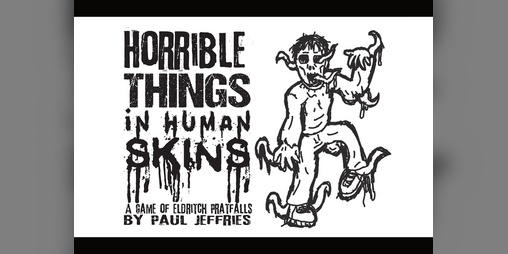
User reviews (0)