Website profiles · Technology insights · Alternatives

puzzle-loop.com No paid content found Multilingual

Categories: Games & Board Games

Play online Slitherlink the puzzle game also known as Loop The Loop or Fences

Visit website

Updated: 2026-10-01 17:30 Language: English (default) Access: Normal

Profile views 6 Outbound visits 0
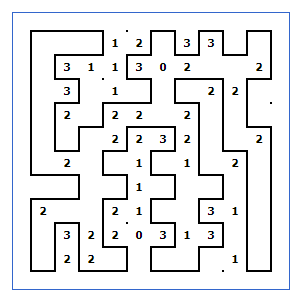
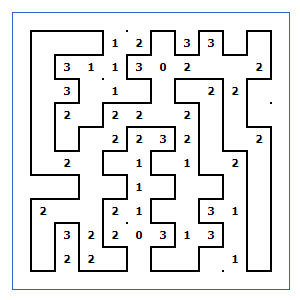
Slitherlink - online puzzle game Full homepage screenshot
Editorial Review

Website Review

What is Slitherlink?

Slitherlink is a logic puzzle in which you connect dots with lines to form a single closed loop. Numbers inside the grid tell you how many of the four surrounding edges are part of the loop. The loop never crosses itself and has no branches, so every dot is either unused or has exactly two connected lines. The same puzzle is also known as Fences or Loop the Loop.

On Slitherlink - online puzzle game, you play directly in the browser. Left-click between dots to draw a line, and right-click to mark an edge with an X as definitely empty. The page offers a video tutorial, adjustable grid sizes from 5x5 up to 25x30, and Normal or Hard difficulty, plus daily, weekly and monthly special puzzles.

How a solve typically works

  • Scan for numbers with very few possible edges, such as a 0 or a 3, and mark the forced lines or Xs.
  • Use the "single loop" rule: a line cannot create a small closed circle unless it is the final loop, and no dot may end up with three lines.
  • Treat X marks as real deductions, not decoration; they often reveal the next forced edge.
  • Work outward from clusters of numbers rather than trying to guess the whole grid at once.

Who it suits

If you like Sudoku-style deduction but want spatial reasoning, Slitherlink is a good fit. Small boards are approachable for beginners; larger boards reward patience and careful note-taking. The site's optional aids, such as highlighting wrong moves, auto-crossing completed numbers and a magnifier, make it easier to learn, though purists may prefer them off.

A practical next step: open a 5x5 Normal puzzle, watch the built-in video tutorial once, then solve without hints. If you finish comfortably, move to 7x7 Hard before trying the larger grids.

How do I play Slitherlink online?

Open Slitherlink - online puzzle game in a browser with JavaScript enabled, pick a board size and difficulty, then click between dots to draw line segments. Right-click a gap to place an X marking a segment you have ruled out. The goal is one single closed loop with no crossings or branches, and each number tells you how many of its four surrounding edges are part of the loop.

A practical first puzzle

Choose 5x5 Normal, then work through this order:

  1. Look for a 0 — mark all four of its edges with X.
  2. Look for a 3 — at most one of its edges can be empty, so test which one.
  3. At a corner, a 3 forces the two outer edges to be lines.
  4. A 2 on the board edge often forces one line and one X.
  5. Never let a line end in a dead end or form a small separate loop.

Use the toolbar options to reduce mistakes: turn on "Highlight wrong moves," "Gray out completed numbers," and "Auto cross the sides of completed numbers." The last one automatically places X marks around satisfied numbers, which saves a lot of clicking on larger grids.

Board sizes and what they demand

Size Typical use
5x5, 7x7 Learning the rules; short sessions
10x10, 15x15 A solid daily puzzle; deduction chains get longer
20x20, 25x30 Long sittings; you will need pencil-style notes and patience

Difficulty is set separately from size, so a 5x5 Hard is a compact logic test while a 25x30 Normal is mostly an endurance exercise.

Convenience features worth knowing

The Daily, Weekly, and Monthly Loop puzzles give you a shared puzzle to compare with other players. A non-competitive timer, night mode, left-handed layout, and magnifier are available if you prefer a quieter session. You can also print a puzzle if you would rather solve on paper, and progress can be shared via a permalink.

If you get stuck

Check every number again for edges you have already drawn. Most stalls come from a 1 or 2 that was satisfied earlier and then forgotten. Switching on "Highlight last change" helps you trace what you just did. If a puzzle still resists, start a fresh one at the same size — pattern recognition builds faster than forcing a single grid.

Next step: solve one 5x5 Normal without any hint features, then move to 7x7 Normal. If you enjoy the loop-drawing mechanic but want variety, the site also hosts related logic puzzles such as Masyu, Shingoki, and Slant.

What do the numbers in a Slitherlink puzzle mean?

In Slitherlink, each number tells you exactly how many of the four grid edges around that numbered cell must be part of the final loop. A “3” means three of its four sides are drawn lines; a “0” means none of them are. Blank cells have no restriction beyond the loop rules.

The loop itself must be a single closed path with no branches or crossings, so the numbers act as local constraints while you work out the global route. In practice, a 3 is often the most restrictive clue: it forces three sides to be lines, which usually means the fourth side is an X and helps you extend the loop. A 0 is equally useful because you can immediately mark all four surrounding edges as empty. A 1 or 2 gives you more freedom, but combined with neighbouring numbers and the no-branch rule they still narrow things down.

If you want to try it, start with a small board and look for 3s and 0s first. On Slitherlink - online puzzle game, the 5x5 and 7x7 Normal puzzles are a practical place to see how those clues interact before moving to larger grids.

Can I print Slitherlink puzzles to solve offline?

Yes. The site includes a Mass Print option alongside the individual Print... button, so you can generate paper copies of Slitherlink puzzles and solve them away from a screen. This is handy if you prefer pencilling in lines and X marks, want a puzzle for a commute or waiting room, or need several copies for a group.

The board sizes shown run from small grids up to larger ones, with Normal and Hard variants, so you can print a batch matched to the time you have. The Daily, Weekly and Monthly Loop puzzles are also listed, which gives you a reason to print something fresh on a regular schedule rather than replaying the same grid.

Practical next step: open the puzzle at the size and difficulty you want, use Print... for a single copy, or Mass Print if you want a stack. For offline solving, print at a comfortable size — larger grids benefit from more space between dots so your lines stay legible.

One trade-off: the site's timer, checkpoints and error highlighting are screen features, so on paper you lose automatic checking. If you rely on those aids, print an easier size first; if you want the pure logic challenge, paper removes the temptation to peek.

For related loop and line puzzles to print, see Slitherlink and its puzzle index, which lists alternatives such as Slant, Masyu and Hashi.

What difficulty levels and grid sizes are available in Slitherlink?

Slitherlink on Slitherlink - online puzzle game offers a grid-size and difficulty matrix rather than a single "easy/hard" switch. The board sizes listed are 5x5, 7x7, 10x10, 15x15, 20x20, and 25x30, each in Normal and Hard variants. There are also Daily, Weekly, and Monthly Loop puzzles, plus a Special category.

H3 What the choices mean in practice

  • Small grids (5x5 and 7x7): Best for learning the rules or a quick break. Fewer numbers and a smaller loop mean you can often see the whole solution path at once.
  • Mid-size grids (10x10 and 15x15): A solid session length for regular players. You need to mark X's and track several local deductions at once.
  • Large grids (20x20 and 25x30): Long-form solving. These reward systematic notation and patience more than raw speed.
  • Normal vs Hard: The same grid size gets harder, so you can increase difficulty without changing how much screen space the puzzle occupies.
  • Daily/Weekly/Monthly: Fixed-schedule puzzles, useful if you want a shared or recurring challenge rather than picking a size yourself.

H3 A practical way to choose

If you are new, start with 5x5 Normal and move to 7x7 Normal once the loop rule feels automatic. If you already solve logic puzzles comfortably, begin at 10x10 Normal and use Hard only when Normal stops requiring you to mark candidates. The site also provides a video tutorial and an FAQ if the rules are unclear.

A useful next step: open a 7x7 Normal puzzle and time yourself, then try the same size on Hard. The gap between the two tells you whether your bottleneck is spotting the loop or handling the harder deductions, which in turn tells you whether to change grid size or difficulty next.

How can I get better at solving Slitherlink puzzles?

Improving at Slitherlink comes down to learning a small set of reliable deductions and then applying them consistently before you start guessing. The game on Slitherlink - online puzzle game uses the standard rule set: draw a single closed loop between the dots, with no crossings or branches, and each number tells you how many of its four surrounding edges are part of the loop. The site also offers a range of sizes from 5x5 up to 25x30, plus a daily, weekly and monthly puzzle, which gives you a natural practice ladder.

H3 Start with the forced cases The fastest way to speed up is to internalise the situations where an edge is decided for you:

  • A 0 means none of its four edges are used, so mark all four with X.
  • A 3 means three of the four edges are used, so the fourth is always an X.
  • A 2 sitting in a corner forces both of its available edges.
  • A 3 on an edge or in a corner is even more constrained than it looks — count carefully which edges are still possible.
  • If two adjacent numbers would both need more edges than the shared space allows, one of them is blocked.

H3 Use the X marks as seriously as the lines Beginners tend to draw lines and ignore the crosses. In Slitherlink the X marks do most of the work, because every line you add removes options from neighbouring numbers. Whenever you place a line, immediately ask which edges that line rules out. The site's "auto cross the sides of completed numbers" and "gray out completed numbers" options do this bookkeeping for you, which is helpful while you are still building the habit — but try a few puzzles with them off so you learn to spot the consequences yourself.

H3 Learn the loop constraints The single-loop rule is the part that separates Slitherlink from other grid puzzles, and it gives you two extra families of deduction:

  • No dead ends. Every dot the loop passes through must have exactly two used edges. If a dot already has two, all its other edges are X; if it has one and only one possible continuation, that edge must be a line.
  • No premature closure. A line that would seal off a small loop before every number is satisfied is wrong. Watch for this in the later stages, when scattered segments start to look like they connect.

H3 A practical practice routine Pick a size where you can finish most puzzles without guessing — 5x5 or 7x7 is plenty to drill the patterns — and solve a few in a row, noting which deduction you missed each time you get stuck. Then move up a size. On Slitherlink - online puzzle game the difficulty is split into Normal and Hard at each board size, so you can increase size and difficulty independently rather than jumping both at once. The daily, weekly and monthly puzzles are a good way to keep a streak going without committing to a long session.

H3 When you are truly stuck Guessing is a legitimate last resort, but do it in a way you can learn from: pick the edge with the fewest plausible alternatives, follow the contradiction until it breaks, and then trace back to see which earlier deduction would have caught it. If you want to compare approaches, the wider family of logic puzzles on the same site — Masyu, Nurikabe, Slant and Hashi among them — trains similar loop-and-region reasoning and can loosen up your pattern recognition when one puzzle type stalls.

Related questions

More questions →
Can You Use CC0 Assets in Commercial Games? Licensing and Integration Basics

Yes. CC0 assets can be used in commercial games without paying royalties or crediting the creator. CC0 is a public-domain dedication: the creator has waived copyright and related rights to the fullest extent allowed by law. That means you can copy, modify, redistribute, and sell work built on those assets — including in a game you charge money for.

This article explains what CC0 actually covers, how it differs from other Creative Commons licenses, and how to bring CC0 assets into engines like Unreal and Unity and tools like Blender, Maya, and 3ds Max.

What CC0 actually means

CC0 is not a license in the traditional sense — it is a waiver. When a creator applies CC0 to their work, they give up their copyright and agree not to enforce related rights. You are free to:

  • Use the asset in personal, educational, or commercial projects
  • Modify, remix, and build derivative works
  • Distribute the asset or your derivative as part of a larger project
  • Do all of the above without attribution

There is no requirement to credit the creator, no share-alike clause forcing you to open-source your game, and no non-commercial restriction. For a studio shipping a paid title, that combination is unusually permissive.

One practical caveat: CC0 applies to the rights the creator holds. It cannot waive third-party rights the creator never owned. A scanned statue, a branded product, or a recognizable logo in a texture may still carry trademark or personality-rights issues. Treat CC0 as clearing copyright, not as clearing everything.

CC0 vs. other Creative Commons licenses

The differences matter most when you are choosing assets for a commercial build. The table below summarizes the common variants.

| License | Commercial use | Attribution required | Share-alike | Notes for games | |---|---|---|---|---|---| | CC0 | Yes | No | No | Closest to public domain; safest for closed-source commercial titles | | CC BY | Yes | Yes | No | Fine for commercial use, but you must credit — plan for a credits screen | | CC BY-SA | Yes | Yes | Yes | Derivatives may need to be shared under the same license; risky for proprietary code/assets | | CC BY-NC | No | Yes | No | Excludes commercial projects; avoid for any monetized game | | CC BY-ND | Yes | Yes | No | No derivatives — you cannot modify the asset, which limits integration |

If your goal is a commercial game with no legal overhead, CC0 is the simplest choice. CC BY is workable if you can maintain attribution. Avoid NC and ND for anything you intend to sell or heavily adapt.

How CC0 assets fit into game engines and pipelines

CC0 libraries typically provide HDRIs, PBR textures, and 3D models. Each type has a natural place in a game pipeline.

HDRIs

HDRIs are high-dynamic-range environment maps. In Unreal, they are commonly used for sky lighting via a Sky Light set to use an HDRI cubemap or a Sky Sphere material. In Unity, they feed the skybox and the environment lighting in the Lighting window. You can also use them as reflection probes or as the basis for image-based lighting in Blender, Maya, or 3ds Max for look development before export.

Textures

PBR texture sets usually ship as albedo (base color), roughness, metallic, normal, and sometimes ambient occlusion or height maps. These drop directly into Unreal's material system or Unity's Standard/URP/HDRP shaders. Keep the resolution appropriate: 4K textures are useful for hero assets, but 1K or 2K is often enough for background props and saves memory.

Models

Static meshes and props can be imported as FBX or OBJ. Check the scale and pivot before placing them in a level. If the asset was authored for offline rendering, it may have very high poly counts — decimate or LOD it before use in a real-time scene.

Practical steps for importing and adapting assets

  1. Download and verify the license. Confirm the asset page states CC0. Save a screenshot or the license text alongside the file.
  2. Organize by type. Keep HDRIs, textures, and models in separate folders. A consistent naming convention (for example, env_forest_01_4k.hdr) saves time later.
  3. Import into your engine. In Unreal, drag the FBX into the Content Browser and set up materials. In Unity, import the FBX and assign a PBR material, then wire the texture maps to the correct slots.
  4. Adapt scale and orientation. Real-world assets may be authored in meters or centimeters. Check against a reference cube of known size.
  5. Optimize. Reduce texture resolution where it will not be seen up close, generate LODs for models, and bake lighting where appropriate.
  6. Test in context. Place the asset in a representative scene and check lighting, reflections, and performance before committing it to the project.

What CC0 does not cover

CC0 clears copyright, but a few things still deserve a second look:

  • Trademarks and logos. A texture containing a recognizable brand mark is not automatically safe to ship.
  • Recognizable people or property. A model of a real person or a distinctive building may raise personality or property-rights questions.
  • Third-party content inside the asset. If a creator included someone else's work without permission, the CC0 dedication does not fix that.

For most generic assets — rocks, foliage, generic furniture, abstract HDRIs — these concerns are minimal. For anything depicting a real brand, person, or landmark, verify independently.

Documenting asset sources for teams and clients

Even though CC0 requires no attribution, keeping records is good practice. It protects you if a client or publisher asks for provenance, and it helps when a team member needs to know where a file came from.

A simple tracking sheet works:

Asset name Type Source License Date downloaded Notes
forest_01_4k.hdr HDRI Poly Haven CC0 2025-01-10 Used for level 2 sky
rock_cliff_a.fbx Model Poly Haven CC0 2025-01-10 Decimated to 8k tris

Store this alongside your project files. If you later combine CC0 assets with CC BY assets, the sheet makes it obvious which ones need credit.

Bottom line

CC0 assets are safe for commercial games, require no attribution, and impose no royalties or share-alike obligations. The main work is practical: verify the license, check for third-party rights, import and optimize the asset for your engine, and keep a record of where it came from. Do that, and a CC0 library becomes a legitimate, low-friction source for production assets in Unreal, Unity, Blender, Maya, and 3ds Max.

How Do You Play Slitherlink? Rules and Basic Solving Steps

Slitherlink (also called Fences or Loop the Loop) is a logic puzzle where you draw a single closed loop along the grid lines between dots. Each number in a cell tells you how many of its four surrounding edges belong to the loop. You can play it online at puzzle-loop.com, where the page describes the rules as "simple rules and challenging solutions" and offers board sizes from 5x5 up to 25x30, plus daily, weekly, and monthly specials.

The rules in plain terms

  • Draw one loop. Connect dots with lines so the result is a single continuous cycle.
  • No crossings, no branches. A dot can be part of the loop with exactly two connected edges — never one (a dead end) or three or more (a branch).
  • Numbers count surrounding edges. A cell marked 2 must have exactly two of its four sides drawn; a 0 has none; a 3 has three.
  • Unnumbered cells are unconstrained by a count, but still obey the single-loop rule.

Controls on puzzle-loop.com

The site's own instructions are short: left click between the dots to connect them, and right click to mark an edge with X to show it is excluded. The page also lists optional aids such as auto-crossing the sides of completed numbers, highlighting wrong moves, and a ghost-lines mode. If the game does not load, the page notes that JavaScript must be switched on; a printable copy is available as an alternative.

A practical solving order

Start with the clues that force the most, then work toward the ambiguous middle.

  1. Handle 0s first. Every edge around a 0 is excluded — mark them all with X. This often forces neighboring 3s.
  2. Fill in 3s. A 3 means only one of its four edges is empty, so the other three are loop. Around a 3 next to a 0, the shared edge is already excluded, which can pin down the rest.
  3. Use 1s and 2s to eliminate or force. A 1 next to a 3, for example, shares edges that cannot both be used, so you can often cross out candidates.
  4. Watch the corners and borders. Cells on the edge of the grid have fewer neighbors, so their numbers constrain more tightly.
  5. Avoid dead ends and second loops. Every time you add a line, check that no dot ends up with only one connection and that you are not closing a small separate cycle. The final loop must be one continuous cycle.
  6. Verify at the end. Walk the loop and confirm each number matches the count of drawn edges around it, and that no dot has a branch.

What to expect as you go

The page offers 5x5 and 7x7 boards in Normal and Hard, up through 25x30, so you can start small and scale up. Larger boards mainly add more deduction steps rather than new rules. If you get stuck, the site's toolbar includes options like highlighting wrong numbers and showing checkpoints, which can help you spot a contradiction without revealing the whole solution.

Once your loop is closed and every number checks out, the puzzle is solved.

How Do You Play Slitherlink (Loop the Loop) on puzzle-loop.com?

Slitherlink on puzzle-loop.com is a logic puzzle where you draw lines between dots to form one single closed loop with no crossings or branches. Each number tells you how many of the four edges around it are part of the loop. Left-click between dots to connect them, right-click to mark an edge with an X as definitely not part of the loop. Start with 0s and 3s, then work outward using the constraints each number places on its neighbors.

The Rules in Plain Terms

The board is a grid of dots. The loop runs along the gaps between dots, so every edge you draw is a segment connecting two adjacent dots.

  • One loop only. The finished line must be a single closed circuit. No separate loops, no dead ends, no branches.
  • No crossings. Lines may meet at dots, but they never cross each other.
  • Numbers count surrounding edges. A number sits inside a cell. Its four sides are the four edges around it. The number tells you exactly how many of those four edges are drawn.
  • Blank cells have no constraint. A cell with no number can have any number of drawn edges from 0 to 4.

A 0 means none of its four sides are drawn. A 3 means three of the four are drawn, so only one is excluded. These two extremes are the most informative starting points.

How to Draw and Mark on puzzle-loop.com

The site uses a two-button scheme that maps directly onto the logic:

  • Left click between two dots to connect them with a line segment.
  • Right click between two dots to place an X, marking that edge as definitely not part of the loop.

X marks are your scratch work. They record deductions so you don't re-check the same edge. The site also offers optional aids you can toggle, including auto-crossing the sides of completed numbers, graying out completed numbers, highlighting wrong moves, and a ghost lines mode.

A Basic Solving Sequence

Work from the most constrained cells to the least. A practical order:

  1. Fill in the forced edges around 0s and 3s. Every side of a 0 gets an X. A 3 forces three lines and one X, but which three depends on neighbors — often you can only mark the X once you see the surrounding constraints.
  2. Apply the 2 rule at corners and edges. A 2 in a corner cell has only two possible edges, so both are drawn. A 2 on the board edge has three possible edges, meaning exactly one is excluded.
  3. Use the no-branch rule at every dot. A dot in the loop has exactly two drawn edges meeting it — never one, never three. This single rule eliminates many possibilities as you go.
  4. Propagate from neighbors. When a cell's count is already satisfied, X out its remaining sides. When a cell has only enough open edges left to reach its number, draw them all.
  5. Watch for premature loops. If a drawn path closes on itself before covering the whole board, some segment in it is wrong. Backtrack and re-examine.

Repeat these steps; each pass through the grid usually unlocks new forced moves.

Sizes, Difficulty, and Special Puzzles

puzzle-loop.com offers a range of board sizes, each in Normal and Hard:

Size Normal Hard
5x5 Yes Yes
7x7 Yes Yes
10x10 Yes Yes
15x15 Yes Yes
20x20 Yes Yes
25x30 Yes Yes

There are also Daily, Weekly, and Monthly special puzzles, plus a specific-puzzle lookup by ID and a mass print option. If you want to learn the mechanics without time pressure, start at 5x5 Normal.

Built-in Tools Worth Using

The site includes a timer and checkpoints, and you can switch the timer to a non-competitive personal mode. Other options that help while learning:

  • Show checkpoints to track progress.
  • Highlight last change so you can see what you just did.
  • Magnify part of the puzzle while drawing for large boards.
  • Highlight wrong numbers / wrong moves to catch mistakes early.
  • Dots style (normal, smaller, tiny) to fit more of the grid on screen.
  • Night mode and left-handed layout.

The game requires JavaScript enabled in your browser to play online, though you can print a copy instead.

Common Sticking Points

  • Marking X too late. Placing Xs as you eliminate edges keeps the board readable and prevents contradictions.
  • Forgetting the single-loop rule. A valid partial path that forms a small closed loop is already wrong, even if every number checks out locally.
  • Ignoring edge and corner cells. Cells on the border have fewer possible edges, so their numbers are more restrictive and often resolve first.
  • Treating 1s and 2s as unhelpful. They rarely force edges alone, but combined with a neighbor's count they often do.

Once you can clear a 5x5 Normal consistently, move to 7x7 and then 10x10. The logic scales; only the bookkeeping grows.

What Is a Puzzle? Types, Mechanics, and How to Start Solving

A puzzle is a problem with a known solution that you reach by applying rules and reasoning, not by guessing or outside knowledge alone. It differs from a game (which usually involves competition, chance, or ongoing play) and from a riddle (which typically turns on wordplay or a trick). If you want to start solving, pick a type that matches your time and goal, learn its one core rule, and work in small verified steps rather than trying to see the whole answer at once. The sections below cover the main types, how constraint-based puzzles like sudoku actually work, and a repeatable way to begin.

Puzzle vs. game vs. riddle vs. brain teaser

These terms overlap in casual use, but the distinctions help you choose what to sit down with.

Form Core trait Example
Puzzle Fixed rules, one or a set of valid solutions, solved by reasoning Sudoku, crossword, jigsaw
Game Play continues, often two or more players, may involve chance or skill Chess, card games
Riddle Short, relies on wordplay, misdirection, or a hidden meaning "What has keys but no locks?"
Brain teaser Tests a specific cognitive trick or assumption Lateral-thinking scenarios

A single activity can blur the lines — a crossword is a puzzle, but a timed crossword race adds a game element. The useful takeaway: if success depends on finding the intended solution under fixed rules, you're dealing with a puzzle.

Major puzzle types and what each demands

Different puzzles train different skills, so the "right" one depends on what you enjoy or want to practice.

  • Sudoku — a grid of numbers where each row, column, and box must contain each digit exactly once. Demands pure logic and constraint tracking; no arithmetic or vocabulary needed.
  • Crosswords — fill a grid with words from clues. Demands vocabulary, general knowledge, and comfort with wordplay.
  • Jigsaw — assemble cut pieces into a picture. Demands spatial reasoning and pattern matching; low language load.
  • Logic grid puzzles — match categories (people, colors, pets) using a set of clues. Demands deductive elimination.
  • Word and number puzzles — anagrams, kakuro, number sequences. Demand a mix of language or arithmetic pattern recognition.

If you want something language-independent and purely deductive, sudoku is the cleanest entry point. If you want to use vocabulary and trivia, crosswords fit better.

How constraint-based puzzles work: the sudoku example

Sudoku is the clearest illustration of a constraint satisfaction puzzle: you have a set of slots, a set of values, and rules that limit which value can go in which slot. The solution is whatever assignment satisfies every rule at once.

The rules for a standard 9×9 sudoku:

  1. Every row must contain the digits 1–9 exactly once.
  2. Every column must contain the digits 1–9 exactly once.
  3. Every 3×3 box must contain the digits 1–9 exactly once.

The key mechanic is elimination. For any empty cell, you ask which digits are already blocked by its row, its column, and its box. If only one digit remains possible, that cell is solved. More advanced techniques (like finding a digit that can only fit in one cell of a row) extend the same idea.

This is why sudoku needs no math beyond counting: the digits are just nine distinct symbols, and the whole puzzle is about tracking what's still allowed.

A simple way to start any puzzle without getting stuck

The most common reason beginners stall is trying to solve everything at once. Work in passes instead.

  1. Read the rules and the goal first. Know exactly what a finished solution looks like before you place anything.
  2. Scan for the easiest forced moves. In sudoku, look for rows, columns, or boxes that are nearly full. In a crossword, start with clues you're confident about.
  3. Fill only what you can justify. Place a value only when the rules force it. Guessing creates errors that are hard to trace later.
  4. Re-scan after every placement. Each new entry removes options elsewhere, often unlocking a move that wasn't visible before.
  5. When stuck, switch technique, not effort. Move from "what fits here?" to "where can this digit go?" — a different question often breaks the block.
  6. Verify at the end. Check every row, column, and box (or every clue) against the rules. A single early mistake usually shows up as a contradiction.

If you're completely stuck, the honest move is to check your earlier entries for an error before assuming the puzzle is too hard.

Choosing a puzzle by time, difficulty, and goal

Match the puzzle to your situation rather than defaulting to the hardest one.

  • 5–10 minutes, want to relax: a small or easy sudoku, or a quick word puzzle.
  • Want to build vocabulary or general knowledge: crosswords.
  • Want pure logic with no language barrier: sudoku or logic grid puzzles.
  • Want a low-stress, hands-on activity: a jigsaw.
  • Want a genuine challenge: larger grids, harder difficulty tiers, or puzzles with fewer given clues.

A practical tip: start one difficulty level below what you think you can handle. Finishing a puzzle teaches you the mechanics faster than abandoning a hard one, and you can always move up.

Where online puzzles fit in

Online puzzle sites typically let you generate a random puzzle, solve a given one, check or reveal a solution, and print it. That combination is useful for practice: generate a puzzle at a chosen difficulty, solve it on screen, and use the solver only to confirm your answer or to study a step you missed. Printing is handy if you prefer working on paper without screen time. Availability and any account requirements vary by site, so check the specific page before relying on a feature.

Website Overview

An established domain and managed infrastructure suggest continuity of operations and may support dependable delivery, although neither guarantees service quality. Several search or sharing settings need attention. Together they may make snippets, preview images or preferred URLs less consistent across platforms.

Domain and Registration

Registered in 2006, this domain has about 20 years of history. That suggests continuity, although ownership and purpose may have changed. Transfer-protection status is present, helping reduce the risk of unauthorized domain transfers. The registrar is GoDaddy.com, LLC, a widely used domain service provider. The domain uses the common .com extension, which is not an independent safety signal.

DNS and Email

Nameservers are provided by GoDaddy, indicating managed DNS hosting. MX records point to the GoDaddy email service. SPF and DMARC are configured. DKIM status is unknown. DNSSEC signatures were not detected, so this additional DNS authenticity protection is not confirmed. The lowest observed DNS TTL is 3600 seconds.

TLS and Certificates

The certificate uses an RSA 2048-bit public key, offering broad client compatibility. The server supplied a complete certificate chain. No organization name is present in the certificate; the available fields are consistent with domain validation. The certificate was issued by Let's Encrypt, commonly associated with automated certificate services. The certificate's total validity is about 89 days, consistent with a short renewal cycle.

HTTP and Browser Security

The checked browser-security headers were not detected, leaving fewer explicit browser-side safeguards. No X-Powered-By header was found, reducing one common source of backend fingerprinting information. No obvious internal addresses or debug information were found in the headers. The Server header identifies nginx without an exact version. No explicit CDN or WAF marker was found in the response headers.

Technology Stack Analysis

The public page identifies Google Analytics, nginx without precise versions, leaving fewer clues for version-specific scanning.

Search and Social Sharing

No homepage canonical URL was detected. If duplicate URLs exist, consolidation may be less explicit. Open Graph is partially configured; og:description, og:type is missing. Twitter Card metadata is configured. The page declares 30 language or regional alternatives using hreflang. The title has 32 characters, within a common display range.

Hosting and Email

DNSGoDaddy
Hostingpuzzle-loop.com
EmailGoDaddy
Location United States flagBoardman, Oregon, United States 52.25.152.19

User reviews (0)

  • No reviews yet.

Pages, Search and Sharing

Meta descriptionPlay online Slitherlink the puzzle game also known as Loop The Loop or Fences
Canonical URLNot detected
LanguageEnglish (default) · Multilingual
Twitter Cardsummary_large_image
All bots 0 allowed · 0 disallowed

No sitemaps found

Registration details RDAP / WHOIS

RegistrarGoDaddy.com, LLC
Registered2006-02-23
Expires2026-10-04
Domain statusclient delete prohibited、client renew prohibited、client transfer prohibited、client update prohibited
Nameserversns61.domaincontrol.com、ns62.domaincontrol.com
DNSSECunsigned

DNS records

TypeNameValueTTLPriority
Apuzzle-loop.com52.25.152.193600—
MXpuzzle-loop.comsmtp.secureserver.net36000
MXpuzzle-loop.commailstore1.secureserver.net360010
NSpuzzle-loop.comns61.domaincontrol.com3600—
NSpuzzle-loop.comns62.domaincontrol.com3600—
TXTpuzzle-loop.comv=spf1 a include:mailgun.org include:secureserver.net ~all3600—
CNAMEwww.puzzle-loop.compuzzle-loop.com3600—
DMARC_dmarc.puzzle-loop.comv=DMARC1; p=reject; rua=mailto:[email protected]; adkim=r; aspf=r;3600—

TLS and certificates

AssessmentNormal configuration
Supported protocolsTLSv1.2、TLSv1.3
Negotiated protocolTLSv1.3
Certificate subjectpuzzle-loop.com
IssuerLet's Encrypt
Valid until2026-11-21T15:45 · Remaining when checked: 50 days
Verification detailsCertificate trust: Passed · Hostname match: Passed

HTTP response headers

HeaderValue
content-typetext/html; charset=UTF-8
content-languageen
servernginx

Identified technologies

Google Analyticsnginx