
 简体中文
 English
Website review
This review may include AI-generated content and is not individually verified. Domain, certificate and other facts come from the observed data on this page.
What is Skydive Santa Cruz?
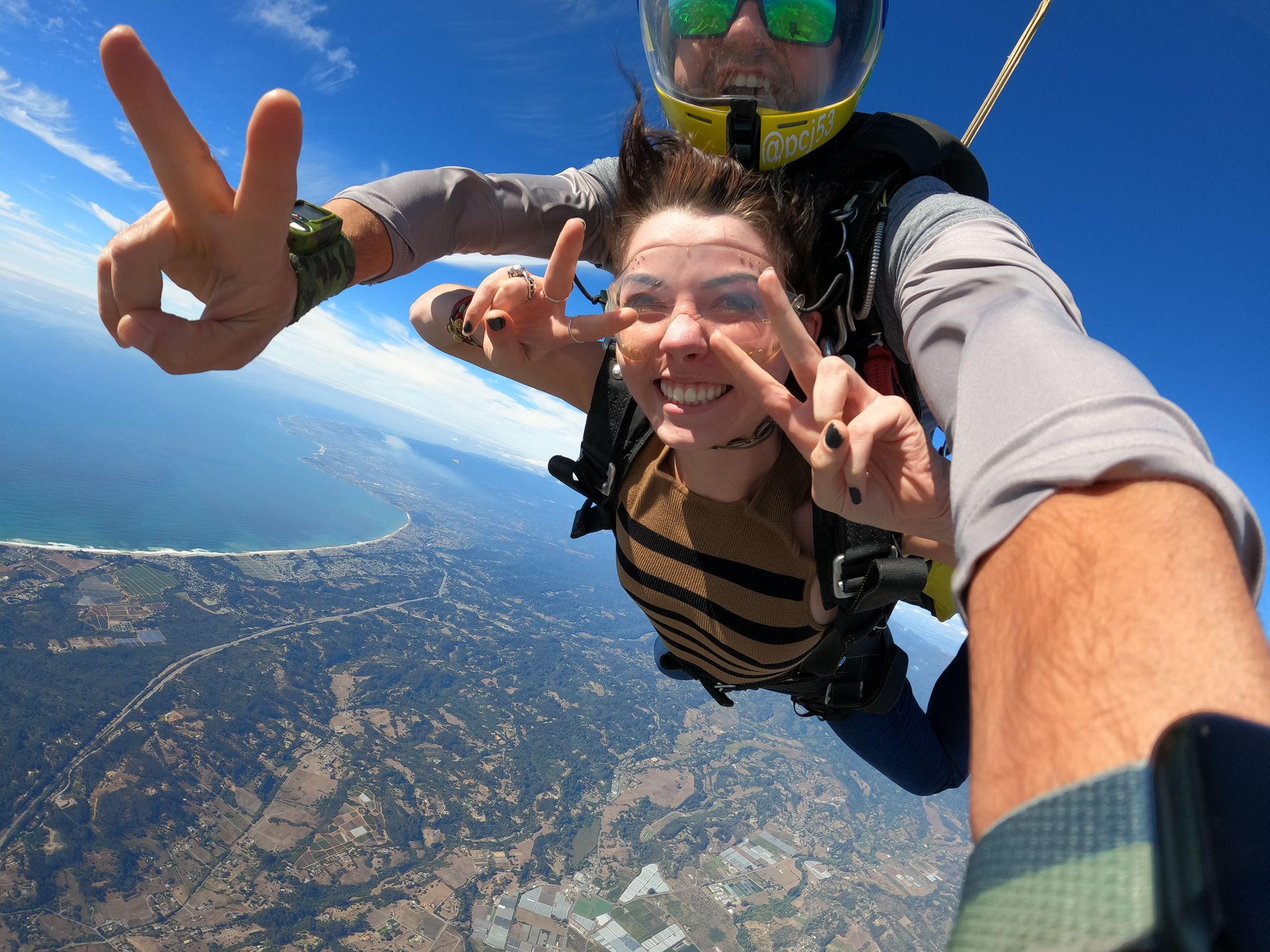
Skydive Santa Cruz is a tandem skydiving operation based near Santa Cruz, California, positioning itself as the closest skydiving center to San Francisco and San Jose. Its draw is the setting: jumps are marketed around views of the Pacific Ocean, Santa Cruz beaches and Boardwalk, Monterey Bay, redwoods, and the coastal mountains.
What a jump involves
According to the site, the experience includes a roughly 20-minute aerial tour before exiting the aircraft from at least 10,000 feet, followed by freefall at about 120 mph for up to 40 seconds and then a parachute descent. Two students fly per flight, which the operator frames as a more private, one-on-one experience — useful if you want to jump with a partner or friend rather than in a large group.
Who it suits
- First-time jumpers who want a tandem experience with coastal scenery rather than an inland drop zone.
- Visitors to San Francisco or San Jose treating it as a day trip.
- Couples or pairs who value a smaller, less crowded flight.
What to weigh
The ocean-view location is the main trade-off in its favor; the counterweight is that weather and coastal conditions can affect scheduling, and the site lists separate weekend and weekday ocean-view options, so availability and pricing vary by when you go. The site has a pricing page, but no rates are shown here, so check directly before booking.
A practical next step: decide whether you want a weekend or weekday slot, then confirm current pricing, weight limits, and weather policy with the operator before reserving.
How does skydiving at Skydive Santa Cruz compare to other skydiving centers near San Francisco?
Skydive Santa Cruz differentiates itself mainly by location and jump format rather than by offering a fundamentally different kind of skydive. Its core pitch is proximity plus scenery: it bills itself as "the closest skydiving to San Francisco," with ocean views over Santa Cruz beaches, the Boardwalk, Monterey Bay, and the central California coastline. Most Bay Area drop zones compete on similar jumps; the meaningful comparison is what you see, how far you drive, and how crowded the plane feels.
What stands out from the site's own description
- Ocean-view positioning. The site repeatedly frames the jump around Pacific coastline, beaches, redwoods, and mountain peaks. That is a scenic contrast to inland drop zones where the view is mostly farmland, foothills, or sprawl.
- Small-group flights. It says it jumps with only two students per flight, describing this as more private and VIP, and mentions a more personalized, one-on-one first-jump experience with a slower pace.
- A longer scenic lead-in. It advertises a 20-minute aerial tour before exit, then a jump from at least 10,000 feet with freefall at 120 mph for up to 40 seconds.
- Weekend vs. weekday options. The booking menu separates a Weekend Ocean View Skydive and a Weekday Ocean View Skydive, which suggests pricing or availability differs by day.
- An explicit price claim. The site says it offers "the best price on ocean view skydiving near San Francisco and San Jose." Treat that as the operator's marketing claim, not a verified comparison.
How to compare it with other Bay Area centers
| Factor | Why it matters | What to check |
|---|---|---|
| Drive time | The "closest to San Francisco" claim is the main hook | Compare door-to-door time from your address, not just city names |
| View | Ocean vs. inland changes the whole experience | Ask what you actually see on the climb and under canopy |
| Plane size and load | Fewer jumpers can mean less waiting and a quieter flight | Ask how many students share your flight |
| Altitude and freefall | Higher exits generally mean longer freefall | Confirm the exit altitude for the day you book |
| Price and day | Weekday slots are often cheaper or easier to book | Compare total cost including photos, video, and any fees |
| Weather reliability | Coastal fog and wind can cause delays | Ask about rescheduling policy before paying |
For a concrete scenario: if you live in San Francisco and want a half-day trip with ocean scenery, Skydive Santa Cruz is built around exactly that. If you are comparing purely on price, an inland drop zone may undercut it, but you would trade away the coastal view and likely drive farther. If you are nervous and want a calmer, less crowded plane, the two-students-per-flight detail is the most useful differentiator to ask about directly.
Next step: call or check the booking page for the specific date you want, and ask three questions — total drive time from your location, exit altitude for that day, and how many other jumpers will be on your flight. Those answers will tell you more than any general ranking. For broader context on the sport, United States Parachute Association publishes safety and licensing information worth reviewing before you book.
What is the cost of a tandem skydive at Skydive Santa Cruz?
Skydive Santa Cruz does not publish a specific tandem price in the page details provided, so any exact dollar figure would be a guess. The site does state that it "offers the best price on ocean view skydiving near San Francisco and San Jose," and it lists a dedicated Pricing page alongside two jump options: a Weekend Ocean View Skydive and a Weekday Ocean View Skydive.
What this means for planning
- Weekday vs. weekend pricing: Because the site separates the two jump types, the day you book is likely the main factor in what you pay. Weekday slots are commonly the cheaper option at drop zones, though you should confirm this directly with Skydive Santa Cruz.
- What's included: The listed tandem experience includes a 20-minute aerial tour over the Santa Cruz beaches, Boardwalk, Monterey Bay and the central California coastline, an exit from at least 10,000 feet, and up to 40 seconds of freefall at around 120 mph. Only two students fly per flight, which makes the jump feel more private.
- Extras to budget for: Video and pictures are listed as a separate section, so media packages are typically an added cost rather than part of the base jump.
Best next step
Open the Pricing page on Skydive Santa Cruz and compare the weekday and weekend rates, then check the FAQ for weight limits, deposit rules and rescheduling terms. If you are deciding between operators, compare total cost including media, since a lower base price can end up costing more once photos and video are added. For a second reference point on Bay Area options, Skydive California in Tracy is another well-known tandem drop zone.
What views and landmarks can I see during a skydive with Skydive Santa Cruz?
Skydive Santa Cruz centers its jumps on an ocean-view descent, with the Pacific, coastline and nearby mountains as the main visual set. According to the operator's own description, the flight includes a 20-minute aerial tour over Santa Cruz beaches, the Santa Cruz Boardwalk, Monterey Bay and the central California coastline, followed by an exit from at least 10,000 feet. The same page also references redwoods and rocky mountain peaks as part of the broader landscape.
What you can expect to see
- Ocean and coastline: Crystal-clear water and long stretches of beach are the headline views, with the jump marketed specifically as ocean-view skydiving.
- Santa Cruz Boardwalk: A recognizable landmark that gives the flight a clear sense of place; useful if you want photos or video that immediately read as Santa Cruz.
- Monterey Bay: A wide bay view that adds scale to the experience beyond the immediate beach.
- Redwoods and mountain peaks: These appear in the operator's description of the surrounding region, so the panorama mixes coast with forested hills and rocky terrain rather than being purely a beach view.
A practical way to think about it
If you are deciding between coastal and inland drop zones, the trade-off here is scenery variety versus the specific sensation of jumping over open water. A coastal jump tends to feel more scenic and photogenic, while an inland jump may feel more about the freefall itself. The operator also notes jumping with only two students per flight, which makes the experience more private and may give you a better chance to take in the views rather than being crowded.
For a concrete scenario: if you are visiting San Francisco or San Jose and want a jump that doubles as sightseeing, this profile fits — you get the Boardwalk, Monterey Bay and the coastline in one flight. If your priority is a specific landmark like the Golden Gate Bridge, note that this page positions Santa Cruz as the closest option to San Francisco rather than a jump over the city itself.
Next step: confirm the current flight path and altitude when you book, since views depend on weather, flight direction and the day's conditions.
What are the requirements and safety measures for skydiving at Skydive Santa Cruz?
Skydive Santa Cruz presents itself as a tandem-only operation focused on first-time jumpers, so the core requirement is straightforward: you jump attached to a licensed instructor rather than on your own. The tandem format removes the need for prior training or certification, which is what makes it accessible to visitors who simply want to try it once. The site emphasizes a personalized, one-on-one experience, and notes that only two students fly per flight — a detail worth weighing if you prefer a quieter, less crowded jump day over a busy drop zone.
What the site actually tells you
- Tandem skydiving is the offering. There is no indication of solo or accelerated freefall programs, so anyone hoping to progress toward jumping alone would need a different drop zone.
- Exit altitude and freefall. Jumps exit from at least 10,000 feet, with freefall at roughly 120 mph for up to 40 seconds before the parachute deploys.
- A 20-minute aerial tour over the Santa Cruz beaches, the Boardwalk, Monterey Bay and the central California coastline precedes the exit.
- Two jump options are listed: a Weekend Ocean View Skydive and a Weekday Ocean View Skydive, which suggests scheduling and possibly pricing differ by day.
- Booking and logistics are handled through a booking page, with a gift card option available and a separate contact page for directions.
Safety: what is implied versus what you must confirm
The page describes the experience and the team as "stoked and talented," but it does not lay out specific safety credentials, aircraft type, instructor certification bodies, reserve parachute procedures, or weight and age limits. Those are the details that actually determine whether you can jump and how the operation is regulated, so treat them as questions to ask directly rather than assumptions. In the United States, tandem skydiving operations are typically governed by FAA regulations and instructor certification through organizations such as the United States Parachute Association, and drop zones usually publish weight limits, minimum age (often 18, with some exceptions requiring parental consent), and medical restrictions.
A practical next step: before booking, call or email using the contact details on the site and ask four things — the maximum weight allowed, the minimum age and ID requirements, whether the instructor holds current USPA tandem certification, and what happens if weather cancels your slot. If you are comparing options, United States Parachute Association maintains a drop zone directory that lets you check affiliation, and Federal Aviation Administration covers the regulatory side of parachute operations. For a broader sense of regional choices, Skydive Santa Cruz is the operator in question, while Bay Area jumpers sometimes also look at drop zones farther inland when coastal fog is a factor.
One trade-off to keep in mind: ocean-view jumps along the coast are scenic but more weather-sensitive than inland sites, since marine layer and wind can scrub a booking. The two-students-per-flight policy cuts both ways — it means more attention and a calmer experience, but potentially fewer daily slots and less flexibility if you need to reschedule.
How do I book a skydive or gift card with Skydive Santa Cruz?
Booking a jump or gift card with Skydive Santa Cruz starts on the website: the navigation includes Book Skydive and Book Skydive Gift Card links, so you can reserve either a jump for yourself or a voucher for someone else directly online. The same booking path is used for both of the jump options shown on the page — a Weekend Ocean View Skydive and a Weekday Ocean View Skydive — which matters because weekend slots typically fill first and weekday slots are usually the easier, less crowded choice.
What to decide before you click Book
- Who is jumping. A gift card works when the recipient should pick their own date. Booking a jump works when you already know the date and the person.
- Weekend or weekday. If your group is flexible, a weekday gives you more choice of times; if the jump is tied to a visit or celebration, book the weekend option early.
- How many in your group. The page states they jump with only two students per flight, so pairs and couples get a more private experience — but larger groups will likely be split across multiple flights rather than jumping together.
What the booking covers
According to the site, the tandem experience includes a 20-minute aerial tour over the Santa Cruz beaches, the Santa Cruz Boardwalk, Monterey Bay and the central California coastline, then an exit from at least 10,000 feet with freefall at 120 mph for up to 40 seconds before the parachute opens. Tandem skydiving, views, pricing, video and pictures, facilities, FAQ and reviews are all separate pages, so pricing and media add-ons are worth checking on their own pages rather than assuming they are bundled into the base booking.
Practical next step
Before paying, confirm three things with the team directly: the exact meeting location and arrival time, the current weight and health restrictions, and the weather-reschedule policy — none of which can be safely assumed from the homepage. Contact details are on the Contact page, and the site lists daily hours of 9:00 am to 5:00 pm, which is the window in which to call with questions. If you are coming from the Bay Area, note that the site positions itself as the closest skydiving to San Francisco and San Jose, and it also lists a San Jose contact page — useful if you are comparing drive times. For a second opinion on the broader Bay Area market, Skydive SF and Skydive California both operate in the region.
 GoDaddy
User reviews (0)