
 简体中文
简体中文 English
Website review
This review may include AI-generated content and is not individually verified. Domain, certificate and other facts come from the observed data on this page.
What is Saverio Morelli?
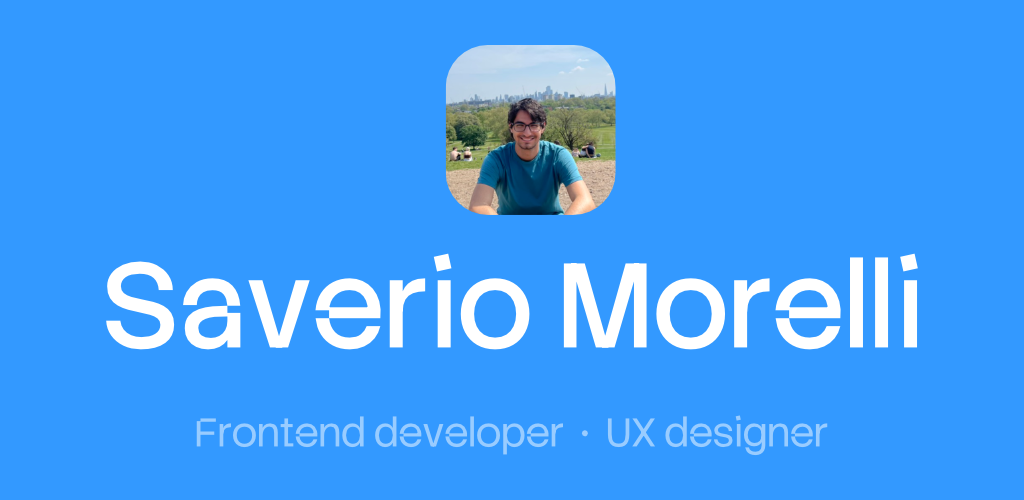
Saverio Morelli is the personal site of a frontend developer and UX designer who builds open-source browser extensions, Android apps, and web tools. The page presents him through a short identity line — "Frontend Developer — UX Designer" — plus navigation for About, Projects, Contact and Donate, so it works as a portfolio and a hub for his software rather than as a company or product.
What you'll find there
- A brief professional introduction and design/development positioning.
- A projects area that collects his browser extensions, Android apps and web utilities.
- Contact details for reaching him directly.
- A donate option for supporting the open-source work.
Who it's for
If you need a lightweight browser extension or a small web tool, this is a place to see what already exists before building your own. Developers can also look at the projects as examples of frontend and UX work. Because the software is described as open source, the code is typically available to inspect, adapt or contribute to.
A practical next step: open the Projects section and filter by the platform you care about — a browser extension for desktop browsing, an Android app for mobile, or a web tool you can run in a tab. If a project matches your need, use the Contact link to ask about maintenance status or feature requests; if nothing fits, the Donate link is the way to support continued work. For general open-source browsing, GitHub hosts many comparable developer portfolios and their repositories, which can help you judge how active a project is before relying on it.
Which open-source browser extensions has Saverio Morelli built?
Saverio Morelli's site identifies him as a frontend developer and UX designer who builds open-source browser extensions, Android apps, and web tools. The landing page itself names the category but does not list individual extensions, so the specific titles, supported browsers and feature sets have to be read from his Projects section rather than the homepage.
How to find the extension list
- Open the Projects area of Saverio Morelli and look for entries described as browser extensions or add-ons.
- For each one, check which browser it targets and where the source code is hosted; the site itself is a portfolio, not an extension store.
- If a project links to a store listing, the store page is usually the fastest way to confirm current permissions, version history and user reviews.
What to expect from a solo developer's extensions
Extensions from an individual developer tend to be narrow and purposeful: one job done well, a small permission footprint, and occasional updates rather than a full product roadmap. That is often an advantage for privacy-conscious users, because fewer permissions mean less data the extension can touch. The trade-off is support: bug fixes and compatibility with browser changes depend on one person's spare time, so a project that has gone quiet for a year is a real risk if you plan to rely on it daily.
If you need an extension for something critical, treat the source code as the safety net. An open-source extension you can read, fork or self-load is more durable than a closed one, even if the original author stops maintaining it.
What Android apps are available from Saverio Morelli?
Saverio Morelli describes himself as a frontend developer and UX designer who builds open-source browser extensions, Android apps, and web tools. His site presents these as personal, independent projects rather than a commercial app portfolio, so the useful way to read it is as a directory of experiments and utilities rather than a storefront.
What the site tells you about his Android apps
The homepage itself only names Android apps as one of three categories he works in, alongside browser extensions and web tools. It does not list individual Android app names, screenshots, or store links in the material available, so anyone looking for a specific title should treat the projects section as the place to look rather than the landing page.
How to find the actual apps
- Open his Projects page first; that is where individual builds are typically grouped by type.
- Check the Contact page if a project has no obvious download link — independent developers often distribute through GitHub releases, F-Droid, or direct APK links rather than Google Play.
- Expect open-source distribution: for a solo developer, that usually means source code is public and installation may require enabling installs from outside the Play Store.
Who this suits
If you want a small, focused utility from an independent developer and you are comfortable sideloading or reading a repository before installing, his Android work fits that pattern. If you need Play Store listings, automatic updates, or commercial support, an independent open-source portfolio is a weaker match — updates depend on one person's spare time.
A practical next step: list the Android apps on the Projects page, note for each whether it links to a repository, an APK, or a store listing, and pick based on how you prefer to install and update software.
How does Saverio Morelli approach UX design in his frontend projects?
Saverio Morelli presents himself as a frontend developer and UX designer who builds open-source browser extensions, Android apps and web tools. The site itself is the clearest evidence of his UX approach: it is a minimal personal portfolio with a short identity statement ("Frontend Developer — UX Designer") and a simple navigation of About, Projects, Contact and Donate. That structure suggests a design philosophy built on clarity and low friction rather than elaborate presentation — visitors can tell what he does and where to go within seconds.
What the portfolio structure implies
- Identity first. The headline pairs his two roles, so the UX intent is framed as part of the engineering work rather than a separate layer.
- Flat navigation. Four top-level items cover the main user intents: learn about him, see his work, get in touch, support the work.
- No clutter. The excerpt contains no marketing copy, feature grids or testimonials, which keeps attention on the projects themselves.
For someone evaluating his work, the practical next step is to open the Projects section and look at how each browser extension or app handles its own first-run experience — onboarding, empty states, permission prompts and error messages. Those details reveal far more about a designer's UX judgment than a portfolio page can.
A concrete way to judge it
If you are hiring or collaborating with him, treat his extensions as usability case studies. Install one, then ask: does it explain what it will access before asking for permissions? Does it recover gracefully when a page breaks? Does the interface stay out of the way during normal browsing? A designer who ships open-source tools has to answer those questions for real users, not just for a mockup.
You can compare that approach with other developer-designers who publish their work publicly, such as GitHub for source and issue history, or Chrome Developers for extension UX and permission guidelines. The trade-off in a minimal personal site like his is that it under-sells the depth of the work: there is little context on process, research or iteration, so the projects have to speak for themselves.
Can I hire Saverio Morelli for a frontend development or UX design project?
Yes, you can approach Saverio Morelli for frontend development or UX design work, but the site itself is presented as a personal portfolio rather than a service business with published rates, packages or booking flow. The page identifies him as a "Frontend Developer — UX Designer" and highlights open-source browser extensions, Android apps and web tools, so the most realistic engagement is a small, well-scoped project rather than a large agency-style retainer.
What the portfolio suggests he is suited for
- A focused frontend build where design and implementation are handled by one person, such as a marketing site, a dashboard interface or a browser-extension front end.
- UX work on an existing product: reviewing flows, simplifying navigation or turning rough requirements into wireframes and polished UI.
- Open-source or tool-style projects, given the emphasis on extensions, Android apps and web tools.
How to start
Send a short project brief through the site's contact route. Include the goal, the main user, the pages or screens involved, your timeline and your budget range. Because no pricing signals appear on the page, treat cost and availability as a conversation rather than an advertised menu.
A practical decision criterion
Hire him for a clearly bounded piece of work where you need both design judgement and working frontend code. If you need a large team, ongoing support contracts or a fixed public price list, look for an agency or a freelancer platform instead. For a quick sense of how he presents his own work, see Saverio Morelli.
How can I support or donate to Saverio Morelli's open-source work?
Saverio Morelli's site lists a Donate link alongside About, Projects and Contact, so that is the intended route for financial support.
Ways to support the work
- Donate directly via the Donate link in the site navigation. This is the most straightforward option and goes to the developer rather than through a third-party store.
- Use and share the projects. He builds open-source browser extensions, Android apps and web tools. Adopting one, reporting bugs, or pointing others to it supports the work without money.
- Contribute on the project side. For open-source software, code contributions, translations, documentation fixes and clear issue reports are often as valuable as small donations.
- Reach out through Contact if you want to ask about a specific project, sponsorship, or another form of support not covered by the Donate link.
A practical next step
Open the site's Donate page first and check which payment methods it actually offers and whether donations are one-off or recurring; the site does not publish pricing or platform details in advance. If you would rather give time than money, pick the project you actually use, check its repository for contribution guidelines, and start with a well-documented bug report.
For context on the developer and his project list, see Saverio Morelli.
 Arezzo, Province of Arezzo, Italy

User reviews (0)