
 简体中文
 English

swipehunger.org
One in three college students faces food insecurity. We partner with colleges on student led anti-hunger programs.
At a glance
- Category
- Education & Learning
- Language
- English
- Paid-content signal
- Paid contentObserved
- Registered
- 2015
- Hosting
- FastlyInferred
- HTTPS certificate trusted
- PassedObserved
- Last updated
Related questions
More questions →How Big Is the College Student Food Insecurity Problem Swipe Out Hunger Addresses?
About one in three college students faces food insecurity, according to Swipe Out Hunger. The organization frames this as a solvable issue and works through a network of more than 1,000 campuses to keep students from having to choose between food and their education. Its reported reach gives a sense of the scale: more than 807,000 students served in the 2024–2025 school year, more than 20.5 million meals enabled to date, and more than $1 million awarded in Swipe Grants.
The scale in one view
| Measure | Reported figure |
|---|---|
| Share of college students facing food insecurity | About 1 in 3 |
| Campus network | 1,000+ campuses |
| Students served, 2024–2025 school year | More than 807,000 |
| Meals enabled to date | More than 20.5 million |
| Swipe Grants awarded | More than $1 million |
Why the problem is described as solvable
Swipe Out Hunger's approach is to partner with colleges and universities on student-led anti-hunger programs. The logic is that campuses already have food infrastructure, student networks, and administrative channels — what's often missing is coordination and funding. By working inside that existing system rather than building something separate, the organization aims to turn a large, persistent problem into a series of manageable campus-level fixes.
The human side of that framing shows up in student testimony on the site: being fed and feeling seen, one student says, helped them "live, instead of worrying about if I will eat that day," freeing up attention for school.
What the numbers do and don't tell you
The figures above describe reach, not the full size of the problem. A 1,000+ campus network and 807,000 students served in a single year are meaningful, but they represent the portion of student hunger that Swipe Out Hunger's partnerships have touched — not a measurement of every food-insecure student in North America. Read them as evidence of scale and momentum rather than a complete census.
If you want to act on this
- Students: the site's "Get Involved" path explains how to bring your campus into the network.
- Campus administrators: Swipe Grants are described as flexible grants for growing college food insecurity advocacy; applications for the 2026 Swipe Grants were open at the time of the site content.
- Researchers or journalists: the organization publishes a National Campus Survey dashboard and an annual impact report, which are the most direct sources for its own data.
- General public: a monthly newsletter signup is available for ongoing updates.
For media inquiries, the site directs visitors to its Media page.
What Is Swipe Out Hunger and What Does the Organization Do?
Swipe Out Hunger is a nonprofit that works with colleges and universities to end student food insecurity. It describes its mission as powering "the movement to end college student hunger" and partners with campuses on student-led anti-hunger programs. It is relevant to you if you are a student looking for campus food support, a campus administrator exploring food-security programs, or someone who wants to understand how college hunger is being addressed at scale.
The problem it addresses
The organization states that one in three college students faces food insecurity. Its framing of the issue is that student hunger is "a solvable issue" — not an unavoidable feature of college life. The goal it sets out is that no student should have to choose between food and their education.
What it actually does
Swipe Out Hunger operates through a network of campus partners rather than as a direct food bank. Its work centers on:
- Campus partnerships — collaborating with colleges and universities across a network it describes as 1,000+ campuses, primarily in North America.
- Swipe Grants — flexible grants awarded to campuses to support food-security work. The site notes applications for 2026 Swipe Grants are open, and that more than $1 million has been awarded in Swipe Grants.
- Student-led programs — the model emphasizes programs run with student involvement on campus.
- Convenings and shared learning — including a national convening on ending college hunger and published resources such as a national campus survey dashboard and impact reports.
Reported impact
The organization publishes these figures from its own reporting:
| Metric | Reported figure |
|---|---|
| Students served (2024–2025 school year) | More than 807,000 |
| Meals enabled to date | More than 20.5 million |
| Swipe Grants awarded | More than $1 million |
| Campus network | 1,000+ campuses |
These numbers come from Swipe Out Hunger's own impact reporting, so treat them as the organization's self-reported figures rather than independently verified totals.
Who it is for
- Students facing food insecurity who want to know whether their campus has a program — the practical step is to check the campus partners list or ask their student affairs or basic-needs office.
- Campus administrators and staff who want to launch or grow a food-security program; the Swipe Grants and convening are aimed at this group.
- Advocates and donors who want to support the broader movement or stay informed through the organization's newsletter.
How to get involved
The site offers a few concrete entry points:
- For campuses — use the "Get Involved" path to learn how to bring your campus into the network.
- For grant seekers — check the Swipe Grants page for the current application cycle (2026 applications were listed as open at the time of the site content).
- For general updates — sign up for the monthly newsletter.
- For media — inquiries are routed through the organization's Media page.
One caveat: the site content does not specify eligibility rules, grant amounts, or deadlines in the material available here, so confirm current details directly on the relevant page before applying or planning around a specific cycle.
What Impact Has Swipe Out Hunger Reported?
Swipe Out Hunger reports three headline impact figures: more than 807,000 students served in the 2024–2025 school year, more than 20.5 million meals enabled to date, and more than $1 million awarded in Swipe Grants. These numbers come from the organization's own website and describe its cumulative work with colleges and universities across a network it says exceeds 1,000 campuses. If you are evaluating the organization's credibility, the figures below are the ones it publishes, along with the reports and dashboards where you can check them.
The Reported Impact Numbers
| Metric | Reported figure | Time frame |
|---|---|---|
| Students served | More than 807,000 | 2024–2025 school year |
| Meals enabled | More than 20.5 million | To date (cumulative) |
| Swipe Grants awarded | More than $1 million | Cumulative |
| Campus network | 1,000+ campuses | Current |
Two things are worth noting about how to read these. First, the time frames differ: the student figure covers a single school year, while the meal and grant figures are cumulative totals. Second, "meals enabled" is a broader measure than "meals served" — it reflects meals made possible through the organization's programs and campus partnerships, not necessarily meals distributed directly by Swipe Out Hunger itself.
Where the Numbers Come From
The impact figures are published on the organization's site under an "Our Impact" section, with a link to see more detail. The site also points to two additional sources for anyone who wants to go deeper:
- A 2025 National Campus Survey dashboard — survey data on campus food insecurity.
- An FY26 Impact Report, discussed at a town hall event listed on the site.
If you need citable numbers for a paper, grant application, or campus proposal, the impact report and survey dashboard are the primary documents to pull from rather than the summary figures on the homepage.
The Problem the Impact Addresses
Swipe Out Hunger frames its work around a single statistic: one in three college students faces food insecurity. Its stated mission is to "power the movement to end college student hunger," working with colleges and universities so that, in its words, no student has to choose between food and their education.
The organization describes student hunger as "a solvable issue" — a framing that matters if you are deciding whether to partner with or support it. The claim is not just that the problem is large, but that campus-level programs can measurably reduce it.
What the Impact Looks Like on the Ground
The site includes a student quotation that illustrates what the programs are meant to change: being fed and feeling seen "has helped me live, instead of worrying about if I will eat that day," with the student adding that food is always there and they can move their worries over to school.
That is a useful way to interpret the 807,000-student figure. The reported impact is not only about meal counts but about removing a recurring source of stress so students can stay enrolled and focused.
How to Verify or Use These Figures
If you want to check the numbers or cite them:
- Go to swipehunger.org and look for the "Our Impact" section.
- Follow the link to see the fuller impact breakdown.
- For survey-based data, open the 2025 National Campus Survey dashboard.
- For program-level reporting, look for the FY26 Impact Report and related town hall materials.
Keep in mind that all of these figures are self-reported by the organization. They are appropriate for describing what Swipe Out Hunger says it has achieved; if you need independently verified data, you would need to cross-check with the individual campuses in its network or with external research on college food insecurity.
Quick Answers
How many students has Swipe Out Hunger served? More than 807,000 in the 2024–2025 school year, per the organization.
How many meals has it enabled? More than 20.5 million to date.
How much has it awarded in grants? More than $1 million through its Swipe Grants program.
How many campuses does it work with? A network of more than 1,000 colleges and universities.
Where can I find the underlying reports? The 2025 National Campus Survey dashboard and the FY26 Impact Report, both referenced on swipehunger.org.
How Can a College Campus Get Involved With Swipe Out Hunger?
Swipe Out Hunger works with colleges and universities to run student-led anti-hunger programs, and the main entry point for a campus is the "Get Involved" section of swipehunger.org. If you are a student, staff member, or administrator who wants your school to join the network, start there; if you just want to follow opportunities, the monthly newsletter and the Swipe Grants application page are the two most useful places to watch.
What Swipe Out Hunger actually does
The organization describes its mission as powering the movement to end college student hunger. It works with colleges and universities across a network of more than 1,000 campuses so that, in its words, no student has to choose between food and their education.
Its stated impact, as published on the site:
| Metric | Figure |
|---|---|
| Students served in the 2024–2025 school year | More than 807,000 |
| Meals enabled to date | More than 20.5 million |
| Swipe Grants awarded | More than $1 million |
The site also frames student hunger as "a solvable issue," which is the premise behind the campus partnership model rather than direct food distribution by the national organization.
The main route: get your campus involved
The site's "JOIN SWIPE OUT HUNGER!" section says: "Learn how to get your campus involved," with a GET INVOLVED link. That is the intended path for a campus that wants to partner.
A practical way to approach it:
- Go to swipehunger.org and open the Get Involved page.
- Identify who on your campus would own the program — typically a basic needs office, student affairs, dining services, or a student government body, since the model is built on student-led programs with institutional partnership.
- Use the contact channel on the site to ask about joining the campus network and what a partnership requires.
- Expect the conversation to cover how meal swipes, pantry operations, or emergency funds would work at your specific school — the site does not publish a fixed program template, so terms are worked out per campus.
The site does not publish eligibility rules, fees, or a step-by-step onboarding checklist, so treat the first contact as an inquiry rather than a self-serve signup.
Funding: Swipe Grants
Swipe Grants are the concrete, time-bound opportunity the site highlights. The homepage currently shows:
- Applications now open: 2026-27 Swipe Grants
- A note that applications for 2026 Swipe Grants are open and described as flexible grants
- A separate item referencing "How Swipe Grants Fueled Campus Food Security in 2025-26"
If your campus already has or wants to start a food security program, a Swipe Grant is often the most direct way to get resources attached to it. Check the application page for the current cycle's deadline and requirements — the site shows a countdown-style reminder ("One week left!"), so timing matters.
Events and learning opportunities
The site lists a few recurring ways to engage beyond a single campus program:
- FY26 Impact Report Town Hall — a "Register Now" event.
- 2026 National Convening on Ending College Hunger — described as "Fueling Solutions," with a "Read More" link.
- 2025 National Campus Survey Dashboard — data on campus food insecurity you can use to make the case internally.
These are useful if you need evidence or peer examples before pitching your administration.
Staying informed
The site's "STAY IN TOUCH" section offers a monthly newsletter via a SIGN UP link (swipehunger.org/subscribe/). This is the lowest-commitment option and is worth doing if you want grant cycles, convenings, and new resources to reach you without checking the site.
For press and media questions, the site directs visitors to a dedicated Media page rather than the general contact form.
Quick decision guide
| Your situation | Best first step |
|---|---|
| You want your own campus to partner | Get Involved page → contact the organization |
| You need funding for an existing program | 2026-27 Swipe Grants application |
| You want data to persuade administrators | 2025 National Campus Survey Dashboard |
| You want to attend or learn from peers | National Convening / Town Hall registration |
| You just want to keep up | Monthly newsletter signup |
One caveat: the site does not state whether network membership or grants carry costs, nor does it publish eligibility criteria in the material available here. Confirm those details directly through the Get Involved or grants pages before making commitments on behalf of your campus.
What Are Swipe Grants and Who Can Apply?
Swipe Grants are flexible funding awards from Swipe Out Hunger, a nonprofit that partners with colleges and universities to end student hunger. Applications for the 2026–27 Swipe Grants are currently open, according to the organization's site. The grants are intended for campus communities — students, staff, and administrators — working on food security initiatives. Swipe Out Hunger reports it has awarded more than $1 million in Swipe Grants to date, and its network spans 1,000+ campuses across North America.
What Swipe Grants Are
Swipe Grants are described by Swipe Out Hunger as "flexible grants" tied to campus food security work. They sit alongside the organization's broader programs, which include:
- A 1,000+ campus partner network
- Student-led anti-hunger programs
- National convenings and impact reporting on college hunger
The grants are one mechanism the organization uses to move funding directly to campuses rather than running every program centrally.
Who Can Apply
The site's callouts point to campus administrators and campus communities as the audience for Swipe Grants ("Calling campus administrators leading the movement..."). The 2026–27 application window is open as of the site's current content.
If you are a student, staff member, or administrator at a college or university that wants to start or expand a food security program, this is the relevant funding track. Swipe Out Hunger's separate "Get Involved" path covers campuses that want to join the partner network more broadly.
What the Funding Supports
Based on the organization's stated focus, Swipe Grants fuel campus food security projects — the kind of work that shows up in its impact reporting, such as:
| Impact area | Reported figure |
|---|---|
| Students served (2024–2025 school year) | More than 807,000 |
| Meals enabled to date | More than 20.5 million |
| Swipe Grants awarded | More than $1 million |
A 2025–26 recap on the site, "How Swipe Grants Fueled Campus Food Security in 2025-26," suggests grants have funded concrete campus-level projects. The site also highlights pantry-level work, such as a piece on how a spice rack changed a campus pantry — an example of the small, practical improvements flexible funding can cover.
How to Apply
- Go to swipehunger.org and look for the Swipe Grants application callout on the homepage.
- Confirm your campus fits the target audience (campus administrators and campus food security programs).
- Submit an application for the 2026–27 cycle while the window is open.
The site does not publish detailed eligibility rules, award amounts, or deadlines in the material available here, so check the application page itself for those specifics before you start.
Why It Matters
Swipe Out Hunger frames student hunger as solvable and cites that one in three college students faces food insecurity. Its model is partnership-based: rather than running food programs itself, it works with campuses and funds their efforts. Swipe Grants are the funding arm of that approach — a way for a campus with a workable idea to get flexible money behind it.
If your campus already has a pantry, a meal-swipe sharing program, or an advocacy effort that needs seed funding, the Swipe Grants application is the direct route. If you're starting from zero, the broader "Get Involved" path is the better first step.
Website Overview
Identifiable technologies and additional version or configuration signals make the service easier to fingerprint, which may help targeted scanners narrow their checks. An established domain and managed infrastructure suggest continuity of operations and may support dependable delivery, although neither guarantees service quality.
Domain and Registration
Registered in 2015, this domain has about 11 years of history. That suggests continuity, although ownership and purpose may have changed. Transfer-protection status is present, helping reduce the risk of unauthorized domain transfers. The registrar is Squarespace Domains II LLC, a widely used domain service provider. The domain uses the common .org extension, which is not an independent safety signal.
DNS and Email
Nameservers are provided by Cloudflare, indicating managed DNS hosting. MX records point to the Google Workspace email service. No CNAME was found; the observed records resolve directly to addresses. SPF and DMARC are configured. DKIM status is unknown. TXT records include verification markers for Google. Such markers may also remain after a service stops being used.
TLS and Certificates
The public key uses EC with 256 bits. The server supplied a complete certificate chain. No organization name is present in the certificate; the available fields are consistent with domain validation. The certificate was issued within the Google Trust Services cloud or CDN ecosystem. The certificate's total validity is about 90 days, consistent with a short renewal cycle.
HTTP and Browser Security
The response lacks these common security headers: HSTS, CSP, Permissions-Policy, clickjacking protection. No X-Powered-By header was found, reducing one common source of backend fingerprinting information. The cf-ray, x-cache, x-served-by response header indicates a CDN or caching proxy in the delivery path. No obvious internal addresses or debug information were found in the headers. The Server header identifies cloudflare without an exact version.
Technology Stack Analysis
The public page identifies WordPress 7.1.2, jQuery, Google Tag Manager, Cloudflare, Fastly, with exact versions exposed for 1 technologies. These details can narrow vulnerability checks, although exposure alone is not a vulnerability.
Search and Social Sharing
The title has 68 characters and may be truncated in search results. The Generator tag identifies WordPress 7.1.2, making the publishing system easier to fingerprint. Twitter Card metadata is configured. JSON-LD includes Organization data, helping describe the organization as an entity. A meta description is present, with 114 characters.
Hosting and Email
 Cloudflare
 Fastly
 Google Workspace
Registration details
| Registrar | Squarespace Domains II LLC |
|---|---|
| Registered | 2015-03-12 |
| Expires | 2036-03-12 |
| Domain status | client delete prohibited、client transfer prohibited |
| Nameservers | kip.ns.cloudflare.com、nicole.ns.cloudflare.com |
| DNSSEC | unsigned |
DNS records
| Type | Name | Value | TTL | Priority |
|---|---|---|---|---|
| A | swipehunger.org | 104.21.66.86 | 300 | — |
| A | swipehunger.org | 172.67.157.254 | 300 | — |
| AAAA | swipehunger.org | 2606:4700:3035::ac43:9dfe | 300 | — |
| AAAA | swipehunger.org | 2606:4700:3036::6815:4256 | 300 | — |
| MX | swipehunger.org | aspmx.l.google.com | 300 | 1 |
| MX | swipehunger.org | alt1.aspmx.l.google.com | 300 | 5 |
| MX | swipehunger.org | alt2.aspmx.l.google.com | 300 | 5 |
| MX | swipehunger.org | alt3.aspmx.l.google.com | 300 | 10 |
| MX | swipehunger.org | alt4.aspmx.l.google.com | 300 | 10 |
| NS | swipehunger.org | kip.ns.cloudflare.com | 86400 | — |
| NS | swipehunger.org | nicole.ns.cloudflare.com | 86400 | — |
| TXT | swipehunger.org | google-site-verification=tHc1e1P8Uqxoj_rNtHgEo92TDrdmntMmjJb24sMPCWI | 300 | — |
| TXT | swipehunger.org | v=spf1 include:_spf.google.com include:u18728900.wl151.sendgrid.net include:4682884.spf01.hubspotemail.net include:sendgrid.net -all | 300 | — |
| DMARC | _dmarc.swipehunger.org | v=DMARC1; p=none; | 300 | — |
TLS and certificates
HTTP response headers
| Header | Value |
|---|---|
| content-type | text/html; charset=UTF-8 |
| server | cloudflare |
| x-content-type-options | nosniff |
| referrer-policy | no-referrer-when-downgrade |
Identified technologies
Pages, Search and Sharing
| Meta description | One in three college students faces food insecurity. We partner with colleges on student led anti-hunger programs. |
|---|---|
| Canonical URL | https://swipehunger.org/ |
| Language | English (default) |
| Twitter Card | summary_large_image |
Social Sharing Preview
12 fields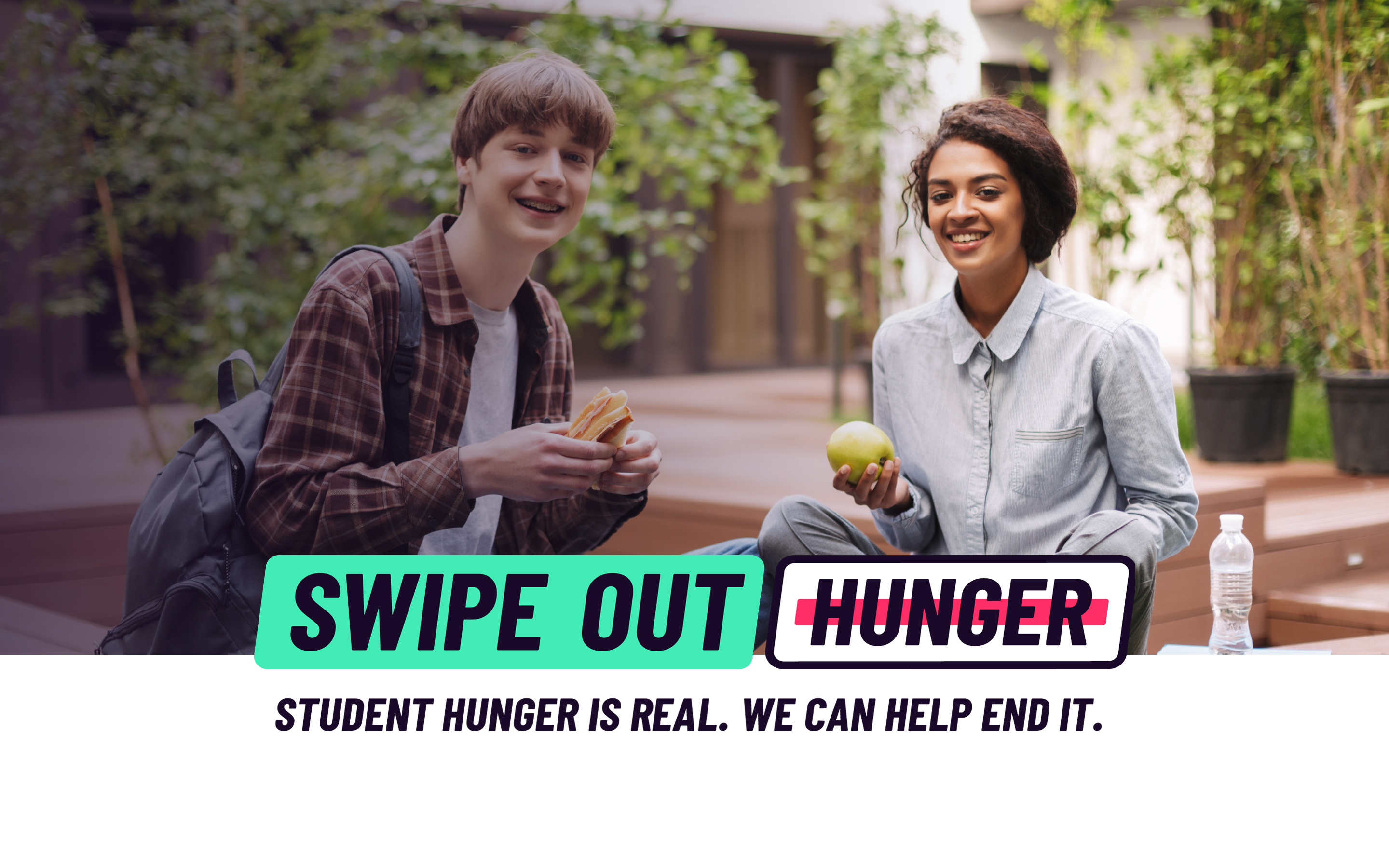
robots.txt (opens in a new tab)
5 rulesAll bots 2 allowed · 3 disallowed
- Allow
/*.css - Allow
/*.js - Disallow
/calendar/action* - Disallow
/events/action* - Disallow
/*? - Interval
Crawl delay 3 seconds
No matching rules.
Sitemaps
1Recent Updates
- Website images
- Screenshots
- Network details
- Website Technologies
- Pages and Search Information
- TLS and certificates
- DNS Information
- HTTP Response Information
- Domain Registration
- Website profile
- Website Description
- Website Name
- Website profile
- Website Description
- Website Name
User reviews (0)