
 简体中文
 English

Website review
This review may include AI-generated content and is not individually verified. Domain, certificate and other facts come from the observed data on this page.
What is The Kelty Foundation?
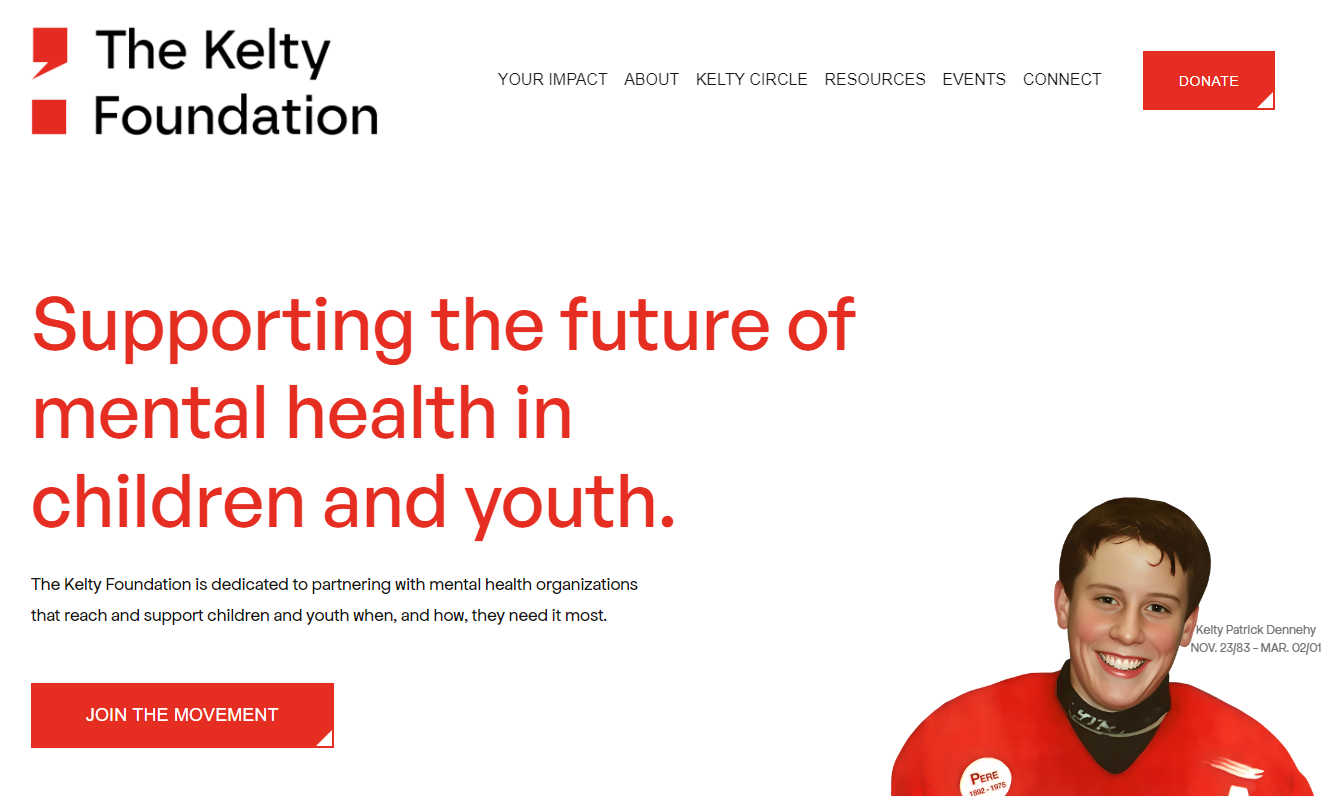
The Kelty Foundation is a registered Canadian charitable organization focused on youth mental health, particularly prevention and access to care. It was founded in memory of Kelty Patrick Dennehy and his sister Riley Rae Dennehy, and its stated mission is to support the future of youth mental health by funding organizations that reach young people and families before crisis points.
What it does
Its work centers on two ideas: prevention (building resilience early) and access (bridging the gap between mental health resources and the families who need them). A flagship initiative is the Kind Mind Program, described as a way to get resources to parents and build resilience in children. Kind Mind Month is designed to engage students, educators, and parents or caregivers in conversations about mental well-being, reduce stigma, and raise awareness of available resources before families experience crisis.
The foundation also reports having raised over $8 million for mental health initiatives in Canada.
Who it is for
- Families and caregivers looking for early mental health resources and ways to talk about well-being with children.
- Schools and educators interested in classroom or school-wide mental health programming.
- Donors and community members who want to support youth mental health prevention in Canada.
- Young people and those seeking help, through the foundation's "Get Help Now" pathway.
How to engage
If you are a parent, educator or potential supporter, start with the foundation's Kind Mind Program page to see whether its materials fit your school, family or funding goals. If you are looking for immediate support, use the Get Help Now section rather than the program pages.
How can I donate or contribute to The Kelty Foundation?
The Kelty Foundation is a registered Canadian charity that funds youth mental health prevention and access, so contributions generally fall into two lanes: giving money, or giving time and voice.
Ways to contribute
- Donate directly. The site's own call to action is "Get Involved," which is where donation and support options are gathered. Use that page rather than a third-party fundraiser, so the gift reaches the charity's own programs.
- Give to a specific initiative. The Kind Mind Program is the foundation's named school-based effort, aimed at reaching parents and caregivers with resources before a crisis develops. If you want your contribution tied to a defined activity rather than general operations, ask whether gifts can be directed there.
- Fundraise or mark an occasion. Because the foundation frames its work around resilience and upstream prevention, peer fundraising, memorial gifts, and event-based giving fit its stated purpose. The site honours Kelty Patrick Dennehy and Riley Rae Dennehy, which makes tribute giving a natural route.
- Contribute non-financially. Schools, educators, and caregiver groups can take part in Kind Mind Month conversations; skilled volunteers and corporate partners can offer reach, venues, or professional services.
Which route fits you
| Your situation | Practical choice |
|---|---|
| One-off personal gift | Donate through the foundation's Get Involved page |
| Want to see where money goes | Ask about directing support to the Kind Mind Program |
| Workplace or group giving | Ask about partnership or team fundraising |
| Teacher, parent or counsellor | Enquire about bringing Kind Mind Month to your school |
A useful next step
Open the foundation's Get Involved page and note two things before you give: whether you can designate your gift, and whether you need a Canadian tax receipt (the site lists a registered charitable number, so receipts should be available for eligible gifts). If you are giving on behalf of a school or employer, email first and describe what you want the money to do — a short, specific request gets a faster, more useful reply than a general enquiry.
For context on youth mental health giving in Canada, organisations such as CAMH publish plain-language resources you can share alongside a donation.
What mental health programs and initiatives does The Kelty Foundation fund?
The Kelty Foundation funds youth mental health work with an explicit upstream focus: prevention, resilience-building and better access to resources for children, youth and families. Its own framing is that it bridges the gap between mental health resources and the families who need them most, rather than concentrating on crisis response alone.
What the foundation says it supports
The clearest named initiative in its own materials is the Kind Mind Program, described as an innovative way to get resources to parents and build resilience in children. Its Kind Mind Month is designed to engage students, educators and parents or caregivers in conversations about mental well-being, reduce stigma, and raise awareness of available family resources before crisis points and before children reach the more challenging adolescent years.
Alongside that, the foundation describes its broader funding as supporting organizations dedicated to reaching and supporting youth precisely when and how they need it most, under the themes of prevention, access and care. It also states that it has raised over 8 million dollars for mental health initiatives in Canada.
How to judge whether this matters for you
| If you are… | The relevant angle |
|---|---|
| A parent or caregiver | Look at the Kind Mind materials as a way to start conversations and find resources earlier, not as a clinical service |
| A school or educator | Kind Mind Month is the natural entry point for classroom and school-community engagement |
| A youth mental health organization | The foundation's stated prevention-and-access focus is the lens for assessing fit with its funding priorities |
| A donor or volunteer | The "Get Involved" route is the direct path; the foundation presents itself as a registered Canadian charity |
A practical next step
If you want to know which specific organizations receive grants, the foundation's own site is the place to check for current program and funding details: The Kelty Foundation. For a wider view of youth mental health funders in Canada, the Centre for Addiction and Mental Health and Mental Health Commission of Canada publish context on prevention and access that can help you compare approaches.
How can I access mental health resources or get help through The Kelty Foundation?
The Kelty Foundation is a Canadian charity that funds youth mental health prevention and access initiatives rather than operating a walk-in clinic or crisis line itself. Its role is to direct money and programs toward organizations that reach children, teens and families early, before a crisis develops. Practical help usually comes through the programs and partners it supports, not through the foundation as a direct service provider.
What the foundation actually offers
- Kind Mind Program and Kind Mind Month: School-focused programming that engages students, educators and parents/caregivers in conversations about mental well-being, aims to reduce stigma, and connects families with available resources.
- Funding for prevention and access: Grants to organizations working on youth mental health, with an emphasis on reaching families early.
- A public call to action: The site's "Get Help Now" and "Get Involved" sections are the two main entry points — one for people seeking support, the other for donors, volunteers and partners.
If you need help now
The foundation's own pages are not a crisis service. If you or a young person is in immediate danger, contact local emergency services or a crisis line in your region rather than waiting on a charity website. For non-urgent support, start with the "Get Help Now" pathway on The Kelty Foundation, which points toward resources and partner organizations. In Canada, provincial health authorities and school boards also maintain youth mental health referral routes; a family doctor or school counsellor can often make the first connection fastest.
If you are a parent, educator or school
Kind Mind Month is the most direct route to foundation-linked resources: it is designed for classrooms and caregivers, and it emphasizes conversations before adolescence. A school administrator or parent council can ask about bringing the program in, while individual parents can use the same materials to open a conversation at home.
If you want to contribute rather than receive
Donations, fundraising and partnerships are handled through the "Get Involved" route. Because the foundation has raised over $8 million for Canadian mental health initiatives, donors can reasonably ask which organizations and programs the money supports and how outcomes are measured before giving.
A useful decision rule
Ask what you need first: crisis support today (go to emergency or a crisis line), local counselling or assessment (school counsellor, family doctor, provincial services), or prevention and awareness programming (The Kelty Foundation's Kind Mind work and the groups it funds). The foundation is strongest in that third category; treat it as a connector and funder, not a frontline provider.
What is the Kind Mind Program and how does it work?
The Kind Mind Program is The Kelty Foundation's school-based mental health initiative, described on the site as "an innovative, memorable, and unique way to get resources to parents and build resilience in children." Its centrepiece is Kind Mind Month, which engages students, educators and parents/caregivers in conversations about mental well-being, aims to reduce stigma, and raises awareness of family resources before crisis hits and before children reach the trickier adolescent years.
How it works in practice
- Setting: schools, with three participant groups — students, educators, and parents or caregivers.
- Timing: framed as prevention, deliberately upstream of crisis rather than as a response to it.
- Mechanism: structured conversations about mental well-being plus signposting to available resources.
- Goal: build resilience in children and connect families to support they can actually reach.
Where it fits in the foundation's wider work
The Kind Mind Program sits under two themes the site names explicitly — Prevention and Access — alongside a third, Care. The emphasis on "bridging the gap between mental health resources and the families who need them most" suggests the program is as much about distribution and awareness as about curriculum content.
Is it a fit for your situation?
- A parent or caregiver wanting mental health language and resources to use at home: Kind Mind Month is designed with you as a target audience, not just the child.
- A teacher or school administrator considering a turnkey awareness month: the program is built around educator participation, so it slots into existing school routines rather than requiring a clinical service.
- A donor or community partner weighing where to direct support: the foundation states it has raised over $8 million for mental health initiatives in Canada, and prevention/access is its stated focus.
The practical next step is to read the program page itself and check what a school or family needs to do to take part — the site's "Learn More" and "Get Involved" paths are the entry points. For broader context on youth mental health in Canada, CAMH publishes plain-language family resources, and Canadian Mental Health Association offers local branch programs that can complement a school-based initiative.
How can schools or community organizations partner with The Kelty Foundation?
Schools and community organizations most often partner with The Kelty Foundation by delivering or hosting its youth mental health programming, particularly the Kind Mind Program and Kind Mind Month, which are designed for students, educators, parents and caregivers. The foundation's stated focus is upstream prevention: building resilience in children and connecting families to mental health resources before a crisis develops. If your organization already runs classroom or family-facing programs, that prevention-and-access framing is the natural point of alignment.
Practical ways to start
- Adopt a school-based program. Kind Mind Month is built to engage students, educators and caregivers in conversations about well-being, reduce stigma and raise awareness of local resources. A school can run it as a classroom or whole-school initiative rather than a one-off assembly.
- Bring in parent and caregiver outreach. Because the program is explicitly designed to get resources to parents, a community organization could co-host caregiver sessions alongside a school's student activities.
- Join fundraising or awareness efforts. The foundation reports having raised over 8 million dollars for mental health initiatives in Canada, so organizations looking to contribute rather than deliver programming can support or co-brand fundraising and awareness campaigns.
- Reach out through the foundation's own channels. The site's "Get Involved" and "Learn More" paths are the intended entry points for interested schools and groups; use those rather than assuming a fixed partnership template.
What to prepare before you make contact
Partnerships move faster when you can describe your audience and your capacity. A short brief covering the following is usually enough:
| What to include | Why it matters |
|---|---|
| Your setting (school, board, community agency, after-school program) | Determines whether Kind Mind Month or a caregiver-focused format fits |
| Age range and approximate number of students or families | Shapes scope and materials |
| Existing mental health or wellness programming | Avoids duplication and shows where the foundation adds value |
| Staff or volunteer capacity | Clarifies who delivers sessions and follows up |
| Any funding or sponsorship you can contribute | Distinguishes a delivery partner from a fundraising partner |
A realistic first step
If you lead a school or community group, pick one concrete activity rather than proposing a broad partnership: for example, running Kind Mind Month in a single grade level this term, with a caregiver information session attached. That gives both sides a defined pilot, a clear audience and an easy way to judge whether to expand. Then contact the foundation through its Get Involved channel with that plan in hand.
For context on youth mental health funding and prevention in Canada, official national resources include CAMH and Kids Mental Health.
 NS1
 squarespace.com
 Google Workspace

User reviews (0)