
 简体中文
简体中文 English
Website review
This review may include AI-generated content and is not individually verified. Domain, certificate and other facts come from the observed data on this page.
What is ThreeDee?
ThreeDee is an award-winning 3D design studio and asset marketplace, best known for producing large modular 3D character libraries and standalone models that businesses use in games, animation, product design, and marketing. Its site describes it as the studio behind some of the biggest 3D libraries in the world, with recognition from Dribbble, Gumroad, and Clutch, and a customer base of 130,000+ users.
What it actually offers
- Modular 3D packs — Characterz, Avatarz, Illustrationz, Gamerz, Mascotz, Humanz, Cartoon Black Family, Jamez, and Handz. These are built for recombination: Characterz alone claims 3,000,000,000+ character combinations across ethnicities and age groups, while Illustrationz claims 167,000,000+ combinations across adults, kids, and elders.
- Standalone 3D models — individual, ready-to-use assets rather than packs.
- Custom 3D services — bespoke asset creation for teams that need something outside the library.
- Supporting tools — Blender generators, rigged characters, ARKit blendshapes, lipsync, facial expressions, gameplay animations, and pre-rendered PNG outputs. Handz, for example, is a free library of 320+ diverse hand files.
Who each part suits
| Need | Best fit |
|---|---|
| Fast game or app prototypes | Gamerz (low-poly, modular, gameplay animations) |
| Diverse character casting at scale | Characterz or Illustrationz |
| Upper-body avatars for UI or video | Avatarz |
| Animation or film-style scenes | Humanz, Cartoon Black Family, Mascotz |
| Presentation or product visuals | Standalone models and custom services |
Practical trade-offs
Packs reward volume: if you need many distinct characters, the combination counts and ready-made PNG renders save real production time. If you need one specific asset, a standalone model or a custom commission is usually the more efficient route. Rigging, ARKit, and lipsync support matter most for real-time and animated work; static marketing renders won't need them.
A useful next step is to match your pipeline first. Blender users get the most from the included generators and source files; Unity or Unreal teams should check export formats such as FBX and GLB before buying. If you want to see the studio's wider profile before committing, Dribbble and Gumroad both list ThreeDee's public work and creator standing.
How can I use ThreeDee's 3D models in my own projects?
ThreeDee supplies ready-made 3D characters, avatars, hands and mascots that you can drop into animation, game, app and marketing work rather than modelling from scratch. The site groups its products into modular packs (thousands of combinations from one purchase) and standalone models, with files intended for common 3D tools.
Typical ways to use the assets
- Animation and explainer video: rigged cartoon characters such as Cartoon Black Family, Humanz and Jamez are built for character animation, so you can pose, lip-sync and render scenes without building a rig.
- Game and app prototyping: Gamerz is positioned as a low-poly starter pack with modular male and female characters, gameplay animations, outfits and accessories — useful when you need placeholder or shippable characters quickly.
- Product, UI and marketing visuals: the avatar and hand libraries suit interface mockups, social posts and presentation imagery where you need varied, consistent-looking people.
- Brand mascots: Mascotz offers fully rigged cartoon animals and a business character, which fits campaign work that needs a recurring face.
- Scene building at volume: Characterz and Illustrationz are aimed at generating large numbers of distinct characters across ethnicities and age groups, helpful for crowd scenes or diverse representation in one project.
Practical decisions before you buy
| Your situation | Better fit |
|---|---|
| One specific character for a single scene | Standalone model |
| Many characters, repeated use, long-term library | Modular pack or lifetime access |
| Game engine workflow | Packs listing FBX, GLB, OBJ and Blender sources |
| Facial animation or VTuber-style work | Packs noting ARKit and lipsync |
| Tight budget, low-risk test | Handz, the free hand library |
Check the file formats and rig type listed for each pack against your pipeline — Blender, FBX, GLB and OBJ appear across several products, but not every pack includes every format. If you need ARKit or lipsync and it is not listed, the page points to a request option.
A sensible first step: download the free Handz library and open one file in your main 3D tool. That tells you within an hour whether the topology, scale and materials suit your workflow before you commit to a character pack. For a paid trial, pick the single pack closest to your actual project rather than the largest one — the value of a modular library only materialises if you will genuinely reuse it across multiple scenes.
What is the difference between ThreeDee's modular 3D packs and single 3D models?
ThreeDee separates its catalog into two buying paths: modular 3D packs and single 3D models. The page presents them as a choice at the top of the model library, and the distinction is about how much variety and assembly work you want versus how quickly you want one finished asset.
Modular 3D packs
These are libraries built around combinations. You pick a pack and then mix parts — body types, outfits, hair, accessories, expressions — to produce many characters from one purchase. The page's examples show the scale this can reach: Characterz advertises 3,000,000,000+ combinations across ethnicities and age groups, with 50,000+ rendered PNG files and 3D scenes included; Avatarz offers 8,000+ upper-body avatar combinations plus a Blender generator and a customization tutorial; Illustrationz lists 167,000,000+ combinations spanning adults, kids and elders.
Best for:
- Studios that need a recurring cast of characters across many scenes or campaigns
- Teams without a dedicated 3D artist who still need variety without commissioning each asset
- Game and prototype work where modular parts and source files (Blender, FBX, GLB, OBJ) matter
Trade-off: packs reward you with range, but they assume you will spend time assembling and customizing. If you need one specific character for a single image, that assembly step is overhead you may not want.
Single 3D models
These are standalone, ready-to-use assets. The page's examples are narrower and more specific: Mascotz (five fully rigged cartoon mascots — Lion, Zebra, Bull, Wolf, Business Bull), Cartoon Black Family (four rigged characters in a Disney/Pixar style), Humanz (rigged low-poly male and female humans with face rig and animations), Gamerz (a low-poly starter pack with modular characters, gameplay animations and ARKit facial expressions), and Jamez (one rigged, expressive cartoon character for business, travel, fantasy and construction scenes).
Best for:
- A defined project with a known character or mascot need
- Fast turnaround where rigging and file-format compatibility are the priority
- Brand mascots that must stay visually consistent rather than be recombined
Trade-off: less flexibility. You get exactly the character or set described, and adding a new look usually means buying another model rather than remixing parts you already own.
How to decide
| Your situation | Better fit |
|---|---|
| Many characters, one visual system | Modular pack |
| One hero character for a campaign | Single model |
| You have Blender skills and time | Modular pack |
| You need files usable today | Single model |
| Long-term library you keep reusing | Modular pack |
| Fixed scope, fixed deadline | Single model |
A practical next step: list the characters your next three projects actually need. If that list keeps growing or overlaps, a modular pack pays off; if it is one or two named characters, a single model is the shorter route. ThreeDee also offers custom 3D services and a request option for ARKit or Lipsync assets, which is worth considering when neither catalog option matches your brief.
What does the ThreeDee lifetime deal include and how does the 70% discount work?
The ThreeDee lifetime deal is a one-time purchase that unlocks the studio's entire library of current and future 3D packs, rather than a subscription or per-asset purchase. According to the product page, buying it gives you access to all existing ThreeDee packs, all future updates to those packs, and every new pack released afterward. The page advertises this as a 70% discount compared with buying the packs individually.
What the deal covers
Based on the page's pack list, the lifetime deal spans the full catalog as it stands, including:
- Characterz — a character library with billions of combination options, multiple ethnicities and age groups, thousands of rendered PNG files, and included 3D scenes.
- Avatarz — upper-body avatar combinations plus a Blender generator and a customization tutorial.
- Handz — a free diverse 3D hand library with hundreds of files.
- Mascotz — five fully rigged cartoon mascots with Blender, FBX, GLB, OBJ, MTL, texture and PNG files.
- Cartoon Black Family — four fully rigged characters in a Disney/Pixar-style look.
- Humanz — rigged low-poly male and female cartoon humans with face rigs and animations.
- Gamerz — modular low-poly game characters with gameplay animations, outfits, ARKit facial expressions, lipsync and Blender source files.
- Jamez — a rigged cartoon character suited to business, casual, travel, fantasy and construction scenes.
- Illustrationz — a large multi-purpose character combination library.
How the 70% discount works
The page frames the 70% figure as a saving against acquiring the packs separately: instead of paying per pack, the lifetime deal bundles all current and future packs at a reduced one-time cost. The practical trade-off is that you commit to the whole catalog up front rather than picking only the packs you need. If you would realistically use three or more of the listed packs — or expect to need new packs as they are released — the bundle math tends to favor the lifetime deal. If you only need one specific pack, such as Handz (which is free) or a single character pack, buying that pack alone is the more sensible route.
A useful next step
Before buying, list the packs you expect to use in the next 12 months and check whether that list already covers most of the catalog. If it does, the lifetime deal is the better value; if it covers only one or two packs, start with those and revisit the bundle later. The page also notes that ARKit or Lipsync assets can be requested if a pack does not include them, which is worth factoring in if your project depends on those features.
Which ThreeDee 3D pack is best for creating a diverse cast of characters for animation?
For a diverse animation cast, Characterz is the strongest starting point on ThreeDee, with Illustrationz as the broad alternative when you need wider stylistic range and Avatarz only for upper-body work.
Quick comparison
| Pack | Best for | Diversity and scale | Trade-off |
|---|---|---|---|
| Characterz | Large casts of full 3D characters across projects | Multiple ethnicities and age groups; very large combination count; 50,000+ pre-rendered PNGs; 3D scenes | Heavier library to navigate; more than a small project needs |
| Illustrationz | Multi-purpose character libraries spanning ages | Adults, kids and elders among a very large combination set | Less clearly framed as a full-body animation pipeline than Characterz |
| Avatarz | Presenters, talking heads, UI and explainer work | 8,000+ upper-body avatar combinations | Upper-body only, so not for full-body animation |
| Humanz | Rigged low-poly male and female leads | Face rig, animations, customization | Two base characters, so diversity comes from customization |
| Cartoon Black Family | A specific four-character family in a Pixar-style look | Four fully rigged characters | Narrow cast by design |
Why Characterz usually wins
A diverse cast is not just about skin tone. It means mixing ages, genders, body types and outfits across many shots while keeping a consistent style. Characterz is built for exactly that: the page describes it as the biggest 3D library, with multiple ethnicities and age groups, 3D scenes included and a character generator. That combination lets you populate crowd scenes and background roles without hunting for matching assets elsewhere.
If your animation is stylised and you want a broader visual vocabulary rather than one coherent cast, Illustrationz is the one to test, since it spans adults, kids and elders across a very large combination set.
Practical next step
Pick one scene from your script that needs three characters of different ages and ethnicities, then build it in Characterz first. If the style fits your project, the lifetime deal covering current and future packs removes the per-pack decision entirely. If your characters are mostly seen from the chest up, Avatarz will get you there faster and cheaper in effort.
One caveat: these are asset libraries, not finished animation. Budget time for rigging checks, retargeting and lighting before committing a whole production to any single pack.
How do I request ARKit or Lipsync support for a ThreeDee model?
ThreeDee's own model catalogue includes a "Need ARKit or Lipsync? Request it here" prompt alongside its filter options, so the studio handles these as custom requests rather than a checkout toggle. In practice, that means you ask, they assess, and you get a tailored answer rather than an instant download.
What to prepare before you ask
- The exact pack and model. Naming the pack (Characterz, Avatarz, Gamerz, Jamez, and so on) plus the specific character or variant avoids a round of back-and-forth.
- Your target format. Say whether you need the ARKit blend shapes, the lipsync rig, or both, and which engine or tool you'll drive them from — Blender, Unity, Unreal and web/AR pipelines all consume this data differently.
- Your intended use. A game prototype, a marketing animation and a real-time AR filter place different demands on the rig.
- Timeline and scope. One character is a small job; a modular pack with thousands of combinations is a different conversation.
Where to actually send the request
Start on ThreeDee, on the model library page where the ARKit/Lipsync prompt appears — that's the entry point the studio itself publishes for this. If you've already bought a pack, keep your order details to hand so they can match the request to your licence. For studio-level or bespoke work, the custom 3D services route is the more appropriate channel than a single-model request.
A practical decision point
If ARKit or lipsync is essential to your project, confirm support before you commit to a pack, not after. Rigging facial blend shapes onto a finished character is real production work, and the answer may be "this pack, yes; that one, no." Treating it as a pre-sales question rather than a support ticket saves you from buying assets you then can't animate the way you planned.
 Cloudflare
 Netlify
 Zoho Mail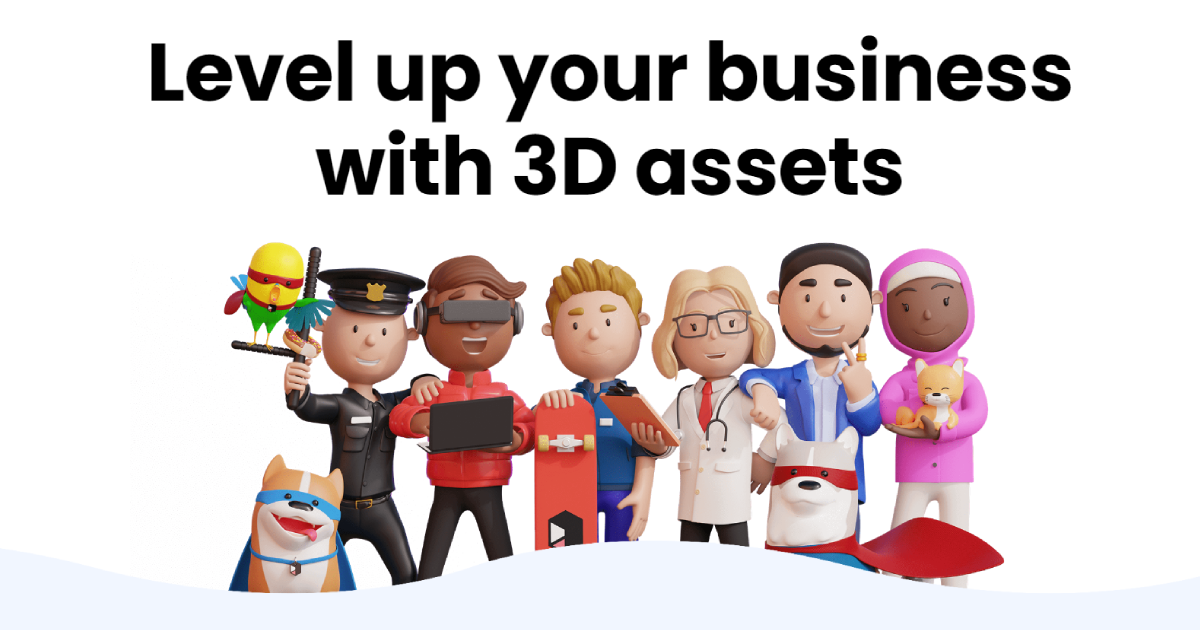

User reviews (0)