Website profiles · Technology insights · Alternatives

tmexpress.com

Get expert trademark consultation and register your trademark, company name, or slogan. Secure your business identity with TradeMark Express's comprehensive registration services.

No paid content found
Visit website
Profile views 12 Outbound visits 15 Normal
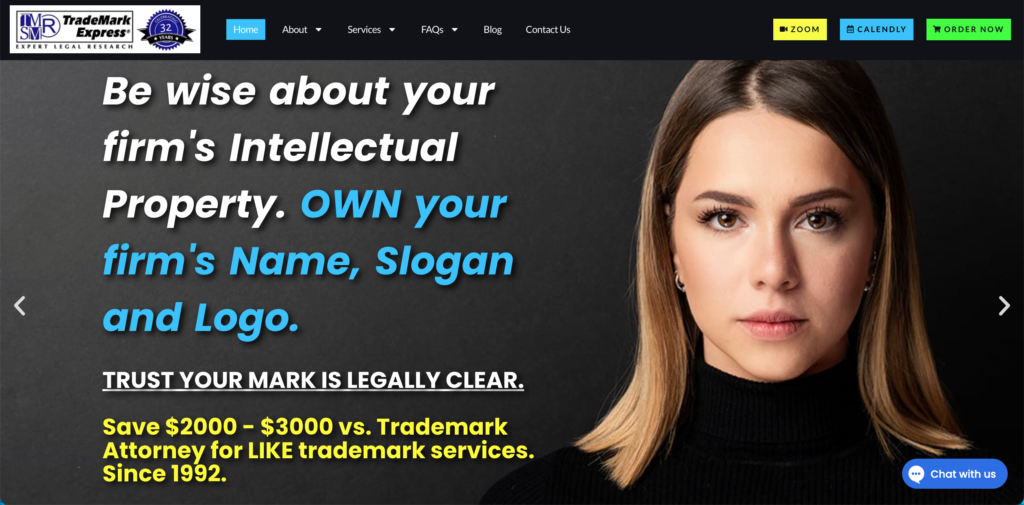
Expert Trademark Consultation & Registration | TradeMark Express Full homepage screenshot

At a glance

Category
Patents & Trademarks
Language
English
Paid-content signal
No paid content foundObserved
Registered
1995
Hosting
A2 Hosting, Inc.Inferred
HTTPS certificate trusted
PassedObserved
Last updated

Website review

This review may include AI-generated content and is not individually verified. Domain, certificate and other facts come from the observed data on this page.

What is TradeMark Express?

TradeMark Express is a long-running trademark registration and consultation service that helps businesses clear, file and manage trademarks for names, logos and slogans. Its site presents the service as a guided, attorney-supported process rather than a self-serve filing tool.

Its stated process has three main parts:

  1. Free expert consultation — a call, Zoom session or scheduled appointment to discuss whether a name, logo or slogan needs trademark protection and whether it is likely to be trademarkable.
  2. Comprehensive trademark research — searches across Federal, State and Common Law databases, which the site says typically takes about six hours.
  3. Application preparation and filing support — preparing the application for submission, with analysis intended to identify conflicts or similarities before filing.

The site also says the company has operated since 1992 and describes itself as North America's oldest and most successful trademark service, offering savings compared with hiring a trademark attorney for similar work. Those are the company's own claims, not independently verified here.

Who it suits: small businesses, founders and solo operators who want human guidance through a search and filing but do not want to manage the process alone. It is less suited to someone who only needs a quick DIY application or who already has trademark counsel.

Next step: before paying for anything, use the free consultation to ask two concrete questions — which databases will be searched for your specific mark, and whether an attorney or a non-attorney specialist will handle your file. The answers tell you how much of the "legally clear" promise is professional legal judgment versus a database report.

For general orientation on the filing system itself, the official USPTO site explains the federal application process and its requirements.

How does TradeMark Express's trademark registration process work step by step?

TradeMark Express breaks its process into four visible stages: a free consultation, a comprehensive search, legal analysis, and application preparation. The page frames the goal as making a mark "legally clear" before filing, rather than filing first and sorting out conflicts later.

The steps as described

  1. Free expert consultation. You discuss what you want to protect — a name, logo, or slogan — and whether a trademark is needed now. The page offers phone, Zoom, or Calendly scheduling.
  2. Comprehensive trademark research. The search covers Federal, State, and Common-Law databases. The page states this typically takes about 6 hours, which signals the depth expected rather than a quick knockout search.
  3. Legal research and analysis. Results are analyzed for conflicts and similarities, with trademark attorney access, so you get a judgment call on whether the mark is clear — not just a list of hits.
  4. Application preparation. The filing is prepared for submission, with the aim of a successful registration on the first attempt.

What this means in practice

A reader scenario: you have a business name you have used for a year and want to register it. Step 2 matters most, because unregistered common-law use can block you even when no federal record exists. A six-hour search across three database types is the kind of coverage that catches that, though the page does not detail the specific databases or the exact report format you receive.

The trade-off is time and cost versus doing it yourself. The page positions itself as a lower-cost alternative to hiring a trademark attorney for comparable work, and notes it has operated since 1992. Treat the comparison as a positioning claim, not a guarantee — the value depends on whether the search and analysis match what an attorney would do for your specific mark.

How to decide

  • If your mark is a common word or in a crowded category, prioritize the search and analysis steps and ask what the report includes.
  • If you are filing for a logo, ask how the search handles design-code similarities, not just text.
  • Before paying, confirm who reviews the analysis and whether an attorney signs off on the clearance opinion.

A useful next step is to request the free consultation and ask two questions: what the search report looks like, and what happens if a conflict surfaces after filing. For general background on the registration system itself, the USPTO explains the federal filing basics.

What does a comprehensive trademark search cover, and why is it crucial before filing?

A comprehensive trademark search checks whether a proposed name, logo, or slogan is already in use — or too close to something already registered — before you spend money filing. TradeMark Express describes its process as covering Federal, State, and Common-Law databases, with analysis by trademark attorneys to judge conflicts and similarities. That three-layer scope is the core of what "comprehensive" means in practice.

What each layer catches

  • Federal search: Marks registered or applied for with the national trademark office. This is the most visible layer and the one most people mean by "a trademark search."
  • State search: Marks registered at the state level, which can block use within that state even when no federal registration exists.
  • Common-law search: Unregistered marks used in commerce — business names, product names, slogans, regional brands. Common-law rights can still support an objection or a lawsuit, so skipping this layer leaves real risk uncovered.

The page states that this research typically takes about six hours, which is a useful expectation-setter: it is a research and analysis exercise, not an instant database lookup.

Why it matters before filing

Filing first and searching later inverts the risk. If a conflicting mark exists, you can lose the application fee, be forced to rebrand after you have printed signage and packaging, or face a cease-and-desist letter once you have built goodwill. A search also tells you whether your mark is distinctive enough to be registrable at all — for example, a purely descriptive phrase is weak regardless of who else is using it. TradeMark Express frames the goal as being "legally clear" before filing, and offers attorney access to interpret what the search turns up.

How to decide what you need

Situation Practical starting point
Launching a national product or brand Full federal, state and common-law search before filing
Local business, one state, no expansion plans State and common-law search still matters; federal search for future-proofing
Logo or slogan alongside a name Search the wording and the visual mark separately
Already using the name for years Search to see whether you have common-law exposure to someone else

A concrete scenario: a coffee roaster plans to sell online nationwide under a new name. A federal-only check comes back clean, but a common-law search finds a regional roaster using a near-identical name in a neighboring state. Filing anyway invites an opposition or a later dispute; adjusting the name now costs far less than rebranding after launch.

Next step: before paying for a filing, ask any search provider three questions — which databases are covered, whether common-law sources are included, and whether an attorney reviews the results for likelihood of confusion. If a provider cannot answer all three, the search is likely incomplete. TradeMark Express offers a free initial consultation, which is a reasonable way to test whether the scope fits your situation before committing.

How much does TradeMark Express charge compared to hiring a trademark attorney?

TradeMark Express presents itself as a lower-cost alternative to hiring a trademark attorney for comparable work, but the page does not publish a specific fee schedule. Its own copy claims "Savings vs. trademark attorney for LIKE work," with the caveat "do not compare us to negligent attorneys or incompetent trademark services." That is a positioning claim, not a quoted price, so treat it as a starting point for a quote rather than a number you can budget against.

What the page actually tells you about cost

  • A free expert consultation is the entry point, offered by phone, Zoom, or Calendly.
  • Comprehensive research is described as covering Federal, State, and Common-Law databases and "typically takes 6 hours" — the main driver of any quoted fee.
  • The service bundles search, legal research analysis, application preparation, and "trademark attorney access."
  • Pricing language on the site is limited to the word "premium" and a cost-effectiveness claim; no dollar figures appear in the supplied page content.

How the two options typically differ

Factor TradeMark Express (as described) Hiring a trademark attorney directly
Who does the work Service team plus attorney access for analysis A licensed attorney you select and supervise
Search scope Federal, State, Common-Law databases Varies by firm and budget
Cost structure Positioned as savings for "LIKE work" Hourly or flat fee, usually higher
Legal advice Access described, but not a full attorney-client engagement Direct attorney-client relationship
Best for Straightforward name, logo, or slogan filings on a budget Conflicts, contested marks, or marks central to your business

A practical way to decide

Get a written quote from TradeMark Express for your specific mark, then get one flat-fee quote from a trademark attorney for the same scope: search, opinion, filing, and office-action response. Compare line by line. If your mark is simple and the search comes back clear, the savings may be real. If the search surfaces conflicts or you operate in a crowded class, the attorney's judgment usually justifies the difference.

A concrete example: a solo founder registering a coined brand name for one class of goods can reasonably start with a packaged search-and-file service. A company whose brand name is descriptive, or who has already received a cease-and-desist letter, should treat the lower fee as a false economy and go straight to counsel.

For general context on the filing process and official fees, see USPTO.

Can TradeMark Express help me trademark a name, logo, or slogan?

Yes. TradeMark Express is set up for exactly that: trademarking a name, logo, or slogan. Its own pages describe services covering comprehensive searches (federal, state, and common-law databases), application preparation, and access to trademark attorneys, with a free initial consultation.

What that means in practice

  • Names: the core use case. The site repeatedly frames its work around clearing a name before you commit to it, then filing to secure nationwide rights.
  • Logos: covered as part of the same service, which matters because a logo can carry both trademark and copyright considerations.
  • Slogans: also listed. Slogans are harder to register than names because they must function as a source identifier, not just a descriptive phrase — so the search-and-analysis step does more work here.

How the process is described

  1. Free expert consultation to scope what you need.
  2. Comprehensive search across federal, state, and common-law databases — the site says this typically takes about six hours.
  3. Legal analysis of conflicts and similarities, with trademark attorney access.
  4. Application preparation and filing.

A realistic reader scenario

Say you've settled on a business name and a tagline, and you're about to print signage and packaging. The useful sequence is to search first, then commit to the name, then file. If the search turns up a confusingly similar mark in your class, you've saved the cost of rebranding later — which is usually far more than the search itself.

Decision criteria

  • If you only need a quick knockout search to screen a shortlist, a full service may be more than you need.
  • If you're filing in multiple classes, or your mark is descriptive or a slogan, attorney involvement is worth it.
  • If you're outside the US, confirm whether the service covers your jurisdiction — the site's language emphasizes nationwide US rights.

Next step: book the free consultation and bring your shortlist of names or slogans, plus the goods or services you'll sell. Ask which classes apply and whether the search covers common-law uses like unregistered local businesses. You can start at TradeMark Express. For general background on the filing process, the USPTO's own site is the authoritative reference.

What happens during the free expert trademark consultation?

The free consultation is a scoping and strategy call, not the legal work itself. On TradeMark Express, the page describes it as the starting point of their service: you discuss what you want to protect — a name, logo, or slogan — and whether you need a trademark now or whether a mark is even trademarkable. The stated aim is to build a trademark strategy tailored to your business before any search or filing begins. The page also notes the consultation can be booked by phone, Zoom, or Calendly.

H3 What to expect, based on the page

  • A conversation about your specific mark and business, rather than a generic pitch.
  • Early guidance on whether your mark is worth pursuing and whether timing matters.
  • A recommended next step, which on this site is typically a comprehensive search covering Federal, State, and Common-Law databases; the page says that search usually takes about six hours.
  • Access to trademark attorneys for the legal analysis, which the site presents as part of the paid process rather than the free call.

H3 How to get the most from it

Come with the exact wording, spelling, and any logo or slogan you have in mind, plus the goods or services you sell and the markets you care about. Ask directly: what conflicts are likely, what would you search, and what would you change about the mark before filing? A free consult is a fit if you are deciding whether to invest in a search; it is not a substitute for the search and legal clearance themselves.

If you want to compare approaches before booking, look at how other trademark services structure their intake, for example LegalZoom or the USPTO's own resources at USPTO.
Related questions

More questions →
What Is TradeMark Express? Services, Process, and Who It's For

TradeMark Express is a trademark consultation and registration service that has operated since 1992, describing itself as North America's oldest trademark service. It handles the search, legal-clearance analysis, and application preparation needed to register a trademark, company name, or slogan. It fits individuals and businesses that want a name, logo, or slogan cleared and filed without managing the search and paperwork themselves, and it starts with a free expert consultation.

What TradeMark Express does

The company positions itself around one promise: getting a trademark approved "the first time" by confirming it is legally clear before filing. Its stated scope covers rights in a mark's sound, appearance, and meaning, nationwide.

Its core work breaks into three parts:

  • Comprehensive trademark search — covers Federal, State, and Common-Law databases using what the site calls top-tier legal trademark resources. The site states a typical search takes about 6 hours.
  • Legal research and analysis — a step-by-step review that identifies conflicts or similarities, with access to trademark attorneys to confirm the mark is legally clear.
  • Application preparation — preparing the trademark application for filing.

The site frames the search as the deciding factor: "If your trademark search isn't comprehensive, then it isn't done."

How the process works

The site describes a step-by-step registration flow:

  1. Free expert consultation — a session tailored to your needs, where you can ask whether you need a trademark now, whether a name/logo/slogan needs legal clearance, or whether a logo is even trademarkable.
  2. Comprehensive search — Federal, State, and Common-Law databases, roughly 6 hours of work.
  3. Legal research and analysis — conflict and similarity review with attorney access.
  4. Application preparation — preparing the filing for submission.

You can book the consultation by phone, Zoom, or Calendly, according to the site.

Who it's for

TradeMark Express targets people and businesses that need to:

  • Register a company name, slogan, or trademark
  • Confirm a mark is legally clear before committing to it
  • Protect a brand identity nationwide

If you already have trademark counsel or only need a quick self-directed search, the full service may be more than you need. If you want the search, clearance analysis, and filing handled together, that is the case it is built for.

What the site claims about itself

Claim Detail given
Years in business Since 1992
Positioning "North America's oldest & most successful trademark service"
Search coverage Federal, State, and Common-Law databases
Search time Typically 6 hours
Consultation Free expert consultation
Cost framing Describes itself as cost-effective and notes savings vs. a trademark attorney for like work

The site also states it does not want to be compared to "negligent attorneys or incompetent trademark services" — a caution about the comparison, not a verified figure.

Practical notes before you start

  • The consultation is free, so it is a low-commitment way to test whether the service fits your situation.
  • The search is the core deliverable. Ask what the 6-hour search covers in your specific case and how conflicts are reported.
  • Attorney access is part of the process, but the site does not specify how much attorney time is included — clarify this during the consultation.
  • Pricing is not published on the page. The site uses the word "premium" and references savings, but no rates appear, so confirm costs directly.

To begin, contact TradeMark Express by phone, Zoom, or Calendly to schedule the free consultation and describe your mark.

What Is the Step-by-Step Trademark Registration Process with TradeMark Express?

TradeMark Express walks clients through four stages: a free expert consultation, a comprehensive trademark search across federal, state, and common-law databases, a legal research and analysis phase with trademark attorney access, and application preparation and filing. The stated goal is a successful trademark "the first time." The process suits business owners who want to clear and register a name, logo, or slogan nationwide but want a service layer between doing it alone and hiring a full-service trademark attorney.

Step 1: Free Expert Trademark Consultation

The process starts with a free consultation tailored to your needs. According to the site, you can reach the team by phone, Zoom, or by scheduling through Calendly.

What this stage is for:

  • Legally clearing a name, logo, or slogan
  • Deciding whether you need a trademark now
  • Finding out whether your logo is even trademarkable

The consultation is framed as a strategy session: "Every business is unique, and so are its trademark needs." Expect to describe what you want to protect and how you plan to use it, then get a recommendation on whether and how to proceed.

Step 2: Comprehensive Trademark Research

If you move forward, the next stage is a trademark search. TradeMark Express states that a comprehensive search must cover:

  • Federal databases
  • State databases
  • Common-law databases

The site says this search typically takes about 6 hours and uses "top-tier legal trademark resources." The company also takes a firm position on scope: "If your trademark search isn't comprehensive, then it isn't done."

This is the stage where conflicts or similarities to existing marks are supposed to surface — before you spend money filing.

Step 3: Legal Research and Analysis

Search results alone don't tell you whether a mark is legally clear. TradeMark Express describes a step-by-step approach that includes:

  • Thorough analysis of the search findings
  • Access to trademark attorneys to confirm the mark is legally clear
  • Identification of any conflicts or similarities that could block registration

The company positions this as a cost-effective alternative to hiring a trademark attorney for like work, while explicitly warning against comparing it to "negligent attorneys or incompetent trademark services." In other words, the value claim is attorney-backed review at a lower price point — not the same scope as full attorney representation.

Step 4: Application Preparation and Filing

Once the mark is cleared, TradeMark Express prepares the trademark application for filing. The stated aim is "a successful filing" and a trademark secured "the first time" — meaning the earlier search and analysis stages exist to reduce the chance of a refusal or a conflict-driven rejection later.

What the Process Does Not Cover

Based strictly on the site content, a few things are not specified:

  • Exact turnaround time for filing after the search
  • Which filing basis (use in commerce vs. intent to use) applies to your situation
  • Government filing fees versus service fees — the site references "premium" pricing signals but publishes no price list or payment details
  • Whether attorney access means direct representation or consultation only

Treat these as questions to raise during the free consultation.

Who This Process Fits

Situation Why the process fits
You have a name, logo, or slogan you plan to use nationwide The search covers federal, state, and common-law databases
You want legal clearance before filing Attorney access is built into the analysis stage
You want to avoid a DIY filing mistake Application preparation is handled for you
You need full attorney representation in a dispute Not described on the site — this is a registration service

How to Start

  1. Choose a contact channel: phone, Zoom, or Calendly scheduling.
  2. Bring your proposed name, logo, or slogan and how you intend to use it.
  3. Ask upfront what the search and filing will cost, since no pricing is published.
  4. Confirm what "attorney access" includes for your case before committing.

The company has operated since 1992 and describes itself as North America's oldest trademark service, with a stated savings versus hiring a trademark attorney for like work.

How Does TradeMark Express Compare to Hiring a Trademark Attorney?

TradeMark Express positions itself as a lower-cost alternative to hiring a trademark attorney for search and filing work, while still involving trademark attorneys in the legal analysis. According to its site, the service is built around a comprehensive Federal, State, and Common-Law search, application preparation, and a free expert consultation. The key caveat is in its own framing: it claims savings "vs. trademark attorney for LIKE work" and explicitly says not to compare it to "negligent attorneys or incompetent trademark services." So the real comparison is not "service vs. attorney" but "this service vs. a competent attorney doing the same scope of work."

The comparison at a glance

Dimension TradeMark Express (as described on its site) Hiring a trademark attorney (typical engagement)
Core work Comprehensive search (Federal, State, Common-Law), application preparation, attorney access for analysis Search, clearance opinion, filing, office action responses, ongoing counsel
Cost positioning Claims savings vs. attorney for "like work"; described as "cost-effective" Usually billed hourly or flat fee; generally higher for equivalent scope
Attorney involvement Trademark attorneys involved in the legal analysis and clearance step Attorney leads the matter directly
Search scope Preliminary, Trademark, and Common Law; Federal, State, and Common-Law databases; typically takes 6 hours Varies by firm; depth depends on the engagement
Consultation Free expert trademark consultation (call, Zoom, or Calendly) Often paid or bundled into engagement
Track record claim Operating since 1992; describes itself as North America's oldest and most successful trademark service Depends on the individual attorney or firm

Where the cost difference actually comes from

The site's savings claim is tied to doing "LIKE work" — meaning the same search and filing tasks. If you compare a full-scope attorney engagement (clearance opinion, filing, and later office action responses) against a search-and-prep service, you are not comparing equivalent work, and the price gap reflects that difference rather than pure efficiency.

The site also states the search typically takes 6 hours and covers Federal, State, and Common-Law databases using "top-tier legal trademark resources." That is the scope you should use as the baseline when getting any competing quote, so both sides are priced against the same deliverable.

What you still get from the attorney side

TradeMark Express says its step-by-step approach includes "thorough analysis & trademark attorney access to ensure your mark is legally clear." That means attorney input is part of the process, not absent from it. What differs is the structure: you are buying a packaged service with attorney access at defined points, rather than retaining an attorney who owns the matter end to end.

If your situation involves contested marks, prior refusals, or complex goods and services classifications, the packaged model may not cover everything a direct attorney engagement would. The site does not describe how it handles office actions or disputes, so treat that as an open question to raise in the consultation.

Who each option fits

TradeMark Express may fit you if:

  • You want a comprehensive Federal, State, and Common-Law search before filing
  • Budget is a primary constraint and your mark is relatively straightforward
  • You want attorney input on clearance without retaining a firm for the full matter
  • You want to start with a free consultation before committing

A direct attorney engagement may fit you if:

  • You expect office actions, oppositions, or other contested proceedings
  • Your mark or industry carries higher legal risk
  • You want one point of contact accountable for the entire lifecycle

How to decide

  1. Use the free consultation to describe your mark, goods/services, and industry.
  2. Ask exactly what the search covers and whether the 6-hour, three-database scope applies to your case.
  3. Ask who handles an office action if one is issued, and at what cost.
  4. Get a quote from a trademark attorney for the same scope — search plus filing — and compare like for like.
  5. Weigh the savings against the risk profile of your specific mark, not against trademark filing in general.

The site's own warning is the most useful decision rule here: compare against competent, equivalent work. If the attorney quote covers materially more (disputes, responses, ongoing counsel), the lower price is not a discount on the same thing — it is a different scope.

Why Do Trademarks Matter for a Business?

A trademark matters because it gives you ownership and control over the sound, appearance, and meaning of your brand — and, once registered, those rights can extend nationwide. TradeMark Express frames it as the ability to "OWN, CONTROL and EXPAND rights in SOUND, APPEARANCE and MEANING - geographically NATIONWIDE." If you're building a company name, logo, or slogan you intend to keep using, a trademark is what keeps that identity yours. The catch: those rights only hold up if the mark is legally clear before you commit to it.

What a Trademark Actually Gives You

A trademark is not just a filing receipt. According to TradeMark Express, it covers three dimensions of your brand:

  • Sound — how your name or slogan is spoken
  • Appearance — the visual form, such as a logo
  • Meaning — the impression and associations the mark carries

The value is in the combination: you can own it, control how it's used, and expand it into new products, services, or regions without someone else trading on the same identity. The geographic reach is described as nationwide, which is the practical difference between a registered mark and an unregistered name you simply started using.

The Risk of Skipping a Legal Clearance Search

The site's central warning is blunt: "If your trademark search isn't comprehensive, then it isn't done." A mark that hasn't been cleared can collide with an existing one, and that conflict surfaces at the worst possible time — after you've printed packaging, built a following, or started expanding.

TradeMark Express describes its search as covering Federal, State, and Common-Law databases, using legal trademark resources, and notes that a thorough search typically takes about 6 hours. That scope matters because a federal database alone won't show unregistered ("common law") users who may still have prior rights in a region.

The stated goal of the process is to "ensure your trademark is legally clear" before filing, so the application itself has a better chance of succeeding the first time.

How the Process Is Structured

TradeMark Express presents its service as a sequence rather than a single transaction:

  1. Free expert consultation — a session tailored to your needs, offered by phone, Zoom, or Calendly scheduling. The site invites questions like whether you need a trademark now, or whether your logo is even trademarkable.
  2. Comprehensive trademark research — Federal, State, and Common-Law databases, roughly 6 hours of work.
  3. Step-by-step legal research analysis — identifying conflicts or similarities, with access to trademark attorneys, positioned as a cost-effective alternative to hiring an attorney for comparable work.
  4. Application preparation — preparing the filing for submission.

The company states it has operated since 1992 and describes itself as North America's oldest and most successful trademark service, with a claimed savings versus a trademark attorney for like work. Treat those as the company's own marketing claims, not independently verified figures.

Who This Fits — and Who It Doesn't

This approach suits a business that:

  • Has settled on a name, logo, or slogan it intends to keep and grow
  • Wants a clearance search before spending on branding or filing
  • Prefers a guided, service-led process over filing alone

It fits less well if you only need a quick informational lookup, or if your situation involves a dispute, opposition, or infringement claim — those are legal matters the site's consultation can route you toward, but the page does not present itself as litigation support.

The Practical Takeaway

Before you invest in a brand identity, confirm it's legally clear. A comprehensive search across federal, state, and common-law sources is the step that prevents a costly conflict later, and it's the step TradeMark Express builds its process around. If you're unsure whether your name or logo is even protectable, the free consultation is the low-risk starting point the site offers.

How to Know If You Need a Trademark — and Whether Your Logo Is Trademarkable

You likely need a trademark once you're using (or about to use) a name, logo, or slogan to identify your business in commerce, and you want exclusive rights to it. Whether your logo is actually trademarkable is a separate question that depends on a comprehensive search — not on how much you like the design. TradeMark Express frames this as two decisions you can work through in a free expert consultation: (1) do you need to register now, and (2) is your mark legally clear enough to register.

First, separate the two questions

People often bundle "do I need a trademark?" and "can I trademark this?" into one worry. They're different:

Question What it's really asking How you answer it
Do I need a trademark? Do I want exclusive, nationwide rights in this name/logo/slogan? Look at how you use the mark in commerce and whether you plan to expand
Is my logo trademarkable? Is this mark legally clear, or does it conflict with an existing one? Run a comprehensive search across Federal, State, and Common-Law databases

The first is a business decision. The second is a legal-clearance question that a search answers.

Do you need a trademark?

According to TradeMark Express, a trademark lets you own, control, and expand rights in sound, appearance, and meaning — geographically nationwide. That's the core value: it's not just about your local market.

You're a reasonable candidate for registration if any of these apply:

  • You're using a name, logo, or slogan to identify your goods or services.
  • You want to secure your business identity rather than risk someone else claiming it.
  • You plan to grow beyond your current area — the page emphasizes nationwide rights.
  • You're "starting your business right" and want the mark cleared before you invest in branding.

The site's own framing is blunt about the downside: "Live the dream — not the nightmare." The implied risk is building a brand on a name you later can't own or defend.

If you're unsure whether you need one now, that's exactly what the free consultation is for — the page explicitly invites you to ask "Wondering if you need a trademark now?"

Is your logo (or name, or slogan) trademarkable?

This is where the search does the work. TradeMark Express states plainly: "If your trademark search isn't comprehensive, then it isn't done."

A comprehensive search, as described on the site, covers:

  • Federal trademark databases
  • State trademark databases
  • Common-Law databases (unregistered marks that still carry rights)

The service uses "top-tier legal trademark resources" and notes a comprehensive search typically takes about 6 hours. The goal is to confirm your mark is legally clear — meaning no conflicts or confusingly similar marks already exist.

What "legally clear" means for your logo

A logo can be distinctive as a design and still be unregistrable if it's confusingly similar to an existing mark. The search and analysis step is designed to identify "any conflicts or similarities." So the honest answer to "is my logo trademarkable?" is: not until a comprehensive search says so.

The page also flags a common question directly — "Unsure if your logo is trademarkable?" — and routes it to the consultation rather than promising a yes.

How TradeMark Express structures the process

The site lays out its approach in three connected stages:

  1. Free expert consultation — tailored to your needs. You can reach them by phone, Zoom, or by scheduling via Calendly. This is where you discuss whether you need a mark now and whether your name, logo, or slogan is a candidate.
  2. Comprehensive trademark research — Federal, State, and Common-Law search using legal resources; typically ~6 hours.
  3. Step-by-step legal research analysis — a cost-effective service that includes thorough analysis and trademark attorney access to confirm the mark is legally clear.

The stated promise is a "successful trademark. The first time." — which is really an argument for doing the search before filing, not after.

A practical way to decide

Work through these in order:

  • Are you using or about to use a name/logo/slogan in commerce? If yes, you have something a trademark could protect.
  • Do you want nationwide exclusive rights? If yes, registration is the path — and the page stresses nationwide geographic scope.
  • Have you cleared it? If you haven't run a Federal + State + Common-Law search, you don't yet know if it's trademarkable.
  • Still unsure? The site offers a free expert consultation specifically for "need to legally clear a name, logo, or slogan" and "unsure if your logo is trademarkable."

What the page doesn't tell you

The site references "premium" resources and mentions savings versus a trademark attorney for "like work," but it does not publish prices, package tiers, or payment details on this page. It also doesn't state turnaround times beyond the ~6-hour search estimate. So treat cost and timeline as things to confirm in the consultation rather than assumptions.

Bottom line

You need a trademark if you want to own and control your brand identity nationwide. Your logo is trademarkable only after a comprehensive Federal, State, and Common-Law search confirms it's legally clear. TradeMark Express positions the free consultation as the starting point for both questions — and its core message is that skipping the comprehensive search is the mistake that turns a dream into a nightmare.

Website Overview

Identifiable technologies and additional version or configuration signals make the service easier to fingerprint, which may help targeted scanners narrow their checks. An established domain and managed infrastructure suggest continuity of operations and may support dependable delivery, although neither guarantees service quality.

Domain and Registration

Registered in 1995, this domain has about 31 years of history. That suggests continuity, although ownership and purpose may have changed. Transfer-protection status is present, helping reduce the risk of unauthorized domain transfers. The domain uses the common .com extension, which is not an independent safety signal.

DNS and Email

Nameservers are provided by a2hosting.com, indicating managed DNS hosting. MX records point to the tmexpress.com email service. No CNAME was found; the observed records resolve directly to addresses. SPF and DMARC are configured. DKIM status is unknown. DNSSEC signatures were not detected, so this additional DNS authenticity protection is not confirmed.

TLS and Certificates

The certificate uses an RSA 2048-bit public key, offering broad client compatibility. The server supplied a complete certificate chain. No organization name is present in the certificate; the available fields are consistent with domain validation. The certificate was issued by Let's Encrypt, commonly associated with automated certificate services. The certificate's total validity is about 89 days, consistent with a short renewal cycle.

HTTP and Browser Security

X-Powered-By exposes backend information: PHP/8.1.34. The response lacks these common security headers: CSP, Referrer-Policy, Permissions-Policy. No obvious internal addresses or debug information were found in the headers. The Server header contains the custom value LiteSpeed. No explicit CDN or WAF marker was found in the response headers.

Technology Stack Analysis

The public page identifies AMP for WP 1.1.17, WordPress, jQuery, PHP, with exact versions exposed for 1 technologies. These details can narrow vulnerability checks, although exposure alone is not a vulnerability.

Search and Social Sharing

The meta description has 179 characters and may be shortened in search results. The Generator tag identifies AMP for WP 1.1.17, making the publishing system easier to fingerprint. Twitter Card metadata is configured. JSON-LD includes Organization data, helping describe the organization as an entity. The title has 64 characters, within a common display range.

Hosting and Email

DNSa2hosting.com
HostingA2 Hosting, Inc.
Emailtmexpress.com
Approximate IP geolocation (inferred; a CDN or proxy may differ from the origin server) United States flagUnited States Inferred 68.66.226.123

Registration details

RDAP / WHOIS

RegistrarNetwork Solutions, LLC
Registered1995-08-31
Expires2035-08-30
Domain statusclient transfer prohibited
Nameserversns1.a2hosting.com、ns2.a2hosting.com
DNSSECunsigned

DNS records

DNS

TypeNameValueTTLPriority
Atmexpress.com68.66.226.123300—
MXtmexpress.commail.tmexpress.com144000
NStmexpress.comns1.a2hosting.com86400—
NStmexpress.comns2.a2hosting.com86400—
NStmexpress.comns3.a2hosting.com86400—
NStmexpress.comns4.a2hosting.com86400—
TXTtmexpress.comv=spf1 +mx +a +ip4:162.240.98.124 ~all14400—
DMARC_dmarc.tmexpress.comv=DMARC1; p=none14400—
DMARC_dmarc.tmexpress.comv=DMARC1; p=reject; rua=mailto:[email protected]; ruf=mailto:[email protected]14400—

TLS and certificates

TLS / SSL

AssessmentNormal configuration
Supported protocolsTLSv1.2、TLSv1.3
Negotiated protocolTLSv1.3
Certificate subjecttmexpress.com
IssuerLet's Encrypt
Valid until2026-12-01T15:15 · Remaining when checked: 65 days
Verification detailsCertificate trust: Passed · Hostname match: Passed

HTTP response headers

HTTP

HeaderValue
content-typetext/html; charset=UTF-8
serverLiteSpeed
strict-transport-securitymax-age=63072000; includeSubDomains
x-frame-optionsSAMEORIGIN
x-content-type-optionsnosniff

Identified technologies

AMP for WP 1.1.17WordPressjQueryPHP

Pages, Search and Sharing

Meta descriptionGet expert trademark consultation and register your trademark, company name, or slogan. Secure your business identity with TradeMark Express's comprehensive registration services.
Canonical URLhttps://tmexpress.com/
LanguageEnglish (default)
Twitter Cardsummary_large_image
All bots 0 allowed · 0 disallowed
  • IntervalCrawl delay 20 seconds

User reviews (0)

  • No reviews yet.