
 简体中文
 English

Website review
This review may include AI-generated content and is not individually verified. Domain, certificate and other facts come from the observed data on this page.
What is Toge Productions?
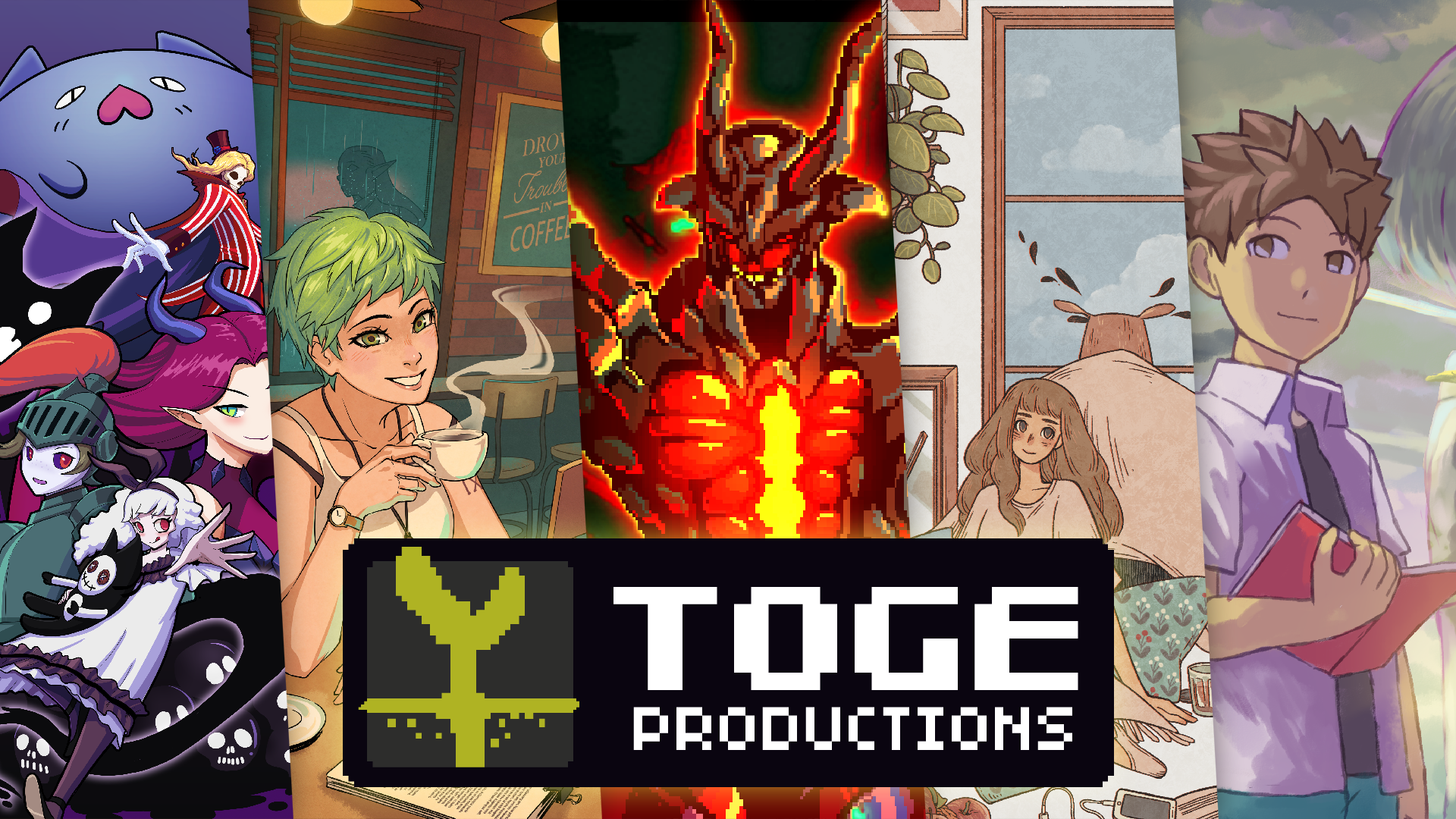
Toge Productions is an independent game development and publishing studio based in Indonesia. Its own site describes it as growing "games you enjoy," and its catalogue spans narrative games, action titles and strategy experiments rather than a single genre.
What it makes and publishes
The studio is best known for Coffee Talk, a coffee-brewing and conversation simulator about listening to fantasy-inspired modern characters and serving them the right warm drink. Its roster also includes:
- A Space for the Unbound — a slice-of-life pixel-art adventure set in late-1990s rural Indonesia, dealing with anxiety, depression and a boy-and-girl relationship with supernatural elements.
- When the Past was Around — a point-and-click puzzle adventure about love, moving on and letting go.
- Necronator: Dead Wrong — a comedic micro RTS with deck-building, where you collect undead units and build a deck.
- Rising Hell — a vertical platformer rogue-lite with heavy metal music and demon-fighting.
- Older series such as Infectonator and titles including Rage in Peace and Kriegsfront Tactics.
Who it suits
If you like story-driven, atmosphere-first indie games — especially ones with distinctive regional settings and emotional themes — Toge's line-up is the draw. Players who prefer fast, mechanics-heavy action have Rising Hell and Necronator to consider, but the studio's identity leans toward narrative and character.
A practical next step
Pick the title that matches your mood: Coffee Talk for a low-pressure conversational experience, A Space for the Unbound for a longer narrative adventure, or Rising Hell for quick action runs. The site's game pages give each title's premise, and its blog covers announcements and anniversary sales — useful if you want to time a purchase. For a broader view of Indonesian independent games, Steam lists many of these titles with player reviews.
Which games has Toge Productions developed versus published, and how can I tell which is which?
Toge Productions' own site separates its work into games it develops and games it publishes, though the distinction isn't always visible from a store listing alone. From the page evidence, the clearest "developed by Toge" title is Infectonator 3: Apocalypse, part of the zombie series the studio is known for. Coffee Talk is described on the page as a coffee-brewing and conversation simulator, and it is the title most closely associated with the studio's identity. The site also lists Kriegsfront Tactics, A Space for the Unbound, Necronator: Dead Wrong, When the Past was Around, Rage in Peace, and Rising Hell in its games lineup, but the page doesn't label each one as developed or published.
How to tell which is which
- Check the credit line, not the logo. Store pages and press kits usually say "Developed by" and "Published by" separately. A Toge logo on a trailer often means publishing, not development.
- Look at the studio's own framing. The site calls Toge "an independent game development and publishing studio," so both roles are core to its identity. Titles made in-house tend to be discussed alongside the team and its history; published titles are framed around the partner studio.
- Use the acquisition and fund announcements as clues. The page notes Toge acquired Tahoe Games (a studio in Kediri, East Java) and runs the Toge Game Fund Initiative for external projects. Games tied to those initiatives are more likely publishing or funding arrangements than in-house development.
- Match the genre to the studio's track record. The Infectonator series and Coffee Talk reflect Toge's own established output; a title with a distinct external studio voice is more likely a publishing partnership.
A practical next step
Pick one title you're curious about, such as A Space for the Unbound, and read its individual page or press release on Toge Productions for the developer credit. If the credit names a different studio, Toge's role is publishing; if it names Toge's internal team, it's a developed title. For cross-checking credits, Steam lists developer and publisher fields separately on each game page, which is usually the fastest way to confirm the split.
How can I play Coffee Talk and on which platforms is it available?
You can play Coffee Talk on PC, Mac, Nintendo Switch, PlayStation 4, PlayStation 5 and Xbox One; it is also available on mobile through iOS and Android. The game is sold digitally through each platform's official store, and a physical edition has been offered for Switch and PS4 in some regions. It is a single-player game with no online requirement, so any version gives you the full experience.
Choosing a version
- PC or Mac: Best if you want keyboard and mouse control, easy screenshots, and the option to play on a laptop. Buy from Steam or GOG.
- Switch: Best for handheld play, which suits a slow, dialogue-heavy game you might play in short sessions.
- PlayStation or Xbox: Best if that console is already connected to your TV and you prefer a controller.
- Mobile: Convenient, but the small screen makes the drink-brewing interface fiddlier. Check that your device is supported before buying.
A practical next step
If you are unsure, watch a few minutes of gameplay first: Coffee Talk is mostly reading and choosing dialogue, with a simple drink-making step between conversations. If that pace suits you, pick the platform you already use most. The official site, Toge Productions, lists the game alongside the studio's other titles and links to where it is sold.
What does Toge Productions look for when accepting game submissions from indie developers for publishing?
The supplied page doesn't state Toge Productions' submission criteria. It confirms that Toge is an Indonesian independent development and publishing studio and lists its own titles and publishing activity, but it gives no eligibility rules, pitch requirements or selection preferences for outside developers. Any specific answer would be a guess, so treat the following as practical advice on what to prepare and verify, not as Toge's stated policy.
What to check on Toge's site first
Look for a dedicated publishing or submissions page, or a contact address for business inquiries. Studios that publish third-party games usually describe their process there: whether they accept unsolicited pitches, what materials they want, and typical response times. If no such page exists, a short, polite inquiry asking whether they are reviewing pitches is the right first step.
What a strong pitch to a story-driven indie publisher typically contains
- A playable build or demo, even a rough one; publishers judge feel, not descriptions.
- A one-page summary: genre, platform, target release window, current stage of development.
- A short vertical slice of the experience: the opening 10–15 minutes, a representative puzzle or scene.
- Team and budget reality: who is working on it, what is already funded, and what the ask is.
- Comparable titles to position the game, ideally ones the publisher already knows.
Reading Toge's catalogue as a signal
The page evidence shows a clear editorial identity: narrative-first games such as Coffee Talk (a conversation-and-drink-making simulator) and A Space for the Unbound (a pixel-art slice-of-life adventure set in late-90s rural Indonesia dealing with anxiety and depression), alongside genre experiments like Necronator: Dead Wrong (a comedic micro RTS with deck-building) and Rising Hell (a vertical platformer rogue-lite). A developer whose game shares that character—strong writing, distinctive art direction, a specific cultural or emotional point of view—has a more plausible fit than a generic genre entry. That is an inference from the catalogue, not a published rule.
A useful next step
Before pitching, write a two-paragraph email: one paragraph on the game and why it suits Toge's line-up, one on your team and stage of development, with a link to a build. If the site offers no submissions route, ask directly whether they review external projects, and keep the message short enough to answer in a sentence.
How did Toge Productions' acquisition of Tahoe Games affect its game lineup and publishing plans?
The site confirms the acquisition itself—Toge Productions announced in March 2022 that it had acquired Kediri-based indie studio Tahoe Games for 4 billion Rupiah—but it does not spell out the resulting changes to the lineup or publishing slate. So the direct answer is: the acquisition is documented, while its specific effect on which games ship and when is not detailed in the supplied page content.
What the page does establish
- Toge describes itself as an Indonesian independent development and publishing studio based in Tangerang, with a catalog spanning narrative games (Coffee Talk, A Space for the Unbound), action and roguelite titles (Rising Hell), and strategy with deck-building (Necronator: Dead Wrong).
- The acquisition is framed as a studio-level expansion, alongside the earlier Toge Game Fund Initiative for funding external projects.
- The anniversary announcement mentions new titles and sales, but not a Tahoe-specific pipeline.
Practical reading
Bringing a studio in-house usually affects a publisher in three places: development capacity (more internal teams rather than only external partners), regional talent concentration in East Java, and the balance between first-party and funded third-party projects. For a player, the realistic expectation is more Indonesian-developed titles appearing under the Toge banner over time, not an immediate reshuffle of announced games. For a developer weighing a pitch, the relevant question is whether Toge now prefers internal teams over external funding—something the page doesn't answer.
Next step: check Toge's blog and Tahoe Games' own announcements for post-2022 titles credited to both, which is where any real lineup shift would show up.
What is the Toge Game Fund Initiative and how can developers apply for funding?
The Toge Game Fund Initiative (TGFI) is a funding program announced by Toge Productions, the Indonesian indie studio and publisher behind Coffee Talk and A Space for the Unbound. The studio's site describes it as supporting selected game projects; the announcement excerpt does not spell out grant sizes, eligibility rules or deadlines.
What the available information covers
- Who runs it: Toge Productions, a Tangerang-based development and publishing studio.
- What it is: an initiative to fund game projects, announced in 2021 with projects revealed that December.
- What it is not (per the site): a general storefront or a public application portal. No application form, criteria or contact route appears in the material shown.
How to pursue funding
Treat the initiative as a published program to research rather than an open call you can apply to today. Concretely:
- Check the Toge Productions site's blog and announcements for TGFI updates and any stated application instructions.
- Look for the studio's business or press contact and ask directly about current intake, eligibility and what a pitch should include.
- Prepare a short pitch in the meantime: a playable prototype or vertical slice, a one-page summary of scope and timeline, a team overview, and a realistic budget. Publishers typically weigh these when assessing fit.
As general advice, not a description of TGFI's terms: funders usually care most about a demonstrable prototype, a credible team and a schedule you can defend, so lead with those rather than a long design document.
Decision criterion
If you are a small studio in Southeast Asia making narrative or genre games in the vein of Toge's catalog, the initiative is worth a direct inquiry. If you need confirmed terms before committing, wait for an official announcement rather than assuming the program is open.
For context on the studio's output and tone, see Toge Productions.
 GoDaddy
 Google Workspace
User reviews (0)