

 Visit website
 Updated: 2026-09-30 02:06
 Language: English (default)
 Access: Normal
 Profile views 2
  Outbound visits 0
 Website Review
What is TomodachiShare?
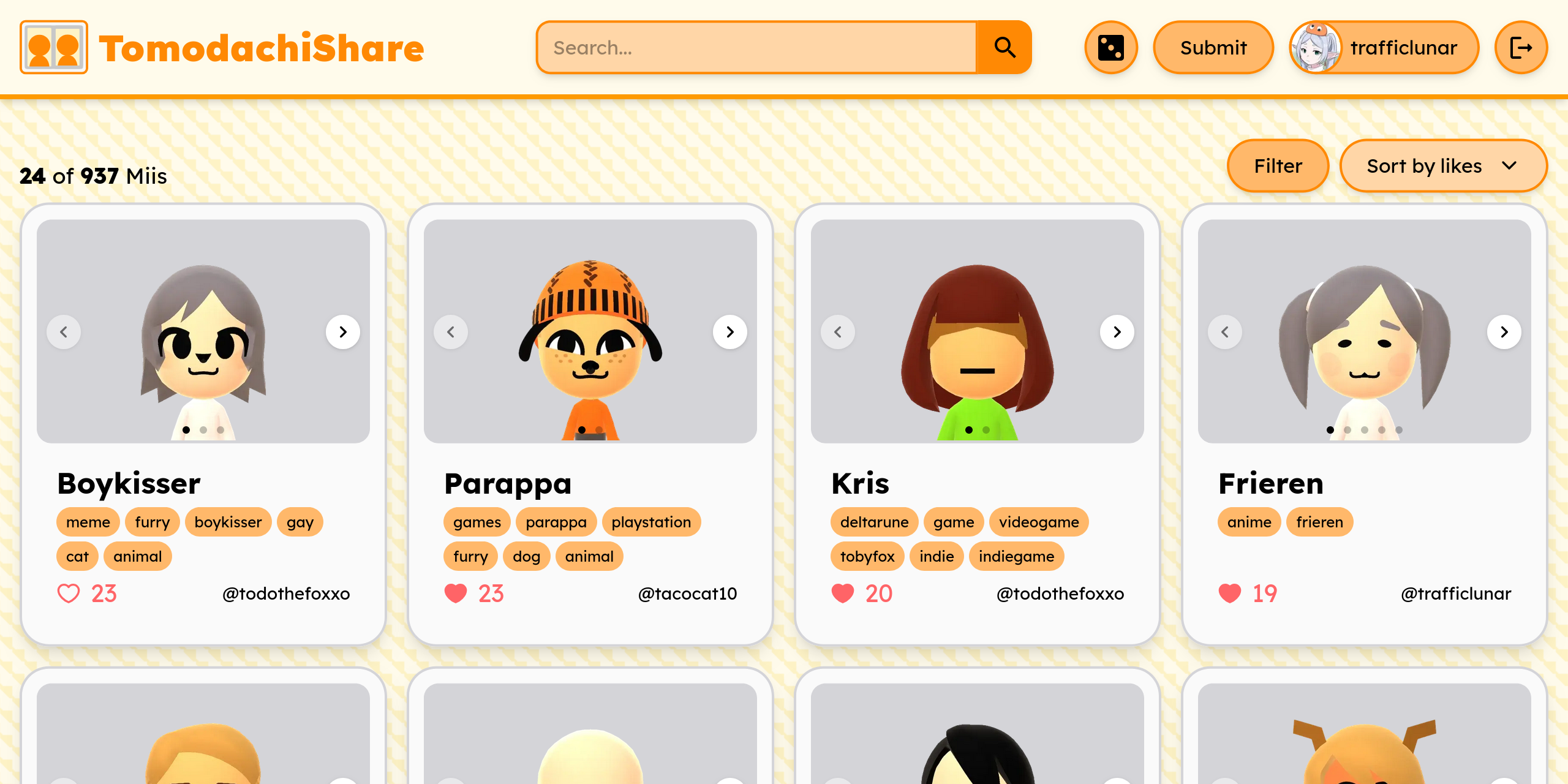
TomodachiShare is a fan-run website for discovering and sharing Mii characters to use in Tomodachi Life. Its own description frames it simply: "Discover and share Mii residents for your Tomodachi Life island!" So the core idea is a community collection of Miis rather than a game, a Nintendo service, or a Mii editor in its own right.
What you'd use it for
- Finding ready-made Mii residents instead of creating every islander from scratch.
- Browsing a collection of Miis by whatever categories or presentation the site offers.
- Sharing your own Mii creations with other players.
Who it suits
It's most useful for Tomodachi Life players who want to populate an island quickly, or who enjoy seeing what other people have made. If you specifically want to design Miis from the ground up, the Mii creation tools built into Nintendo hardware and games are the more natural starting point; TomodachiShare is about the sharing and discovery layer around that.
Practical things to weigh
Because it's a fan project, the collection depends on what users contribute, and you'll want to check how Miis are transferred to your own game before relying on it. Nintendo's own Mii-sharing arrangements have changed over time, so confirm the current method works with your setup.
A good next step: open TomodachiShare, look at a few entries to judge the variety and quality on offer, and check the site's own instructions for getting a Mii onto your island before you invest time browsing.
How do I download Miis from TomodachiShare to my Tomodachi Life game?
TomodachiShare is a community gallery for sharing Mii characters for Tomodachi Life — you browse other players' creations and then bring the ones you like into your own game. The site itself is a discovery and sharing hub; the actual transfer into your game happens through your Nintendo hardware, not through the website.
The general workflow
- Find a Mii on TomodachiShare. Browse or search the collection, then open the individual Mii's page. That page is where any download file, QR code, or sharing code would be offered.
- Get the Mii onto your console. Which method applies depends on what the listing provides and which system you play on.
- Import it in-game. Tomodachi Life has built-in Mii import options (typically via the Mii Maker/plaza on the system, or by scanning a QR code with the console camera), and imported Miis then become available to move onto your island.
Matching the method to your situation
| If the listing gives you… | What you'd typically do | Watch out for |
|---|---|---|
| A QR code image | Scan it with the console's camera-based QR reader | QR codes are tied to the 3DS-era Mii format; quality depends on the image being clear and uncropped |
| A downloadable Mii file | Transfer it to your console's storage, then import through Mii Maker | File format must match your system; a 3DS file won't load on Switch |
| A sharing/creator code | Enter it in the relevant Mii or sharing feature | Codes can expire or be region-locked |
Practical notes
- The site's own page evidence is thin — there's no listed step-by-step download instruction, pricing, or platform detail on the page itself, so treat the specific buttons and file types you see on a Mii's page as the source of truth rather than assuming a single universal method.
- Platform matters most. If you're on a 3DS, QR scanning is the classic route. If you're using a newer system, check whether Tomodachi Life on that platform even supports direct Mii import from external files before you spend time collecting links.
- A concrete scenario: you spot a well-made celebrity Mii on TomodachiShare, open its page, save the QR image to your phone, display it on your phone screen, and scan it with your 3DS camera in the Mii Maker. That's the most common path people describe for this kind of sharing site.
Next step: open one Mii's page on TomodachiShare and note exactly what it offers — QR image, file, or code — then check your console's Mii import menu for the matching option before downloading anything in bulk.
Can I upload my own Mii creations to TomodachiShare?
Yes. TomodachiShare is built around discovering and sharing Mii residents for Tomodachi Life islands, so contributing your own creations is the intended use rather than a read-only gallery. The site's own description frames it as a place to "discover and share Mii residents," which implies both browsing and uploading.
What that means in practice
- You create a Mii in your game (or a Mii Maker), then share it to the site so other players can add it to their island.
- Other visitors browse the collection and pull in Miis they like, which is the main reason to upload: your creation gets used by strangers.
- Because it's a fan-run sharing hub rather than a Nintendo service, expect community-style listings rather than official moderation or account systems tied to your Nintendo ID.
A realistic scenario
Say you've spent an evening making a spot-on lookalike or a deliberately weird character. Uploading it to TomodachiShare costs you nothing and gives it an audience beyond your own save file. On the flip side, if you only want to find Miis, you never need to upload anything — the site works fine as a one-way resource.
Before you upload
Check what the site asks for at submission time — typically a Mii QR code or an in-game share method — and be aware that anything you post publicly can be downloaded and reused by others. If a Mii is personal or tied to a real person's likeness, think twice.
For official context on how Miis and sharing work in the games, see Nintendo.
What types of Mii characters are most popular on TomodachiShare?
TomodachiShare is built for discovering and sharing Mii residents for Tomodachi Life islands, so the characters that surface most are the ones players actively want to borrow rather than design from scratch.
Broadly popular categories
- Celebrity and lookalike Miis. Real-world figures, musicians, actors and internet personalities are perennial draws because recreating a recognizable face in the Mii editor is tedious and most players would rather import one.
- Fictional characters. Video game, anime and cartoon characters are a mainstay; the Mii editor's proportions suit stylized faces better than photorealistic ones, which is why game and animation casts dominate over live-action likenesses.
- Original characters. Players who design their own OCs often upload them to see how they interact with a wider island, and these tend to attract downloads from other creators looking for variety.
- Everyday and themed Miis. Family members, friends, "ordinary islander" types and seasonal or joke characters round out the mix — useful when you want a full island rather than a novelty roster.
How to judge what's actually popular
Download or like counts (where a site shows them) reflect what people borrow, not necessarily what's best made. A recognizable name will often out-download a more carefully crafted original Mii. If you're choosing what to import, decide first whether you want familiarity (celebrities, fictional characters) or coherence (a set of ordinary residents that feel like a real island).
A practical next step
Browse by category rather than by "top" lists if you're building a themed island, and check whether a Mii's proportions and facial features match your island's style before importing — mixing hyper-detailed celebrity Miis with simple originals can look inconsistent. If you want Mii editing help alongside sharing, Nintendo's official Tomodachi Life pages cover the in-game editor basics, and MiiCharacters is another place players look for ready-made Miis.
Are the Miis on TomodachiShare compatible with other Nintendo games?
The Miis on TomodachiShare are intended for Tomodachi Life first. Whether a Mii works in another Nintendo game depends on the game, not on this site: a Mii is a standard character file, and most Nintendo titles that accept Miis will read the same face, hair and body data. What often does not carry across is game-specific data attached to a Mii in Tomodachi Life, such as personality, voice, relationships, apartment items and catchphrases. Those are Tomodachi Life systems, so another game will typically ignore them.
H3 Practical compatibility by game type
| Destination | What usually transfers | What usually does not |
|---|---|---|
| Mii Maker / Mii Channel-style editors | Appearance, name, birth date, favourite colour | Tomodachi Life personality, voice, relationships |
| Games with Mii support (racing, sports, party titles) | Appearance and name as a playable or spectator Mii | Tomodachi-specific traits and island data |
| Tomodachi Life (another island) | Appearance, and often personality if the shared data includes it | Existing relationships and island history |
| Games with no Mii support | Nothing | Everything |
H3 A concrete scenario
Say you find a celebrity lookalike Mii on TomodachiShare and want it in a racing or sports game. Treat the shared Mii as a starting point: recreate or import the appearance, then expect to re-enter any personality, voice or relationship details the other game asks for. If you mainly want the Mii for Tomodachi Life, the shared personality and voice are the valuable part, because they shape how the resident behaves on your island.
H3 Decision criterion
Check the destination game's Mii import or creation options before downloading. If it only accepts Mii appearance data, any shared Tomodachi Life Mii is still usable, just incomplete. If the game has no Mii support at all, the file is not relevant there.
How do I search for specific Mii characters on TomodachiShare?
TomodachiShare is built around browsing and sharing Mii residents for Tomodachi Life, so searching for a specific character means working with the site's collection rather than a general web index. The site's own description frames it as a place to "discover and share Mii residents for your Tomodachi Life island," which suggests the intended flow is: find a Mii you like, then bring it into your game.
Practical ways to narrow down a search
- Search by the character's name. If you want a specific person, fictional character or celebrity Mii, start with the name as it would appear in the Mii's nickname or creator label. Try both the full name and common short forms.
- Browse by collection or category. Sharing sites like this typically group Miis by theme (game characters, anime, real people, originals). If a direct name search returns nothing, browse the closest category and scan the entries.
- Check the creator. Popular Mii makers often post multiple related characters, so finding one good Mii can lead you to a whole set.
- Sort or filter if the site offers it. Look for options such as newest, most popular or most downloaded; these help when a name search is too broad.
A concrete scenario
Suppose you want a Mii of a specific video-game character. Search the exact character name first. If that fails, try the series name, then browse the relevant category and look for the creator who has made a matching set. If you still can't find it, the practical fallback is to build the Mii yourself using the site's Mii creator tools and share it, which also helps the next person searching for the same character.
Decision criterion
Use a direct name search when you know exactly who you want; switch to category browsing when the name is ambiguous, spelled differently by different creators, or simply not present.
For the official Tomodachi Life context and Mii features, Nintendo is the authoritative reference.
 Hosting and Email
 Cloudflare
 Hosting
 Location
 Pages, Search and Sharing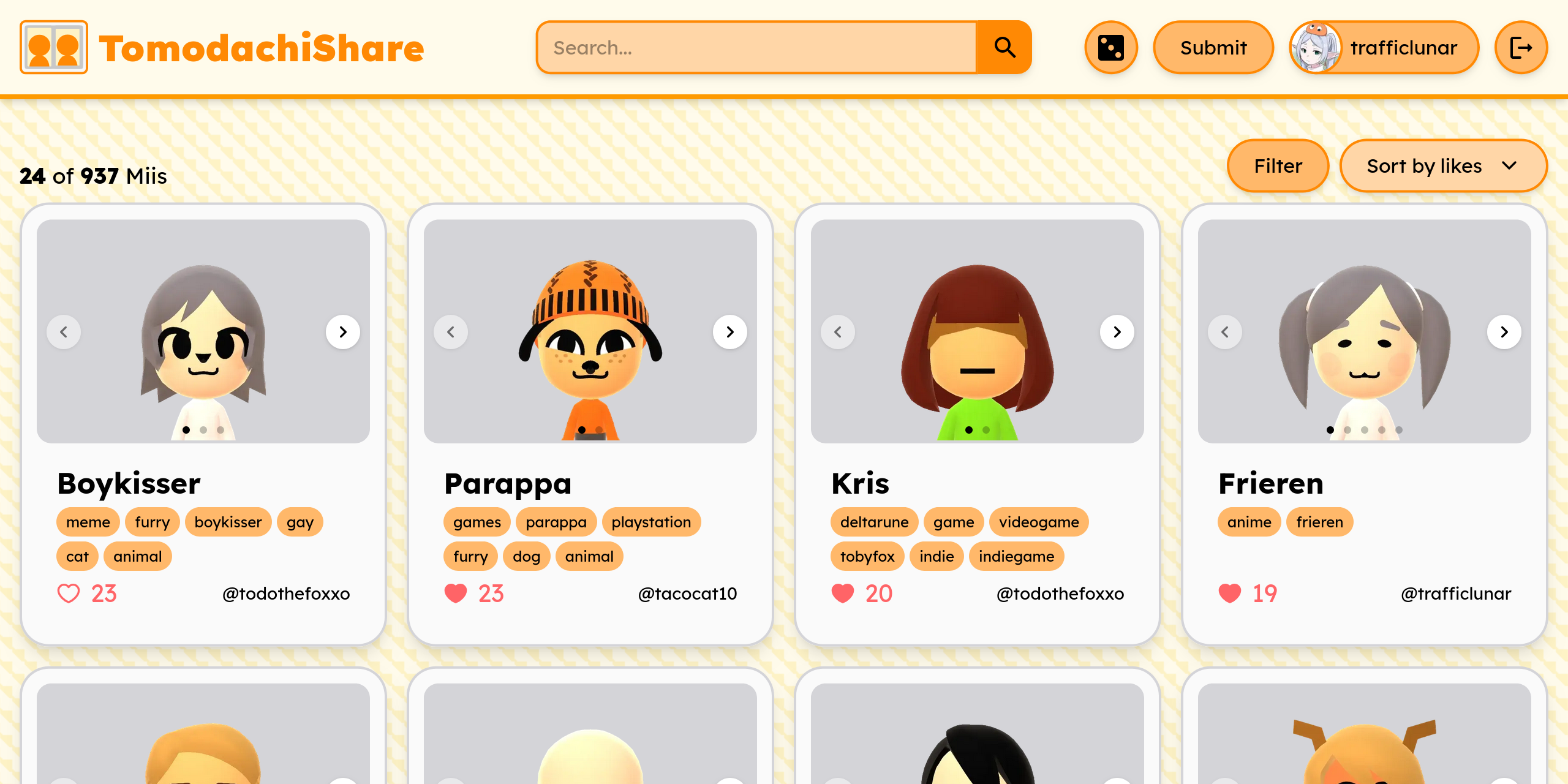



 All bots


 Registration details

 Identified technologies
User reviews (0)