
 简体中文
 English
Website review
This review may include AI-generated content and is not individually verified. Domain, certificate and other facts come from the observed data on this page.
What is Tompkins Cortland Community College?
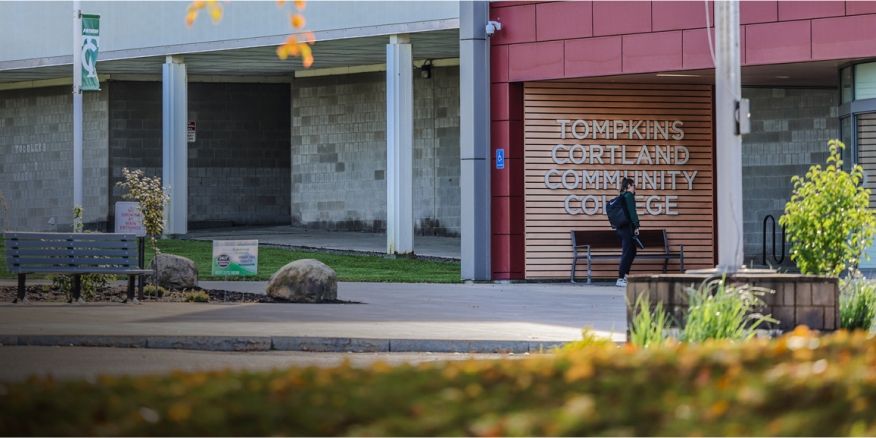
Tompkins Cortland Community College (often called TC3) is a public two-year college in New York's SUNY system, located in Dryden near Ithaca and Cortland. It offers career-oriented associate degrees, certificates and microcredentials alongside transfer pathways to four-year schools, plus online and hybrid learning options.
Who it suits
- Local high school graduates who want an affordable start before transferring; the site highlights transfer pathways and college credit in high school.
- Career-focused students seeking hands-on programs with internships and employer connections rather than a theory-heavy start.
- Adults balancing work and study who need online, hybrid or evening-style flexibility, or who want to stack a certificate into a degree over time.
- Students who want a residential campus experience; TC3 offers on-campus apartments and dining.
What to weigh
| Consideration | What TC3 emphasizes | Practical question for you |
|---|---|---|
| Cost | Affordability and financial aid/scholarships | Compare total cost after aid against a four-year school for your first two years |
| Class size | Small classes, advising, tutoring | Ask about support specifically in your intended program |
| Outcomes | Employer partnerships, internships, stackable credentials | Ask where recent graduates in your field transferred or were hired |
| Flexibility | In-person, online, hybrid | Confirm your program's required in-person labs or clinicals |
Next step
Use the college's Find Your Program page to shortlist two or three programs, then check each one's transfer agreements or internship requirements before applying. For context on the wider SUNY system, see SUNY.
How do I apply for admission to TC3?
Apply through the Apply for Admission link on the TC3 home page (Tompkins Cortland Community College), which is listed under Admission & Aid alongside Request Info, Tuition & Fees, Financial Aid & Scholarships and SUNY Reconnect. If you are still deciding, use Find your program and Visit Campus first, since program choice and a campus visit make the application conversation much more concrete.
Practical steps
- Choose a program of study with Find your program; it shapes which application and any extra requirements apply.
- Open Apply for Admission and complete the application, whether you are a first-time student, transferring, or returning.
- Request information or connect with admissions if you have questions about transcripts, placement or credit for prior work.
- Review Tuition & Fees and Financial Aid & Scholarships, and check SUNY Reconnect if you are an adult learner returning to college.
- Arrange housing through Apply for Housing once admitted, if you plan to live on campus.
Who each path suits
- Recent high school graduates: apply directly, and ask about College Credit in High School if you took early credit.
- Transfer students: use Transfer Pathways to see how prior credits map into a TC3 program.
- Working adults: compare Online Learning and hybrid formats before applying, then check SUNY Reconnect eligibility.
- International students: follow the dedicated International Students page, which typically carries different deadlines and documentation.
A useful next step
Before submitting, email or call admissions with one specific question, such as whether your transcript satisfies a prerequisite for your intended program. A short, specific query usually gets a faster, more useful answer than a general one, and it confirms your documents are complete before deadlines tighten.
What financial aid and scholarships are available to make TC3 affordable?
TC3 points students to three main routes for lowering cost: federal and state financial aid, scholarships, and tuition-and-fee information published by the college. On its Admission & Aid pages, the college lists Tuition & Fees, Financial Aid & Scholarships, and SUNY Reconnect — the last being a State University of New York program aimed at adults who want to return to study. The site also describes TC3 as "one of the most affordable educations in the region," though that is the college's own framing rather than an independent comparison.
What to look at first
- Financial Aid & Scholarships: the central page for aid applications and scholarship listings; start here to see what you may qualify for.
- Tuition & Fees: gives the actual cost figures you need before estimating what aid must cover.
- SUNY Reconnect: worth checking if you are an adult learner returning to college after time away.
- Admissions contact: the "Connect with Admissions" and "Request Info" links let you ask directly about aid deadlines and paperwork.
A practical next step: complete the FAFSA and New York's state aid application (TAP) before browsing scholarships, since most awards are coordinated with the aid package you are already offered. Then compare each scholarship's requirements — some are need-based, others merit- or program-based — against your intended major.
For a second opinion on aid options at similar colleges, SUNY covers system-wide programs, and Federal Student Aid explains the FAFSA process in detail.
Can I complete a TC3 program online or through hybrid classes?
Yes. Tompkins Cortland Community College lists in-person, online and hybrid study among its flexible learning options, and it maintains a dedicated Online Learning section alongside its program search. So the practical answer is that online and hybrid routes exist at TC3, but whether your specific program can be finished entirely online depends on the program — some hands-on fields will require in-person labs, clinicals or fieldwork.
How to decide which format fits
- Check the program page first. Use "Find Your Program" and look at the delivery notes for your intended major. Fully online is most plausible for transfer-oriented liberal arts and some career certificates; hybrid is the likelier fit where practical skills are involved.
- Hybrid means scheduled presence. Plan for travel to the main campus in Dryden or the Cortland extension center on lab or workshop days, and check whether those sessions are daytime or evening.
- Online still has a calendar. Expect assignment deadlines and possibly live sessions; asynchronous courses suit shift workers and caregivers better than synchronous ones.
- Stackable credentials give you an exit point. TC3 describes microcredentials and certificates that build toward a full degree, so you can start online and add in-person components later if a program requires it.
A concrete example: a working adult targeting an associate degree for transfer can often assemble an online-heavy schedule, while someone entering a lab-based technical field should expect a hybrid pattern with regular campus days.
Useful next step
Run the program search, then confirm delivery format with admissions before applying — and ask specifically whether the full degree sequence, not just the first semester, is available in your preferred format. Tompkins Cortland Community College
How do TC3 credits transfer to a four-year college or university?
TC3 approaches transfer through structured Transfer Pathways and its Career & Professional Education offerings. The site's navigation lists "Transfer Pathways" under Academics, and the college describes stackable credentials—microcredentials and certificates that build toward a full degree. That design matters for transfer: earning a certificate on the way to an associate degree keeps each step useful even if plans change.
What the site supports
- Transfer Pathways: The dedicated pathway pages are the place to check how a TC3 program maps to a bachelor's degree at a four-year school.
- Stackable credentials: Certificates and microcredentials build toward the full degree, so credits earned early count toward later completion.
- Online learning: Relevant if you plan to finish some coursework remotely before or after transferring.
- Advising: Academic advising is listed as part of the college's personalized support, which is where course-by-course transfer questions are typically resolved.
A practical next step
Identify your intended four-year institution and major first, then pull the matching Transfer Pathways page and compare it against that school's requirements. Ask an advisor two concrete questions: which TC3 courses satisfy the receiving school's general-education and major prerequisites, and whether the school has an articulation agreement with TC3. For SUNY campuses, transfer is a common route, but requirements still vary by program—competitive majors often demand specific grades, not just completed credits.
Decision criteria
| Situation | What to prioritize |
|---|---|
| Target school and major already chosen | The specific Transfer Pathways page plus that school's transfer guide |
| Still deciding | Stackable certificates that count toward the TC3 degree |
| Balancing work or family | Online and hybrid options, confirmed as transferable |
If you are weighing other starting points, SUNY provides system-wide context on transfer among New York's public colleges.
What on-campus housing and dining options does TC3 offer?
TC3 offers on-campus housing in apartments, plus on-campus dining, according to its site. The housing section links to an application ("Apply for Housing") and to "Explore on-campus Apartments," so the college's residential option is apartment-style living rather than traditional dormitories. The dining section ("Dining Options") is listed alongside housing under "Live On Campus," which suggests meal service is part of the residential experience, though the page itself does not detail meal plans, kitchen facilities, costs or occupancy rules.
What this means for a prospective resident
- Apartment-style living tends to suit students who want more independence—cooking some of their own meals, quieter surroundings or a more adult living arrangement—than a shared dorm room with a mandatory dining plan.
- Dining on campus is presented as a convenience for residents; whether it is a required plan or pay-as-you-go is not stated on this page, so confirm before budgeting.
- Commuter alternative: because housing is a defined on-campus option, students comparing costs should weigh apartment living against commuting from nearby Cortland or Ithaca.
Next step
Use the college's housing and dining pages to check application deadlines, what furnishings and kitchen equipment apartments include, whether a meal plan is required for residents, and current rates. If you are comparing colleges, ask each one the same three questions—is housing guaranteed, is a meal plan mandatory, and what does a full year of room and board add to tuition? For a broader view of the college, see Tompkins Cortland Community College.
 Fastly
 Microsoft 365

User reviews (0)