
 trimet.org
No paid content found
trimet.org
No paid content found
Categories: Other
Get arrival times, plan trips, see route maps and check service alerts, all in one place.
 Visit website
 Updated: 2026-09-26 02:15
 Language: English (default)
 Access: Normal
 Profile views 7
 Outbound visits 1
Related questions
More questions →What Is a Tracker and How Do You Use One to Follow Flights in Real Time?
A tracker is a tool that follows the live position and status of something that moves — in aviation, that means aircraft. A flight tracker such as Flightradar24 shows air traffic in real time on a map, letting you look up a specific flight and watch its position, altitude, speed, and estimated arrival as it happens. You can use one on the web or in an app, and it works for following arrivals, checking delays, or plane spotting. The catch: coverage and extra features vary, and some capabilities sit behind a subscription.
What "tracker" means in the flight context
In general, a tracker continuously reports where a moving object is and what it is doing. A live flight tracker applies that idea to planes: instead of a single snapshot, it updates a map as aircraft move.
On a service like Flightradar24, the tracker combines two things:
- A live map of air traffic, where each aircraft appears as an icon you can select.
- A flight lookup, where you search by flight number, route, or aircraft and follow that one flight in detail.
The site describes itself as a live flight tracker showing air traffic in real time, with a focus on coverage and features. That is the core promise: current positions, not schedules.
How a flight tracker gets real-time data
A tracker is only as good as its data sources. Live flight tracking typically draws on:
- ADS-B (Automatic Dependent Surveillance–Broadcast): aircraft broadcast their position, altitude, and speed, and ground receivers pick up the signal.
- Radar data: traditional surveillance feeds supplement coverage.
- Satellite and other feeds: these extend coverage over oceans and remote areas where ground receivers are sparse.
The practical takeaway for you: coverage is not uniform. Over busy land regions you will usually see dense, frequently updating traffic; over remote or oceanic areas, positions may update less often or rely on different feeds. If a flight seems to "jump" or briefly disappear, that is usually a coverage gap, not a problem with your device.
How to follow a specific flight in real time
The workflow is the same across most live trackers, including Flightradar24:
- Open the tracker on the web or in the app.
- Search for the flight using its flight number, or find it by route or aircraft.
- Select the flight to bring up its detail view.
- Read the live data as it updates — position on the map plus the flight's current status.
- Keep it open to watch progress toward the destination and the estimated arrival.
Expected result: you see the aircraft move along its route, with numbers updating rather than a static schedule. If you searched a flight that has not departed or has already landed, you will see limited or no live movement — check the flight's status before assuming the tracker is broken.
What a flight tracker displays
When you open a flight, a live tracker typically shows:
| Field | What it tells you |
|---|---|
| Position | Where the aircraft is on the map right now |
| Altitude | How high it is flying |
| Speed | How fast it is moving |
| Route | Origin and destination |
| ETA | Estimated time of arrival |
| Status | Whether it is en route, delayed, landed, and so on |
These fields are what make a tracker useful for real decisions: you can judge whether a flight is on time, how far along it is, and roughly when it will arrive.
Common uses
- Tracking arrivals: follow a flight to see when someone will actually land, not just the scheduled time.
- Checking delays: a live status view shows whether a flight is running late.
- Plane spotting: select aircraft on the map to identify what is overhead and where it is headed.
Coverage, features, and cost
Two things shape your experience with a tracker like Flightradar24:
- Coverage determines how reliably and how often you see a given flight. Dense regions generally track better than remote ones.
- Features determine what you can do beyond basic viewing. Flightradar24 offers a premium tier with a free trial and features such as email alerts, which are subscription-based. Basic live tracking is the entry point; alerts and similar extras are where paid options come in.
If you only need to follow a flight's position and status, the free live map and lookup cover that. If you want notifications — for example, an email when a flight is approaching — that is where the subscription features apply.
Quick answers
Is a flight tracker the same as a flight schedule? No. A schedule tells you the planned times; a tracker shows where the aircraft actually is right now.
Why does a flight sometimes vanish from the map? Usually a coverage gap over remote areas or a temporary loss of signal, not an error on your end.
Can I follow any flight? You can search most flights, but what you see depends on whether the flight is active and whether coverage reaches it.
What Is the Hatfield Marine Science Center and What Can You Do There?
The Hatfield Marine Science Center (HMSC) is Oregon State University's coastal campus and marine laboratory in Newport, Oregon. It functions on two levels at once: it is an active oceanographic research base for six state and federal agencies, and it is a public-facing science education destination with a visitor center, exhibits, and K-12 programs. If you are a tourist or family looking for a coastal science stop, you go for the visitor experience. If you are a student, researcher, or educator, you engage through academic, research, or education programs. The two are related but not the same, and knowing which one you want shapes how you plan.
What HMSC actually is
HMSC is described by Oregon State University as a distinguished marine laboratory and OSU's coastal campus. Its dual identity is the key thing to understand:
- Research base: It hosts oceanographic research activity and serves as a base for six state and federal agencies alongside the university.
- Education and outreach resource: It is explicitly positioned as a resource for K-12 educators and the general public, not just scientists.
That combination means a single site supports agency scientists, university researchers and students, school groups, and casual visitors.
What you can do there
If you are a general visitor
The public side of HMSC centers on its visitor center and exhibits. This is the part of the campus built for people who are not there to do research — families, travelers, and anyone curious about marine science on the Oregon coast. Expect an interpretive, educational experience rather than a research tour.
If you are an educator or school group
HMSC is set up as a resource for K-12 educators, which means it supports classroom and field-based learning rather than only individual drop-ins. If you teach, the relevant path is the education programming rather than the general visitor route.
If you are a student or researcher
The academic and research side is tied to Oregon State University and the agencies based at HMSC. This is where the marine laboratory function lives — research activity, agency work, and university programs. Access here runs through academic or professional channels, not through the visitor center.
Public visit vs. research and academic engagement
The most common point of confusion is assuming one experience covers everything. It doesn't.
| Dimension | Public visitor experience | Research / academic engagement |
|---|---|---|
| Primary audience | General public, families, travelers | Students, researchers, agency staff |
| What it is | Visitor center and exhibits | Marine laboratory and coastal campus |
| Entry path | Walk-in visit to the public facilities | Academic, research, or agency affiliation |
| Focus | Interpretation and science education | Active oceanographic research |
| K-12 link | General educational resource | Formal educator and school programming |
Choose the public route if your goal is a coastal science outing. Choose the academic or research route if your goal is study, research, or professional collaboration — and expect to go through OSU or the resident agencies rather than the visitor entrance.
Planning your visit
Because HMSC is a working research campus with a public component, plan around the public facilities specifically:
- Confirm you're going to the right part of the site. The visitor center and exhibits are the public areas; research and agency spaces are not general-visit destinations.
- Check current hours and admission before you go. These are operational details that change, and the source material here does not state specific hours or admission terms — verify them directly with HMSC rather than assuming.
- Set expectations for the experience. This is a science education and interpretation stop, not an aquarium-style attraction or a behind-the-scenes lab tour.
- If you're an educator, ask about K-12 programming separately. School and classroom resources are a distinct offering from a general visit.
Common misconceptions to avoid
- "It's just a visitor attraction." It's also a working marine laboratory and OSU coastal campus with six state and federal agencies based there.
- "I can tour the research facilities as a visitor." The public experience and the research operation are separate; plan for the public side unless you have an academic or professional reason to be there.
- "Hours and admission are fixed and obvious." They aren't stated in the available material, so treat them as something to confirm before traveling.
Bottom line
HMSC is both Oregon State University's coastal marine laboratory in Newport and a public science education destination. Decide first whether you want the visitor experience or an academic, research, or K-12 education connection — that choice determines where you go, what you'll see, and how you should plan.
Portland Apple Support: What Local Mac, iPhone, and Lightroom Help Can You Get?
In the Portland/PDX area, you can get help with Mac, iPad, iPhone, iPod, Apple TV, Apple Watch, and Lightroom from Metro MacSupport, an Apple Certified Support Professional service that offers both on-site and remote support. On-site help suits problems tied to your physical setup—networking, device setup, or hands-on training—while remote support works for software troubleshooting, coaching, and questions you can describe over a screen share. The right choice depends on whether the issue is about your hardware environment or about how to use and fix your devices and software.
What devices and software are covered
Metro MacSupport lists support across the Apple ecosystem plus Lightroom:
| Category | Covered items |
|---|---|
| Computers | Mac |
| Mobile devices | iPad, iPhone, iPod |
| Home & wearable | Apple TV, Apple Watch |
| Software | Lightroom (digital photo workflow) |
This matters if your problem crosses devices—for example, syncing photos from an iPhone into Lightroom on a Mac, or getting an Apple Watch and Apple TV working smoothly on the same home network.
On-site vs. remote: how to choose
Choose on-site when the problem is physical or local
- Setting up a new Mac, router, or home network
- Wi-Fi that drops in certain rooms or devices that won't join
- Hands-on training where you want someone beside you
- Initial configuration of multiple devices at once
Choose remote when the problem is software or "how-to"
- Lightroom import, catalog, or editing questions
- Troubleshooting an app, account, or sync issue
- Coaching on macOS, iOS, or watchOS features
- Follow-up questions after an on-site visit
Remote support is also the option for anyone outside Portland, since the service states it can help remotely "anywhere."
What "Apple Certified Support Professional" means for you
The provider holds Apple Certified Support Professional (ACSP) certification. In practical terms, this signals a tested baseline of Apple platform knowledge rather than a general computer repair background. It's a useful filter when comparing options, but it doesn't by itself tell you about pricing, turnaround, or specialty depth in Lightroom—so confirm those directly.
Common needs this kind of service addresses
- Setup: new Mac, iPhone, iPad, Apple Watch, or Apple TV
- Networking: home Wi-Fi, device-to-device connections, sharing
- Training/coaching: learning macOS, iOS, or Lightroom workflows
- Troubleshooting: devices or apps that misbehave, sync failures, performance issues
Before you reach out, gather this
To get a faster, more accurate answer, have ready:
- Which device(s) and OS versions are involved
- A plain description of what happens vs. what you expect
- Whether the issue is repeatable and when it started
- Any recent changes (new router, update, new device)
- Whether you want on-site or remote help
How to get started
Contact Metro MacSupport through metromacsupport.com to describe your issue and confirm availability, on-site coverage in Portland, and remote options. Pricing and scheduling details aren't specified in the available information, so ask directly rather than assuming.
What Are Monitoring Alerts and How Do You Set Them Up?
A monitoring alert is a notification that fires when a check on your service fails or crosses a threshold you define. You set one up by picking an endpoint to watch, defining the failure condition, and choosing a channel to notify — then tuning retries and cooldowns so you get signal instead of noise. This applies to any service you can probe over HTTP, DNS, or TCP, and it's the mechanism that turns a status page from a passive dashboard into something that wakes you up.
Alert conditions vs. alert channels
These are two separate decisions, and mixing them up is the most common source of confusion.
Alert conditions answer when to fire:
| Condition type | Example trigger |
|---|---|
| Availability | Endpoint stops responding or connection is refused |
| Status code | Response returns 500 instead of 200 |
| Latency | Response takes longer than your threshold (e.g. 2s) |
| Content | Response body is missing an expected string |
| Certificate / DNS | TLS cert nearing expiry, DNS record changed or failed to resolve |
Alert channels answer who finds out and how:
- Email — universal, but easy to ignore or filter into a folder nobody reads
- Chat (Slack, Discord, Teams) — good for team visibility, bad for 3 a.m. wake-ups
- Webhook — posts a JSON payload to a URL you control, so you can route it into PagerDuty, an incident tool, or your own automation
- SMS / phone — reserved for conditions that genuinely justify waking someone
A practical pattern: route availability failures to a channel that pages a human, and route latency or content warnings to a chat channel that's reviewed during working hours.
How to configure an alert
The exact menu names differ between tools, but the sequence is the same everywhere.
- Pick the endpoint to watch. Define the URL or host, the protocol (HTTP, DNS, TCP), and how often to check — commonly every 30s to 5 minutes. Checking every second rarely helps and can look like an attack to the target.
- Define the failure condition. Decide what "broken" means: non-2xx status, timeout beyond N seconds, missing expected content, or a failed DNS lookup. Be specific — "anything that isn't 200" is clearer than "unhealthy."
- Set the threshold and retries. A single failed check is often a blip, not an outage. Requiring 2–3 consecutive failures before firing filters out transient network hiccups at the cost of a small detection delay.
- Choose the channel and recipients. Wire up email, chat, or a webhook, and confirm the destination actually receives a test notification before you rely on it.
- Add a cooldown / re-notify interval. This controls how often you're reminded while the problem persists. Without it, a flapping service can generate hundreds of messages.
- Send a test alert. Most tools have a "send test" or "trigger test" action. Use it — a misconfigured webhook that silently drops payloads is worse than no alert at all.
Expected result: when the condition is met for the required number of consecutive checks, the channel receives one notification, and no further notifications until the cooldown expires or the service recovers.
Tuning to avoid false alarms and missed outages
Two failure modes pull in opposite directions, and the settings that fix one can cause the other.
- Too noisy: lower the sensitivity by increasing consecutive-failure requirements, raising latency thresholds to realistic values, and adding cooldowns. Also check whether you're monitoring a flaky dependency rather than your own service.
- Too quiet: an alert that never fires may be misconfigured rather than healthy. Verify the condition actually matches a real failure — for example, a check that treats any HTTP response as success will never catch a 500.
A useful habit is to deliberately break something in a staging environment and confirm the alert arrives through the full path, including any webhook or routing layer.
Why alerts fail to fire or fire too often
| Symptom | Likely cause |
|---|---|
| No alert during a real outage | Condition too loose (e.g. accepts any response), or retries set so high the outage resolved first |
| Alert storm during brief blips | No consecutive-failure requirement, or cooldown disabled |
| Notifications arrive but nobody acts | Channel goes to a shared inbox or a chat channel with notifications muted |
| Webhook silently does nothing | Endpoint returns an error or expects a different payload format; test it directly |
| Alert fires for a dependency you don't control | Monitoring an upstream third party instead of your own endpoint |
Where this fits
Alerts are the active half of monitoring; the status page is the passive half that shows current and historical state to users. A check that only updates a dashboard tells you about a problem when someone happens to look. An alert tells you when it happens. Most setups need both, and the alert configuration is what determines whether the system is actually useful at 3 a.m.
Website Overview
Identifiable technologies and additional version or configuration signals make the service easier to fingerprint, which may help targeted scanners narrow their checks. An established domain and managed infrastructure suggest continuity of operations and may support dependable delivery, although neither guarantees service quality.
Domain and Registration
Registered in 1996, this domain has about 30 years of history. That suggests continuity, although ownership and purpose may have changed. Transfer-protection status is present, helping reduce the risk of unauthorized domain transfers. The registrar is GoDaddy.com, LLC, a widely used domain service provider. The domain uses the common .org extension, which is not an independent safety signal.
DNS and Email
Nameservers are provided by scnresearch.com, indicating managed DNS hosting. MX records point to the Mimecast email service. No CNAME was found; the observed records resolve directly to addresses. SPF and DMARC are configured. DKIM status is unknown. TXT records include verification markers for Apple, Atlassian, Microsoft. Such markers may also remain after a service stops being used.
TLS and Certificates
The certificate includes the organization field Tri-county Metropolitan Transportation District Of Oregon. The certificate issuer is DigiCert Inc, a commercial certificate authority. The certificate uses an RSA 2048-bit public key, offering broad client compatibility. The server supplied a complete certificate chain. The certificate is valid for about 190 days in total, with 103 days remaining.
HTTP and Browser Security
The response lacks these common security headers: CSP, X-Content-Type-Options, Referrer-Policy, Permissions-Policy, clickjacking protection. CORS permits any origin to read this response. This is common for public resources; sensitive responses need narrower handling. No X-Powered-By header was found, reducing one common source of backend fingerprinting information. No obvious internal addresses or debug information were found in the headers. The Server header identifies Apache without an exact version.
Technology Stack Analysis
The public page identifies Gatsby 5.14.0, Google Tag Manager, Apache, with exact versions exposed for 1 technologies. These details can narrow vulnerability checks, although exposure alone is not a vulnerability.
Search and Social Sharing
The Generator tag identifies Gatsby 5.14.0, making the publishing system easier to fingerprint. No homepage canonical URL was detected. If duplicate URLs exist, consolidation may be less explicit. Twitter Card metadata is configured. The title has 34 characters, within a common display range. A meta description is present, with 89 characters.
 Hosting and Email
 Hosting
 Mimecast
 Location
 Portland, Oregon, United States
 Pages, Search and Sharing
| Meta description | Get arrival times, plan trips, see route maps and check service alerts, all in one place. |
|---|---|
| Canonical URL | Not detected |
| Language | English (default) |
| Twitter Card | summary_large_image |
Social Sharing Preview
13 fields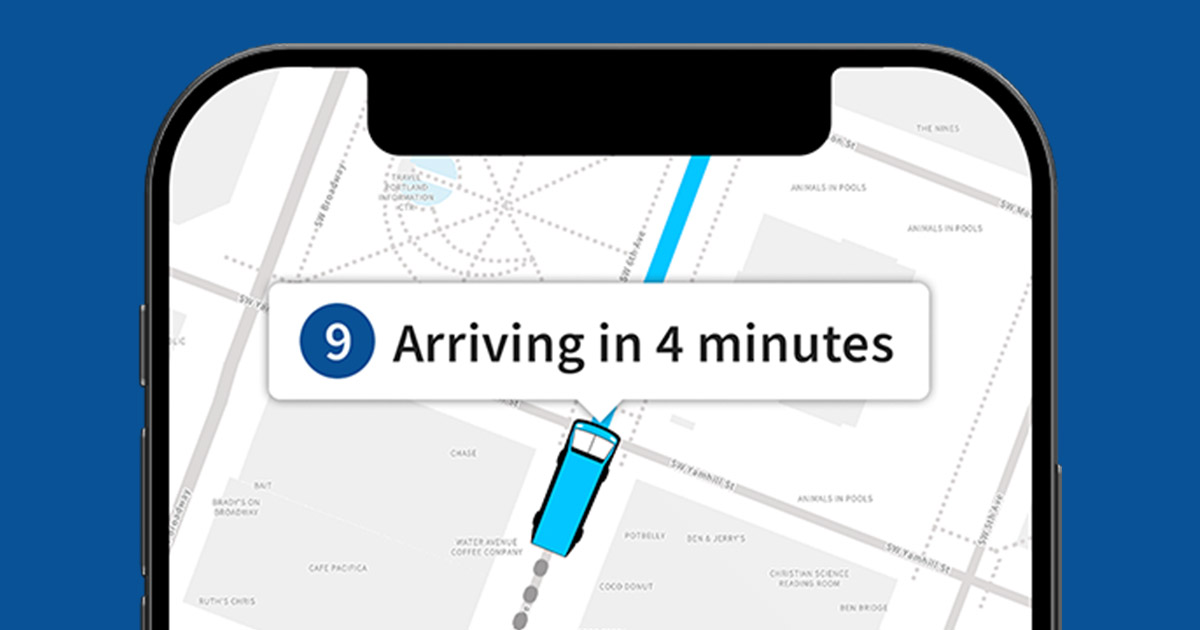

Sharing metadata
| og:url | https://trimet.org/home/ |
|---|---|
| og:type | website |
| og:image | https://trimet.org/global/home/general.jpg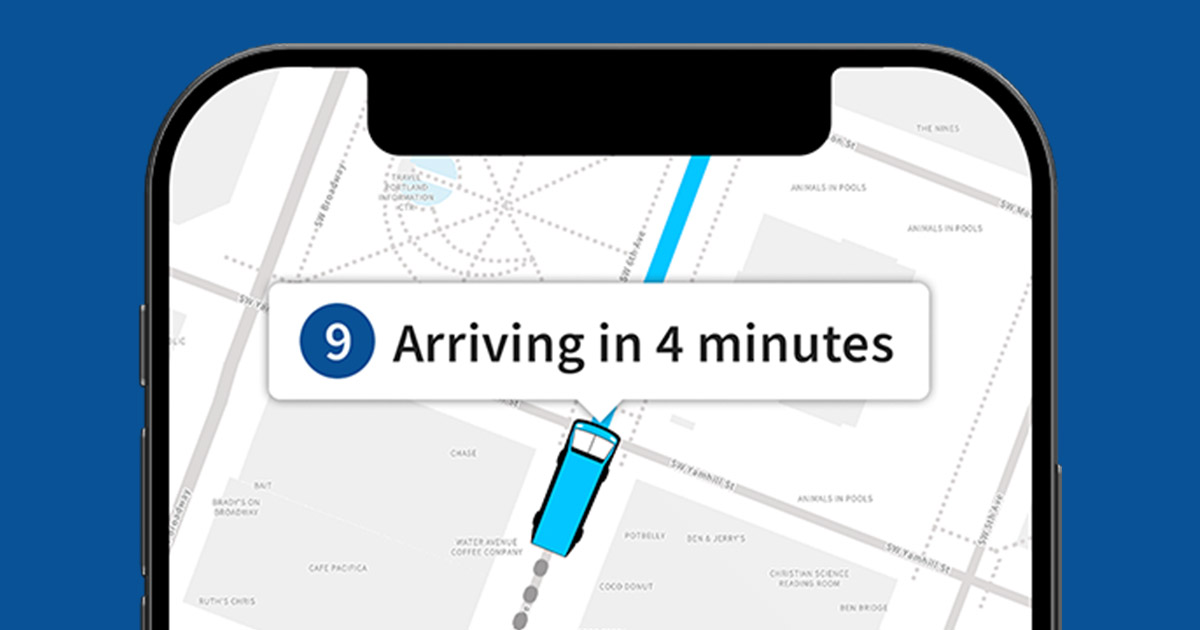 |
| og:title | Plan and track your trip on TriMet |
| og:site_name | TriMet |
| og:description | Get arrival times, plan trips, see route maps and check service alerts, all in one place. |
| og:image:width | 1200 |
| og:image:height | 630 |
| twitter:card | summary_large_image |
| twitter:site | @trimet |
| twitter:image | https://trimet.org/global/home/general.jpg |
| twitter:title | Plan and track your trip on TriMet |
| twitter:description | Get arrival times, plan trips, see route maps and check service alerts, all in one place. |
robots.txt (opens in a new tab)
29 rulesAll bots 0 allowed · 29 disallowed

 All bots

/emergency.htm/apps//schedule/w//schedule/s//schedule/h//schedule/a//ecoSurvey//citations//citation//go/cgi-bin/itin.pl/arrivals//arrivals/*/go//got//go/*/got/*/employee//home/planner-trip/solr//global//ride//ride/*/ride_ws//ride_ws/*/tilecache//maps//geoserver//data//about/civilrights-complaint.htm
No matching rules.
Sitemaps
1 Registration details RDAP / WHOIS
| Registrar | GoDaddy.com, LLC |
|---|---|
| Registered | 1996-02-26 |
| Expires | 2032-02-27 |
| Domain status | client delete prohibited、client renew prohibited、client transfer prohibited、client update prohibited |
| Nameservers | ns1.scnresearch.com、ns2.scnresearch.com |
| DNSSEC | unsigned |
 DNS records
| Type | Name | Value | TTL | Priority |
|---|---|---|---|---|
| A | trimet.org | 216.25.208.100 | 6264 | — |
| MX | trimet.org | us-smtp-inbound-1.mimecast.com | 7200 | 10 |
| MX | trimet.org | us-smtp-inbound-2.mimecast.com | 7200 | 10 |
| NS | trimet.org | NS1.SCNRESEARCH.COM | 7200 | — |
| NS | trimet.org | NS2.SCNRESEARCH.COM | 7200 | — |
| TXT | trimet.org | 80d4c3de-ced3-4d89-887b-c6684a2a3163 | 7200 | — |
| TXT | trimet.org | KKb9G6M4caEAVpAKV3+vgHXkHXAwFE0RNA1sa9TlAZEZwE9YG84y+BfO6L7URvEqeEtOiMqXWKhQedqmdDAsYA== | 7200 | — |
| TXT | trimet.org | MS=B7BC9FBC818AEAC0E3336F86F92314E76C66EEAA | 7200 | — |
| TXT | trimet.org | _w6kh5ikvy1upfj7esm5bx2kq9x70n79 | 7200 | — |
| TXT | trimet.org | adobe-idp-site-verification=8be6c8e3e8474cae1caece7eabd80b23b0390cb63fc267ded2a5a11aba596d2a | 7200 | — |
| TXT | trimet.org | apple-domain-verification=sy0KqEviydTuD9em | 7200 | — |
| TXT | trimet.org | atlassian-domain-verification=NlKrwTYO2lWil2B5plLvgkqOCiP4qJlp3yO01U9OPoG7psgo/kXY2lFvV0cIvPoy | 7200 | — |
| TXT | trimet.org | atlassian-sending-domain-verification=799f8ac3-5f8b-4856-ada8-9876e50cf02e | 7200 | — |
| TXT | trimet.org | cisco-ci-domain-verification=51c4c809d12dc69ad4c5cdab4eb86281fc21391e04f3e46d6f528e00c3885de8 | 7200 | — |
| TXT | trimet.org | docker-verification=2c620c01-502d-4296-97ad-74323d4e6bab | 7200 | — |
| TXT | trimet.org | docusign=7937bef2-44ac-41ee-b229-2c68e7b02292 | 7200 | — |
| TXT | trimet.org | formstack-domain-verification=90538d002a63102baf7374bab798bf0c | 7200 | — |
| TXT | trimet.org | intersight=37249aa538df8dd5aa7e26fd24b94beb1497626d9177a1a63556db5229de9ea5 | 7200 | — |
| TXT | trimet.org | smartsheet-site-validation=FD6FKM3Iy35TgO8LjWUg_pN7JXXUqUVS | 7200 | — |
| TXT | trimet.org | v=spf1 ip4:216.25.208.100 ip4:216.25.208.99 include:service.govdelivery.com include:mail.zendesk.com include:spf.workfront.com include:us._netblocks.mimecast.com include:9476999.spf01.hubspotemail.net include:spf.protection.outlook.com -all | 7200 | — |
| DMARC | _dmarc.trimet.org | v=DMARC1; p=none; rua=mailto:[email protected] | 7200 | — |
 TLS and certificates
| Assessment | Normal configuration |
|---|---|
| Supported protocols | TLSv1.2 |
| Negotiated protocol | TLSv1.2 |
| Certificate subject | *.trimet.org |
| Issuer | DigiCert Inc |
| Valid until | 2027-01-07T23:59 · Remaining when checked: 103 days |
| Verification details | Certificate trust: Passed · Hostname match: Passed |
 HTTP response headers
| Header | Value |
|---|---|
| content-type | text/html |
| cache-control | public, max-age=0, must-revalidate |
| server | Apache |
| strict-transport-security | max-age=15768000, max-age=31536000 |
| access-control-allow-origin | * |
 Identified technologies
Recent Updates
- Website images
- Screenshots
- Network details
- Website Technologies
- Pages and Search Information
- HTTP Response Information
- TLS and certificates
- DNS Information
- Domain Registration
- Website profile
- Website Description
- Website Name
User reviews (0)