
 简体中文
 English
Website review
This review may include AI-generated content and is not individually verified. Domain, certificate and other facts come from the observed data on this page.
What is Patricia Posner known for?
Patricia Posner is known as an author, journalist and activist, and above all for her nonfiction book on the Holocaust and Nazi Germany's industrial complex. The reviews quoted on Patricia Posner describe it as a well-researched account of a little-known aspect of Holocaust history that also tells the story of I.G. Farben, the conglomerate behind the Auschwitz factory, and of Nazi hunter Fritz Bauer.
What the book covers, based on the site's review excerpts
- The main subject: a harrowing, carefully documented account of a lesser-known chapter of the Holocaust, praised for avoiding sensationalism.
- The corporate angle: the rise and role of I.G. Farben, described by the Dallas Morning News excerpt as Nazi Germany's largest industrial conglomerate.
- The pursuit of justice: a profile of Fritz Bauer, the prosecutor credited with hunting down the SS officer at the center of the story.
- The reception: endorsements from historians and authors such as Andrew Roberts and Damien Lewis, plus coverage in Kirkus Review, the San Francisco Book Review and Jewish Renaissance Magazine.
Who it suits
The book fits readers of narrative Holocaust history and business-and-complicity studies who want documented research rather than melodrama. Teachers of twentieth-century history may find it useful for its focus on corporate involvement, though the excerpts stress the grim subject matter, so it is not light reading.
A practical next step
If you are deciding whether to read it, start with the review excerpts on the site: the Kirkus and San Francisco Book Review quotes give the clearest sense of tone, while the Andrew Roberts and Dallas Morning News quotes point to the historical and corporate themes. Readers who want the industrial-history side in more depth can pair it with broader histories of German business under the Nazis; those drawn to the justice narrative can look for accounts of the Frankfurt Auschwitz trials, where Bauer played a central role.
Which book by Patricia Posner is described in the reviews on this site?
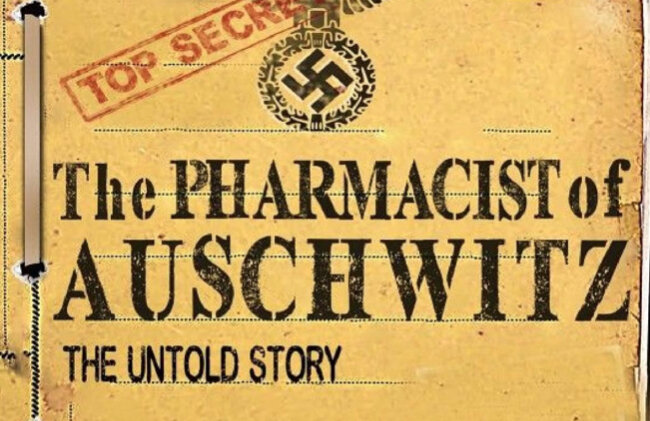
The reviews on Patricia Posner describe The Pharmacist of Auschwitz, a nonfiction account of Nazi Germany, I.G. Farben and the pursuit of war criminal Victor Capesius. The quoted notices point to the book's focus on the Holocaust, corporate complicity and Nazi hunter Fritz Bauer, with praise for its research and restrained prose.
For a reader deciding whether it fits: choose it if you want narrative Holocaust history centered on a perpetrator and the justice effort, rather than memoir or fiction. Readers who prefer a broader corporate history may find the book's personal focus narrower; those wary of graphic material should note the reviews' emphasis on harrowing detail.
How does Patricia Posner's book cover the history of I.G. Farben and Nazi Germany?
Patricia Posner's book approaches I.G. Farben through the story of a single SS officer rather than as a corporate history from the boardroom down. The page presents the book as the account of Nazi Germany's largest industrial conglomerate, told through the pursuit of the man who served as its pharmacist at Auschwitz and was later hunted by Fritz Bauer. Reviews quoted on the site describe it as well-researched, restrained in tone and clear in its prose. The Dallas Morning News excerpt calls the Farben story "spellbinding" and singles out the Bauer side story as a profile of rare heroism; Kirkus calls it "a gruesome story eloquently told"; Jewish Renaissance Magazine notes that it avoids sensationalism.
What that means for different readers
- Holocaust and WWII readers get a narrative built around a perpetrator's postwar evasion and the prosecutor who refused to let it rest, with the industrial setting as the frame rather than the subject.
- Business and corporate-history readers should expect Farben's role to arrive through individual complicity—the company's reach into the camp—rather than through a full account of its founding, mergers, patents or wartime production.
- Students and teachers will find the tone accessible; the San Francisco Book Review excerpt argues the book belongs in English classrooms, which suggests readable prose over dense scholarship, though that is a reviewer's opinion, not a guarantee of curricular fit.
The trade-off is focus. A single case can make an abstract corporation concrete and morally legible, but it will not map the whole conglomerate. If you want the institutional history first, read a dedicated Farben study alongside it; if you want to understand how ordinary professional work became part of the killing process, the case-study route is the stronger entry point. A useful test before buying: check whether the table of contents and index give substantial space to Farben's executives and plants, or mainly to the pharmacist and his trial.
How does the book portray Nazi hunter Fritz Bauer and the pursuit of justice?
The book presents Fritz Bauer as a determined, morally driven prosecutor whose pursuit of justice is a central counterweight to the story of Nazi greed and corruption. The page's quoted reviews emphasize that Bauer "proved relentless in hunting down Capesius and bringing him to justice," and one reviewer frames this side story as "a celebration of a rare kind of heroism." So the portrayal is less about a lone avenger and more about institutional persistence: a state prosecutor using the law to force accountability years after the crimes.
What the portrayal emphasizes
- Persistence over spectacle: The Dallas Morning News quote stresses Bauer's relentlessness, suggesting the book shows justice as slow, procedural work rather than dramatic confrontation.
- Moral contrast: Bauer's pursuit is set against the book's account of I.G. Farben and the SS, making him a counterpoint to the greed and corruption the reviews describe.
- A rare kind of heroism: The quoted praise treats Bauer's role as a distinct, admirable thread within a harrowing narrative, not as a sentimental subplot.
How to read it
If you are deciding whether to read the book for the Bauer material, expect it as a substantial side story rather than the main subject. Readers interested in how postwar prosecutors built cases against former Nazi officials will find the most value there; those seeking a full biography of Bauer should look for dedicated works on him, such as those from Yad Vashem or the United States Holocaust Memorial Museum, whose collections cover Nazi war crimes trials and postwar justice.
What makes Patricia Posner's writing style distinct from other Holocaust histories?
Patricia Posner's distinctive contribution is narrative drive applied to archival material. The page evidence shows reviewers repeatedly describing her work as a "riveting read" that "grips from page one," with the San Francisco Book Review noting moments where "you feel as if you are there along with the SS officers and their prisoners." That is scene-level immersion rather than the panoramic survey style common to Holocaust histories—she builds a single case (the pursuit of a perpetrator and the complicity of I.G. Farben) into a story with the pacing of a thriller, while Kirkus and Jewish Renaissance both credit her with avoiding sensationalism, and the Dallas Morning News highlights her parallel profile of Nazi hunter Fritz Bauer as a study in heroism.
Where the trade-off lies
| Approach | Strength | Cost |
|---|---|---|
| Posner's case-study narrative | Emotional immediacy; shows how corporate and individual complicity interlocked | Narrower than a continental overview; readers wanting broad chronology should pair it with a survey history |
| Classic academic Holocaust history | Structural breadth, historiographical debate | Less accessible to general readers; the human stakes can feel abstract |
For a reader new to the subject, her method works as an entry point precisely because it personalizes institutions—the MiamiArtZine reviewer's point that the story "really is not yet over" reflects how she ties wartime conduct to postwar justice. A student writing about corporate collaboration, or a book-club reader who wants a narrative spine, gets more from this than from a thematic monograph; a researcher mapping camp systems across Europe needs the wider literature alongside it.
Next step: read one chapter of her book next to a standard overview of I.G. Farben and note where her scenes supply detail the survey compresses—that contrast makes her stylistic choice concrete. For her own framing and background, see Patricia Posner.
Where can readers find reviews and endorsements of Patricia Posner's work?
Reviews and endorsements of Patricia Posner's work are collected on her own author site, Patricia Posner, which quotes praise from historians, authors and publications in one place. The strongest material there concerns her Holocaust history The Pharmacist of Auschwitz, with endorsements from Andrew Roberts and Damien Lewis, plus notice from Kirkus Review, the San Francisco Book Review, the Dallas Morning News, Jewish Renaissance Magazine and MiamiArtZine.
What the endorsements tell a prospective reader
The quoted notices fall into three useful groups, which helps you judge fit before buying:
| Type of source | What it tends to emphasize | Best for |
|---|---|---|
| Historians and authors (Roberts, Lewis) | Research quality and narrative grip | Readers weighing historical reliability |
| Review journals (Kirkus, San Francisco Book Review) | Prose style and emotional impact | Readers deciding whether the writing suits them |
| Newspapers and magazines (Dallas Morning News, MiamiArtZine) | The I.G. Farben story and the Fritz Bauer side narrative | Readers interested in corporate and justice angles |
A reader who wants a documented account of the Holocaust's industrial dimension, rather than memoir or fiction, will find the Dallas Morning News comment on I.G. Farben and Nazi hunter Fritz Bauer the most concrete signal of what the book actually covers.
A practical next step
Read two or three of the fuller quoted reviews rather than the pull-quotes alone, since short blurbs strip context. Then check a library catalogue or bookseller page for the same titles to compare independent reader reviews alongside the professional ones. If courtroom and corporate history appeal more than survivor testimony, the Bauer thread is the part to look for first.
 GoDaddy
 squarespace.com

User reviews (0)