
 简体中文
 English

Website review
This review may include AI-generated content and is not individually verified. Domain, certificate and other facts come from the observed data on this page.
What is the University of Nevada, Reno?
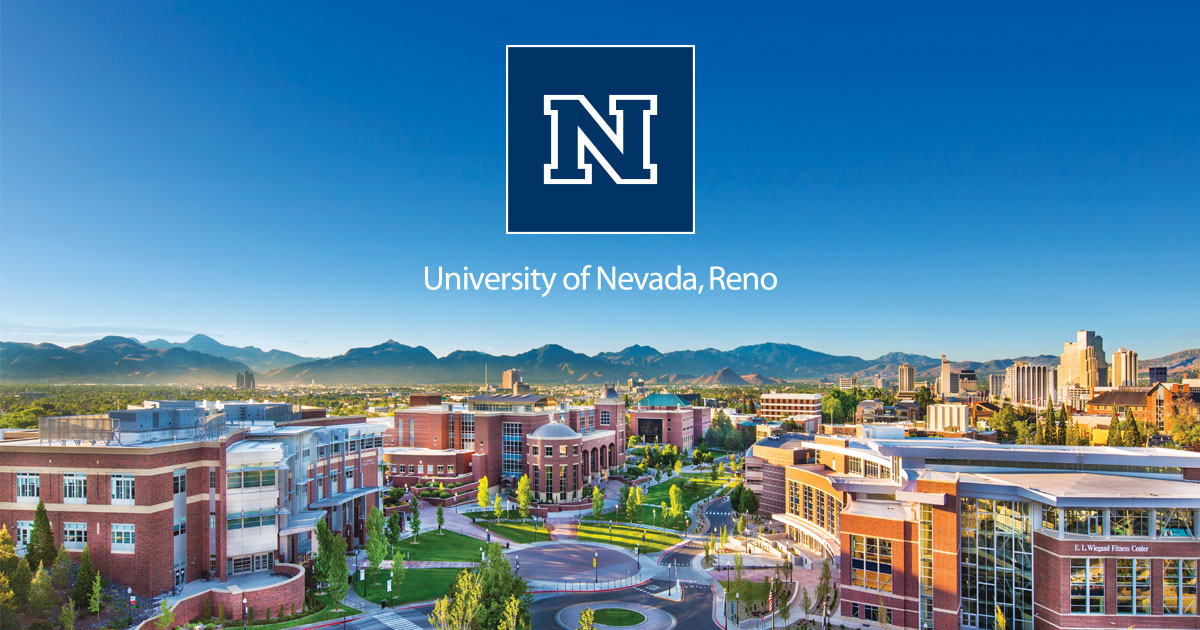
The University of Nevada, Reno is Nevada's land-grant university, founded in 1874 and based in Reno. It enrolls students at the undergraduate, graduate and certificate levels and describes itself as a Carnegie R1 research institution with a 17:1 student-to-faculty ratio and more than 560 majors, minors and graduate or certificate programs. In practical terms, it is a large public university that pairs broad degree choice with research access and a traditional residential campus.
Who it suits
- Prospective undergraduates weighing a public research university. The range of programs and the R1 designation matter if you want research exposure without attending a private institution.
- Transfer and graduate applicants. The site lists separate pathways for freshman, transfer and graduate admissions, so each group can start from its own checklist rather than a single generic application page.
- Students who want an active campus outside class. The university cites 300+ student clubs, 45 study abroad locations across 24 countries and 17 NCAA Division I teams.
- Families comparing costs and setting. Nine on-campus residence halls and 20+ dining locations suggest a mostly residential first-year experience, though the surrounding city and mountains shape daily life too.
What to check before applying
The strongest reasons to choose a large public university—program breadth and research—are also the reasons to verify fit carefully. A 560+ program count does not mean every major is equally resourced, and a 17:1 ratio is an average, not a promise about class size in your field.
- Open the degree list and confirm your intended major, plus a backup.
- Check the academic calendar and the deadline page for your applicant type.
- Compare the research centers relevant to your interests, not just the total.
- Book a campus visit if location and campus culture will influence your decision.
For official details, start with University of Nevada, Reno.
What undergraduate and graduate degree programs does the University of Nevada, Reno offer?
The University of Nevada, Reno offers more than 560 majors, minors, graduate programs and certificates across its colleges and schools, though the site does not list every program on its homepage. The clearest way to see the full range is to browse the university's degree and program listings, where you can filter by level (bachelor's, master's, doctoral, certificate) and by field.
What that looks like in practice
- Undergraduate: bachelor's degrees and minors spanning engineering, the sciences, business, the arts, humanities and social sciences, among others, plus certificate options.
- Graduate: master's and doctoral programs, along with graduate certificates. The university also has a School of Medicine, so medical education sits within the graduate and professional side of the institution.
- Research links: with 60+ research centers and facilities, many graduate programs connect directly to lab, field and applied project work.
How to narrow it down
Start from the program search rather than the homepage. Filter by degree level, then by college or department, and check whether the program you want is offered on campus, online or both. If a specific career is the goal — say, physician assistant studies, which appears in the site's own student example — work backward from the credential that career requires.
A useful comparison
| If you are... | Look first at... | Why |
|---|---|---|
| A first-year student | Freshman admissions and the undergraduate degree list | Confirms prerequisites and application route |
| Transferring with credits | Transfer admissions plus program requirements | Credit evaluation matters more than the overall catalog |
| Seeking advanced training | Graduate admissions and specific department pages | Deadlines, funding and research fit vary by program |
For official program lists and admissions steps, see University of Nevada, Reno.
What are the freshman admission requirements and application deadlines for the University of Nevada, Reno?
Freshman admission at the University of Nevada, Reno is handled through its undergraduate admissions office, and the requirements and deadlines are set out there rather than on the main homepage. The university confirms it enrolls first-year students directly and points prospective freshmen to a dedicated freshman admissions page, but the page evidence provided does not list specific GPA, test-score, or course requirements, nor exact deadline dates. Treat those particulars as something to confirm on the official admissions pages before you plan.
What the university does say
- It is Nevada's land-grant institution, founded in 1874.
- It describes itself as a Carnegie R1 research university with a 17:1 student-to-faculty ratio.
- It offers 560+ majors, minors, graduate and certificate programs.
- First-year entry is one of several paths, alongside transfer and graduate admissions.
How to find the exact requirements and deadlines
Start at University of Nevada, Reno and follow the freshman admissions link. Look specifically for:
- Required high school coursework (often expressed as units in English, math, science, social studies and electives).
- The stated minimum GPA or core-course GPA used for review.
- Whether ACT or SAT scores are required, optional or used only for placement and scholarships.
- Application deadline dates for fall and spring entry, plus any priority date tied to scholarships or housing.
- Whether there is a separate honors college or direct-admit program with its own earlier deadline.
A practical example
Suppose you are a high school junior in Reno aiming for fall entry. You would check the freshman page in the spring of your junior year, note the application opening date and the deadline, confirm whether your test scores are needed, and request your transcript and any required documents early. If you are applying from out of state or internationally, check for additional items such as English proficiency evidence or residency forms, since those often have their own timelines.
Decision criterion
If a deadline or requirement is not clearly stated on the page you land on, use the admissions contact information there rather than relying on third-party summaries, which frequently carry outdated dates. An admissions counselor can confirm the current cycle's requirements in one message.
How does the University of Nevada, Reno support students in finding internships, research, and career opportunities?
The University of Nevada, Reno builds internship, research, and career support into the academic experience rather than treating it as an add-on. Its land-grant, R1 research identity means undergraduates can join faculty-led projects in labs and the field, while career-facing services help translate those experiences into jobs and graduate study.
Research access
The university reports 60+ research centers and facilities and hundreds of project opportunities across disciplines. In practice, that means a student can approach a professor whose work matches their interests, ask about joining a project, and use that work as a credential for internships or graduate applications. The 17:1 student-to-faculty ratio is relevant here: smaller classes and lab groups make it easier to build the relationships that lead to research invitations.
Internships and career preparation
The page evidence highlights career-aligned academics and research connected to career paths, but it does not list a specific internship office, job board, or placement rate. Treat those as questions to ask directly. A useful decision criterion: ask each department how many undergraduates do internships for credit, whether internships are required, and which local employers regularly host students.
A concrete student scenario
A student interested in health care could combine a major in a health-related field, research with a faculty member, and clinical or community internships. The page quotes Madison Schuster, a Physician Assistant Studies student in the Class of 2025, describing her path to an emergency department physician assistant role in a rural Nevada critical access hospital. That is her observation, not a guarantee of outcomes; the practical lesson is that rural and regional clinical placements can offer early hands-on responsibility.
How to evaluate the fit
- Ask your intended department for a sample four-year plan showing when internships or research fit.
- Request names of recent graduates and where they landed.
- Confirm whether career advising is centralized or housed in your college.
- Visit campus and meet faculty in your field before committing.
For official program and admissions details, start with University of Nevada, Reno.
What is student life like at the University of Nevada, Reno, including housing, dining, clubs, and athletics?
Student life at the University of Nevada, Reno centers on a residential campus with a strong club and outdoor culture, plus Division I sports. The university describes 9 on-campus residence halls, 20+ on-campus dining eateries, 300+ student clubs and organizations, 17 NCAA Division I athletics teams, and 45 study abroad locations across 24 countries, along with fitness and performing arts facilities. It also frames the campus as a “big school — tight-knit community,” which is the key trade-off: you get large-university resources and athletics, but the residential core and clubs are where you build a smaller circle. See University of Nevada, Reno.
Housing
Living on campus is the fastest route into that community, especially as a first-year student. With 9 residence halls, the practical question is not just “which hall,” but which lifestyle you want: quieter study-focused floors, more social traditional halls, or apartment-style options as you get older. If you are deciding, prioritize proximity to your likely classes and dining over minor room differences.
Dining
The 20+ on-campus eateries matter most if you lack a car or have back-to-back classes. Meal plans usually make the most sense for first-year students in residence halls; upperclassmen in apartments often cook more and use dining dollars selectively. Ask about hours at the locations nearest your dorm, since late-night options vary.
Clubs and activities
With 300+ clubs, the risk is browsing without joining. Pick two: one tied to your major or career (research, engineering, business) and one purely social (outdoors, culture, intramurals). That combination tends to produce the friendships and resume experience students actually value.
Athletics and recreation
17 NCAA Division I teams give the campus a game-day rhythm, and the surrounding Sierra Nevada location supports hiking, skiing, and other outdoor recreation. If you are not a varsity athlete, club and intramural sports plus fitness facilities are where most students stay active.
A useful next step
Before committing, schedule a campus visit and ask current students three questions: How easy is it to get into the clubs I want? What do weekends look like if I stay on campus? And how do students get to off-campus recreation without a car? Their answers will tell you more than any brochure.
How much does it cost to attend the University of Nevada, Reno, and what financial aid and scholarships are available?
Tuition and aid at the University of Nevada, Reno depend on whether you are a Nevada resident, a nonresident, an undergraduate or a graduate student, and whether you enroll full- or part-time. The university's own pages describe it as Nevada's land-grant institution with 560+ majors, minors, graduate and certificate programs, but the home page does not list current tuition rates or fee schedules, so treat any figure you see elsewhere as needing verification for your specific program and residency status.
What typically drives your cost
- Residency classification: Nevada residents generally pay substantially lower tuition than nonresidents at public land-grant universities. Residency rules usually require documentation and a waiting period.
- Program level and type: Undergraduate, graduate, professional (such as medicine or physician assistant studies), and online programs often have different tuition structures and fees.
- Mandatory fees: Student services, technology, athletics, and course-specific lab or materials fees are usually separate from base tuition.
- Housing and dining: The university lists 9 on-campus residence halls and 20+ on-campus dining eateries, so room-and-board costs vary by hall and meal plan.
- Books, transportation, and personal expenses: These are usually estimated rather than billed directly, and they vary widely by student.
Financial aid and scholarships
The University of Nevada, Reno participates in federal student aid programs as a land-grant public university. Aid generally falls into these categories:
- Need-based aid: Federal grants, work-study, and need-based institutional grants, determined through the FAFSA.
- Merit scholarships: Often awarded based on academic records, test scores where applicable, and sometimes residency or specific majors. Many public universities have automatic consideration for incoming freshmen based on GPA and test scores.
- Departmental and program scholarships: Individual colleges and departments frequently offer awards to current students in their majors.
- Transfer and graduate-specific aid: Transfer students and graduate students usually have separate scholarship and assistantship pathways, including teaching or research assistantships that may include tuition waivers and stipends.
- External scholarships: Private foundations, employers, and community organizations.
A practical decision path
- Use the university's net price calculator to get a personalized estimate before applying.
- File the FAFSA as early as possible; some aid is first-come, first-served.
- Check the specific admissions page for your path — freshman, transfer, or graduate — for deadline-linked scholarship consideration.
- Ask the financial aid office directly about residency reclassification, payment plans, and whether departmental scholarships require a separate application.
For official figures, start with University of Nevada, Reno and its financial aid and admissions sections, and compare with the Nevada System of Higher Education for system-wide tuition schedules. If you are weighing other options, College Board and Federal Student Aid provide general cost and aid context, though they are not this university's official sources.
 Microsoft 365

User reviews (0)