
 简体中文
 English

Website review
This review may include AI-generated content and is not individually verified. Domain, certificate and other facts come from the observed data on this page.
What is the University of Southern California?
The University of Southern California is a private research university in Los Angeles, described on its own site as one of the world's leading research universities, where learning, research and creativity are cultivated together. It enrolls roughly 21,000 undergraduates and 25,000 graduate and professional students, and its academic identity is built around both classroom rigor and hands-on discovery.
What that means in practice
USC is a full-spectrum research institution rather than a single-focus school. Its self-description emphasizes "academic excellence" alongside a "transformational education" that extends beyond the classroom — including study on the West Coast, in Washington, D.C., and abroad. For a prospective student, that translates into a large, resource-rich university with many entry points: undergraduate majors, graduate and professional programs, and research experiences that begin early.
The page evidence illustrates the range:
- A six-week summer research academy in otolaryngology that gives undergraduates hands-on lab experience, drawing students from USC and other schools.
- A nautical science class that took students on a two-day voyage to Catalina Island to learn navigation and seamanship.
- An online master's in applied psychology that one student used to reposition her career after an industry strike and the rise of AI.
- A clinical trial testing whether mindfulness meditation can enhance and sustain the benefits of psychedelic therapy for depression.
That mix — laboratory science, field-based learning, online professional degrees and clinical research — is a useful signal of what a large research university actually offers day to day.
Cost and access
Affordability is a real decision factor at a private university. USC states that two-thirds of its undergraduates receive some form of financial aid, and that incoming first-year students from U.S. families with income of $80,000 or less and typical assets can attend tuition free. Treat those figures as the university's own published claims and verify current terms with the financial aid office, since eligibility rules and thresholds change.
How to decide if it fits
Ask three questions:
- Do you want a large, research-intensive environment with many graduate programs and labs, or a smaller teaching-focused setting?
- Does your intended field benefit from USC's specific strengths — communication and journalism, the arts, health sciences, engineering, public policy — or would another university's program serve you better?
- Can the financial aid package make the net cost workable compared with your in-state or alternative options?
A practical next step is to compare USC against one or two other schools on your list using the same criteria: net price after aid, program structure in your major, and access to undergraduate research. The official site is University of Southern California, and news and research stories appear at USC News.
How does USC's tuition-free policy for families earning $80,000 or less work?
USC's tuition-free commitment is an aid policy for incoming first-year undergraduates from U.S. families with income of $80,000 or less and typical assets. It is tied to financial aid, not to merit: the university states that two-thirds of its undergraduates receive some form of aid, and that this income group can attend USC tuition free. The page does not spell out the full formula, so treat the headline as a starting point and confirm the details with USC Financial Aid before applying.
What the policy actually covers
- Tuition only. The published wording promises tuition-free attendance, not a free ride. Housing, meals, books, travel and personal costs are separate and may still appear on a bill.
- First-year entrants. The commitment is described for incoming first-year students, so transfer and international applicants need to check their own aid terms.
- Income plus assets. The phrase "typical assets" matters. A family below the income line but with substantial assets may not land in the same aid package.
- U.S. families. The stated eligibility is for U.S. families, which usually means citizens and eligible non-citizens rather than international students.
How it works in practice
USC aid is need-based and calculated from the financial documents a family submits. The income threshold is a marker for the most generous packages, not an automatic switch. A student from a household at or below $80,000 with ordinary savings and no unusual financial circumstances is the profile the policy is aimed at; a family with business holdings, a second property or large investments may see a different result even at the same income.
The practical sequence is straightforward: apply for admission, file the aid forms by the posted deadlines, and compare the aid letter against the actual cost of attendance. For a student weighing USC against a public university in their home state, the deciding number is the net price after grants, not the sticker tuition.
Where to verify your own case
Start with the financial aid office's net price calculator and deadline pages, then check the university's own updates at University of Southern California. If you are comparing California options, California Student Aid Commission explains state grant eligibility, and Federal Student Aid covers the federal forms both schools will require.
What financial aid options are available for USC undergraduates?
USC undergraduates have several forms of financial aid, and the university's own page highlights two broad points: need-based support reaches a large share of students, and there is a specific tuition-free path for some California families.
Aid options described by USC
- Need-based financial aid. USC states that two-thirds of its undergraduates receive some form of financial aid.
- Tuition-free attendance for lower-income U.S. families. Incoming first-year students from U.S. families with an income of $80,000 or less and typical assets can attend USC tuition free, according to the university.
- Merit-based scholarships. USC is widely known for awarding merit scholarships, including full-tuition and half-tuition awards, though the page evidence above does not list the individual programs.
- Federal and state aid. As a U.S. university, USC participates in federal student aid programs and California state aid, including Cal Grants for eligible California residents.
- Loans and work-study. These typically appear in a need-based aid package alongside grants and scholarships.
What this means in practice
A prospective student from a family earning under $80,000 with typical assets would likely see tuition covered by need-based aid, but would still need to plan for housing, food, books and travel. A student from a higher-income family might still qualify for need-based aid if multiple siblings are in college or other circumstances apply, and may also compete for merit scholarships regardless of income.
Next step
File the FAFSA and, if you are a California resident, the California Dream Act Application (for undocumented students) or Cal Grant GPA verification as early as possible, since many aid programs have priority deadlines. Then check USC's financial aid office for the current year's specific deadlines and required forms, because the figures and income thresholds above reflect the university's published description and can change.
For official details, see University of Southern California and its financial aid pages.
What online master's degree programs does USC offer?
USC offers online master's degrees across several of its schools, though the university does not publish a single consolidated list of every program on its main site. The clearest example in USC's own current material is a master's in applied psychology, taken online by a student who wanted to keep working while retooling for an AI-shaped job market. That case is useful because it shows the typical profile: an online USC master's is aimed at people who already have professional experience and want a credential without relocating to Los Angeles.
What the evidence actually shows
The main USC page highlights the online applied psychology master's as a career-change route, not as a general catalog. It also stresses that USC enrolls roughly 21,000 undergraduates and 25,000 graduate and professional students, with learning experiences on the West Coast, in Washington, D.C., and abroad. So the online option sits alongside a large residential operation rather than replacing it.
How to find the full list
USC's individual schools run their own online programs, so the reliable path is school by school rather than through the homepage:
- Start with the schools most likely to offer online master's work: USC Rossier (education), USC Viterbi (engineering), USC Annenberg (communication and journalism), USC Price (public policy), and USC Marshall (business).
- Check each school's own "online" or "distance" page, since admissions requirements, residency periods and capstone formats differ by program.
- Confirm whether the degree is fully online or hybrid. Some USC programs blend online coursework with short on-campus sessions.
- Ask about accreditation and diploma wording: an online master's from a school like USC should carry the same institutional accreditation as its on-campus equivalent.
A concrete decision test
If you are comparing USC with another university, weigh three things: whether the program is run by the same faculty who teach on campus, whether any campus visits are required, and how the alumni network works for distance students. For a working professional in, say, psychology or education, the applied psychology route is the most visible online option in USC's own messaging; for engineering or communication, you will need to verify current offerings directly with the relevant school.
For official program details, begin at University of Southern California and follow the links to each school's graduate admissions pages.
What undergraduate research opportunities are available at USC?
USC offers undergraduate research across many fields, from laboratory science and engineering to the humanities, social sciences, health and the arts. The page evidence highlights one concrete example: a six-week summer academy in otolaryngology, the USC Hearing and Communication Neuroscience Summer Research Academy, which gave students from USC and other schools hands-on research experience. That model is typical of the university's approach: structured programs that pair undergraduates with faculty mentors and real projects rather than only classroom study.
Ways undergraduates commonly get involved
- Summer research academies and institutes: Short, intensive programs that provide training, mentorship and a defined project, often in health and neuroscience fields.
- Faculty-mentored research during the academic year: Students join a professor's lab or research group, sometimes for course credit or as a paid assistant.
- Undergraduate research programs and fellowships: Many departments and schools run their own application-based programs, including opportunities tied to specific disciplines.
- Capstones, honors theses and independent study: Research can be built into a major through a senior project or thesis.
- Placement outside USC: Some students conduct research in Washington, D.C., or abroad through university-affiliated experiences.
How to decide what fits
Start with your goal. If you want a first taste of research, a summer academy is a low-risk entry point. If you are considering graduate school, a sustained faculty-mentored project with a presentation or publication is more valuable. If your field is professional rather than academic, look for research that connects to practice, such as clinical, policy or industry-linked work.
A practical next step is to identify two or three faculty members whose work interests you, read one recent paper or project description from each, and email them with a short note about your background and why their work connects to your goals. Ask your department's undergraduate adviser whether research can count for credit and whether funding is available, since support varies by program. For official details, begin with University of Southern California and the relevant school or department pages.
What is the student experience like at USC?
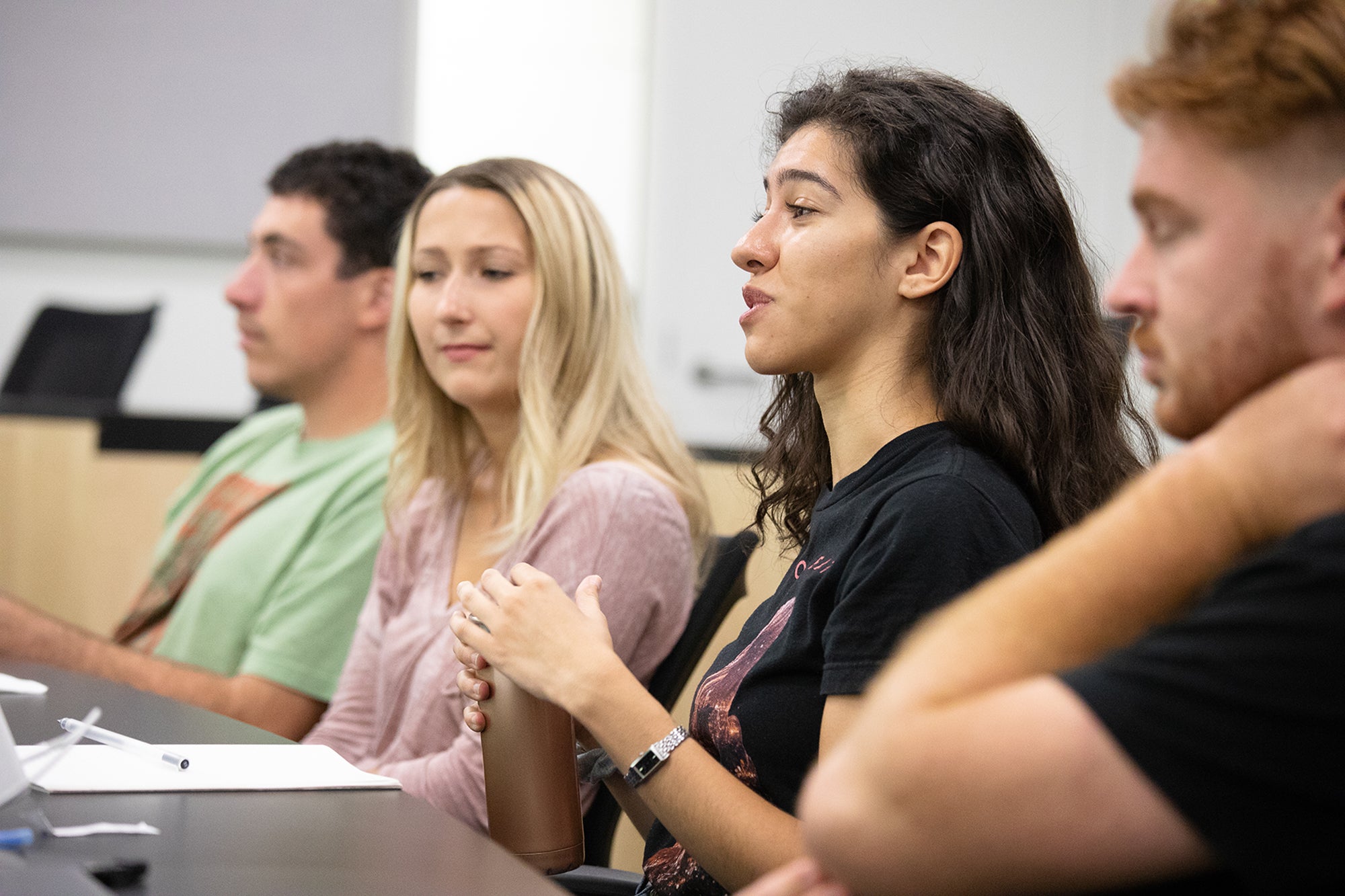
USC presents its student experience as broad and resource-rich: a large research university where classroom rigor is paired with hands-on work, professional preparation and a strong campus culture. The university enrolls roughly 21,000 undergraduates and 25,000 graduate and professional students, so the experience is varied rather than uniform. What a student actually gets depends heavily on school, major and how deliberately they pursue opportunities.
What the experience tends to include
- Academic challenge with research access. USC describes excellence in the classroom as central, and its news coverage highlights undergraduates doing hands-on research, such as a six-week summer academy in hearing and communication neuroscience open to students from USC and elsewhere.
- Learning beyond the main campus. USC says it offers experiences on the West Coast, in Washington, D.C. and internationally. That suits students who want semesters or programs away from Los Angeles without pausing their degree.
- Professional and applied work. Examples include a nautical science class that sailed to Catalina Island to practice navigation and seamanship, and an online master's student in applied psychology who used the degree to reposition her career after an industry strike and the rise of AI.
- Arts and culture. The USC Kaufman School of Dance named Tony-nominated choreographer Camille A. Brown as its next endowed artist, signaling a steady stream of visiting artists and performance opportunities.
- Cost and aid matter to the experience. USC states that two-thirds of undergraduates receive some form of financial aid, and that incoming first-year students from U.S. families with income of $80,000 or less and typical assets can attend tuition free. Aid shapes how much time students can give to activities instead of paid work.
How to decide if it fits
Ask three questions. Does your intended major have the research, studio or clinical access you want? Are you comfortable in a large, decentralized environment where you must seek out mentors and programs? And does the financial aid offer make the four years workable without excessive outside employment?
For a concrete test, pick one program you are considering and trace what a student actually does in years one through four: which courses, which labs or performances, which internships or study-away terms. Then compare that path with a smaller institution where access may be simpler but offerings narrower. USC's own site is the place to start: University of Southern California. For a second opinion, look at the U.S. Department of Education's College Scorecard at College Scorecard for outcomes data, and check whether your intended department publishes undergraduate research or study-abroad pages.
 Cloudflare
 Fastly
 Proofpoint
User reviews (0)