
 answersocrates.com
 Paid content
 Multilingual
Categories: Artificial Intelligence
Generate real keyword ideas & questions people are searching, cluster by topic, and export in one click - for free.
 Visit website
 Updated: 2026-09-28 04:40
Language: English (default)
Updated: 2026-09-28 04:40
Language: English (default)
 Access: Normal
 Profile views 4
 Outbound visits 1
Related questions
More questions →What Is Grant Writing and How Do You Write a Grant Proposal?
Grant writing is the process of researching funding opportunities and producing a structured proposal that persuades a funder to pay for a specific project. It applies to public and private sector organizations seeking grants, and the work runs from opportunity research through drafting, submission, and post-award reporting. It differs from general writing or fundraising: the proposal must match a funder's published priorities and guidelines, and it competes against other applicants on evidence, fit, and budget credibility.
What Grant Writing Is (and What It Isn't)
Grant writing is proposal development for a defined funder and program. It is not:
- General writing. Persuasion matters, but the structure, sections, and review criteria are set by the funder, not the writer.
- Fundraising. Fundraising usually builds ongoing relationships with many donors; grant writing responds to a specific solicitation with a specific deadline and scope.
- A one-time document. A competitive proposal depends on research before writing and reporting after an award.
Grants Office describes itself as a full-service provider of grant resources for public and private sector organizations, with support tailored to the needs of a grant application. That framing is useful: the writing is one part of a larger intelligence and preparation process.
The Standard Sections of a Grant Proposal
Most proposals, especially federal ones, follow a similar skeleton. Names vary by funder, but the underlying questions do not.
| Section | Question it answers | What reviewers look for |
|---|---|---|
| Need statement | Why is this project necessary? | Local data, documented gaps, connection to the funder's priorities |
| Goals and objectives | What will change, and by how much? | Specific, measurable outcomes tied to the need |
| Methods / activities | How will you do it? | A realistic plan, timeline, staffing, and evidence the approach works |
| Evaluation | How will you know it worked? | Metrics, data collection, and who is responsible |
| Budget and justification | What will it cost, and why? | Every cost tied to an activity, math that adds up |
| Organizational capacity | Can you deliver? | Relevant experience, staff, partnerships, past results |
A proposal that answers these questions consistently — the need matches the goals, the goals match the methods, the methods match the budget — reads as credible. A proposal where the sections contradict each other is one of the most common reasons reviewers lose confidence.
How to Align a Proposal With a Funder's Priorities
Alignment is the difference between a fundable project and a good project that gets rejected.
- Read the notice of funding opportunity (NOFO) or guidelines in full. Note eligibility, required sections, page limits, formatting, and review criteria.
- Extract the funder's language. If the program prioritizes a specific population, outcome, or region, use the same terms and show how your project serves that priority.
- Map your project to the review criteria. If the funder scores "need" at 20 points, your need statement should be strong enough to earn them.
- Check eligibility before writing. An ineligible applicant cannot be rescued by good prose.
- Confirm the deadline and submission system. Late or misformatted submissions are often rejected without review.
Step-by-Step: From Research to Reporting
1. Research opportunities. Identify programs whose priorities and eligibility match your organization and project. Track deadlines, required documents, and contacts.
2. Decide whether to apply. Weigh fit, effort, competition, and whether the project can succeed at the funding level offered. Not every opportunity is worth a proposal.
3. Plan the project. Define the need, goals, objectives, activities, staffing, timeline, and evaluation before drafting. A logic model or outline keeps the sections consistent.
4. Draft the narrative. Write the need, goals, methods, and evaluation in plain language. Use data your organization can document, and avoid claims you cannot support.
5. Build the budget. Cost out each activity, include required categories (personnel, fringe, travel, supplies, indirect costs, as applicable), and write a justification that explains every line.
6. Gather attachments and approvals. Collect letters of support, resumes, financial documents, and any required signatures or institutional approvals.
7. Review against the criteria. Have someone who did not write the proposal check it against the funder's scoring rubric, page limits, and formatting rules.
8. Submit early. Enter the submission system before the deadline, confirm receipt, and keep a copy of everything submitted.
9. Report and follow up. If funded, meet reporting requirements and document outcomes. If not, request reviewer feedback where the funder offers it and use it in the next application.
Common Mistakes That Get Proposals Rejected
- Ignoring the guidelines. Wrong format, missing sections, or over-length proposals can be disqualified before review.
- A weak or generic need statement. Reviewers want documented local need, not general statements about a problem.
- Goals that aren't measurable. "Improve outcomes" is not an objective; "increase X by Y% among Z participants by [date]" is.
- A budget that doesn't match the narrative. Costs that appear in the budget but not the activities — or the reverse — raise doubts.
- Overpromising. A plan that is too large for the budget, timeline, or staff is a red flag.
- No evaluation plan. Funders want to know how results will be measured and reported.
- Missing the deadline. Submit with time to spare; technical problems near a deadline are common.
Where Training and Resources Fit
Grant writing is a learnable process, and training typically covers opportunity research, proposal structure, budgeting, and compliance. Grants Office positions itself as a full-service provider of grant resources for public and private sector organizations, with support tailored to each application — useful when an organization needs help matching a project to the right program or strengthening a proposal before submission. Whether you build the skills in-house or use outside support, the core requirement is the same: a project that fits a funder's priorities, described in the sections and format that funder requires.
What Is a Data Parsing Tool and How Do You Choose One for Your Data Format?
A data parsing tool is software that reads raw, often messy input—delimited text, log files, fixed-width records, or semi-structured documents—and converts it into structured data you can analyze, store, or feed into another program. Choosing one comes down to three questions: does it handle your specific input format, can you express your extraction rules without fighting the tool, and does its output fit where the data needs to go next? Everything below is a practical way to answer those questions before you commit to a purchase.
What "parsing" actually means in practice
Parsing is the step between having a file and having usable fields. A parser identifies boundaries (where one record ends and the next begins), extracts values (columns, key-value pairs, nested blocks), and normalizes them (dates, numbers, whitespace, encodings).
The input usually falls into one of these families:
| Input type | Typical example | Main parsing challenge |
|---|---|---|
| Delimited text | CSV, TSV, pipe-separated exports | Quoted fields, embedded delimiters, inconsistent line endings |
| Fixed-width | Legacy mainframe or instrument output | Column positions shift between file versions |
| Log files | Application, server, or device logs | Variable message bodies, multi-line entries |
| Semi-structured | JSON, XML, INI, HTML tables | Nesting, optional fields, schema drift |
| Free-form / irregular | Reports, PDFs converted to text | No reliable delimiters; needs pattern rules |
Knowing which family your data belongs to narrows the field immediately. A tool that excels at CSV may be the wrong choice for nested JSON, and a regex-heavy log parser may be overkill for clean tabular exports.
Core capabilities to look for
Configurable extraction rules
You want rules you can define, save, and re-run—not a one-time manual cleanup. Good signs: named fields, reusable rule sets, the ability to preview results against a sample before applying them to a whole batch.
Format handling breadth
Check whether the tool supports your format natively or only through workarounds. If your data is fixed-width, confirm it handles column definitions. If it's delimited, confirm it handles quoting and escaping correctly.
Output options
The parser's output should match your downstream tool. Common targets: CSV or tabular files, JSON, database inserts, or in-memory structures passed to a programming language. If you plan to post-process in Visual Basic or MATLAB, confirm the tool can emit data in a form those environments read easily—plain text, CSV, or a documented API.
Error handling and validation
Ask what happens when a record doesn't match the rules. Does the tool skip it, flag it, or fail the whole run? For production use, you want visibility into failures, not silent data loss.
Repeatability
The real test of a parsing tool is the second run: can you apply the same rules to next month's file with no manual rework? If the answer depends on the file looking identical, your rules are brittle.
Common use cases
- Converting raw exports into analysis-ready tables. A delimited or fixed-width file becomes a clean CSV you can load into a spreadsheet or statistics package.
- Preparing data for programming workflows. Parsed fields feed into scripts written in Visual Basic, MATLAB, Python, or similar, replacing hand-written string-splitting code.
- Log and telemetry extraction. Pulling timestamps, IDs, and status codes out of high-volume text for monitoring or reporting.
- Format migration. Moving data out of a legacy fixed-width system into a modern structured format.
Evaluation criteria: a practical checklist
Before buying or adopting any tool, run it against your own data—not a demo file.
- Format fit. Does it parse your actual file, including its quirks (odd encodings, blank lines, trailing delimiters)?
- Rule expressiveness. Can you describe your extraction logic clearly, or are you writing fragile patterns that break on the next sample?
- Integration. Does the output connect to your language or database without a conversion step you'll have to maintain?
- Learning curve. Estimate the time to get your first correct parse. A powerful tool you can't configure is worse than a simple one you can.
- Licensing and purchase terms. Understand what you're buying: per-seat, per-server, perpetual, or subscription. Check whether updates and support are included. If pricing isn't published, request a quote and ask specifically about deployment limits and renewal terms.
- Support and documentation. For a tool you'll depend on, documentation quality and vendor responsiveness matter as much as features.
A quick test protocol
Take three real samples: a typical file, an edge case, and a file from a different time period. Parse all three with the same rules. If the tool handles the edge case and the older file without rule changes, it's a strong candidate. If it needs a new rule per file, keep looking.
Common pitfalls
- Brittle rules for irregular data. Rules tuned to one sample often fail on the next. Prefer rules based on stable structure (field order, key names) over incidental formatting.
- Skipping real-sample testing. Demo data is clean by design. Always test with your messiest production file.
- Ignoring encoding. Character encoding mismatches silently corrupt text. Verify the tool handles your file's encoding.
- Overlooking the output stage. A parser that produces data your next tool can't read just moves the problem.
- Underestimating maintenance. Every parsing rule is code you'll maintain. Fewer, more general rules age better than many specific ones.
How to decide
If your data is clean and tabular, a lightweight delimited-text parser is enough. If it's fixed-width or log-based, prioritize configurable column or pattern rules and clear error reporting. If you'll post-process in a programming environment, weight integration and output format heavily. And whatever you choose, validate it against your own files and confirm the licensing terms in writing before purchase—especially if the vendor doesn't publish pricing.
The right parsing tool isn't the most feature-rich one; it's the one that turns your specific raw files into structured data reliably, repeatably, and with the least ongoing effort.
Website Overview
An established domain and managed infrastructure suggest continuity of operations and may support dependable delivery, although neither guarantees service quality. Page metadata, canonical configuration and social previews work together to provide more consistent search and sharing presentation.
Domain and Registration
Registered in 2020, this domain has about 6 years of history. That suggests continuity, although ownership and purpose may have changed. Transfer-protection status is present, helping reduce the risk of unauthorized domain transfers. The registrar is NameCheap, Inc., a widely used domain service provider. The domain uses the common .com extension, which is not an independent safety signal.
DNS and Email
Nameservers are provided by Cloudflare, indicating managed DNS hosting. MX records point to the Cloudflare Email Routing email service. SPF, DKIM and DMARC records were found, with DMARC policy none. Together they can help recipients reject impersonated messages. No CNAME was found; the observed records resolve directly to addresses. TXT records include verification markers for Google. Such markers may also remain after a service stops being used.
TLS and Certificates
The public key uses EC with 256 bits. The server supplied a complete certificate chain. No organization name is present in the certificate; the available fields are consistent with domain validation. The certificate was issued within the Google Trust Services cloud or CDN ecosystem. The certificate's total validity is about 90 days, consistent with a short renewal cycle.
HTTP and Browser Security
X-Powered-By exposes backend information: Next.js. The response lacks these common security headers: CSP, X-Content-Type-Options, Referrer-Policy, Permissions-Policy, clickjacking protection. The cf-ray response header indicates a CDN or caching proxy in the delivery path. No obvious internal addresses or debug information were found in the headers. The Server header identifies cloudflare without an exact version.
Technology Stack Analysis
The public page identifies Next.js, Google Analytics, Cloudflare, Vercel without precise versions, leaving fewer clues for version-specific scanning.
Search and Social Sharing
Twitter Card metadata is configured. The page declares 14 language or regional alternatives using hreflang. The title has 62 characters, within a common display range. A meta description is present, with 115 characters. The observed directives allow indexing and link following.
 Hosting and Email
 Cloudflare
 Hosting
 Vercel
 Location
 unknown
104.21.60.176
Location
Location unknown
104.21.60.176
 Pages, Search and Sharing
| Meta description | Generate real keyword ideas & questions people are searching, cluster by topic, and export in one click - for free. |
|---|---|
| Canonical URL | https://answersocrates.com |
| Language | English (default) · Multilingual |
| Twitter Card | summary_large_image |
Social Sharing Preview
12 fields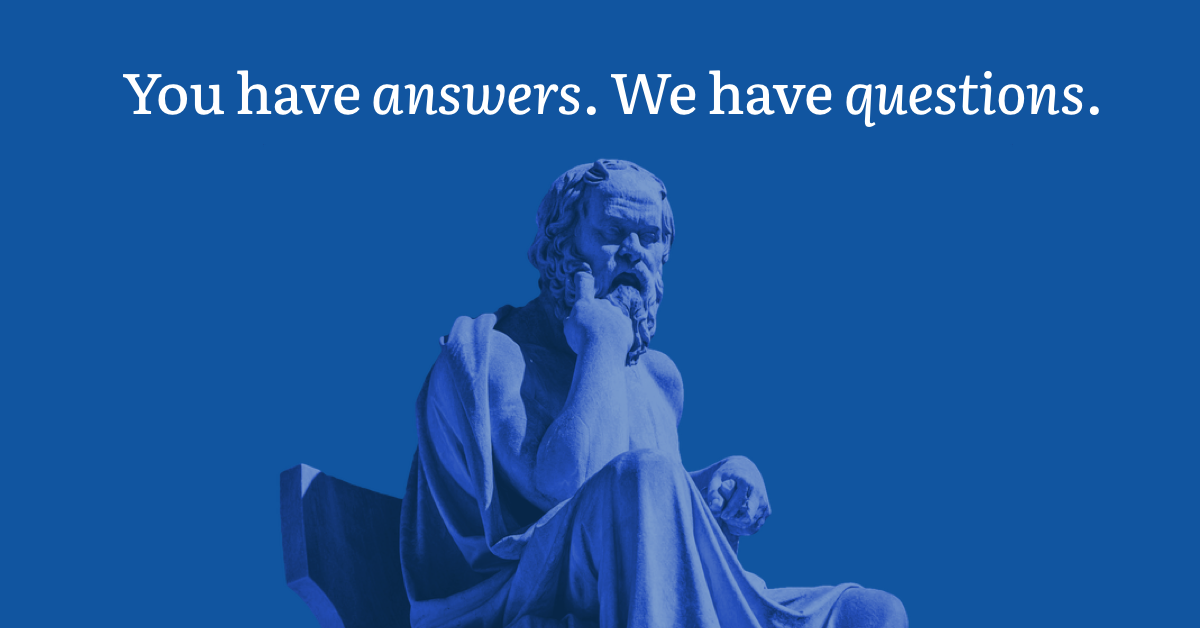

Sharing metadata
| og:url | https://answersocrates.com |
|---|---|
| og:type | website |
| og:image | https://answersocrates.com/images/socrates-opengraph-preview.png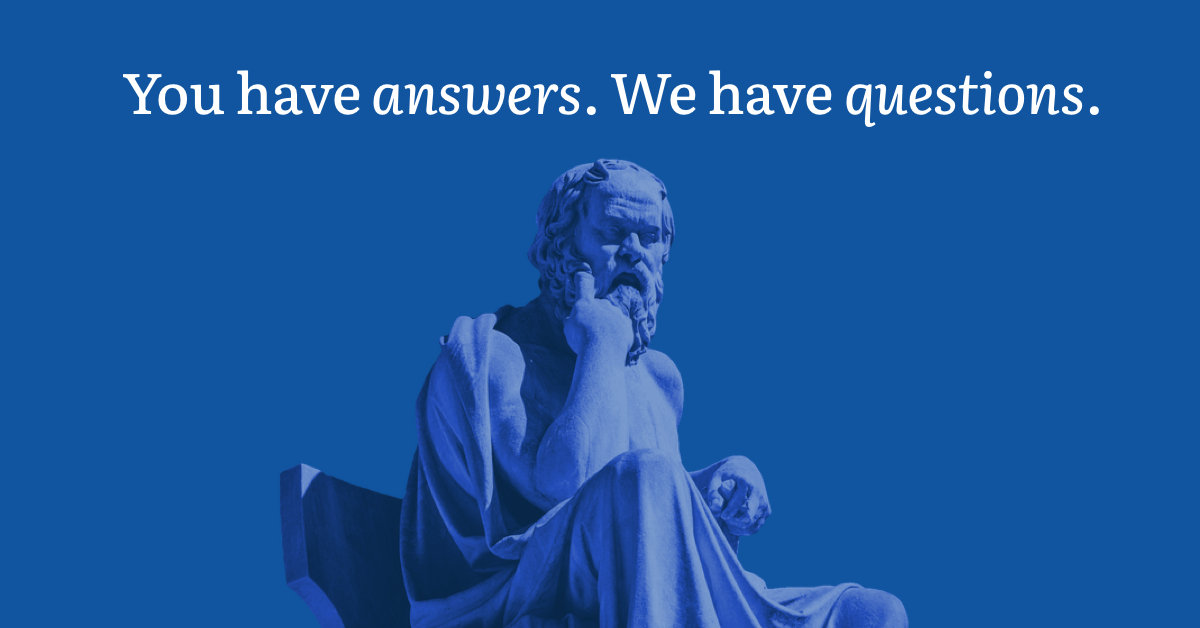 |
| og:title | Answer Socrates: Free Question Keyword Research Tool Generator |
| og:site_name | Answer Socrates |
| og:description | Generate real keyword ideas & questions people are searching, cluster by topic, and export in one click - for free. |
| twitter:card | summary_large_image |
| twitter:site | @AnswerSocrates |
| twitter:image | https://answersocrates.com/images/socrates-opengraph-preview.png |
| twitter:title | Answer Socrates: Free Question Keyword Research Tool Generator |
| twitter:creator | @AnswerSocrates |
| twitter:description | Generate real keyword ideas & questions people are searching, cluster by topic, and export in one click - for free. |
robots.txt (opens in a new tab)
173 rulesAll bots 1 allowed · 172 disallowed

 All bots

/
/account/admin/api//invite//q//llm-brand-tracker/dashboard/llm-brand-tracker/prompts/llm-brand-tracker/sources/llm-brand-tracker/radar/*?q=*/es/account/es/cuenta/es/admin/es/invite//es/invitacion//es/q//es/llm-brand-tracker/dashboard/es/visibilidad-de-marca-en-ia/panel/es/llm-brand-tracker/prompts/es/visibilidad-de-marca-en-ia/indicaciones/es/llm-brand-tracker/sources/es/visibilidad-de-marca-en-ia/fuentes/es/llm-brand-tracker/radar/es/visibilidad-de-marca-en-ia/radar/fr/account/fr/compte/fr/admin/fr/invite//fr/invitation//fr/q//fr/llm-brand-tracker/dashboard/fr/visibilite-de-marque-dans-les-ia/tableau-de-bord/fr/llm-brand-tracker/prompts/fr/visibilite-de-marque-dans-les-ia/prompts/fr/llm-brand-tracker/sources/fr/visibilite-de-marque-dans-les-ia/sources/fr/llm-brand-tracker/radar/fr/visibilite-de-marque-dans-les-ia/radar/de/account/de/konto/de/admin/de/invite//de/einladung//de/q//de/llm-brand-tracker/dashboard/de/ki-sichtbarkeit/dashboard/de/llm-brand-tracker/prompts/de/ki-sichtbarkeit/prompts/de/llm-brand-tracker/sources/de/ki-sichtbarkeit/quellen/de/llm-brand-tracker/radar/de/ki-sichtbarkeit/radar/it/account/it/admin/it/invite//it/invito//it/q//it/llm-brand-tracker/dashboard/it/visibilita-ai/dashboard/it/llm-brand-tracker/prompts/it/visibilita-ai/prompt/it/llm-brand-tracker/sources/it/visibilita-ai/fonti/it/llm-brand-tracker/radar/it/visibilita-ai/radar/nl/account/nl/admin/nl/invite//nl/uitnodiging//nl/q//nl/llm-brand-tracker/dashboard/nl/ai-zichtbaarheid/dashboard/nl/llm-brand-tracker/prompts/nl/ai-zichtbaarheid/prompts/nl/llm-brand-tracker/sources/nl/ai-zichtbaarheid/bronnen/nl/llm-brand-tracker/radar/nl/ai-zichtbaarheid/radar/tr/account/tr/hesap/tr/admin/tr/invite//tr/davet//tr/q//tr/llm-brand-tracker/dashboard/tr/ai-gorunurluk-takibi/panel/tr/llm-brand-tracker/prompts/tr/ai-gorunurluk-takibi/promptlar/tr/llm-brand-tracker/sources/tr/ai-gorunurluk-takibi/kaynaklar/tr/llm-brand-tracker/radar/tr/ai-gorunurluk-takibi/radar/pt/account/pt/conta/pt/admin/pt/invite//pt/convite//pt/q//pt/llm-brand-tracker/dashboard/pt/monitoramento-de-marca-em-ia/painel/pt/llm-brand-tracker/prompts/pt/monitoramento-de-marca-em-ia/prompts/pt/llm-brand-tracker/sources/pt/monitoramento-de-marca-em-ia/fontes/pt/llm-brand-tracker/radar/pt/monitoramento-de-marca-em-ia/radar/ko/account/ko/admin/ko/invite//ko/q//ko/llm-brand-tracker/dashboard/ko/ai-brand-visibility/dashboard/ko/llm-brand-tracker/prompts/ko/ai-brand-visibility/prompts/ko/llm-brand-tracker/sources/ko/ai-brand-visibility/sources/ko/llm-brand-tracker/radar/ko/ai-brand-visibility/radar/ja/account/ja/mypage/ja/admin/ja/invite//ja/invitation//ja/q//ja/llm-brand-tracker/dashboard/ja/llmo-brand-tracker/dashboard/ja/llm-brand-tracker/prompts/ja/llmo-brand-tracker/prompts/ja/llm-brand-tracker/sources/ja/llmo-brand-tracker/sources/ja/llm-brand-tracker/radar/ja/llmo-brand-tracker/radar/hi/account/hi/admin/hi/invite//hi/q//hi/llm-brand-tracker/dashboard/hi/ai-brand-visibility/dashboard/hi/llm-brand-tracker/prompts/hi/ai-brand-visibility/prompts/hi/llm-brand-tracker/sources/hi/ai-brand-visibility/sources/hi/llm-brand-tracker/radar/hi/ai-brand-visibility/radar/pl/account/pl/konto/pl/admin/pl/invite//pl/zaproszenie//pl/q//pl/llm-brand-tracker/dashboard/pl/widocznosc-marki-w-ai/panel/pl/llm-brand-tracker/prompts/pl/widocznosc-marki-w-ai/prompty/pl/llm-brand-tracker/sources/pl/widocznosc-marki-w-ai/zrodla/pl/llm-brand-tracker/radar/pl/widocznosc-marki-w-ai/radar/id/account/id/akun/id/admin/id/invite//id/undangan//id/q//id/llm-brand-tracker/dashboard/id/visibilitas-ai/dashboard/id/llm-brand-tracker/prompts/id/visibilitas-ai/prompt/id/llm-brand-tracker/sources/id/visibilitas-ai/sumber/id/llm-brand-tracker/radar/id/visibilitas-ai/radar
No matching rules.
Sitemaps
2 Registration details RDAP / WHOIS
| Registrar | NameCheap, Inc. |
|---|---|
| Registered | 2020-07-16 |
| Expires | 2027-07-16 |
| Domain status | client transfer prohibited |
| Nameservers | finley.ns.cloudflare.com、selah.ns.cloudflare.com |
| DNSSEC | unsigned |
 DNS records
| Type | Name | Value | TTL | Priority |
|---|---|---|---|---|
| A | answersocrates.com | 104.21.60.176 | 300 | — |
| A | answersocrates.com | 172.67.198.238 | 300 | — |
| AAAA | answersocrates.com | 2606:4700:3031::6815:3cb0 | 300 | — |
| AAAA | answersocrates.com | 2606:4700:3035::ac43:c6ee | 300 | — |
| MX | answersocrates.com | route1.mx.cloudflare.net | 300 | 40 |
| MX | answersocrates.com | route2.mx.cloudflare.net | 300 | 62 |
| MX | answersocrates.com | route3.mx.cloudflare.net | 300 | 94 |
| NS | answersocrates.com | finley.ns.cloudflare.com | 86400 | — |
| NS | answersocrates.com | selah.ns.cloudflare.com | 86400 | — |
| TXT | answersocrates.com | google-site-verification=HCjROZ3f5lVU4yv5hE8qNOqCQz_zw7nlAtwWnUoNK4o | 300 | — |
| TXT | answersocrates.com | google-site-verification=Hjw-Owsja-yvabmZ2w0tGpl5YXJ0qfK-TKoxJ2NFdJI | 300 | — |
| TXT | answersocrates.com | google-site-verification=OTIajRMLuVjH-QHmNXhERKrBX3DHvXh_EtIxUG-QE1w | 300 | — |
| TXT | answersocrates.com | google-site-verification=YitLvsNkGt1BeI3sRKF3Icn9kRr0pgP0G1GEaQo3I9o | 300 | — |
| TXT | answersocrates.com | v=DKIM1; k=rsa; t=s; p=MIGfMA0GCSqGSIb3DQEBAQUAA4GNADCBiQKBgQCfiyEQAA+gehVKNHh2ywm97fAe3KWsvITRoxLgrhEvoUmsjqjdrlrum1tk34+3LB6M4cFb9le8fWx9WmKeISGdnHA56doZx6zEPO1rhLb9772MndlaoY77yeBFwDOpX7ejc5Gc0hnfiHUNP43DvhawrJ/Erp0XBQ4JFIik1LpQ2wIDAQAB | 300 | — |
| TXT | answersocrates.com | v=spf1 include:_spf.mx.cloudflare.net ~all | 300 | — |
| TXT | answersocrates.com | yandex-verification: a89d639aba9c745b | 300 | — |
| DMARC | _dmarc.answersocrates.com | v=DMARC1; p=none; | 300 | — |
 TLS and certificates
| Assessment | Normal configuration |
|---|---|
| Supported protocols | TLSv1.2、TLSv1.3 |
| Negotiated protocol | TLSv1.3 |
| Certificate subject | answersocrates.com |
| Issuer | Google Trust Services |
| Valid until | 2026-12-09T02:32 · Remaining when checked: 71 days |
| Verification details | Certificate trust: Passed · Hostname match: Passed |
 HTTP response headers
| Header | Value |
|---|---|
| content-type | text/html; charset=utf-8 |
| cache-control | private, no-cache, no-store, max-age=0, must-revalidate |
| server | cloudflare |
| strict-transport-security | max-age=63072000 |
 Identified technologies
Recent Updates
- Website images
- Screenshots
User reviews (0)