
 Visit website
 Updated: 2026-09-27 05:15
 Language: English (default)
 Access: Normal
 Profile views 1
  Outbound visits 0
 Website Review
What is DevTools Academy?
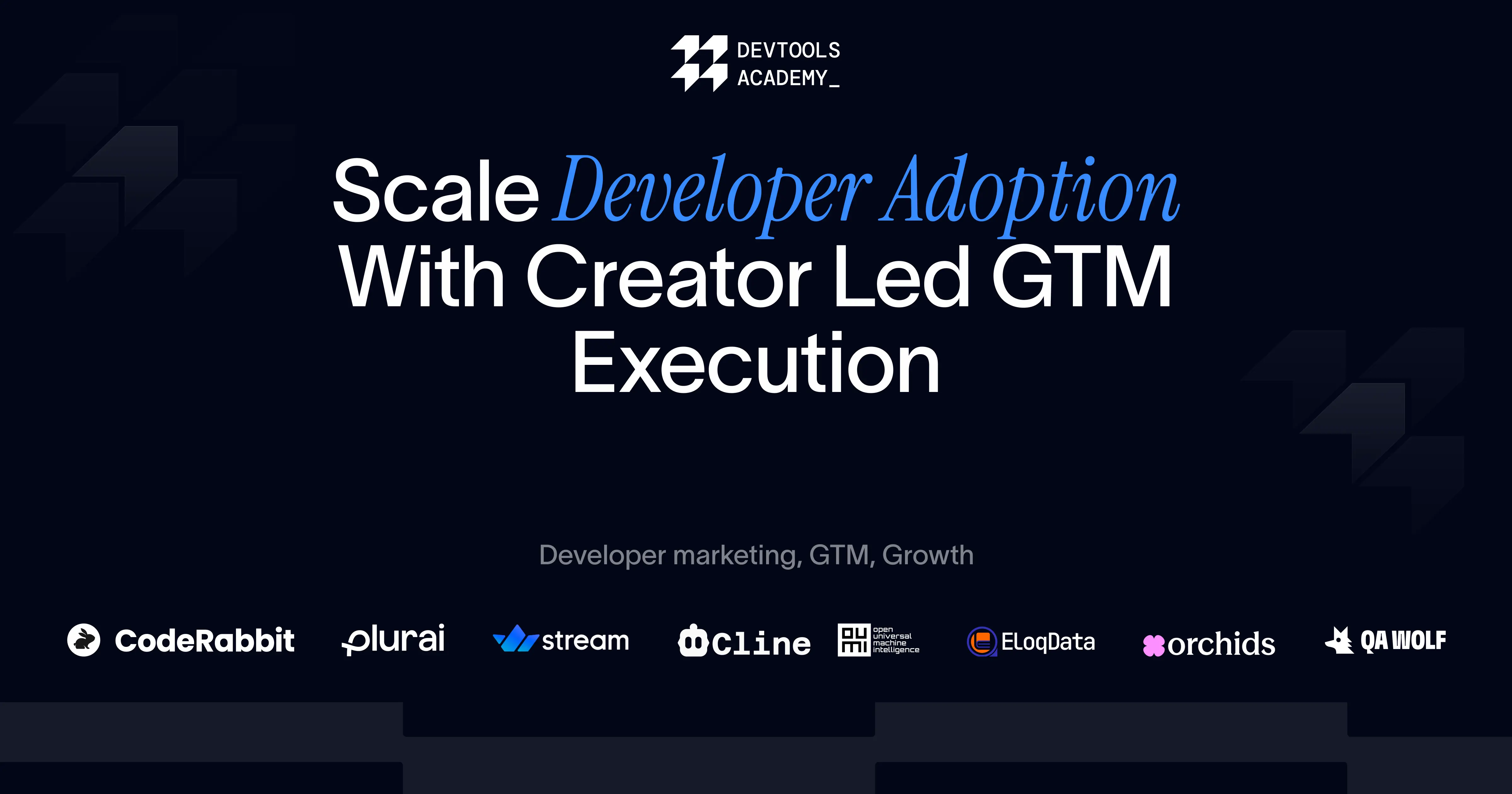
DevTools Academy is a go-to-market agency for AI and developer-tool companies, focused on turning developer marketing and creator partnerships into repeatable distribution. Its pitch is "developer marketing that actually drives signups," aimed at brands that need developers rather than just impressions.
What it actually does
According to its own page, the work spans end-to-end developer GTM execution: creator partnerships, plus channels including YouTube, X, LinkedIn, Instagram, TikTok, Reddit, UGC and technical newsletters. Rather than one-off sponsorships, the emphasis is on a systematic pipeline of technical creators who already have credibility with developer audiences.
Who it's for
- Seed-to-growth-stage AI and DevTools startups whose product is stronger than their distribution.
- Marketing leads who have tried paid ads or generic influencer campaigns and found them weak at reaching technical buyers.
- Founders willing to hand over creator sourcing, briefing and coordination rather than run it themselves.
Evidence it points to
The page cites client results: 1.1M impressions and 10,000+ engagements for Orchids in a quarter; 631+ comments and 269+ reposts on Oumi's LinkedIn launch day; 6,600+ sign-ups for Stream across FY-2025 quarters; and ongoing distribution work with Cline. Founders and marketing leaders from those companies are quoted describing a creator program built from scratch — one client, Stream's Neevash Ramdial, notes 60+ creators across YouTube, X, LinkedIn, open source and newsletters. Treat these as the agency's own reported outcomes, not independently verified figures.
How to judge fit
| If your priority is… | Creator-led GTM suits you when… |
|---|---|
| Qualified developer signups | Your product can be demoed and discussed credibly by practitioners |
| Fast, broad reach | You accept a portfolio of creators over one big name |
| Compounding distribution | You can commit to multiple quarters, not a single push |
The trade-off is control and speed: creator-led distribution takes coordination and rarely produces instant spikes, but it builds social proof that technical audiences trust more than ads.
A practical next step is to look at the case studies on DevTools Academy and ask which of those companies most resembles yours in stage and audience — then decide whether a strategy call is worth it.
How does DevTools Academy help AI and DevTools companies get more developer signups?
DevTools Academy is a creator-led go-to-market agency for AI and DevTools companies. Instead of running broad ads, it builds distribution through technical creators — people who already have developer audiences on YouTube, X, LinkedIn, Instagram, TikTok, Reddit, UGC and technical newsletters. The pitch is that developer trust travels through practitioners, so a credible creator demo or deep-dive converts better than an impression bought from a platform.
Its stated process is end-to-end GTM execution: strategy, creator sourcing and matching, partnership management, and measurement. The page frames this as replacing "speculative spending" with a systematic, high-intent creator partnership framework, and it emphasizes numbers over narratives.
What the page claims it has delivered
The site lists client outcomes rather than generic testimonials:
- Orchids: 1.1M impressions and 10,000+ engagements in a single quarter
- Oumi: 631+ comments and 269+ reposts on day one of a LinkedIn launch
- Stream: 6,600+ sign-ups across every quarter of FY-2025, with a program of 60+ creators built from scratch
- Cline: ongoing strategic distribution to reach more developers
These are the agency's own reported figures and client quotes, so treat them as marketing claims rather than independently audited results. Still, the pattern is worth noting: the wins described are engagement and sign-up numbers, not vanity reach alone.
Who this fits
| If you are… | Creator-led GTM tends to work when… | It tends to struggle when… |
|---|---|---|
| Early-stage DevTool with a working product | You need trusted voices to explain a novel workflow | Your onboarding breaks under new signups |
| AI infra or API company | Your buyers hang out in technical newsletters and YouTube | Your audience is non-technical |
| Funded startup scaling past founder-led sales | You want repeatable distribution, not one-off launches | You expect results in days, not quarters |
| Open-source project | Contributors and maintainers can amplify authentically | You have no one to support incoming users |
Practical next step
Before booking a strategy call, write down your current signup funnel: where developers first hear about you, what they try first, and where they drop off. Creator partnerships amplify a funnel that converts; they expose one that doesn't. Bring those numbers to the conversation, and ask specifically how the agency would measure success beyond impressions — signups, activations, or retained usage.
For context on how developer-focused companies approach this, DevTools Academy publishes case studies, and you can compare approaches with general developer marketing guidance from GitHub or Stack Overflow community resources.
Which platforms does DevTools Academy use for developer marketing campaigns?
DevTools Academy runs creator-led campaigns across YouTube, X, LinkedIn, Instagram, TikTok, Reddit, UGC (user-generated content), and technical newsletters, according to its own site. The emphasis is on channels where developers already spend time and where credible technical creators can carry the message, rather than on paid impressions alone.
That mix splits into a few practical groups:
- Long-form technical video — YouTube, useful for demos, architecture walkthroughs, and comparison content that developers research before adopting a tool.
- Text and professional networks — X and LinkedIn, suited to launch moments, founder posts, and comment-driven discussion. The site cites an Oumi LinkedIn launch that generated 631+ comments and 269+ reposts on day one.
- Short-form and community — Instagram, TikTok, and Reddit, better for reach and niche community conversations than for deep technical evaluation.
- Owned and semi-owned channels — UGC and technical newsletters, which can compound over time and reach developers who ignore ads.
The trade-off is speed versus depth. Reddit and short-form can produce fast visibility but require careful tone, since developer communities react badly to overt promotion. YouTube and newsletters build more durable credibility but take longer per asset. The site's own framing is "numbers, not narratives," and it points to results such as 1.1M impressions and 10,000+ engagements for Orchids in a quarter, and 6,600+ sign-ups for Stream across FY-2025.
If you are planning something similar, decide first which single channel matches your buyer's research habits, then add a second only once the first produces repeatable sign-ups. For a developer tool with a complex setup, YouTube plus a technical newsletter is usually a stronger starting pair than spreading across all eight at once.
What results have DevTools Academy's creator partnerships delivered for clients like Orchids, Oumi, Stream, and Cline?
DevTools Academy publishes client-reported outcomes from creator-partnership programs. The short answer: the results are framed around engagement, sign-ups and launch-day discussion rather than downloads or revenue.
Reported client results
| Client | Reported outcome | Timeframe / channel |
|---|---|---|
| Orchids | 1.1M impressions, 10,000+ engagements | One quarter |
| Oumi | 631+ comments, 269+ reposts on launch day | LinkedIn launch |
| Stream | 6,600+ sign-ups | Every quarter of FY-2025 |
| Cline | Improved developer marketing and distribution reach | Ongoing partnership |
Orchids co-founder Kevin Lu is quoted describing the shift from "speculative spending" to a systematic creator partnership framework; Stream's director of marketing credits the build-out of 60+ creators across YouTube, X, LinkedIn, open source and newsletters. Oumi's founder highlights the comment section becoming a technical discussion on day one, and Cline's founder cites speed and ecosystem understanding.
How to read these numbers
Impressions and engagements measure attention, not activation; sign-ups are closer to business value but still say nothing about retention or paid conversion. Stream's multi-quarter sign-up figure is the most commercially meaningful of the set, while Oumi's launch-day comment and repost counts are best treated as social-proof signals for a single campaign.
Next step
If you are evaluating a similar agency, ask for cohort-level data behind the headline: sign-up-to-activated-user rate, cost per sign-up, and whether creator relationships continued past the first quarter. Compare those against your own paid and organic channels before committing budget.
How does DevTools Academy measure the success of its developer GTM efforts?
DevTools Academy frames measurement around business outcomes rather than reach alone. Its page explicitly says "Numbers, not narratives," and the case studies it presents are tied to signups, engagement and impressions rather than vague brand awareness.
What it reports
- Signups: 6,600+ sign-ups for Stream across every quarter of FY-2025.
- Engagement: 10,000+ engagements for Orchids in a single quarter.
- Comments and reposts: 631+ comments and 269+ reposts on Oumi's LinkedIn launch day.
- Reach: 1.1M impressions for Orchids in one quarter.
What that means in practice The mix suggests a funnel view: impressions and engagements show whether a creator's audience paid attention, while comments, reposts and signups show whether that attention turned into interest or action. The Oumi example is especially telling because day-one comment volume and reposts were treated as social proof, not just vanity metrics.
For a team evaluating this approach, the useful test is whether a creator program produces repeatable, compounding distribution. A single viral post is not enough; the Stream example is measured across every quarter of a year, which points to consistency as a success criterion.
Next step Before committing, ask a prospective partner which metric they optimize for at each stage — reach, engagement, or signups — and how they separate creator-driven results from other marketing. If you want a broader view of how developer-focused agencies and communities present their work, you can compare with Clerk or Vercel for developer-facing content, though neither is a direct GTM agency.
Should my AI or DevTools startup hire DevTools Academy or build an in-house developer marketing team?
Hire DevTools Academy if you need distribution running this quarter; build in-house if developer marketing is core to your long-term identity and you can wait for it to compound. DevTools Academy is a creator-partnership and developer-GTM agency: it turns technical creators across YouTube, X, LinkedIn, Reddit, newsletters and short-form video into repeatable signup channels. An in-house team means hiring a developer-marketing lead, a content person and a community/DevRel engineer, then building creator relationships yourself. The two options solve different problems at different stages.
When the agency model fits
- You have product-market fit but no repeatable pipeline. The agency's own framing is "Great Product, Broken Distribution," and its case-study pattern is distribution volume: 1.1M impressions and 10,000+ engagements for Orchids in a quarter, 6,600+ sign-ups for Stream across FY-2025, and a LinkedIn launch for Oumi that produced 631+ comments and 269+ reposts on day one.
- You need creator relationships you don't have. Stream's marketing director, Neevash Ramdial, credits the team with building a 60+ creator program across YouTube, X, LinkedIn, open source and newsletters — that network is the actual product you're buying.
- You want to test channels before committing headcount. Paying for a quarter of creator-led campaigns tells you which platforms convert for your audience. Hiring first means you're learning on a salary.
- Speed matters more than ownership. A founder-led or agency-led push can start in weeks; a first marketing hire often takes a quarter to ramp.
When in-house wins
- Developer marketing is your moat, not a channel. If your community, docs, open-source contributors and conference presence are the product experience, an internal owner builds assets that stay with you.
- You need deep technical accuracy. Agency creators explain your product well, but they don't sit in your codebase. For complex infra, internal DevRel can answer questions no external creator can.
- You're playing a multi-year game. Creator relationships, community trust and content libraries compound; rented distribution stops when the contract does.
- You already have a marketing leader. Then the question is whether to add creator-partnership capability internally or buy it as a service.
A practical comparison
| Dimension | DevTools Academy | In-house team |
|---|---|---|
| Time to first output | Weeks | One to two quarters |
| Cost shape | Campaign/retainer, variable | Salaries, fixed and committed |
| Creator network | Existing, across many platforms | Built from zero |
| Product depth | External, needs briefing | Deep, embedded |
| Asset ownership | Mostly rented reach | Compounding internal assets |
| Best for | Proving and scaling distribution | Owning a long-term developer brand |
A concrete way to decide
Pick one metric — qualified signups, activated developers, or pipeline — and one quarter. If you can't name the person internally who would own creator partnerships full-time, and you don't have a warm list of technical creators, the agency route gets you data faster. If you can name that person and your roadmap depends on developer trust, hire them and use an agency only for reach you can't build yourself.
A middle path is common and usually best: run one agency-led creator program for a quarter while hiring a developer-marketing lead, then bring the playbook in-house. For context on how developer-focused companies approach this, see DevTools Academy and, for broader developer-marketing practice, Developer Relations and Orbit.
 Hosting and Email
 Namecheap
 Hosting
 Vercel
 Google Workspace
 Location
 United States
 Pages, Search and Sharing

 All bots


 Registration details

 Identified technologies
User reviews (0)