
 简体中文
简体中文 English
Website review
This review may include AI-generated content and is not individually verified. Domain, certificate and other facts come from the observed data on this page.
What is drawanyone?
drawanyone is an AI drawing tool whose stated purpose is to let you draw anyone, any way you want. Based on that description, it belongs to the category of image-generation services where you supply a subject and a style or direction, and the tool produces the artwork rather than you drawing it by hand.
Who it suits
- People who want a portrait or character image of a specific person without traditional drawing skills.
- Users who want stylistic flexibility — the same subject rendered in different visual treatments.
- Casual creators making images for personal projects, social posts or concept exploration.
What to weigh
The main trade-off with any tool in this category is control versus convenience. Typed prompts are fast, but they rarely give you pixel-level command; if you need exact likeness, precise composition or brand-consistent output, expect iteration and cleanup. Also consider how you will use the result: images of real, identifiable people raise consent and publicity questions, so keep intended use in mind.
A practical first step: take one clear reference photo of your subject and run the same prompt with two or three different style words, then compare which direction the tool handles best before committing to a larger batch.
How can I create a custom drawing of a specific person using drawanyone?
To create a custom drawing of a specific person, you supply a reference image or description of that person and a style or pose direction, and the tool generates an image matching both. The site's own tagline, "Draw anyone, any way you want," describes exactly this two-part input: who to draw and how to draw them.
A practical workflow
- Pick a clear reference. A sharp, front-facing photo with even lighting gives the model the most to work with. Group shots, heavy shadows, or extreme angles tend to produce vague likenesses.
- Describe the "any way" part. State the style (pencil sketch, watercolor, comic ink), the framing (portrait, full body), and the mood or pose. Style words do more work than long physical descriptions when you already have a photo.
- Generate and compare. Produce several variations rather than judging one output. Likeness is the hardest part to get right, so expect the first pass to need adjustment.
- Refine one variable at a time. If the face is off, change the reference. If the style is off, change the style wording. Changing both at once makes it hard to tell what helped.
What to expect
Expect strong results on style and composition, and variable results on exact facial likeness — that is the general trade-off with image generation tools that work from a reference. If the person is a public figure with many photos online, you have more reference options; for a private individual, you are limited to what you provide.
For a concrete case: a couple wanting an illustrated anniversary portrait would use a favorite photo as the reference, request a warm watercolor style, and generate a handful of versions before choosing one to print.
Decision criteria
- Need a recognizable face? Prioritize reference quality over style ambition.
- Need a specific art style? Name a real medium or artist-adjacent style rather than a vague adjective like "nice."
- Need it for print? Check the output resolution before committing to a final version.
If you want alternatives to compare workflows, Midjourney and OpenAI's image tools are well-known options for reference-based generation; the right choice depends on whether you value style control or likeness accuracy more.
Is drawanyone free to use, or does it require a subscription?
The available information for drawanyone does not include pricing details, so I can't confirm whether it is free or subscription-based. The site presents itself simply as a tool to "draw anyone, any way you want," with no visible pricing signals in the material provided.
How to check for yourself
- Open the site and look for a Pricing, Plans or Upgrade link in the main navigation or footer.
- Try the drawing tool without entering payment details. If you can generate an image end-to-end, there is likely a free tier.
- Watch for credit limits, watermarks, or a cap on the number of images — these usually indicate a free allowance attached to a paid plan.
- If a signup wall appears before you can generate anything, treat it as account-gated rather than free.
Typical patterns for tools like this
AI image generators usually fall into one of three models: a limited free tier with daily credits, a one-off credit pack, or a monthly subscription that unlocks higher resolution and faster generation. A reasonable rule of thumb: if your use is occasional and personal, a free tier is usually enough; if you need consistent output, commercial rights, or no watermark, expect to pay.
Practical next step
Decide what you need first — a handful of images for a personal project, or regular output for client work. That answer determines whether a free allowance is sufficient or whether a paid plan is worth comparing.
What kind of reference photos work best for generating accurate drawings on drawanyone?
Use clear, well-lit photos where the person’s face is large enough to see distinct features: eyes, nose, mouth, jawline, and hair shape. For drawanyone, the goal is to give the system enough visual information to preserve likeness, so the best reference is usually a sharp, front-facing portrait with minimal obstruction.
What tends to work best
- Single subject: One person per photo, not a group shot where the face is small.
- Good lighting: Even daylight or soft indoor light; avoid heavy shadows across the face.
- Neutral or clear expression: A relaxed smile or neutral look is easier to interpret than a dramatic expression.
- Face clearly visible: No sunglasses, masks, hands, or hair covering key features.
- Moderate angle: Straight-on or slightly turned is better than a profile or extreme low/high angle.
- Reasonable resolution: The image should be sharp enough that zooming in still shows clean facial details.
What usually causes problems
- Blurry, pixelated, or heavily filtered photos.
- Very dark images or strong backlighting.
- Faces that are tiny in the frame.
- Extreme angles, motion blur, or obscured features.
- Heavy makeup or beauty filters that change the underlying face shape.
If you want a reliable starting point, choose a recent photo taken in daylight, from the chest up, with the person looking toward the camera. Then try one drawing and compare the result with the original. If the likeness is off, swap to a sharper, more frontal photo rather than adjusting the prompt repeatedly.
Can I use drawanyone to draw someone in a particular art style, such as anime or realistic?
Yes. drawanyone is positioned around drawing "anyone, any way you want," which points to style control as a core part of the experience rather than a fixed output format. If you want a specific look, the practical approach is to name the style explicitly in your prompt — "anime style," "photorealistic portrait," "watercolor sketch" — instead of expecting the tool to guess from a photo alone.
What that means in practice
- Anime or illustrated styles suit character art, avatars, profile pictures, and stylized gifts.
- Realistic styles suit portraits where likeness matters more than artistic interpretation, such as family photos or professional headshots.
- Mixed requests ("realistic face, anime background") are where results get least predictable, so change one variable at a time.
A quick test before committing
Run the same source image through two prompts — one anime, one realistic — and compare how well each preserves recognizable features. Likeness tends to hold up better in realistic modes, while anime modes often trade exact facial detail for cleaner, more stylized lines. That trade-off, not the style label itself, is usually what decides which output you keep.
If you want a comparison point for what AI image tools typically offer in style presets, OpenAI documents its image generation features, and Midjourney is a common reference for style-driven prompting.
What are the limitations or restrictions on images generated with drawanyone?
The available information about DrawAnyone does not specify any limitations or restrictions on generated images. The site presents itself only as a tool to "draw anyone, any way you want," and no usage limits, content restrictions, licensing terms, or output constraints are documented here.
If you need to know what you can or cannot do with generated images, check the site directly for a terms of service, content policy, or FAQ page. Those documents are where image-generation tools typically state rules such as:
- Prohibited content categories (e.g., real people without consent, minors, explicit material)
- Commercial versus personal use rights
- Whether you own the output or the platform retains rights
- Watermarking, attribution, or redistribution requirements
As general advice, not a description of this product: most image generators restrict likenesses of real people without permission, prohibit illegal or harmful content, and define commercial rights in their terms. If your use case involves a real person's face or a commercial project, confirm the relevant policy before generating.
 Cloudflare
 Vercel
 Google Workspace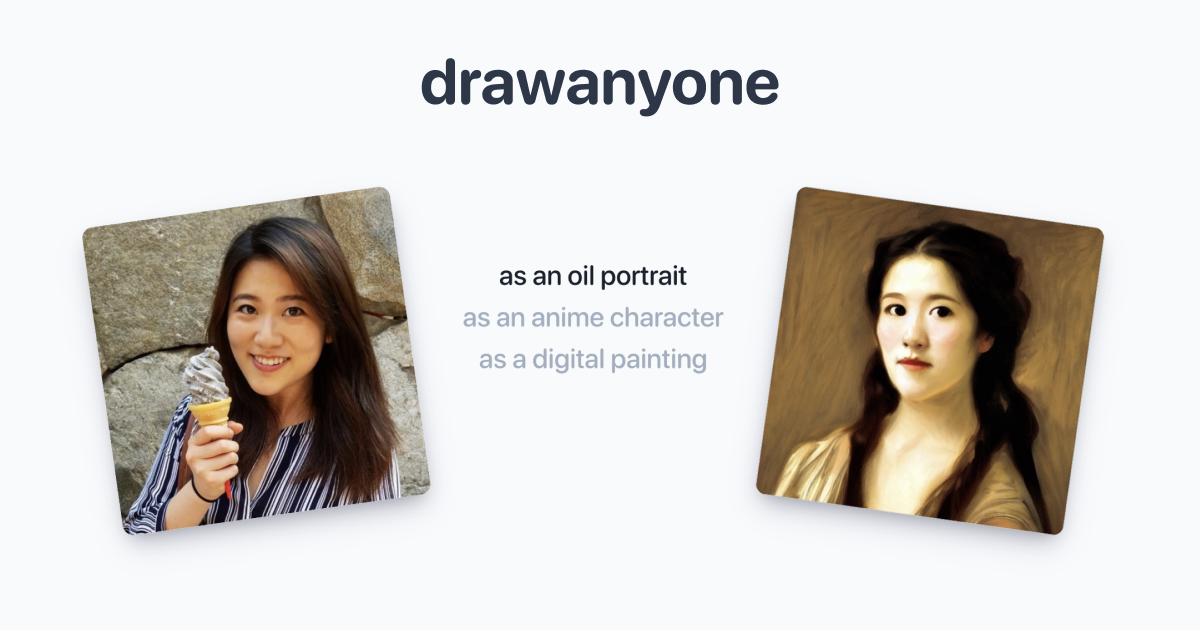
User reviews (0)