
 简体中文
简体中文 English
Website review
This review may include AI-generated content and is not individually verified. Domain, certificate and other facts come from the observed data on this page.
What is The George Washington University?
The George Washington University (GW) is a private university in Washington, D.C., whose identity is closely tied to its location. Its own materials emphasize being "steps away" from world-class opportunities and describe a "campus without borders" in the nation's capital.
What that means in practice
GW's location shapes the academic experience across many fields. Students in international affairs, political science, law, journalism, and public health can pursue internships and research alongside the institutions that define the city. The university's own examples include a student interning on Capitol Hill and at an embassy, and a physics professor leading NASA-partnership research with students.
Who it tends to suit
- Policy- and government-oriented students who want proximity to federal agencies, Congress, embassies, and think tanks.
- Students who value internships during the semester, not just in summer, because employers are a short trip away.
- Researchers in fields where D.C.-based institutions (NASA Goddard, public health agencies, policy centers) are collaborators.
Trade-offs to weigh
An urban campus means no traditional enclosed quad experience; city life, transit, and cost of living in D.C. become part of daily student life. Programs without a natural D.C. connection may feel less distinctive. Class sizes and housing vary by school and program, so check the specific school you're considering.
Next step
Identify the school or program you care about, then look at its internship and research listings to see whether the D.C. location actually connects to your goals. If it does, GW's setting is a genuine advantage; if not, the location matters less than the program itself. Start at The George Washington University.
How does GW's location in Washington, D.C. benefit students?
GW's Washington, D.C. location functions less like a backdrop and more like an extension of the classroom: internships, research placements and policy work sit within a short trip of campus, so students can stack real experience onto their coursework without pausing their degree.
What the location actually enables
- Internships during the semester. The page's student profiles show this in practice: Camila Barbosa, an international affairs and criminal justice double major, interned on Capitol Hill in Rep. Darren Soto's office and at the Embassy of El Salvador, and was preparing to intern with the DC Metro Police Department — all while enrolled.
- Research partnerships with federal agencies. Physics associate professor Sylvain Guiriec leads GW's partnership with NASA, working with students on X-ray space telescopes, satellite launches and gamma-ray burst mapping, with research opportunities at NASA Goddard Space Flight Center.
- Policy-relevant work in public health. Edlyn Rochon, an M.P.H. '26 and Ph.D. candidate, works at GW's Gill-Lebovic Center applying systems thinking to social determinants of health in Latino populations — the kind of structural, policy-level work that depends on being near the institutions that shape it.
- A professional network in motion. The page describes the city as a place "where everybody's on the move," which is a fair description of how quickly DC contacts, events and job openings turn over.
The trade-off to weigh
Proximity cuts both ways. Access to Capitol Hill, embassies and federal agencies is real, but so is the competition: students at other D.C. schools are chasing the same internships, and semester-long placements can collide with a heavy course load. Location helps most when you arrive with a plan — a target sector, a semester you can protect for an internship, or a professor whose research already connects to an agency.
A practical next step
Pick one program you're considering and check two things: whether internships can be taken for academic credit during the fall or spring term, and whether faculty in that department have active partnerships with D.C. institutions. That combination — not the city alone — is what turns location into a credential. You can start from The George Washington University.
What programs and degrees does GW offer?
GW offers programs across its schools and colleges, and the page points to a "Find Your Program" tool as the fastest way to see what's available. The university's own examples span international affairs, physics, public health and business, so it isn't limited to one field. Based on the page evidence, you can expect a broad mix of undergraduate majors, graduate and professional degrees, and research opportunities tied to Washington, D.C.
How to narrow it down
- Start with the program finder. Use the "Find Your Program" link on the homepage to filter by level and field rather than browsing school by school.
- Check the school that matches your interest. The page names the Elliott School of International Affairs, Columbian College of Arts and Sciences, the Milken Institute School of Public Health and the GW School of Business.
- Look at degree level. The examples include a sophomore double major, an M.P.H. student who is also a Ph.D. candidate, and faculty-led research, which suggests options at bachelor's, master's and doctoral levels.
A concrete example
If you want international affairs plus hands-on policy work, the page's profile of Camila Barbosa shows a student double-majoring in international relations and criminal justice while interning on Capitol Hill and at an embassy. That combination is a useful signal: at GW, the degree and the city-based experience tend to be packaged together. If that model appeals to you, shortlist programs that build in internships or research placements rather than choosing on the major name alone.
For official program lists and admission requirements, go straight to The George Washington University.
What research opportunities are available for GW students?
GW students can find research opportunities tied to the university's Washington, D.C. location, with several examples described on the university's own site.
Examples from GW's own pages
- NASA-linked physics work. Associate Professor Sylvain Guiriec and his students collaborate with NASA on projects including X-ray space telescopes, satellite launches and gamma-ray burst mapping. Guiriec leads GW's partnership with NASA Goddard Space Flight Center, which the site says creates research opportunities for students and faculty there.
- Public health research with a policy focus. Edlyn Rochon, an M.P.H. '26 graduate and Ph.D. candidate at the Milken Institute School of Public Health, works at GW's Gill-Lebovic Center, applying systems-thinking frameworks to social determinants of health in Latino populations.
- International affairs plus hands-on placements. Sophomore Camila Barbosa, an international affairs and criminal justice double major in the Elliott School, has interned on Capitol Hill and at the Embassy of El Salvador, and is a member of GW's Mock Trial team.
How to judge whether a research opportunity fits
The examples above point to a pattern worth testing against your own goals:
| What you want | What to look for |
|---|---|
| Lab or field research | Faculty-led projects, especially those with external partners |
| Policy or applied research | Centers and institutes connected to D.C. institutions |
| Publication or graduate school preparation | A named faculty mentor and a defined project role |
A practical next step
Identify two or three faculty members whose work matches your interests, read one recent paper or project description from each, then email them with a specific question about their current work and whether they expect to take on students. Ask current students in your department which labs or centers actually involve undergraduates or master's students in substantive tasks rather than administrative support.
For program-level details and current openings, start with The George Washington University and the relevant school or center page.
How can prospective students apply to GW?
Prospective students apply to GW through its undergraduate admission process, with the application itself handled online and supporting materials submitted through the applicant portal. The main decision is which deadline and application route fits your record and goals.
Application routes and deadlines
GW accepts the Common Application and also offers its own GW Application. Most first-year applicants use the Common Application because it lets them apply to multiple schools without re-entering the same information. Check which route your school or counselor supports before you start.
Typical first-year options include:
- Early Decision I and II — binding; you commit to enroll if admitted. Best if GW is clearly your first choice and the financial aid picture is workable.
- Early Action — non-binding; you get an earlier decision but are not committed.
- Regular Decision — the standard non-binding route with the latest deadline.
Transfer applicants follow a separate process and timeline, and GW's website is the place to confirm current dates, since deadlines shift year to year.
What you'll need
- Your application form and GW-specific essay or short answers
- High school transcript (and college transcript, if transferring)
- Counselor and teacher recommendations, where required
- Standardized test scores, if you choose to submit them
- Application fee or an approved fee waiver
- Optional materials such as a portfolio, résumé or interview, depending on your program
GW's page evidence highlights a "campus without borders" in Washington, D.C., with students interning on Capitol Hill, at embassies and in local agencies. That context matters for your essay: rather than generic praise about the city, name the specific internships, research labs or policy work you want to pursue and why GW's location makes them reachable.
A practical next step
Create a shortlist of three to five programs, then work backward from each deadline. Build a simple table:
| Item | Why it matters |
|---|---|
| Deadline and round | Binding vs. non-binding changes your whole list strategy |
| Required essays | Start drafts four to six weeks before submitting |
| Recommenders | Ask at least a month ahead and share your résumé |
| Testing policy | Confirm whether scores are required, optional or not considered |
If you are weighing GW against other D.C. schools, compare program strength and access to internships rather than location alone. Official admissions details live at The George Washington University, and the Common Application at Common App handles the shared form. For a binding Early Decision, confirm your family's aid situation first — that is the one choice you cannot undo.
What is student life like at GW?
Student life at GW is defined less by a traditional enclosed campus and more by the surrounding city. The university describes itself as a “campus without borders” in Washington, D.C., where internships, government offices, embassies, museums and research institutions sit within walking distance. For students who want their coursework and their daily life to overlap with professional work, that proximity is the main draw. For students who picture a self-contained quad-and-tailgate college experience, the same setting can feel scattered and fast-paced.
What the university highlights
The page presents student experience through examples rather than a general description. A few patterns stand out:
- Work integrated with study. Camila Barbosa, an international affairs and criminal justice double major, interned on Capitol Hill, helped develop trade policy reports at the Embassy of El Salvador, and was set to intern with the DC Metro Police Department, while also competing on GW’s Mock Trial team.
- Research access at the graduate and undergraduate level. Physics professor Sylvain Guiriec works with GW students on NASA-partnered projects, including X-ray space telescopes, satellite launches and gamma-ray burst mapping.
- Community-engaged public health work. Edlyn Rochon, an M.P.H. student and Ph.D. candidate, works full-time at GW’s Gill-Lebovic Center, applying systems thinking to social determinants of health in Latino populations.
- A professional, always-moving city culture. The page quotes a business student describing the nation’s capital as a place “where everybody’s on the move.”
What that means day to day
A realistic week for a GW student often mixes classes with an internship commute, a student-organization meeting and study time squeezed between them. That suits organized, self-directed students who are comfortable navigating a city on their own. It is harder for students who need a strong residential bubble to feel settled, or who want campus social life to be the center of gravity rather than one part of a busier schedule.
The trade-offs are worth naming plainly:
| If you want… | GW’s setting tends to… |
|---|---|
| Internships during the semester | Make them practical, not just summer options |
| A compact, walkable campus | Spread buildings through a city neighborhood |
| Policy, government, media, science policy exposure | Put relevant employers nearby |
| A classic residential college feel | Require more effort to build a tight social circle |
A useful next step
Before applying or committing, test the fit against a specific goal rather than the general reputation. Pick one internship, research lab or student organization you would actually join, then check whether it operates during the academic year and how students reach it. Also ask current students where they spend unstructured time and how they built friendships in the first semester — that answer will tell you more about daily life than any campus tour.
For official program and visit details, start with The George Washington University.
 Cloudflare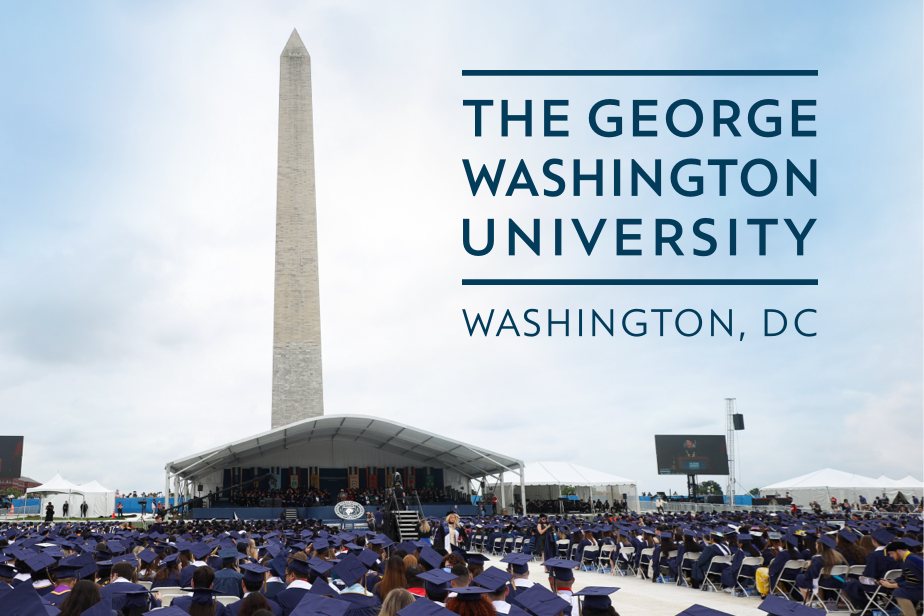

User reviews (0)