
ibo.org No paid content found
Categories: Education & Learning
The International Baccalaureate® (IB) offers four high quality international education programmes to more than one million students in more than 163 countries.
 Visit website
 Updated: 2026-09-21 22:38
 Language: English (default)
 Access: Normal
 Profile views 1
 Outbound visits 0
Related questions
More questions →What Does It Mean to Be an IB Student? Roles and Expectations Across the Four Programmes
Being an IB student means more than attending a school that offers an International Baccalaureate programme. It means learning through a specific framework that asks you to think critically, communicate clearly, and take responsibility for your own progress. The IB's four programmes — the Primary Years Programme (PYP), Middle Years Programme (MYP), Diploma Programme (DP), and Career-related Programme (CP) — share a common philosophy but place different demands on students at each stage.
This article explains what the IB expects from students, how responsibilities change across the four programmes, and how families can prepare for the transition.
The foundation: the IB learner profile
Across all four programmes, the IB describes ten attributes it hopes students develop. These are usually called the learner profile. Students are encouraged to be:
- Inquirers — curious and skilled at asking good questions
- Knowledgeable — exploring ideas across a range of subjects
- Thinkers — using critical and creative thinking
- Communicators — expressing ideas confidently in more than one language
- Principled — acting with integrity and fairness
- Open-minded — appreciating other perspectives and cultures
- Caring — showing empathy and respect
- Risk-takers — approaching uncertainty with courage
- Balanced — attending to intellectual, physical, and emotional well-being
- Reflective — assessing their own learning and experience
These attributes are not a checklist to complete. They describe habits and dispositions that teachers look for and that students are expected to demonstrate over time. In practice, they shape how lessons are taught, how projects are assessed, and how students are asked to behave toward one another.
How student responsibilities differ across the four programmes
Each programme has its own structure, age range, and expectations. The table below summarises the main differences.
| Programme | Typical age range | Core expectation of the student | Main assessment emphasis |
|---|---|---|---|
| PYP | 3–12 | Active participation, curiosity, and reflection on learning | Teacher observation, portfolios, student-led conferences |
| MYP | 11–16 | Connecting subjects to real-world contexts; developing research and self-management skills | Criterion-based assessment, personal project, interdisciplinary units |
| DP | 16–19 | Independent academic work across six subject groups plus core requirements | External exams, coursework, extended essay, theory of knowledge |
| CP | 16–19 | Combining academic study with career-related learning and a reflective project | Career-related study, DP courses, personal and professional skills |
PYP: building the habits of inquiry
In the PYP, the student's main job is to engage. Children are expected to ask questions, work with others, and reflect on what they have learned. The emphasis is on developing curiosity and basic research skills rather than on formal examinations. Students often take part in units of inquiry that connect subjects, and they may lead conferences where they explain their learning to parents.
MYP: making connections and managing yourself
The MYP asks students to go further. They study eight subject groups and are expected to connect what they learn to the world around them. A key responsibility is the personal project, an independent piece of work that students plan, research, and complete over an extended period. This is often the first time students must manage a long-term deadline largely on their own. Service learning also becomes more structured, and students are encouraged to reflect on their role in the community.
DP: depth, independence, and the core
The DP is the most academically demanding of the four programmes. Students typically study six subjects, three at higher level and three at standard level, and complete three core requirements:
- Theory of knowledge (TOK) — a course that asks how we know what we claim to know
- The extended essay — an independent research paper of up to 4,000 words
- Creativity, activity, service (CAS) — a programme of ongoing experiences outside academic study
DP students are expected to manage a heavy workload, meet external examination deadlines, and produce original academic work. Independent study is not optional; it is central to the programme.
CP: academic study with a career focus
The CP is designed for students who want to combine academic courses with career-related learning. Students take at least two DP courses alongside a career-related study programme, and complete a reflective project. They also develop personal and professional skills. The CP suits students who learn best when their studies connect directly to a practical field, while still requiring the critical thinking and communication skills common to all IB programmes.
How assessment and independence change as students progress
One of the clearest patterns across the IB is the shift from teacher-led assessment toward student-led responsibility.
In the PYP, teachers observe and document learning, and students are guided through reflection. In the MYP, students are assessed against published criteria and must increasingly manage their own projects. By the DP and CP, students are preparing for external examinations and independent research, and they are expected to organise their time, seek help when needed, and meet deadlines without constant reminders.
This progression is deliberate. The IB wants students to leave as self-directed learners who can think for themselves.
Common misconceptions about being an IB student
Several myths circulate about the IB. Here are a few clarifications.
- "IB students must be geniuses." The programmes are demanding, but they are designed for a broad range of students. Effort, curiosity, and organisation matter as much as raw ability.
- "The IB is only about exams." Assessment includes projects, portfolios, oral work, and service. The DP has external exams, but the core requirements are equally important.
- "Students must be fluent in a second language before starting." Language learning is part of the IB, and support is usually available. Requirements vary by programme and school.
- "IB students have no free time." The workload is real, but the learner profile includes balance. Schools generally encourage students to manage their time and well-being.
- "All IB schools are the same." Schools implement the programmes in different ways, and the range of subjects and support offered can vary.
Preparing for the transition into an IB programme
If you are a student or a parent preparing to enter an IB programme, the following steps can help.
- Read the programme guide for your specific programme. The IB publishes curriculum and assessment information for PYP, MYP, DP, and CP. Understanding the structure reduces surprises.
- Talk to current students and teachers. Ask about workload, deadlines, and what support is available.
- Build organisational habits early. A simple planner, weekly review, and clear study space make a difference, especially in the MYP and DP.
- Practise reflection. The IB asks students to think about their own learning. Keeping a short journal or notes on what worked and what did not is useful preparation.
- Ask about language and subject choices. Requirements differ by programme and school, so confirm the details with the school directly.
- Plan for the core requirements. In the DP, the extended essay, TOK, and CAS take time. Starting early and setting interim deadlines helps.
- Use school support. Coordinators, counsellors, and teachers are there to help. Asking for guidance is part of being a successful IB student.
A practical summary
Being an IB student means developing the learner profile attributes while meeting the specific demands of your programme. In the PYP, that means curiosity and participation. In the MYP, it means making connections and managing independent work. In the DP, it means academic depth and completing the core. In the CP, it means combining academic study with career-related learning and reflection.
Across all four, the common thread is responsibility: for your learning, your time, and your contribution to the community around you. Understanding that early makes the transition smoother and the experience more rewarding.
Website Overview
An established domain and managed infrastructure suggest continuity of operations and may support dependable delivery, although neither guarantees service quality.
Domain and Registration
Registered in 1996, this domain has about 30 years of history. That suggests continuity, although ownership and purpose may have changed. Transfer-protection status is present, helping reduce the risk of unauthorized domain transfers. The domain uses the common .org extension, which is not an independent safety signal.
DNS and Email
The lowest TTL is 30 seconds, supporting rapid record changes at the cost of more frequent lookups. Nameservers are provided by Cloudflare, indicating managed DNS hosting. MX records point to the Microsoft 365 email service. No CNAME was found; the observed records resolve directly to addresses. SPF and DMARC are configured. DKIM status is unknown.
TLS and Certificates
The public key uses EC with 256 bits. The server supplied a complete certificate chain. No organization name is present in the certificate; the available fields are consistent with domain validation. The certificate is valid for about 198 days in total, with 195 days remaining. The certificate covers the main domain and its usual www hostname.
HTTP and Browser Security
The response lacks these common security headers: X-Content-Type-Options, Referrer-Policy, Permissions-Policy, clickjacking protection. No X-Powered-By header was found, reducing one common source of backend fingerprinting information. The cf-ray response header indicates a CDN or caching proxy in the delivery path. CORS permits the specified origin www.ibo.org. No obvious internal addresses or debug information were found in the headers.
Technology Stack Analysis
The public page identifies Google Tag Manager, Cloudflare without precise versions, leaving fewer clues for version-specific scanning.
Search and Social Sharing
The canonical URL points to another host: https://www.ibo.org/. Search engines may consolidate indexing signals there. Twitter Card metadata is configured. The title has 54 characters, within a common display range. A meta description is present, with 159 characters. The observed directives allow indexing and link following.
 Hosting and Email
 Cloudflare
 Hosting
 Microsoft 365
 Location
 United States
 Pages, Search and Sharing
| Meta description | The International Baccalaureate® (IB) offers four high quality international education programmes to more than one million students in more than 163 countries. |
|---|---|
| Canonical URL | https://www.ibo.org/ |
| Language | English (default) |
| Twitter Card | summary_large_image |
Social Sharing Preview
10 fieldsSharing metadata
| og:url | https://www.ibo.org/ |
|---|---|
| og:type | article |
| og:image | https://www.ibo.org/Assets/Images/ib-og.jpg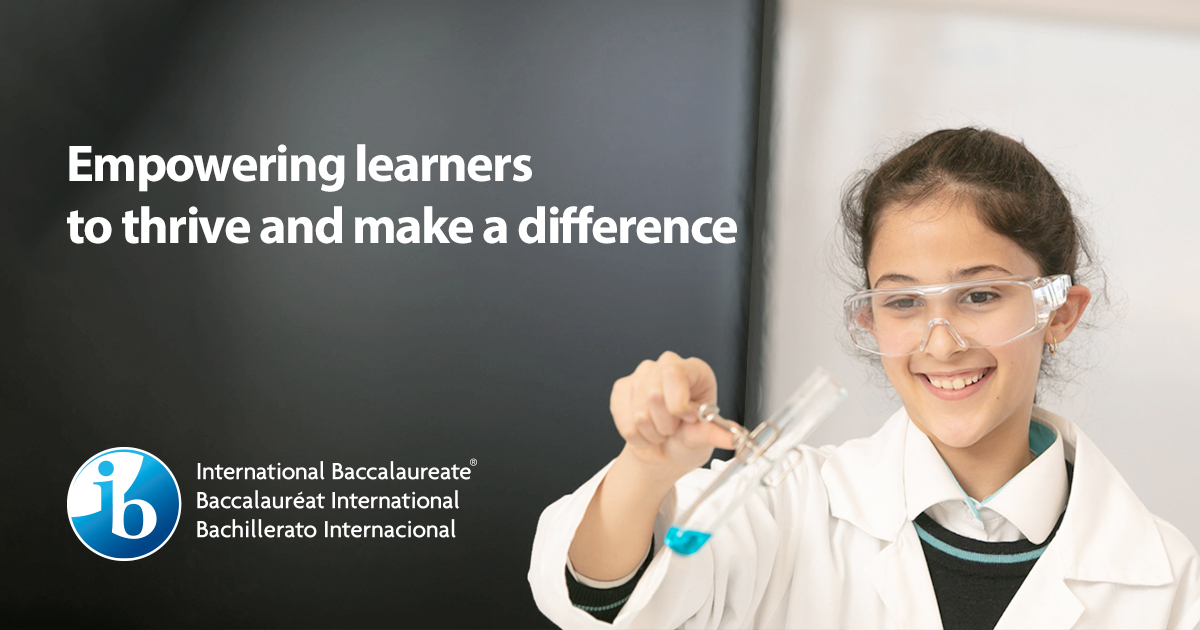 |
| og:title | International education |
| og:site_name | International Baccalaureate® |
| og:description | The International Baccalaureate® (IB) offers four high quality international education programmes to more than one million students in more than 163 countries. |
| twitter:card | summary_large_image |
| twitter:site | iborganization |
| twitter:image | https://www.ibo.org/Assets/Images/ib-og.jpg |
| twitter:creator | iborganization |
robots.txt (opens in a new tab)
HTTP 403Unknown
Sitemaps
0No sitemaps found
 Registration details RDAP / WHOIS
| Registrar | eNom, LLC |
|---|---|
| Registered | 1996-02-05 |
| Expires | 2029-02-06 |
| Domain status | client transfer prohibited |
| Nameservers | drake.ns.cloudflare.com、nancy.ns.cloudflare.com |
| DNSSEC | unsigned |
 DNS records
| Type | Name | Value | TTL | Priority |
|---|---|---|---|---|
| A | ibo.org | 104.17.174.194 | 300 | — |
| A | ibo.org | 104.17.175.194 | 300 | — |
| AAAA | ibo.org | 2606:4700::6811:aec2 | 300 | — |
| AAAA | ibo.org | 2606:4700::6811:afc2 | 300 | — |
| MX | ibo.org | eu-smtp-inbound-1.mimecast.com | 30 | 10 |
| MX | ibo.org | eu-smtp-inbound-2.mimecast.com | 30 | 10 |
| MX | ibo.org | ibo-org.mail.protection.outlook.com | 30 | 30 |
| NS | ibo.org | drake.ns.cloudflare.com | 86400 | — |
| NS | ibo.org | nancy.ns.cloudflare.com | 86400 | — |
| TXT | ibo.org | _00aqt91m2jk7c6efci5r05dxvwjmqnb | 300 | — |
| TXT | ibo.org | adobe-idp-site-verification=bb2513d0334f4e5a7bfe83e9a6fc2c65b366bd232516261820a60d5c792810f3 | 300 | — |
| TXT | ibo.org | apple-domain-verification=WG97r6Zi3neLyAAk | 300 | — |
| TXT | ibo.org | miro-verification=d2ba83a35023542f056060f8bd3589c0a82ebd55 | 300 | — |
| TXT | ibo.org | pardot136871=73232b1ca1a43df68f6ad0db71ed9d9fff534f8c33892cf7aecc8979176d75c5 | 300 | — |
| TXT | ibo.org | sending_domain136871=5ab1ca03e148ba44f711e6b843a4ff40ddbef825c4251f7f624977dd7b9f2fff | 300 | — |
| TXT | ibo.org | smartsheet-site-validation=T0-nZJowpi5KuHcfBo3cPTrBTopT4t3- | 300 | — |
| TXT | ibo.org | v=spf1 redirect=8kjg9juu._spf._d.mim.ec | 300 | — |
| TXT | ibo.org | zoho-verification=zb47592400.zmverify.zoho.com | 300 | — |
| DMARC | _dmarc.ibo.org | v=DMARC1; p=quarantine; rua=mailto:[email protected]; ruf=mailto:[email protected]; fo=1; | 300 | — |
 TLS and certificates
| Assessment | Normal configuration |
|---|---|
| Supported protocols | TLSv1.2、TLSv1.3 |
| Negotiated protocol | TLSv1.3 |
| Certificate subject | ibo.org |
| Issuer | SSL Corporation |
| Valid until | 2027-04-05T16:32 · Remaining when checked: 195 days |
| Verification details | Certificate trust: Passed · Hostname match: Passed |
 HTTP response headers
| Header | Value |
|---|---|
| content-type | text/html; charset=utf-8 |
| cache-control | private |
| server | cloudflare |
| strict-transport-security | max-age=31536000 |
| content-security-policy | frame-src 'self' ibo.eu.qualtrics.com copilotstudio.microsoft.com ibo.org www.ibo.org www-prod.ibo.org cms.ibo.org vimeo.com player.vimeo.com 11652592.fls.doubleclick.net www.facebook.com facebook.com platform.twitter.com creatorapp.zohopublic.com widget.stackla.com google.com www.google.com player.flipsnack.com www.youtube.com youtube.com youtube-nocookie.com www.youtube-nocookie.com kickstarter.com video.html join.ibo.org share.transistor.fm www.instagram.com instagram.com consentcdn.cookiebot.com td.doubleclick.net www.googletagmanager.com monday.com forms.monday.com |
| access-control-allow-origin | www.ibo.org |
| set-cookie | Redacted |
 Identified technologies
Recent Updates
- Website images
- Screenshots
- Network details
- Website Technologies
- Pages and Search Information
- HTTP Response Information
- TLS and certificates
- DNS Information
- Domain Registration
- Website profile
- Website Description
- Website Name
- Website profile
- Website Description
- Website Name
User reviews (0)