Website profiles · Technology insights · Alternatives

josephpisani.com

Artist Pisani's impossible pledge: How to Do Everything in Just One Lifetime. Existential Landscape paintings forged through Visual Archaeology of Slipping Time across 73 countries.

No paid content found
Visit website
Profile views 8 Outbound visits 1 Normal
Artist Joseph Pisani: How to Do Everything in Just One Lifetime | Existential Landscape Paintings Full homepage screenshot

At a glance

Category
Arts & Culture
Language
English
Paid-content signal
No paid content foundObserved
Registered
2005
Hosting
Hostpoint AGInferred
HTTPS certificate trusted
PassedObserved
Last updated

Website review

This review may include AI-generated content and is not individually verified. Domain, certificate and other facts come from the observed data on this page.

What is Artist Joseph Pisani known for?

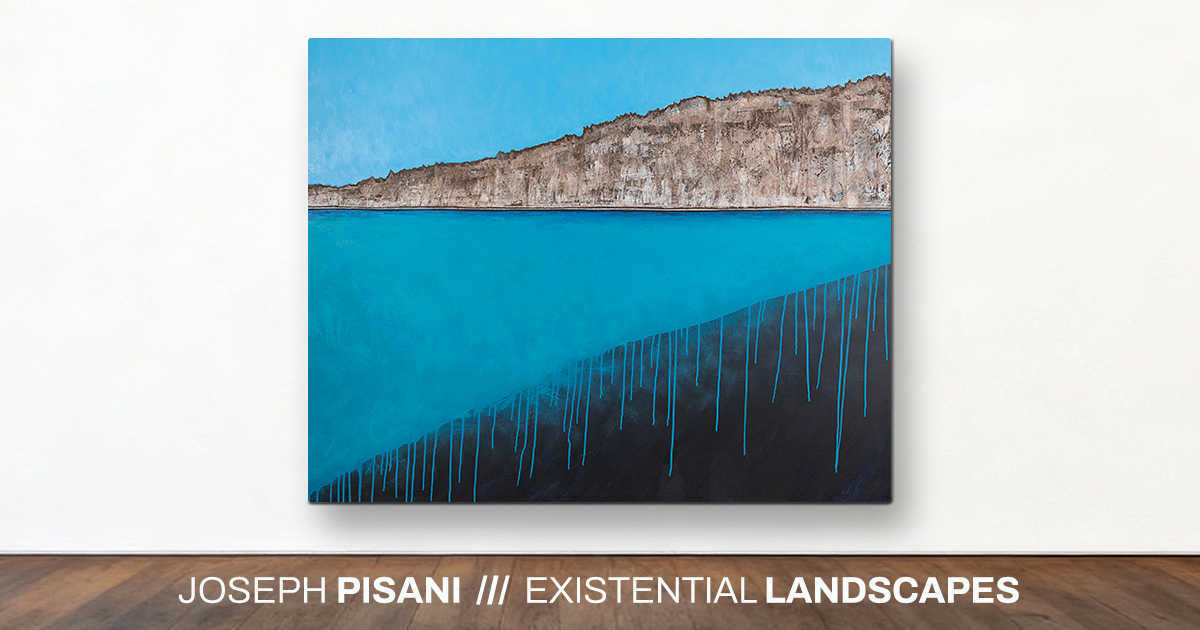
Artist Joseph Pisani is known for Existential Landscape paintings — layered, reworked canvases that treat travel as inner experience rather than scenery. He coined the genre himself, and its defining idea is that the real subject is the whole arc of an event: the anticipation of planning, the physical strain of the approach, the adrenaline of the journey, and the beauty that lingers afterward. The tally marks, etchings and worn patches on the surface are presented as what remains of that experience, so the works read more like visual journal entries than picture postcards.

He is also known for the framing story behind the work: an “Impossible Pledge” made over thirty years ago, at twenty-three, to do everything in just one lifetime. The site traces that pledge across 73 countries. His method is deliberately unstructured — travelling with a backpack, camera and journal, avoiding fixed itineraries to leave room for what he calls “Serendipitous Mischief”: detours, chance encounters and culture shock that supply the raw material for paintings. Photography functions as a second sketchbook, catching fleeting moments and subtle colour juxtapositions. His World Ledger and Artlogs document the journeys, with dated field notes such as arriving in Cairo in May 1998.

Next step: decide what you want from the site. If you are drawn to the travel-and-memory narrative, start with the World Ledger and Artlogs for context. If you care about the work itself, go straight to the Existential Landscape paintings and look at how surface texture carries the story — that is the clearest test of whether the concept holds up for you.

How can I view or buy Joseph Pisani's Existential Landscape paintings?

The site is primarily a portfolio and project archive rather than a conventional online shop. It presents Joseph Pisani's Existential Landscape paintings alongside the travel and photography work behind them, so the practical path to viewing or buying is to use the contact route on Artist Joseph Pisani and ask directly about availability, studio visits, exhibitions, or current offerings. The page evidence lists headings for the paintings, the artist, the World Ledger and Field Photography, but no gallery, checkout or pricing details, so treat any purchase as a direct enquiry rather than an instant online transaction.

A useful first message

When you make contact, be specific about what you want:

  • Whether you are interested in an available original, a commissioned piece, or just viewing the work.
  • The size or subject matter you have in mind, if you already know.
  • Whether you can visit a studio or prefer to see high-resolution images first.
  • Your location and timeline, since shipping and exhibition schedules affect what is possible.

How to decide what to ask for

If you want Ask about
To see the work in person Studio visits, current or upcoming exhibitions, and whether any local gallery represents him
To buy an existing painting Which works are available, how viewing and payment are handled, and what shipping involves
Something made for you Whether commissions are open, the process, typical lead time, and how the travel-based source material would shape it
To follow the work first The artlogs and field photography sections, which give context before you commit to a purchase

A sensible next step is to read a few of the artlogs and look through the Field Photography section, then write a short note naming one or two paintings or themes that caught your eye. That gives Pisani something concrete to respond to and makes it easier to learn what is actually for sale.

What does Pisani's Impossible Pledge 'How to Do Everything in Just One Lifetime' actually mean?

Pisani's Impossible Pledge is a working premise rather than a literal checklist. Made when he was twenty-three, it commits him to experiencing as much of the world as one life allows — and the paintings are the residue of that attempt, not souvenirs of it. On his own account, the pledge still stands after 73 countries.

The key word is impossible. He is not claiming he can actually do everything; he is using an unreachable goal to force a particular way of travelling and making work. Three ideas carry the meaning:

  • The whole event counts, not the destination. He describes the true subject of a painting as the totality of an experience: the anticipation of planning, the physical struggle of getting there, the adrenaline of the journey, and the beauty that lingers after leaving.
  • Friction is the material. He deliberately avoids the easy route and travels with little more than a backpack, a camera and a journal, refusing fixed itineraries so that unplanned detours and chance encounters — his "Serendipitous Mischief" — supply the raw content.
  • Permanence is the wager. The underlying anxiety is that experiences disappear. The layered, reworked canvases, with their tally marks and etched surfaces, are an attempt to make an experience permanent before it slips away.

So the pledge is less a bucket list than a method: maximise lived experience, then convert its friction into an object that outlasts it.

A practical way to test the idea: pick one trip you have already taken and try to describe it without naming a single landmark — only the waiting, the wrong turns, the moment something unsettled you. If that description is thin, the pledge is doing real work; if it is rich, you already travel the way Pisani paints.

For the artist's own framing and the ledger of places behind it, see Artist Joseph Pisani.

What makes a painting an Existential Landscape instead of a travel postcard?

An Existential Landscape, as Joseph Pisani defines the genre, is not a record of a place — it is a distillation of the whole event of being there. A postcard compresses a location into one flattering, instantly readable view. Pisani's paintings instead carry the full arc: the anticipation of planning, the physical effort of the approach, the adrenaline of the journey, and the residue of beauty that stays after leaving. The canvas is treated as a visual journal entry, layered and reworked, with tally marks, etchings and surface wounds left visible as evidence of time and process. The subject is impermanence — the attempt to make an experience permanent before it disappears.

The practical difference

Travel postcard Existential Landscape
Subject A place, at its most scenic The totality of the event, including friction
Surface Smooth, finished, legible Layered, reworked, marked and scarred
Time A single frozen instant Duration — before, during and after
Role of the viewer Recognise the location Read it as a journal entry about time and self

How to judge it in practice

Ask three questions of any travel-derived painting:

  1. Does it show only the destination, or also the cost of getting there? Pisani's working method — a backpack, a camera, a journal, deliberately refused itineraries, what he calls Serendipitous Mischief — means the detours and culture shock are the raw material, not interruptions to be edited out.
  2. Is the surface too clean? Visible reworking, tally marks and wounds signal accumulated time rather than a single decisive rendering.
  3. Could it hang anywhere and mean the same thing? A postcard is interchangeable with any other view of the same spot. An existential landscape should feel tied to one specific, unrepeatable encounter.

A concrete reader scenario

Suppose you are choosing a piece for a room where you will look at it daily. A postcard rewards a glance and then disappears into the wall. A painting built from layered surfaces and marks keeps offering new detail — a scratched tally, a passage of overpainting — because the information is about duration, not scenery. That is the trade-off: you give up instant legibility and gain something that reads differently over years.

Next step

Compare Pisani's field photography with the finished paintings side by side. The photographs, which he describes as a second sketchbook, show what was caught in the moment; the paintings show what survived the journey into the studio. The gap between the two is where the genre lives. See Artist Joseph Pisani.

How does Pisani use field photography and his World Ledger to create his artwork?

Pisani treats field photography and the World Ledger as two halves of one process: gathering raw experience on the move, then converting it into layered, reworked paintings. Neither is a preliminary sketch in the usual sense—both are working materials that feed the finished canvas.

Field photography as a second sketchbook. Since his first journey in 1995, Pisani has carried a camera everywhere, describing it as something fast enough to catch fleeting moments before they vanish. He uses it two ways: to record the friction or excitement of a scene, and to catch subtle juxtapositions of color or circumstance that other people walk past. That second use matters more than documentation—it means the camera is hunting for visual relationships, not landmarks.

The World Ledger as the friction record. The Ledger reflects his deliberate choice to avoid the easy route. Traveling with little more than a backpack, a camera and a journal, and refusing fixed itineraries, he leaves room for what he calls Serendipitous Mischief: unplanned detours, chance encounters and culture shock. The Ledger is where that grit and circumstance get collected, alongside the journal entries he publishes as Artlogs (for example, arriving in Cairo at 6:52 am on 13 May 1998, or two weeks in Japan).

How the two become a painting. The genre he calls Existential Landscapes takes the totality of an event as its subject—the anticipation of planning, the physical struggle of the approach, the adrenaline of the journey, and the beauty that lingers after leaving. Tally marks, etchings and wounds on the canvas surface are what remain. So photography supplies the fleeting visual trigger, the Ledger supplies the narrative and emotional arc, and the layered surface holds both.

What this means if you want to work the same way

  • Separate capture from composition. Shoot fast and without a shot list; write the itinerary, decisions and mishaps in a journal the same day.
  • Log friction, not highlights. Note what went wrong, what was uncomfortable, what you nearly skipped.
  • Treat the canvas as a record of process, not a view. Let marks accumulate rather than resolving the image early.

To see how the results look, start with the Existential Landscape Paintings section at Joseph Pisani Existential Landscapes, then read a recent Artlog against the paintings made from the same trip.

What is Serendipitous Mischief and how does it shape his travels and paintings?

Serendipitous Mischief is Joseph Pisani's term for deliberately avoiding fixed itineraries so that unplanned detours, chance encounters and culture shock become the raw material for his work. On his own account, he travels with little more than a backpack, a camera and a journal, treats foreign places as "sensory laboratories," and lets the friction of circumstance — not an efficient route — decide what happens next.

How it shapes the travels

  • Refusing a fixed plan creates room for the unexpected: wrong turns, conversations with strangers, delays, overload.
  • The goal is intensity of experience rather than coverage of sights. By his description, such moments "dismantle the self" and generate material.
  • The camera works as a "second sketchbook," catching fleeting juxtapositions of colour and circumstance that other travellers walk past.
  • The journal and field photography preserve the moment before it disappears, feeding the studio later.

How it shapes the paintings

  • The work is not a postcard of a place. Pisani calls the genre Existential Landscapes, and says the true subject is the totality of the event: the anticipation of planning, the physical struggle of the approach, the adrenaline of the journey, and the beauty that lingers afterwards.
  • Surfaces are layered and reworked, carrying tally marks, etchings and "wounds" — traces that stand in for memory and impermanence rather than description.
  • Because the source is a chain of accidents, each canvas reads as a visual journal entry: time, self and transience compressed into one surface, tied to his long-running "Impossible Pledge" to do everything in one lifetime.

A practical test for your own travel or sketch practice

Try one trip or one week with no fixed daily itinerary beyond a start and end point. Keep a pocket notebook and a camera, and log three things each day: a detour you didn't plan, a person you wouldn't have met otherwise, and one visual detail others ignored. Then make one finished piece from those notes — not a scene painting, but a distillation of the day's friction and mood. If the result feels like a record of an experience rather than a picture of a location, you are working in the same spirit.

For the artist's own framing and examples, see Artist Joseph Pisani.

Related questions

More questions →
How Joseph Pisani Turns Travels into Paintings

Joseph Pisani turns travel into paintings by treating each journey as raw material rather than a destination to be documented. Working from a backpack, a camera, and a journal, he deliberately avoids fixed itineraries so that unplanned detours and chance encounters generate what he calls the "friction and grit of circumstance." Those experiences are then distilled onto canvas as Existential Landscapes — layered, reworked surfaces that function as visual journal entries, not picture postcards.

The travel method behind the work

Pisani's process starts before any paint is mixed. According to his site, he navigates away from the easy route on purpose. The equipment list is deliberately minimal:

  • A backpack — enough to move without the weight of planning
  • A camera — which he describes as his "second sketchbook," carried to every place he has visited since his first journey in 1995
  • A journal — for the written record that accompanies the visual one

The camera matters because it is fast enough to catch fleeting moments before they vanish. Some frames capture the friction or excitement of a scene; others record subtle juxtapositions of color or circumstance that other travelers walk past without noticing.

Why he refuses fixed itineraries

This is the mechanism that separates his source material from ordinary travel photography. By refusing a set schedule, Pisani creates room for what he terms Serendipitous Mischief: unplanned detours, chance encounters, and the kind of culture shock that overloads the senses and dismantles the self.

Foreign places function as sensory laboratories. The point is not comfort or efficiency — it is the collection of friction. An unplanned detour produces a different quality of experience than a booked tour, and that difference is what eventually shows up in the work.

From experience to canvas

The paintings are not meant to be postcards of places visited. Pisani developed the genre term Existential Landscapes to describe what they actually contain. The true subject is the totality of the event:

Stage of the experience What it contributes
Planning The Vorfreude — anticipation before departure
Approach The physical struggle of getting there
The journey itself Tension and adrenaline
After departure The haunting beauty that lingers

The tally marks, etchings, and wounds on the surface of each canvas are what remain of that full arc. They are records of time, self, and impermanence rather than representations of a location.

The premise underneath it all

The travel and the painting both sit on a single unresolved premise: experiences can be made permanent before they disappear. That idea connects to the Impossible Pledge Pisani made more than thirty years ago, at age twenty-three — How to Do Everything in Just One Lifetime. Seventy-three countries later, the pledge still stands, and the work continues to be made from the friction of trying to keep it.

How to Use Ahrefs for Your First SEO Audit: A Step-by-Step Tutorial

If you're new to Ahrefs and want to run your first SEO audit, the fastest path is: open Site Explorer, enter your target URL, review the Overview for a health snapshot, then dig into Organic Keywords, Top Pages, and Site Audit to find specific problems. From there, build a short prioritized to-do list instead of trying to fix everything at once.

This tutorial walks through that workflow using a realistic starting scenario, explains what the numbers mean, and shows how to turn findings into actions.

Before You Start: Pick a Narrow Scope

A common beginner mistake is auditing an entire large website on day one. The reports become overwhelming, and you can't tell which issues matter.

Instead, choose one of these starting points:

  • A single important page (your homepage or a key product/service page)
  • A small site (under ~50 pages, e.g., a personal blog or small business site)
  • One section of a bigger site (e.g., /blog/)

For this tutorial, assume you're auditing a small business site with about 30 pages. The same steps scale up later.

You'll need an Ahrefs account to follow along. Ahrefs offers paid plans, and pricing and feature limits change over time, so check the current Pricing page for what's included in each tier before committing.

Step 1: Enter Your Target in Site Explorer

Site Explorer is Ahrefs' core tool for analyzing any website or URL.

  1. Open Site Explorer from the top navigation.
  2. In the search box, paste your domain (e.g., example.com).
  3. Choose the Exact URL or Domain mode depending on scope. For a full-site view, use Domain or Prefix; for a single page, use Exact URL.
  4. Press Enter.

You'll land on the Overview report. Don't try to absorb everything — focus on four numbers first.

Reading the Overview Snapshot

Metric What it tells you How to use it
Ahrefs Rank (AR) Relative strength of the site's backlink profile vs. others in the database Useful for comparing against competitors, not as a standalone goal
Organic traffic Estimated monthly visits from search A rough trend indicator, not exact analytics
Organic keywords Estimated number of keywords the site ranks for Shows breadth of visibility
Backlinks / Referring domains Total links and unique sites linking to you Referring domains matter more than raw backlink count

Important caveat: Ahrefs' traffic and keyword numbers are estimates based on its own data. They won't match Google Search Console or your analytics exactly. Treat them as directional, not absolute.

Step 2: See What You Already Rank For

Go to Organic Keywords in the left sidebar. This shows queries where your site appears in search results.

Sort by Traffic (descending) to see which pages bring the most estimated visitors. Then look for:

  • Keywords ranking in positions 4–15 — these are often the easiest wins. A small content or on-page improvement can push them onto page one.
  • Keywords with high volume but low position — potential opportunities if the topic is relevant.
  • Irrelevant keywords — if you rank for something off-topic, it may signal thin or mismatched content.

Write down 5–10 of the position 4–15 keywords. These become your first optimization targets.

Step 3: Find Your Best and Weakest Pages

Open Top Pages. This ranks your URLs by estimated organic traffic.

Look for two things:

  1. Your top performers — understand what topics and formats work. Can you create more content like this?
  2. Pages with traffic but poor rankings — these may need on-page fixes (title, headings, internal links).

If a page gets zero traffic and targets a topic you care about, it's a candidate for a rewrite or consolidation.

Step 4: Run a Technical Site Audit

Now move to Site Audit. This crawls your site and flags technical and on-page issues.

  1. Click Site Audit → New project.
  2. Enter your domain and set crawl settings (default is usually fine for a small site).
  3. Start the crawl and wait for it to finish.

Once complete, you'll see a Health Score and a list of issues grouped by category.

Which Issues to Fix First

Not all issues are equal. Prioritize in this order:

Priority Issue type Why it matters
1 Broken links (404s) Bad for users and crawl efficiency
2 Pages blocked from indexing They can't rank at all
3 Missing or duplicate title tags Directly affects click-through and relevance
4 Slow-loading pages Affects experience and rankings
5 Thin content Low value to users and search engines

Ignore low-impact warnings (like minor meta description length) until the big items are handled.

Step 5: Turn Findings Into a To-Do List

You now have raw data. Convert it into a short, actionable list. Example:

  1. Fix 3 broken links found in Site Audit.
  2. Rewrite title tags on 5 pages with duplicate titles.
  3. Improve 4 pages ranking in positions 6–12 by adding missing subtopics and internal links.
  4. Remove or update 2 thin pages with no traffic.

Keep the list to 5–10 items max for your first audit. Finishing a short list beats starting a long one.

Common Beginner Mistakes

  • Chasing every red flag. Site Audit flags many minor issues. Fix what affects rankings and users first.
  • Trusting estimates as exact numbers. Ahrefs data is modeled, not measured from your analytics.
  • Auditing a huge site too early. Start small to learn the interface.
  • Ignoring search intent. A page can be technically perfect but still fail if it doesn't match what searchers want.
  • Forgetting to re-crawl. After fixes, run Site Audit again to confirm improvements.

Where to Go Next

Once your first audit is done:

  • Compare with competitors using Site Explorer's Competing Domains and Content Gap reports.
  • Track keyword rankings over time with Rank Tracker.
  • Explore backlink opportunities in the Backlinks and Link Intersect reports.
  • Set up recurring Site Audit crawls so new issues surface automatically.

Your first audit isn't about perfection — it's about building a repeatable habit: enter a target, read the key reports, pick the highest-impact fixes, and act. Do that once a month and your site's health compounds.

What Is Joseph Pisani's Impossible Pledge: How to Do Everything in Just One Lifetime?

Joseph Pisani's Impossible Pledge is a personal commitment he made more than thirty years ago, at age twenty-three: to do everything in just one lifetime. It is not a checklist with a finish line but an open-ended driving premise — and according to josephpisani.com, it still stands after 73 countries. The pledge matters to anyone trying to understand his paintings, because it is the engine behind them: the travels, the friction, and the layered canvases all flow from this single unresolved ambition.

The origin and the wording

The site states the pledge plainly: thirty years ago, at twenty-three, Pisani made an Impossible Pledge — How to Do Everything in Just One Lifetime. Two things are worth noting in that phrasing:

  • "Impossible" is the point. The pledge is framed as unachievable by design, not as a goal to be completed and closed out.
  • "Just One Lifetime" sets the constraint. The ambition is bounded by a single human lifespan, which is what gives it urgency rather than mere wanderlust.

The pledge was made before the travels that define his current work. His first journey came in 1995, and the site describes the pledge as still standing 73 countries later.

How the pledge actually operates

The pledge is not a bucket list of destinations. The site describes it as a framework that shapes how Pisani travels and what he brings back:

  • He deliberately navigates away from the easy route, collecting what the site calls "the friction and grit of circumstance."
  • He travels with little more than a backpack, a camera, and a journal.
  • He refuses fixed itineraries, which creates room for what he terms Serendipitous Mischief — unplanned detours, chance encounters, and culture shock that "overloads the senses, dismantles the self, and generates the raw material his paintings are created from."

So the pledge produces a method, not just a tally. The discomfort and unpredictability are treated as the substance of the experience, not obstacles to it.

Why it matters for the paintings

Pisani developed the genre term Existential Landscapes to describe his work, and the pledge is what feeds it. The site says the true subject of each painting is "the totality of the event": the Vorfreude of planning, the physical struggle of the approach, the tension and adrenaline of the journey, and the beauty that lingers after departure.

The visible marks on each canvas — tally marks, etchings, and what the site calls "wounds" on the surface — are described as what remains of those experiences. The paintings are explicitly not meant to be postcards of places visited, but distillations of the full friction and wonder of each one, reflecting time, self, and impermanence.

The record so far

Element Detail from the site
Age when pledged 23
Time elapsed More than thirty years
Countries traveled 73
Status Pledge still stands
First journey 1995
Ongoing documentation Field photography since 1995, plus "Artlogs" dated to specific moments (e.g., Cairo, 6:52 AM, 13 May 1998)

The site also maintains a "World Ledger" framing for the travels and a running set of Artlogs — dated field entries that read as journal fragments rather than polished travel writing.

What the pledge is not

It is not a claim of completion, and the site does not present it as one. It is also not a commercial program, membership, or itinerary you can join — the page evidence describes it purely as Pisani's own thirty-year commitment and the creative frame around his painting and travel practice. If you want to follow the record as it accumulates, the Artlogs and field photography sections on josephpisani.com are where the pledge shows up in dated, specific form.

What Are Field Photography and Artlogs on Joseph Pisani's Website?

Field Photography and Artlogs are the two raw-documentation layers of josephpisani.com. Field Photography is the visual record: since his first journey in 1995, Pisani has carried a camera to every place he visits, calling it his "second sketchbook" — a tool quick enough to catch fleeting moments before they vanish. Artlogs are the written counterpart: dated, place-stamped travel entries such as "6:52 AM Cairo Standard Time" and "Just Two Weeks to See Japan." Together they form the source material his Existential Landscape paintings are built from, rather than finished works in their own right.

Field Photography: The Second Sketchbook

The site describes the camera as something Pisani has carried on every trip since 1995, used less for composed shots than for catching what disappears quickly. Two kinds of images come out of it:

  • Friction and excitement — scenes that carry the physical or emotional charge of being somewhere unfamiliar.
  • Quiet juxtapositions — subtle collisions of color or circumstance that other travelers walk past without noticing.

The framing matters: this is a sketchbook, not a portfolio. Images exist to hold a moment long enough to work from later, which is why the site groups them under "Field Photography" rather than presenting them as standalone art.

Artlogs: Travel Writing Stamped with Time and Place

Artlogs are short first-person entries anchored to a specific moment and location. Two examples appear on the site:

  • "6:52 AM Cairo Standard Time — My Self-prescribed Pilgrimage to Giza" — opens with the exact arrival time in Cairo, 13 May 1998, and frames the trip as self-imposed rather than assigned.
  • "Just Two Weeks to See Japan — Tokyo and Beyond" — signals the compressed timeframe and the resulting pressure to see as much as possible.

The precision of the timestamps is the point. An Artlog records the conditions of an encounter — the hour, the fatigue, the self-imposed assignment — not just the destination.

How Both Feed the Paintings

Pisani's stated premise is that experiences can be made permanent before they disappear. Field Photography and Artlogs are the two capture mechanisms for that project, and the paintings are the distillation:

Layer What it holds Role
Field Photography Fleeting visual moments, color and circumstance Raw visual reference
Artlogs Dated, placed written recollection Raw narrative reference
Existential Landscape paintings Layered, reworked surfaces with tally marks, etchings, wounds Final distillation of the full event

The site is explicit that the paintings are not postcards of places visited. They aim at the totality of an event — the anticipation of planning, the physical struggle of the approach, the adrenaline of the journey, and the beauty that lingers after leaving. Field Photography and Artlogs preserve the earlier stages of that arc so the painting can carry all of it.

What This Means If You're Exploring the Site

If you want to understand a specific painting, the Artlogs and Field Photography are the closest thing to its provenance — the dated moment and the visual fragment behind it. If you're interested in the travel practice itself, the Artlogs read as a journal of a pledge made at twenty-three to "do everything in just one lifetime," now spanning 73 countries. Either way, treat both sections as working archives rather than finished presentations.

What Is josephpisani.com? Joseph Pisani's Existential Landscape Archive

josephpisani.com is the personal art and project site of artist Joseph Pisani, built around one long-running premise: that experiences can be made permanent before they disappear. It is not a shop, gallery listing service, or news site. It functions as a working archive and narrative space for his painting genre, Existential Landscapes, along with the travel practice that feeds it. If you want to understand the paintings, the travel method behind them, or the pledge that organizes the whole project, this is the source.

The organizing idea: an Impossible Pledge

More than thirty years ago, at twenty-three, Pisani made what the site calls an Impossible Pledge: How to Do Everything in Just One Lifetime. The site reports 73 countries visited since then, and states the pledge still stands.

That framing matters for how you read everything else on the site. The paintings are not souvenirs of places. According to the site, they are distillations of the full friction and wonder of each experience, reflecting time, self, and impermanence.

What the paintings are

Pisani developed the term Existential Landscapes to describe his own work. The site is explicit that the true subject is the totality of an event rather than the view:

  • the Vorfreude of planning
  • the physical struggle of the approach
  • the tension and adrenaline of the journey
  • the lingering beauty after departure

The surfaces carry tally marks, etchings, and what the site describes as "wounds" — layered, reworked marks that remain after the experience is over. The site frames these canvases as visual journal entries rather than picture postcards.

The travel method behind the work

Pisani's World Ledger

The site describes a deliberate avoidance of the easy route. Working with little more than a backpack, a camera, and a journal, Pisani treats foreign places as sensory laboratories. Refusing fixed itineraries is the point: it creates room for what he calls Serendipitous Mischief — unplanned detours, chance encounters, and culture shock that overload the senses and generate the raw material for the paintings.

Field Photography

Since his first journey in 1995, Pisani has carried a camera everywhere, describing it as a second sketchbook — fast enough to catch fleeting moments. Some photographs record friction or excitement; others capture subtle juxtapositions of color or circumstance that other passersby missed.

Artlogs

The site also publishes dated field notes. One example is an entry from 6:52 AM Cairo Standard Time, 13 May 1998, about a self-prescribed pilgrimage to Giza. Another covers two weeks in Japan, Tokyo and beyond. These read as raw source material rather than polished travel writing.

How to use the site

If you want to… Go to
Understand the painting genre and its intent Existential Landscape Paintings
Learn who the artist is and the origin of the pledge About Artist Joseph Pisani
See how the travel practice works Pisani's World Ledger
Look at photographic source material Field Photography
Read dated, first-person field notes Recent Artlogs

What the site is not

The available site material shows no pricing, no store links, and no payment platforms. Nothing on the page indicates that works are sold directly through the site, and nothing indicates they are not — that information simply isn't present. Treat it as a documentation and narrative project first. If you are looking for purchase terms, shipping, or commission details, the site as described does not provide them.

Who it's for

This site is useful if you are interested in:

  • contemporary painting that treats travel as method rather than subject matter
  • long-duration personal projects organized around a single stated commitment
  • the relationship between photography, journaling, and finished canvas work
  • travel writing that admits friction, disorientation, and culture shock instead of smoothing them out

If you want a conventional artist portfolio with a price list and exhibition calendar, this is a different kind of site — one built around an unresolved premise rather than a catalog.

Website Overview

An established domain and managed infrastructure suggest continuity of operations and may support dependable delivery, although neither guarantees service quality. Several search or sharing settings need attention. Together they may make snippets, preview images or preferred URLs less consistent across platforms.

Domain and Registration

Registered in 2005, this domain has about 21 years of history. That suggests continuity, although ownership and purpose may have changed. The domain uses the common .com extension, which is not an independent safety signal.

DNS and Email

Nameservers are provided by hostpoint.ch, indicating managed DNS hosting. MX records point to the hostpoint.ch email service. No CNAME was found; the observed records resolve directly to addresses. SPF and DMARC are configured. DKIM status is unknown. TXT records include verification markers for Google. Such markers may also remain after a service stops being used.

TLS and Certificates

The certificate uses an RSA 2048-bit public key, offering broad client compatibility. The server supplied a complete certificate chain. No organization name is present in the certificate; the available fields are consistent with domain validation. The certificate was issued by Let's Encrypt, commonly associated with automated certificate services. The certificate's total validity is about 89 days, consistent with a short renewal cycle.

HTTP and Browser Security

The response lacks these common security headers: Permissions-Policy. No X-Powered-By header was found, reducing one common source of backend fingerprinting information. No obvious internal addresses or debug information were found in the headers. The Server header identifies Apache without an exact version. No explicit CDN or WAF marker was found in the response headers.

Technology Stack Analysis

The public page identifies WordPress, Apache without precise versions, leaving fewer clues for version-specific scanning.

Search and Social Sharing

The title has 97 characters and may be truncated in search results. The meta description has 181 characters and may be shortened in search results. Twitter Card metadata is configured. JSON-LD includes Organization data, helping describe the organization as an entity. The observed directives allow indexing and link following.

Hosting and Email

DNShostpoint.ch
HostingHostpoint AG
Emailhostpoint.ch
Approximate IP geolocation (inferred; a CDN or proxy may differ from the origin server) Switzerland flagSwitzerland Inferred 217.26.53.37

Registration details

RDAP / WHOIS

RegistrarAscio Technologies, Inc. Danmark - Filial af Ascio technologies, Inc. USA
Registered2005-04-27
Expires2027-04-27
Domain statusactive
Nameserversns.hostpoint.ch、ns2.hostpoint.ch、ns3.hostpoint.ch
DNSSECunsigned

DNS records

DNS

TypeNameValueTTLPriority
Ajosephpisani.com217.26.53.37300—
AAAAjosephpisani.com2a00:d70:0:b:2002:0:d91a:3525300—
MXjosephpisani.commx1.mail.hostpoint.ch360010
MXjosephpisani.commx2.mail.hostpoint.ch360010
NSjosephpisani.comns.hostpoint.ch3600—
NSjosephpisani.comns2.hostpoint.ch3600—
NSjosephpisani.comns3.hostpoint.ch3600—
TXTjosephpisani.comgoogle-site-verification=_hWOnOTbAomRrd_czyISeKSwxU47TyucgvYnW_bJRpc300—
TXTjosephpisani.comv=spf1 include:sendersrv.com include:spf.mail.hostpoint.ch ~all300—
DMARC_dmarc.josephpisani.comv=DMARC1; p=none;300—

TLS and certificates

TLS / SSL

AssessmentNormal configuration
Supported protocolsTLSv1.2、TLSv1.3
Negotiated protocolTLSv1.3
Certificate subjectjosephpisani.com
IssuerLet's Encrypt
Valid until2026-11-28T09:38 · Remaining when checked: 66 days
Verification detailsCertificate trust: Passed · Hostname match: Passed

HTTP response headers

HTTP

HeaderValue
content-typetext/html; charset=UTF-8
cache-controlmax-age=43200, must-revalidate
serverApache
strict-transport-securitymax-age=63072000; includeSubDomains; preload
content-security-policyupgrade-insecure-requests
x-frame-optionsSAMEORIGIN
x-content-type-optionsnosniff
referrer-policysame-origin

Identified technologies

WordPressApache

Pages, Search and Sharing

Meta descriptionArtist Pisani's impossible pledge: How to Do Everything in Just One Lifetime. Existential Landscape paintings forged through Visual Archaeology of Slipping Time across 73 countries.
Canonical URLhttps://josephpisani.com/
LanguageEnglish (default)
Twitter Cardsummary_large_image
gptbot 1 allowed · 0 disallowed
  • Allow/
oai-searchbot 1 allowed · 0 disallowed
  • Allow/
claudebot 1 allowed · 0 disallowed
  • Allow/
google-extended 1 allowed · 0 disallowed
  • Allow/
deepseekbot 1 allowed · 0 disallowed
  • Allow/
qwenbot 1 allowed · 0 disallowed
  • Allow/
moonshotbot 1 allowed · 0 disallowed
  • Allow/
perplexitybot 1 allowed · 0 disallowed
  • Allow/
applebot-extended 1 allowed · 0 disallowed
  • Allow/
ccbot 1 allowed · 0 disallowed
  • Allow/
All bots 1 allowed · 10 disallowed
  • Allow/llms-full.md
  • Disallow/404/
  • Disallow/lang/
  • Disallow/artlog/wp-admin/
  • Disallow/artlog/wp-content/
  • Disallow/artlog/wp-login.php
  • Disallow/artlog/wp-*
  • Disallow/artlog/author/
  • Disallow/artlog/*?replytocom
  • Disallow/*?comments=all
  • Disallow/*?s=

User reviews (0)

  • No reviews yet.