Website profiles · Technology insights · Alternatives

marsal.umich.edu

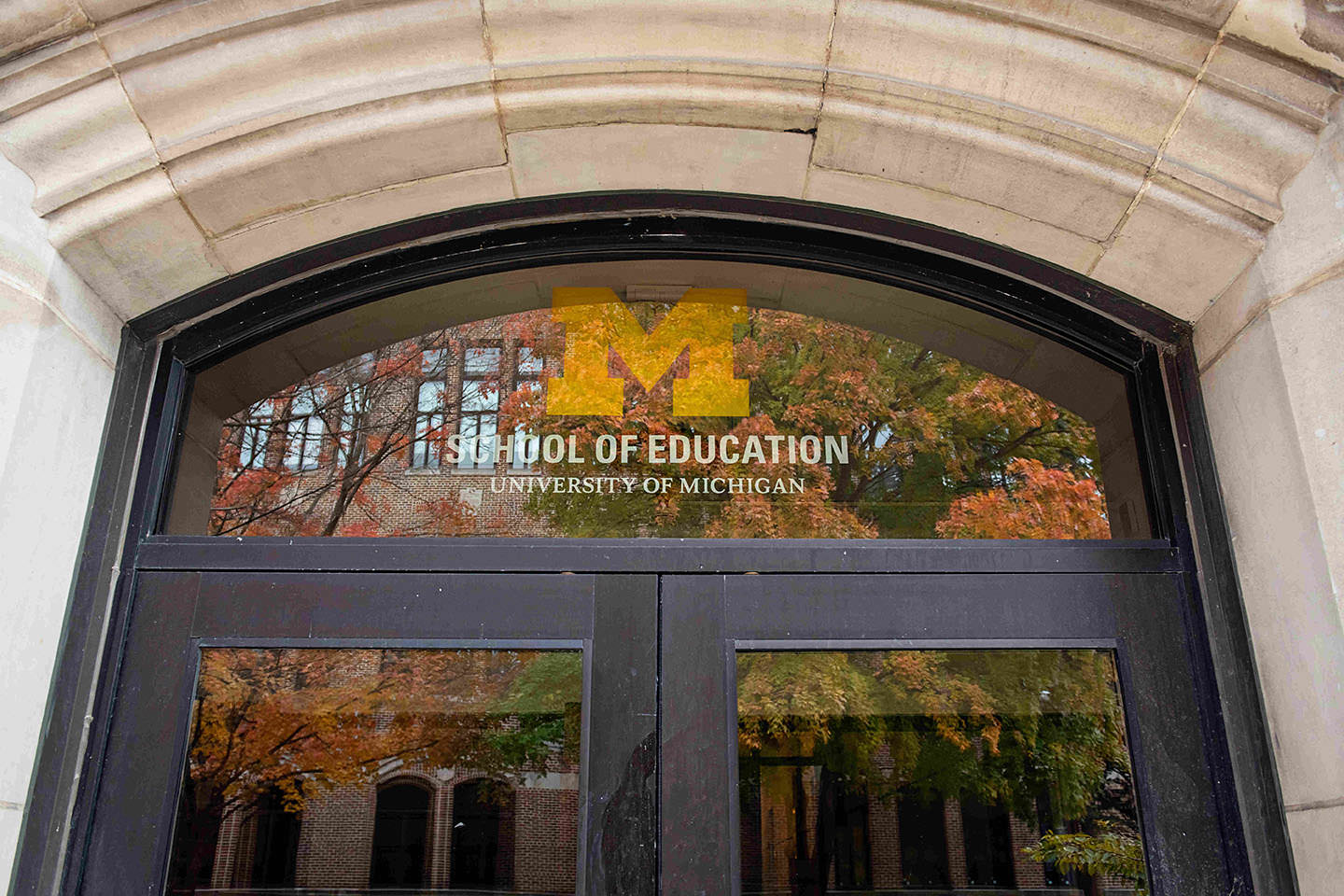
Our mission is to generate, study, and teach strategies, practices, and tools for addressing educational problems and to prepare practitioners, policy-makers, and researchers who can develop equitable and just educational opportunities.

No paid content found
Visit website
Profile views 2 Outbound visits 1 Normal
Home | University of Michigan Marsal Family School of Education Full homepage screenshot

At a glance

Category
Education & Learning
Language
English
Paid-content signal
No paid content foundObserved
Registered
Unknown
Hosting
FastlyInferred
HTTPS certificate trusted
PassedObserved
Last updated

Website review

This review may include AI-generated content and is not individually verified. Domain, certificate and other facts come from the observed data on this page.

What is the University of Michigan Marsal Family School of Education?

The University of Michigan Marsal Family School of Education is the education school of the University of Michigan, based in Ann Arbor. Its stated mission is to generate, study and teach strategies, practices and tools for addressing educational problems, and to prepare practitioners, policy-makers and researchers who can develop equitable and just educational opportunities. In practical terms, it is a graduate-focused professional and research school for people who want to work in teaching, school leadership, policy or education research.

Who it is for

  • Prospective teachers and certification candidates: people seeking teacher preparation and state certification, typically at the graduate level.
  • Working educators: teachers and administrators looking to move into leadership, curriculum or specialist roles.
  • Policy and research students: people aiming at education policy, program evaluation or academic research careers.
  • Researchers and partners: faculty, school districts and community organizations collaborating on applied education research.

What to expect

The school's identity centers on connecting research with practice rather than treating them as separate tracks. That means coursework and fieldwork tend to be framed around real problems in schools—equity of access, instructional quality, and how policy plays out in classrooms. Its location in a major public research university gives students access to cross-disciplinary resources, while its ties to Michigan schools support placements and practice-based projects.

How to judge fit

If your goal is… Consider this school when… Look elsewhere when…
Becoming a certified teacher You want preparation grounded in research and early classroom experience You need a fast, low-cost route with minimal academic coursework
School leadership or specialist roles You already teach and want a research-informed credential You want purely online, self-paced professional development
Education policy or research You want to study alongside active researchers and use real data You want a practice-only program without a research component
A PhD or academic career Faculty mentorship and research apprenticeships matter most to you You prefer industry-oriented training

Next step

Start with the program pages for teacher certification, master's degrees and doctoral study, and compare admission prerequisites, fieldwork requirements and typical time to completion against your own timeline and budget. If you are deciding between schools, ask each program how much supervised classroom time is built in and where graduates typically work—those two answers usually reveal more than marketing materials.

For official program details, see University of Michigan Marsal Family School of Education. You can also compare broader university resources at University of Michigan.

What teacher certification programs does the Marsal Family School of Education offer?

The Marsal Family School of Education at the University of Michigan prepares teachers through its undergraduate and graduate teacher education programs, which combine coursework in teaching and learning with clinical field placements in partner schools. The school's stated mission emphasizes preparing practitioners who can develop equitable and just educational opportunities, so certification pathways are built around practice in real classrooms rather than coursework alone. Details of specific certification routes, grade bands and endorsement areas are best confirmed directly with the school, since program structures change.

How to evaluate the fit

Prospective applicants should compare programs on three practical points:

Question Why it matters
Which grade level and subject do you want to teach? Certification is tied to specific grade bands and endorsements; a mismatch means extra coursework later.
How much time is spent in classrooms before student teaching? Earlier, longer field placements tend to make the transition to a first job smoother.
Does the program lead to Michigan certification, and how does that transfer? Out-of-state moves may require additional tests or paperwork; check reciprocity early.

A concrete next step

If you are deciding between an undergraduate route straight into teaching and a graduate route after a bachelor's in another field, start by confirming which one the school offers for your intended subject and grade level, then ask about the field-placement timeline and the testing requirements for Michigan certification. For comparison, Michigan State's College of Education Michigan State University College of Education and the University of Michigan's own program pages are useful references when weighing in-state options.

How does the school prepare researchers and policy-makers to address educational inequity?

The Marsal Family School of Education frames its mission around generating, studying and teaching strategies, practices and tools for addressing educational problems, and around preparing practitioners, policy-makers and researchers who can develop equitable and just educational opportunities. That mission statement is the clearest signal of how the school approaches inequity: it treats research, policy and practice as connected rather than separate tracks.

What that means in practice

  • Researchers are trained to study educational problems directly—generating and testing strategies and tools—rather than only describing inequity from a distance.
  • Policy-makers are prepared to translate findings into decisions, with equity and justice as the stated goal rather than an afterthought.
  • Practitioners sit in the same mission, which suggests coursework and research that speak to classrooms and schools, not just journals.

A comparison of the three audiences

Audience Emphasis in the mission Typical use of the training
Researchers Generate and study strategies and tools Designing studies on inequitable outcomes, evaluating interventions
Policy-makers Apply evidence to decisions Shaping district, state or institutional policy with equity aims
Practitioners Teach and use practices Adapting tools and strategies in real educational settings

A useful next step

If you are choosing a program, look past the mission language and ask concrete questions: which faculty projects address inequity, what data or partner schools students work with, and whether policy students take research methods courses. A quick way to test fit is to read the school's site at University of Michigan Marsal Family School of Education and note whether the research topics and program structures match the inequity problem you care about—for example, teacher preparation, funding, or access. Compare that against a broader reference like U.S. Department of Education for the policy landscape you would be working in.

The trade-off to weigh: a school organized around a single equity mission gives coherent training, but you should confirm that your specific interest—say, early literacy or higher-education access—has actual faculty depth behind it.

What graduate degree programs in education are available at the University of Michigan?

The University of Michigan's Marsal Family School of Education offers graduate study in education across master's, doctoral and specialist preparation, with an emphasis on teaching practice, policy and research. The school's stated mission is to prepare practitioners, policy-makers and researchers who can expand equitable and just educational opportunities — a useful lens for judging whether a program matches your goals.

What to look for at the graduate level

  • Master's programs for current or aspiring teachers, school leaders and policy analysts, including routes tied to teacher certification.
  • Doctoral study (PhD) for people aiming at research careers, faculty positions or deep policy work.
  • Specialist and certificate options for educators extending an existing credential rather than starting a new degree.

Program names, credit requirements and application deadlines change, so confirm them on the school's own pages: U-M Marsal Family School of Education.

A practical way to choose

Start from the job you want in five years. A classroom teacher seeking certification should compare master's routes with clinical placements; someone targeting district or state policy should look at faculty research areas and internship connections; a future researcher should check doctoral funding, mentoring and publication records. Cross-check against the broader university's graduate catalog at University of Michigan and, for financial aid questions, the federal student aid site Federal Student Aid.

Before applying, email one or two faculty whose work matches your interests and ask what recent graduates now do — that answer usually tells you more than the program description.

How can prospective students apply for admission to the Marsal Family School of Education?

Prospective students apply through the University of Michigan's central undergraduate admissions process if they are seeking a bachelor's degree, or through the school's graduate programs for master's, doctoral or certification routes. The Marsal Family School of Education prepares teachers, researchers and policy-makers, so the right application path depends on which credential you want.

What to check before applying

  • Undergraduate study: Apply to the University of Michigan as a whole; education-specific requirements and timing are set by the school.
  • Graduate study: Each program (for example, teacher certification, master's or doctoral study) typically has its own application, deadlines and required materials such as transcripts, essays and letters of recommendation.
  • Teacher certification: Confirm whether certification is offered as part of a graduate program or a separate pathway, since this affects which application you complete.

A practical next step

Visit the Marsal Family School of Education and open the admissions section for your intended program to find the exact application, deadline and document checklist. If you are undecided between teaching and research routes, compare the program pages side by side before starting an application, because switching later can mean a new application and different deadlines.

What research centers or initiatives at the school focus on equitable educational opportunities?

The Marsal Family School of Education frames equitable and just educational opportunity as a core mission: generating, studying and teaching strategies, practices and tools for addressing educational problems, and preparing practitioners, policy-makers and researchers who can act on them. That mission statement is the clearest signal of where its research centers and initiatives concentrate, though the school's own pages are the place to confirm which specific centers are currently active and what each one studies.

How to find the right center or initiative

  • Start from the mission language. Look for units described in terms of "equitable and just educational opportunities," since that phrasing tracks the school's stated focus rather than generic education research.
  • Match the unit to your question. A center focused on teaching and learning will speak to classroom practice and teacher preparation; a policy-oriented initiative will speak to governance, funding and access. Pick the one whose stated outputs (reports, tools, practitioner programs) match what you need.
  • Check for practitioner-facing work. The mission explicitly names practitioners and policy-makers alongside researchers, so initiatives that run certification, professional learning or partnerships with schools are likely to be part of the equitable-opportunities portfolio.

A concrete reader scenario

Suppose you lead a district equity office and want a research partner for a study on access to advanced coursework. You would look for a school unit whose work pairs practitioner preparation with research on opportunity gaps, then read its project pages for current studies, faculty leads and any published tools you could adapt. If instead you are a prospective doctoral student, the same units matter for a different reason: their faculty and funded projects indicate where assistantships and dissertation supervision are likely.

Practical next step

Browse the school's research and centers section directly at University of Michigan Marsal Family School of Education and note which units name equity or justice in their own descriptions. Then compare two or three candidates on three criteria: the problems they study, the audiences they serve (practitioners, policy-makers, researchers), and the outputs they produce. That comparison will tell you more about fit than any single mission statement.

Related questions

More questions →
How to Use College Scorecard to Search and Compare Colleges

College Scorecard is the U.S. Department of Education's free tool for comparing colleges on costs, graduation rates, student debt, and post-college earnings. Use it when you're building a college list, checking whether a school's price or outcomes match its reputation, or comparing majors across schools. Everything below runs on the site's own search, filter, compare, and profile features — no account is mentioned in the site materials, and no pricing signals appear, so treat access as open but don't assume any paid tier exists.

Start with a college search

The homepage centers on "Search and compare colleges." You have two entry points:

  • Search Colleges — type a college name, or use the quick-search options Near Me or All Colleges.
  • Search Fields of Study — requires a degree type selection, then lets you type a major or program.

If you already have a school in mind, the name search is fastest. If you're still deciding where to apply, start with Near Me to see what's within commuting distance, or All Colleges to browse the full set.

Narrow results with filters

Once you're in the search, the site offers three filters:

Filter What it does When to use it
Location Limits results by geography You have a distance limit or a home state preference
Annual cost Filters by yearly cost You have a hard budget ceiling
Degree type Filters by the credential offered You need a specific level (e.g., associate vs. bachelor's)

Apply filters before comparing. A shortlist of 10 schools that all fit your cost and location constraints is far more useful than 10 schools you'd never attend.

Compare up to 10 colleges side by side

The Compare Colleges feature lets you put up to 10 colleges next to each other. This is the core of the tool — it's built for "compare the information that matters most to you" rather than reading profiles one at a time.

A practical comparison set uses the same dimensions across every school:

  • Annual cost
  • Student debt
  • Graduation rates
  • Post-college earnings
  • Admissions test scores and acceptance rates
  • Student body diversity

Keep the comparison honest by checking the same field for each school. If one college's earnings figure covers a different cohort or major mix than another's, the numbers aren't directly comparable — the site presents Department of Education data, so the underlying definitions are consistent, but your reading of them should be too.

Look up a field of study, not just a school

The Search Fields of Study tool covers majors and programs offered at colleges and universities, and it reports salaries and debt of graduates for those fields. This matters because a school's overall earnings number can hide wide variation between majors.

Use it when:

  • You've picked a major and want to see which schools produce the best outcomes in it.
  • You're comparing two majors at the same school to see how debt and salary differ.
  • You want a reality check on a program before committing.

Remember that degree type is a required input here — you can't search fields of study without selecting one.

Read a college profile for the full picture

Each college has a profile page with U.S. Department of Education data on:

  • Costs
  • Student debt
  • Graduation rates
  • Admissions test scores and acceptance rates
  • Student body diversity
  • Post-college earnings

Use profiles after you've narrowed your list. They give the context that a side-by-side table can't — for example, an acceptance rate that tells you whether a school is a realistic target, or a diversity breakdown that matters to you personally.

Check alternate pathways and financial aid

College Scorecard also points to routes outside a traditional degree:

  • apprenticeship.gov — search apprenticeship jobs and programs
  • MyNextMove.org — career exploration and job analysis
  • TrainingProviderResults.gov — compare training programs by completion rates, employment rates, and more
  • CareerOneStop.org — career exploration, training, and jobs
  • Occupational Outlook Handbook (OOH) — detailed profiles of over 300 occupations

For funding, the site links to StudentAid.gov for financial aid types and to the FAFSA® application, which you must complete to receive federal aid. A Federal Student Aid aid-estimator is available to see how much aid may be available to you. Veterans can use the GI Bill® comparison tool to compare education programs and benefits by school.

A workable sequence

  1. Search by name, Near Me, or All Colleges.
  2. Filter by location, annual cost, and degree type.
  3. Add up to 10 schools to the comparison view.
  4. Run a Fields of Study search for your intended major to check salaries and debt.
  5. Open individual profiles for admissions and diversity details.
  6. If a four-year degree isn't the right fit, check the apprenticeship and training links.
  7. Start the FAFSA and use the aid estimator to see what you'd actually pay.

The main pitfall is comparing schools on different criteria — pick your dimensions first, then apply them uniformly across the comparison set.

What Does Teaching and Learning Mean in Education?

Teaching and learning refers to two connected processes: how educators design, deliver, and adjust instruction, and how students make sense of, practice, and apply knowledge. The term is used to describe both a field of study and a way of looking at classroom work—one that treats instruction and student understanding as interdependent rather than separate. It is most useful when you are planning instruction, evaluating whether a lesson worked, or studying how school conditions shape student outcomes.

The Two Processes and How They Connect

Teaching is the deliberate side of the pair: choosing goals, sequencing content, selecting strategies, building a learning environment, and giving feedback. Learning is the student side: building understanding, practicing skills, connecting new ideas to prior knowledge, and transferring what was learned to new situations.

The connection matters more than either half. A well-designed lesson that students do not understand is a teaching act without learning. Student effort without clear instruction or feedback is learning left to chance. Research and practice in this area therefore ask questions such as:

  • Which instructional strategies produce durable understanding rather than short-term recall?
  • How do classroom climate, expectations, and relationships affect student engagement?
  • How should assessment and feedback be used to guide the next step in instruction?
  • Why do similar lessons produce different results for different groups of students?

Common Misunderstandings

A frequent mistake is equating teaching with lecturing. Lecture is one strategy among many; teaching also includes discussion, modeling, guided practice, group work, and structured feedback. Another is equating learning with memorization or test scores. Scores are evidence of learning, not the whole of it—students can score well through short-term recall and still fail to apply the idea later.

A third misunderstanding treats the two as a one-way street: the teacher acts, the student receives. In practice, student responses—questions, errors, confusion, partial answers—are the information teachers use to adjust instruction. That feedback loop is the core of the concept.

Where the Concept Applies

Teaching and learning connects directly to several areas of education work:

Area What the concept asks you to examine
Teacher preparation Whether future teachers can plan, observe, and revise instruction based on evidence of student learning
Curriculum design Whether content, activities, and assessments align with what students are meant to understand
Assessment and feedback Whether evaluation informs the next instructional move rather than only ranking students
Educational equity Whether all students have access to strong instruction and the support to succeed in it

The University of Michigan Marsal Family School of Education frames its mission around generating, studying, and teaching strategies, practices, and tools for addressing educational problems, and preparing practitioners, policy-makers, and researchers to develop equitable and just educational opportunities. That framing reflects how teaching and learning is treated as a field: not just classroom technique, but the study of how instruction and student opportunity interact.

How to Apply It

When you observe a classroom, design a lesson, or evaluate instruction, look for the interaction rather than only the activity:

  1. State the intended learning. What should students understand or be able to do by the end, beyond recalling facts?
  2. Check what students actually did. Look at their work, questions, and errors—not just whether they were busy or attentive.
  3. Adjust based on that evidence. Decide whether to reteach, practice more, or move on, and note why.
  4. Revisit later. Ask whether students can use the idea in a new context, which is the clearest sign that learning lasted.

A concrete example: a teacher explains a concept, assigns practice, and finds that most students can repeat the procedure but cannot explain why it works. The teaching was clear, but the learning was procedural. The next step is not more repetition but a task that requires explanation or application, followed by feedback on that reasoning.

Used this way, "teaching and learning" is less a slogan than a habit of checking whether instruction produced understanding—and changing the instruction when it did not.

What Is Teacher Certification and How Does It Differ From a Degree or License?

Teacher certification is the credential a state education agency issues to confirm that a person has met its requirements to teach in public schools. It is distinct from a degree (an academic award from a college or university) and from licensure (the legal permission to practice, which in teaching is usually the same state-issued credential). In practice, "certification" and "licensure" are often used interchangeably for public-school teaching, while a degree is one input that may—or may not—satisfy a state's certification requirements. The right path depends on the state where you plan to teach, the grade level and subject you want, and whether you already hold a degree.

The three terms, separated

Term What it is Who grants it What it lets you do
Degree An academic program award (e.g., bachelor's or master's in education or a subject) A college or university Demonstrates academic preparation; may satisfy part of a certification requirement
Certification A state credential confirming you met teaching standards State education agency (or its approved body) Qualifies you to be hired for certified teaching roles in that state's public schools
Licensure Legal authorization to practice a regulated profession State For teaching, typically the same state credential as certification

The key point: a degree is earned from an institution, but certification is granted by the state. A degree alone does not automatically make you certified, and some certification routes do not require an education degree.

Why the distinction matters

States set their own requirements, so a credential from one state does not automatically transfer to another. When people ask whether they "need a degree or certification," the practical answer is usually: you need whatever the target state requires for the specific role, and a degree is often one component of that. Checking the state's official requirements is the only reliable way to know.

Common certification pathways

Traditional programs

These are typically part of or paired with a degree program at a college or university. They usually combine coursework in teaching and learning with supervised classroom experience (student teaching or practicum). This is the most common route for people preparing to teach before or during their undergraduate or graduate studies.

Alternative or post-baccalaureate routes

These are designed for people who already hold a bachelor's degree in another field and want to become certified. They may involve a preparation program, coursework, and classroom experience, and are often completed while working under a provisional or emergency credential, depending on state rules.

Reciprocity and interstate transfer

Many states have agreements or processes to recognize out-of-state credentials, but the details vary. A certificate valid in one state may require additional steps—such as coursework, testing, or experience—in another.

What to check before choosing a program

  • State requirements: Confirm the specific certificate, grade band, and subject area your target state requires, using the state education agency's official guidance.
  • Certification level and subject: Elementary, secondary, and specialty areas (e.g., special education, English learners) often have different requirements.
  • Accreditation and program approval: Verify that the preparation program is approved by the state (or otherwise recognized) for the certificate you want.
  • Field experience: Check how and when supervised classroom practice is arranged, since this is often a required component.
  • Testing: Many states require content or pedagogy exams; confirm which tests apply to your target certificate.
  • Transferability: If you may move states, ask how the program's credential is recognized elsewhere.

A concrete example

Suppose you have a bachelor's degree in biology and want to teach high school science. You would check your target state's requirements for a secondary science certificate. If the state offers an alternative route, you might enroll in a preparation program, complete required coursework and classroom experience, and pass the relevant exams. Your biology degree supports your subject knowledge, but the state certificate is what authorizes you to teach in a public school. If you later move, you would check that state's reciprocity rules rather than assume your certificate carries over unchanged.

Bottom line

Teacher certification is a state-issued credential for public-school teaching; a degree is an academic award that may help you meet certification requirements but is not the same thing; and licensure, for teaching, generally refers to the same state authorization. Because requirements differ by state, confirm the exact certificate, tests, program approval, and field-experience rules with your target state's education agency before committing to a pathway.

Website Overview

The available information shows a mix of normal operation and configuration gaps. Depending on how the website is used, these gaps may affect secure access or the consistency of its public presentation.

Domain and Registration

Unknown

DNS and Email

Nameservers are provided by umich.edu, indicating managed DNS hosting. MX records point to the umich.edu email service. No CNAME was found; the observed records resolve directly to addresses. SPF and DMARC are configured. DKIM status is unknown. TXT records include verification markers for Google, Apple, Atlassian, Meta. Such markers may also remain after a service stops being used.

TLS and Certificates

The public key uses EC with 256 bits. The server supplied a complete certificate chain. No organization name is present in the certificate; the available fields are consistent with domain validation. The certificate was issued within the Google Trust Services cloud or CDN ecosystem. The certificate's total validity is about 90 days, consistent with a short renewal cycle.

HTTP and Browser Security

The response lacks these common security headers: CSP, Permissions-Policy. No X-Powered-By header was found, reducing one common source of backend fingerprinting information. The cf-ray, x-cache, x-served-by, via response header indicates a CDN or caching proxy in the delivery path. No obvious internal addresses or debug information were found in the headers. The Server header identifies cloudflare without an exact version.

Technology Stack Analysis

The public page identifies Cloudflare, Fastly without precise versions, leaving fewer clues for version-specific scanning.

Search and Social Sharing

Unknown

Hosting and Email

DNSumich.edu
HostingFastly
Emailumich.edu
Approximate IP geolocation (inferred; a CDN or proxy may differ from the origin server) United States flagUnited States Inferred 162.159.140.37

Registration details

RDAP / WHOIS

Unknown

DNS records

DNS

TypeNameValueTTLPriority
Amarsal.umich.edu162.159.140.37300—
Amarsal.umich.edu172.66.0.37300—
AAAAmarsal.umich.edu2606:4700:7::25300—
AAAAmarsal.umich.edu2a06:98c1:58::25300—
MXumich.edumx1.a.mail.umich.edu3000
MXumich.edumx2.a.mail.umich.edu3000
NSumich.edudns1.itd.umich.edu86400—
NSumich.edudns2.itd.umich.edu86400—
NSumich.edudns3.umich.org86400—
NSumich.edudns4.umich.org86400—
TXTumich.edu3E5EAAB878F9B1DEC7BF6A48826827181800—
TXTumich.eduMS=ms495102181800—
TXTumich.eduSFMC-5lBIbO82RjFqIQn4tMyyKF3OpLINBTpPQjs6oLJu1800—
TXTumich.eduSFMC-OQN3tnmPOSz-fGaE5by31y_6Ub4VviyOxT1e3RMt1800—
TXTumich.eduZOOM_verify_nGh39JkJQSOoOFRUjwPmjA1800—
TXTumich.eduapple-domain-verification=QcSjbo9Nu9vbTHeW1800—
TXTumich.eduasv=063783b9e2e7b71b15199957539000101800—
TXTumich.eduasv=3409cea16f931a90453c4c4e1fcadf991800—
TXTumich.eduasv=a7593c4cc71712a01968795279d225561800—
TXTumich.eduatlassian-domain-verification=BJherM6FKfh9Y50Eyv/P7vk1rHJVssQEspD7zXqN8IbUzbCsgAAD/UEk74sYe6kB"1800—
TXTumich.eduatlassian-domain-verification=aOp85M18PqRt/5EUYxQey4nzX1W9HysNJrHZYX8vmb0Eu2k9t25awn2J5a/sZXz81800—
TXTumich.eduatlassian-sending-domain-verification=64ae59ad-0030-417d-9da0-02203860823b1800—
TXTumich.eduatlassian-sending-domain-verification=db703b44-8548-4108-894a-1cf49c66b2dd1800—
TXTumich.eduautodesk-domain-verification=x-5-4PZ_F2G_bBj_BVsU1800—
TXTumich.edubrevo-code:247d3d78ed9e663c50b0a12efce3b0951800—
TXTumich.edubrevo-code:27c34e1b5038f713e91b18edc091f7d31800—
TXTumich.edubrevo-code:3adf9f193073a2e465f1178a8226f6551800—
TXTumich.edubrevo-code:66f1aea179b9dac1e341bc96730a09031800—
TXTumich.edubrevo-code:6a1b5714c794582638a3c22137ee387e1800—
TXTumich.edubrevo-code:6a22fe2075c7836824d65669a2b8d5091800—
TXTumich.edubrevo-code:8a9b8c8b911006e247c943c7490896e51800—
TXTumich.edubrevo-code:916190a5216b565989a619ded37b86f71800—
TXTumich.educlio-domain-verification=d226c9cd0c93c18ee9f815f8f685b8901800—
TXTumich.edud365mktkey=733lw7ffo31ti7ozxout3x5l31800—
TXTumich.edud365mktkey=74u3ef6g3xjf80kvbz3v70bwb1800—
TXTumich.edud365mktkey=V4QCbGNWEzxRcvUOEjaSIlUlkEvJCfVPxdCjV7uSNxIx1800—
TXTumich.edudropbox-domain-verification=a5yb6qz6602l1800—
TXTumich.edudropbox-domain-verification=xibtqs96gswn1800—
TXTumich.edue2ma-verification=1y0cb1800—
TXTumich.edue2ma-verification=3c9eb1800—
TXTumich.edue2ma-verification=460eb1800—
TXTumich.edue2ma-verification=4o61800—
TXTumich.edue2ma-verification=7a9eb1800—
TXTumich.edue2ma-verification=bbueb1800—
TXTumich.edue2ma-verification=exibb1800—
TXTumich.edue2ma-verification=m3pgb1800—
TXTumich.edue2ma-verification=nslgb1800—
TXTumich.edue2ma-verification=nuhgb1800—
TXTumich.edue2ma-verification=sk8fb1800—
TXTumich.edue2ma-verification=u60eb1800—
TXTumich.edue2ma-verification=zsz1800—
TXTumich.edufacebook-domain-verification=earrkog9l7y87qxotg01na6vp90ob61800—
TXTumich.edugoogle-site-verification=139Z5IVFcA9BZBRUlFv0cgAzAC4yLg8VWpmIcOPNqgM1800—
TXTumich.edugoogle-site-verification=L00w8kdtX1yuVhzX8BrAZcAkJlYZ47T7f9sXnygWI781800—
TXTumich.edugoogle-site-verification=P8BwxmavP7AqtCMjn4NWvFtyZWrP4-JA92e09PiKUTU1800—
TXTumich.edugoogle-site-verification=Vrq1UHkE6hvICU5PcYAEn-9eY2fAazHkfH_-UprlcDQ1800—
TXTumich.edugoogle-site-verification=b3J-sqZ0hI_gOlJLW3djTVXFHJYYKE_ojG38_5QJYLM1800—
TXTumich.edugoogle-site-verification=ePeJieY3ub5dyqoCqCMxcb00j5MqHIOfff7ev8gvp5M1800—
TXTumich.edugoogle-site-verification=mEb2ZEP3MoTTKDdiDTgoLUkRr5ycOhriZurxfxMYdCM1800—
TXTumich.edugoogle-site-verification=oLGMsCZznEy3f0Wxww-5I9AF0m30h9m6Oqi3gclG9nY1800—
TXTumich.edugoogle-site-verification=wlYuEbd-YP88QiCM4sz9RHQXkSlspXVdipF-EApRWLw1800—
TXTumich.edugoogle-site-verification=xUO8BnEbTYcXYAAYFj4R1B_gXSBGJGT4el26p0w1RZ41800—
TXTumich.eduiContact12586241800—
TXTumich.edujamf-site-verification=81Baq4qavxoOLkx1VulB7w1800—
TXTumich.edumailerlite-domain-verification=4c9bd8e9bcc9532050d764926d28a7b0837605a31800—
TXTumich.edumiro-verification=701abed028a466315e4e96a7c16e0ae7b964447f1800—
TXTumich.edums-domain-verification=806e6295-0316-4573-bdf1-125913e129971800—
TXTumich.edusmartsheet-site-validation=oY0nb96C6xG5_loWLLzVF04btLiZQow51800—
TXTumich.eduv=spf1 redirect=_spf.mail.umich.edu1800—
TXTumich.eduverified-for-netlify=123201_umich_virtual_tour_project1800—
TXTumich.eduvmware-cloud-verification-0612e704-564b-4c09-a310-5c66291ba4ab1800—
TXTumich.eduwpe-verification=readinqwrite1800—
DSumich.edu41530 13 2 ce51d840fb6e56da4a9fdffd8ce666d3bd6ac63a5a364563554e2b47aa53870586400—
DSumich.edu58714 13 2 337d48a8abb906be668023caea18ab706e1ad702bd5084ee6f0f1ba23e3d474286400—
DMARC_dmarc.umich.eduv=DMARC1;p=none;pct=100;rua=mailto:[email protected]1184—

TLS and certificates

TLS / SSL

AssessmentNormal configuration
Supported protocolsTLSv1.2、TLSv1.3
Negotiated protocolTLSv1.3
Certificate subjectmarsal.umich.edu
IssuerGoogle Trust Services
Valid until2027-01-08T21:25 · Remaining when checked: 80 days
Verification detailsCertificate trust: Passed · Hostname match: Passed

HTTP response headers

HTTP

HeaderValue
content-typetext/html; charset=utf-8
content-languageen
cache-controlmax-age=300, must-revalidate, public, s-maxage=31536000
servercloudflare
strict-transport-securitymax-age=300
x-frame-optionsSAMEORIGIN
x-content-type-optionsnosniff
referrer-policysame-origin
set-cookieRedacted

Identified technologies

CloudflareFastly

Pages, Search and Sharing

Meta descriptionOur mission is to generate, study, and teach strategies, practices, and tools for addressing educational problems and to prepare practitioners, policy-makers, and researchers who can develop equitable and just educational opportunities.
Canonical URLNot detected
LanguageEnglish (default)
Twitter CardNot detected
All bots 22 allowed · 35 disallowed
  • Allow/core/*.css$
  • Allow/core/*.css?
  • Allow/core/*.js$
  • Allow/core/*.js?
  • Allow/core/*.avif
  • Allow/core/*.gif
  • Allow/core/*.jpg
  • Allow/core/*.jpeg
  • Allow/core/*.png
  • Allow/core/*.svg
  • Allow/core/*.webp
  • Allow/profiles/*.css$
  • Allow/profiles/*.css?
  • Allow/profiles/*.js$
  • Allow/profiles/*.js?
  • Allow/profiles/*.avif
  • Allow/profiles/*.gif
  • Allow/profiles/*.jpg
  • Allow/profiles/*.jpeg
  • Allow/profiles/*.png
  • Allow/profiles/*.svg
  • Allow/profiles/*.webp
  • Disallow/core/
  • Disallow/profiles/
  • Disallow/README.md
  • Disallow/composer/Metapackage/README.txt
  • Disallow/composer/Plugin/ProjectMessage/README.md
  • Disallow/composer/Plugin/Scaffold/README.md
  • Disallow/composer/Plugin/VendorHardening/README.txt
  • Disallow/composer/Template/README.txt
  • Disallow/modules/README.txt
  • Disallow/sites/README.txt
  • Disallow/themes/README.txt
  • Disallow/admin/
  • Disallow/comment/reply/
  • Disallow/filter/tips
  • Disallow/node/add/
  • Disallow/search/
  • Disallow/search?
  • Disallow/user/register
  • Disallow/user/password
  • Disallow/user/login
  • Disallow/user/logout
  • Disallow/media/oembed
  • Disallow/*/media/oembed
  • Disallow/index.php/admin/
  • Disallow/index.php/comment/reply/
  • Disallow/index.php/filter/tips
  • Disallow/index.php/node/add/
  • Disallow/index.php/search/
  • Disallow/index.php/search?
  • Disallow/index.php/user/password
  • Disallow/index.php/user/register
  • Disallow/index.php/user/login
  • Disallow/index.php/user/logout
  • Disallow/index.php/media/oembed
  • Disallow/index.php/*/media/oembed

No sitemaps found

User reviews (0)

  • No reviews yet.