
 mathpix.com
 Paid content
Categories: Artificial Intelligence
Convert images and PDFs to LaTeX, DOCX, Overleaf, Markdown, Excel, ChemDraw and more, with our AI-powered document conversion technology.
 Visit website
 Updated: 2026-09-26 10:55
 Language: English (default)
 Access: Normal
 Profile views 2
 Outbound visits 2
Related questions
More questions →How to Compress Images for the Web Without Losing Visible Quality
You can cut most images to a fraction of their original file size without any visible quality loss by doing three things in the right order: resize the image to the dimensions it will actually display at, pick the right format for the content, then apply compression at a quality level that survives a side-by-side check. The single biggest mistake is skipping step one — an oversized image compressed at maximum quality is still far heavier than a correctly sized one.
Why file size and quality are a trade-off, not a fixed setting
Every compressed image is a negotiation between three variables: how many pixels you keep, how precisely each pixel is described, and how much the format is allowed to guess.
- Dimensions decide how many pixels exist at all. Halving width and height removes 75% of the pixel data before any compression happens.
- Quality level decides how aggressively the encoder discards detail it thinks you won't notice.
- Format decides the kind of discarding allowed — some formats throw away color precision, others only remove redundancy.
Because these interact, "quality 80" means something different on a 4000px photo than on a 600px thumbnail. Tune dimensions first, then quality.
Pick the format before you touch the quality slider
| Format | Best for | Compression type | Transparency | Notes |
|---|---|---|---|---|
| JPEG | Photographs, gradients, complex scenes | Lossy | No | Smallest for photos; artifacts appear around sharp edges and text |
| PNG | Logos, icons, screenshots, flat color, anything needing transparency | Lossless (or lossy via quantization) | Yes | Often 5–10× larger than JPEG for photos; excellent for flat graphics |
| WEBP | Almost everything, as a modern default | Both lossy and lossless | Yes | Typically 25–35% smaller than JPEG at comparable quality; broad browser support |
| SVG | Logos, icons, diagrams, charts | Vector (resolution-independent) | Yes | Stays crisp at any size; not suitable for photos |
| GIF | Short simple animations only | Lossless, 256 colors | Yes (1-bit) | Superseded by WEBP/MP4 for animation in nearly all cases |
Practical rule: photos → JPEG or lossy WEBP; flat graphics and transparency → PNG or lossless WEBP; anything vector → SVG.
The four levers, in the order you should pull them
1. Resize to display size (biggest win, zero quality cost)
If your layout renders an image at 800px wide, serving a 2400px original wastes roughly 89% of the pixels. Resize to the largest size it will ever be displayed at, and add a 2× version only if you need retina sharpness.
2. Choose the format
Match the format to the content type using the table above. Converting a photographic PNG to JPEG or WEBP alone can shrink it by 80% or more.
3. Set the quality level
For JPEG and lossy WEBP, most photographs hold up well between quality 70 and 85. Below ~60, banding appears in skies and blur around text. Above ~90, file size climbs steeply for gains nobody can see.
4. Strip metadata
EXIF data, camera info, and embedded thumbnails can add tens of kilobytes. Remove them unless you specifically need copyright or orientation data — and note that stripping orientation can rotate an image, so verify after export.
When lossy compression is fine, and when it isn't
Lossy is acceptable when:
- The image is a photograph or has natural texture.
- It's decorative or below the fold.
- Slight softening won't be noticed at final display size.
Use lossless or vector instead when:
- The image contains text, UI elements, or thin lines (lossy creates ringing artifacts).
- It's a logo, icon, or diagram — SVG or PNG keeps edges clean.
- It will be edited again later; repeated lossy saves compound degradation.
- It's a screenshot of code or a chart where color accuracy matters.
Compressing vs. resizing: don't confuse them
Compressing reduces the bytes needed to describe the same pixels. Resizing reduces the number of pixels. They're independent, and resizing usually delivers the larger saving. A 3000×2000 photo at quality 95 might be 2 MB; the same photo resized to 1200×800 at quality 80 might be 180 KB. Doing only the quality reduction gets you maybe 40% off; doing both gets you over 90%.
A repeatable workflow
- Determine the maximum display width in your layout (inspect the element or check your CSS).
- Export at that width (plus a 2× variant if needed).
- Convert to the right format — WEBP as a modern default, JPEG as a fallback, PNG/SVG for graphics.
- Apply quality 75–85 for lossy formats and compare against the original.
- Strip metadata and re-check orientation.
- Verify before publishing (see below).
- Serve the right file with
srcsetso small screens don't download the large variant.
How to verify quality before you publish
- View at 100% at final display size, not zoomed in — artifacts you can't see at real size don't matter.
- Toggle between original and compressed in a viewer or an online compressor's before/after preview.
- Check the worst-case areas: skies, smooth gradients, sharp edges, and any text.
- Compare file sizes and ask whether the extra kilobytes buy visible improvement. If not, go smaller.
- Test on a mid-range phone, where banding and blur are often more obvious than on a desktop monitor.
Common mistakes
- Compressing a full-resolution image and calling it optimized.
- Using PNG for photographs.
- Setting quality to 100 "to be safe" — it inflates size with no visible benefit.
- Re-saving a JPEG repeatedly, stacking artifacts each time.
- Forgetting that GIF animations are usually better as WEBP or video.
- Ignoring metadata, which can silently add weight.
Quick reference
| Goal | Do this |
|---|---|
| Photo on a webpage | Resize to display width → WEBP (fallback JPEG) → quality 75–85 |
| Logo or icon | SVG; fall back to PNG if vector isn't possible |
| Screenshot with text | PNG or lossless WEBP |
| Transparent photo cutout | Lossy WEBP or PNG |
| Short animation | WEBP or MP4, not GIF |
The order matters more than any single setting: resize, then choose format, then tune quality, then strip metadata, then verify at real display size. Follow that sequence and you'll routinely land at 10–20% of the original file size with no quality your visitors can detect.
What Can an Amazon Seller Browser Extension Actually Do for Your Listings?
An Amazon seller browser extension is a small piece of software that runs inside Chrome, Edge, or Firefox and adds information or shortcuts directly onto Amazon pages you already visit. In practice, it can overlay demand and competition data on a product page, pull quick numbers while you browse a niche, flag missing or weak listing elements, and save you from switching between tabs. What it cannot do is replace a full listing engineering or growth platform: extensions are lightweight, page-level helpers, while serious listing work — keyword architecture, AI-readiness, bulk optimization, and performance tracking over time — needs a dedicated toolset. The useful question is not "extension or platform" but "which jobs belong to each."
What a browser extension typically does well
Most seller extensions cluster around a few repeatable, on-page tasks. If your workflow involves a lot of browsing, these are where the time savings are real.
On-page data overlays
While you're on a product detail page, the extension can display estimated sales, revenue, review velocity, seller count, and price history in a panel next to the listing. This turns "open a separate research tab and paste the ASIN" into "read the number where you already are." For quick sanity checks on a competitor or a potential product, that's a genuine speed gain.
Quick product and niche research
Extensions often let you scan a search results page and see metrics for every listing at once, or export a batch of ASINs. This is useful for early filtering: you can spot which results have thin review counts, unstable pricing, or a dominant seller, and decide which few are worth deeper analysis.
Listing checks and basic audits
Some extensions highlight on-page elements — title length, bullet presence, image count, whether A+ content appears, whether key fields look empty. This is a fast visual audit, not a scoring system. It tells you what's there, not whether your listing is engineered to match how Amazon discovery works now.
Convenience features
Coupon and deal finders, price-drop alerts, review-request shortcuts, and quick links to seller tools fall into this bucket. They're small quality-of-life wins rather than strategy.
Where extensions fall short
This is the part sellers most often underestimate. An extension sees the page in front of you; it doesn't hold your catalog, your history, or your strategy.
| Job | Browser extension | Full listing/growth platform |
|---|---|---|
| On-page competitor snapshot | Yes, fast | Yes, often deeper |
| Keyword architecture across a listing | No | Yes |
| AI-readiness / discovery optimization | Rarely | Core function |
| Bulk edits across many ASINs | No | Yes |
| Tracking your own listings over time | Limited | Yes |
| Historical trend and seasonality | Usually shallow | Yes |
| Team workflows and permissions | No | Yes |
The pattern: extensions are read-and-react tools for pages you're already on. Platforms are build-and-manage tools for your own catalog. If your bottleneck is "I need to know if this niche is worth entering," an extension helps. If your bottleneck is "my listings aren't converting or aren't being surfaced the way Amazon discovery now works," an extension won't fix that — you need listing engineering, not a data overlay.
Scenarios: when an extension earns its place
- Early product research. You're scanning dozens of search pages a day. An overlay that shows demand and competition inline saves hours of tab-switching. Worth it.
- Competitor spot-checks. You want a fast read on a rival's pricing and review momentum before a pricing decision. An extension gives you that in seconds.
- Quick listing sanity checks. You're about to publish and want to confirm images, bullets, and title are all present. A visual audit extension is handy.
- Ongoing listing optimization. You need to align titles, bullets, and backend terms with how Amazon's discovery systems interpret intent, and to keep that consistent across a catalog. This is platform territory — an extension can't hold or apply that structure.
- Scaling a catalog. Once you're managing many ASINs, bulk operations, version history, and team access matter more than any single-page overlay.
What to check before installing any extension
Extensions can read the pages you visit, and some request broad permissions. Before you install:
- Read the permission list. Does it need access to all sites, or only Amazon domains? Broader access than the job requires is a yellow flag.
- Check what data leaves your browser. Does it send your browsing or seller data to a server? Is that disclosed?
- Confirm the vendor. Prefer extensions from established sellers/tool providers with a real product behind them, not anonymous one-off add-ons.
- Test on a non-critical account first. If it touches your Seller Central session, verify behavior before relying on it.
- Know the exit. Can you disable it cleanly, and does uninstalling remove stored data?
How to decide if it fits your stage
Ask three questions:
- Is my main pain "I browse a lot and want data inline"? An extension is likely worth it.
- Is my main pain "my listings underperform and I need to engineer them properly"? Skip the extension-first mindset; look at a listing/growth platform.
- Am I managing more than a handful of ASINs? You'll outgrow page-level tools quickly; extensions become a supplement, not the system.
A practical setup for many sellers is both: an extension for fast on-page research, and a dedicated platform for the listing work that actually moves rankings and conversion. ZonGuru, for example, positions its toolset around listing engineering and AI-readiness rather than page overlays — the kind of work an extension structurally can't do. If you want to see where a full platform picks up, its pricing page outlines the options, and there's a free trial to test the workflow before committing.
The short version: a browser extension is a fast, cheap way to see more while you browse. It is not a listing strategy. Use it for the browsing jobs, and bring in a real platform for the engineering jobs — that division is what keeps your time and your listings both working.
What Can You Actually Do With a Free Hosted REST API Like ReqRes?
A free hosted REST API like ReqRes gives you a real HTTP endpoint you can call immediately—no signup, no local server, no database setup. You get predictable JSON responses for users, resources, login, and registration, which makes it useful for front-end demos, integration tests, learning HTTP clients, and prototyping. What it is not is a production backend for your app: the data is shared, resets periodically, and you don't control the schema. If you need persistent, private data with auth and logs, that's where an account-based backend or a commercial licence comes in.
What "free REST API for testing and prototyping" actually means
The phrase sounds vague, so it helps to separate two things people often conflate:
- A mock/sample API — a public, hosted service with fixed or semi-fixed endpoints that return realistic-looking JSON. You don't own the data. It exists so you can point code at a URL and get a response.
- A real backend you configure — a service where you define collections, schemas, authentication, and logging, and where your data persists and belongs to you.
ReqRes's landing page describes both: a free REST API for testing and prototyping with real responses and no signup, plus an option to build your own backend with collections, auth, and logs at app.reqres.in. Those are different products with different trade-offs. The free public endpoints are the "point and go" part; the account-based backend is the "own your data" part.
What you can do with the no-signup public endpoints
1. Front-end demos without a backend
If you're building a UI and need data to render, you can fetch from a public endpoint instead of hardcoding arrays. This keeps your demo code closer to real fetch logic:
async function loadUsers(page = 1) {
  const res = await fetch(`https://reqres.in/api/users?page=${page}`);
  if (!res.ok) throw new Error(`HTTP ${res.status}`);
  const { data, total, page: current } = await res.json();
  return { users: data, total, page: current };
}
You get pagination fields, a data array, and support metadata—enough to build list views, loading states, and empty states.
2. Integration and contract tests
You can assert that your HTTP layer handles status codes, headers, and JSON shapes correctly. Typical checks:
GET /api/users/2returns200with adataobject.GET /api/users/23returns404(a non-existent user).POST /api/loginwith valid credentials returns a token; with missing fields returns400.
This is useful for testing your client wrapper, retry logic, error handling, and serialization—without spinning up your own server.
3. Learning HTTP clients and tooling
If you're new to fetch, Axios, curl, Postman, or HTTPie, a hosted API is a low-friction target. You can practice:
- Sending query parameters (
?page=2,?delay=3). - Setting headers and reading response headers.
- Handling
POST,PUT,PATCH,DELETE. - Observing status codes for success and failure.
4. Deliberate failure and latency testing
Endpoints that return 404 on purpose, or that accept a delay parameter, let you test how your app behaves when things go wrong or slow down. That's hard to do reliably against a happy-path local mock.
What the public endpoints are not good for
| Use case | Public sample endpoints | Account-based backend |
|---|---|---|
| Persistent, private data | No — shared and reset | Yes |
| Custom schema/collections | No | Yes |
| Authentication you control | Limited (demo login) | Yes |
| Request logs and debugging | No | Yes |
| Production traffic | Not intended | Depends on plan/licence |
| Team collaboration | No | Yes |
The key limitation: you don't own the data, and other people are hitting the same endpoints. Treat responses as illustrative, not authoritative.
When you'd move to an account-based backend
Consider app.reqres.in (collections, auth, logs) when any of these are true:
- You need your own collections and fields, not the fixed demo schema.
- You need data to persist between sessions and belong only to you.
- You need real authentication flows you can rely on in a demo or internal tool.
- You need request logs to debug what your client actually sent.
- You're working with a team and need shared, stable endpoints.
The trade-off is setup and, eventually, cost. The public endpoints require none; the backend requires an account and configuration.
Where pricing and licensing become relevant
The site signals a commercial licence and an upgrade path (with Stripe as the payment platform), but specific prices, plan tiers, and limits aren't stated here—so don't assume numbers. What you can reason about:
- Prototyping and learning → free public endpoints are usually enough.
- Internal tools, demos for clients, or anything you don't want reset → an account-based backend is the natural next step.
- Production or commercial use → check the licence terms and any paid plan, because "free for testing" and "free for commercial production" are not the same thing.
Before committing, read the current terms on the site rather than relying on secondhand summaries, since pricing and licence scope change.
A quick decision checklist
- Do you need data that persists and is private? If yes → account-based backend.
- Do you need a custom schema? If yes → account-based backend.
- Are you only testing HTTP behavior, UI rendering, or learning a client? If yes → free public endpoints.
- Will this touch real users or revenue? If yes → review the licence and any paid plan first.
- Do you need logs and team access? If yes → account-based backend.
If you answer "no" to 1, 2, 4, and 5, the free hosted API is likely all you need. If you answer "yes" to any of them, plan for the account-based path.
Website Overview
An established domain and managed infrastructure suggest continuity of operations and may support dependable delivery, although neither guarantees service quality. Page metadata, canonical configuration and social previews work together to provide more consistent search and sharing presentation.
Domain and Registration
Registered in 2015, this domain has about 11 years of history. That suggests continuity, although ownership and purpose may have changed. Transfer-protection status is present, helping reduce the risk of unauthorized domain transfers. The registrar is Gandi SAS, a widely used domain service provider. The domain uses the common .com extension, which is not an independent safety signal.
DNS and Email
The lowest TTL is 60 seconds, supporting rapid record changes at the cost of more frequent lookups. Nameservers are provided by Amazon Route 53, indicating managed DNS hosting. MX records point to the Google Workspace email service. No CNAME was found; the observed records resolve directly to addresses. SPF and DMARC are configured. DKIM status is unknown.
TLS and Certificates
The certificate uses an RSA 2048-bit public key, offering broad client compatibility. The server supplied a complete certificate chain. No organization name is present in the certificate; the available fields are consistent with domain validation. The certificate was issued within the Amazon cloud or CDN ecosystem. The certificate is valid for about 197 days in total, with 155 days remaining.
HTTP and Browser Security
X-Powered-By exposes backend information: Express. The response lacks these common security headers: Permissions-Policy. The x-cache, via response header indicates a CDN or caching proxy in the delivery path. No obvious internal addresses or debug information were found in the headers. No CORS permission header was found, so browsers normally restrict cross-origin script access.
Technology Stack Analysis
The public page identifies Google Analytics, Amazon CloudFront, Express without precise versions, leaving fewer clues for version-specific scanning.
Search and Social Sharing
Twitter Card metadata is configured. The title has 39 characters, within a common display range. A meta description is present, with 137 characters. The observed directives allow indexing and link following. No Generator meta tag is publicly exposed.
 Hosting and Email
 Amazon Route 53
 Hosting
 Google Workspace
 Location
 United States
 Pages, Search and Sharing
| Meta description | Convert images and PDFs to LaTeX, DOCX, Overleaf, Markdown, Excel, ChemDraw and more, with our AI-powered document conversion technology. |
|---|---|
| Canonical URL | https://mathpix.com/ |
| Language | English (default) |
| Twitter Card | summary_large_image |
Social Sharing Preview
10 fields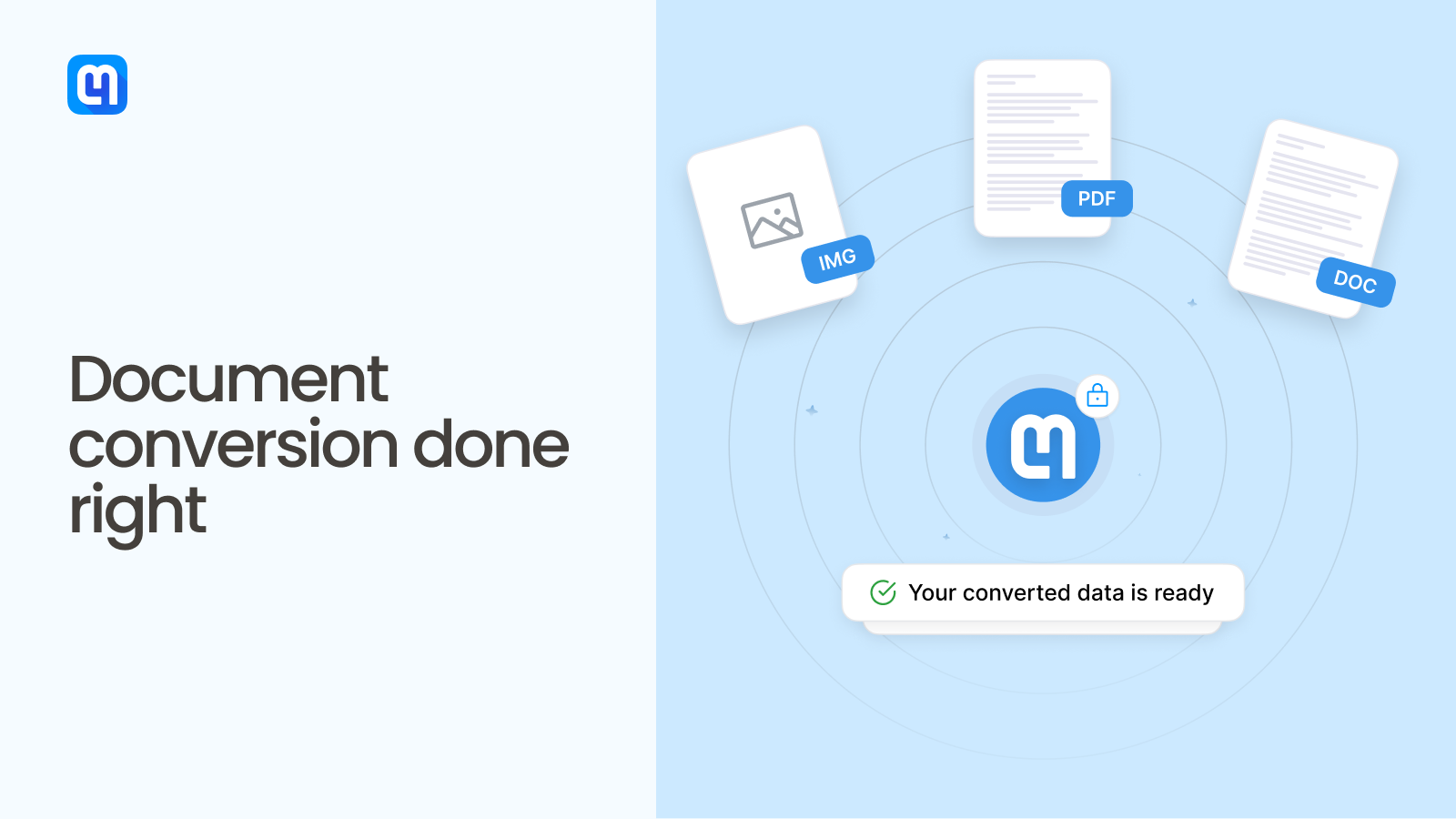

Sharing metadata
| og:url | https://mathpix.com |
|---|---|
| og:type | website |
| og:image | https://mathpix.com/images/social/general-ss.webp |
| og:title | Mathpix: Document Conversion Done Right |
| og:description | Convert images and PDFs to LaTeX, DOCX, Overleaf, Markdown, Excel, ChemDraw and more, with our AI-powered document conversion technology. |
| twitter:card | summary_large_image |
| twitter:image | https://mathpix.com/images/social/general-ss.webp |
| twitter:title | Mathpix: Document Conversion Done Right |
| twitter:creator | @MathpixApp |
| twitter:description | Convert images and PDFs to LaTeX, DOCX, Overleaf, Markdown, Excel, ChemDraw and more, with our AI-powered document conversion technology. |
robots.txt (opens in a new tab)
1 rulesAll bots 1 allowed · 0 disallowed

 All bots

/
No matching rules.
Sitemaps
1 Registration details RDAP / WHOIS
| Registrar | Gandi SAS |
|---|---|
| Registered | 2015-07-10 |
| Expires | 2027-07-10 |
| Domain status | client transfer prohibited |
| Nameservers | ns-1155.awsdns-16.org、ns-1945.awsdns-51.co.uk、ns-57.awsdns-07.com、ns-777.awsdns-33.net |
| DNSSEC | unsigned |
 DNS records
| Type | Name | Value | TTL | Priority |
|---|---|---|---|---|
| A | mathpix.com | 13.226.238.114 | 60 | — |
| A | mathpix.com | 13.226.238.116 | 60 | — |
| A | mathpix.com | 13.226.238.129 | 60 | — |
| A | mathpix.com | 13.226.238.4 | 60 | — |
| AAAA | mathpix.com | 2600:9000:201f:3400:11:d360:3ac0:93a1 | 60 | — |
| AAAA | mathpix.com | 2600:9000:201f:4e00:11:d360:3ac0:93a1 | 60 | — |
| AAAA | mathpix.com | 2600:9000:201f:6000:11:d360:3ac0:93a1 | 60 | — |
| AAAA | mathpix.com | 2600:9000:201f:8000:11:d360:3ac0:93a1 | 60 | — |
| AAAA | mathpix.com | 2600:9000:201f:aa00:11:d360:3ac0:93a1 | 60 | — |
| AAAA | mathpix.com | 2600:9000:201f:ae00:11:d360:3ac0:93a1 | 60 | — |
| AAAA | mathpix.com | 2600:9000:201f:b000:11:d360:3ac0:93a1 | 60 | — |
| AAAA | mathpix.com | 2600:9000:201f:d000:11:d360:3ac0:93a1 | 60 | — |
| MX | mathpix.com | aspmx.l.google.com | 300 | 1 |
| MX | mathpix.com | alt1.aspmx.l.google.com | 300 | 5 |
| MX | mathpix.com | alt2.aspmx.l.google.com | 300 | 5 |
| MX | mathpix.com | alt3.aspmx.l.google.com | 300 | 10 |
| MX | mathpix.com | alt4.aspmx.l.google.com | 300 | 10 |
| NS | mathpix.com | ns-1155.awsdns-16.org | 172800 | — |
| NS | mathpix.com | ns-1945.awsdns-51.co.uk | 172800 | — |
| NS | mathpix.com | ns-57.awsdns-07.com | 172800 | — |
| NS | mathpix.com | ns-777.awsdns-33.net | 172800 | — |
| TXT | mathpix.com | apple-domain-verification=EIibD1UAyDcgF5YL | 300 | — |
| TXT | mathpix.com | google-site-verification=6_cKmHq1cL5e3ABUArGKxwynTvSBg496InmbBwYFFtA | 300 | — |
| TXT | mathpix.com | google-site-verification=7LZYJMWEDRjt-H3SoYk8YKyez-zhtmrL6NXATeKn2PM | 300 | — |
| TXT | mathpix.com | google-site-verification=GUZOUQtNdDfRykKIduP8LAzvZ65FMJb7cPgyAS8oJ5o | 300 | — |
| TXT | mathpix.com | google-site-verification=oyEfFMQvlOQfHu29Zc5r6T2DImzsggyurzI7e-SYGJM | 300 | — |
| TXT | mathpix.com | slack-domain-verification=UUULEtJ7MOt3sb2tsGmckb4WF4d9zsGWIDLxNBCi | 300 | — |
| TXT | mathpix.com | v=spf1 include:_spf.google.com include:servers.mcsv.net include:mail.zendesk.com include:amazonses.com ~all | 300 | — |
| DMARC | _dmarc.mathpix.com | v=DMARC1; p=quarantine; pct=25; rua=mailto:[email protected]; | 60 | — |
 TLS and certificates
| Assessment | Normal configuration |
|---|---|
| Supported protocols | TLSv1.2、TLSv1.3 |
| Negotiated protocol | TLSv1.3 |
| Certificate subject | mathpix.com |
| Issuer | Amazon |
| Valid until | 2027-02-28T23:59 · Remaining when checked: 155 days |
| Verification details | Certificate trust: Passed · Hostname match: Passed |
 HTTP response headers
| Header | Value |
|---|---|
| content-type | text/html; charset=UTF-8 |
| cache-control | public, max-age=21600 |
| strict-transport-security | max-age=63072000; includeSubDomains |
| content-security-policy | frame-ancestors 'none' |
| x-frame-options | DENY |
| x-content-type-options | nosniff |
| referrer-policy | strict-origin-when-cross-origin |
 Identified technologies
User reviews (0)