
 简体中文
简体中文 English
Website review
This review may include AI-generated content and is not individually verified. Domain, certificate and other facts come from the observed data on this page.
What is Passport Index 2026?
Passport Index 2026 is a website and mobile app that collects, sorts and ranks the world's passports in one place. You can look up a single passport to see its visa-free score, or browse the whole set by rank, colour, country, destination type or map view.
What you can actually do with it
- Check a passport's standing. Each passport appears with a score and a movement indicator (for example, a rise or fall in the rankings), so you can see both its position and recent direction.
- Compare passports side by side. The Compare section sets two or more passports against each other, which is useful when weighing a second citizenship or checking whether a partner's passport opens different doors.
- Look up destinations. Instead of starting from a passport, you can start from a country you want to visit and see which passports get in.
- Use the Instant Visa Checker. This is the quick-answer tool for a single traveller question: "Can I go there, and do I need a visa?"
- Explore beyond rankings. Sections for passport designs, colour, maps, openness scores, trends and reports suit people who are curious about the collection itself, not just their own travel plans.
Who it suits
Frequent travellers and people with two passports get the most day-to-day value. Researchers, journalists and students comparing mobility across countries will like the sortable rankings and trend data. Collectors and design enthusiasts have a reason to browse even if they never travel.
Trade-offs to keep in mind
Rankings are a snapshot of a fast-changing picture. Visa rules shift with politics, so a good score is a starting point, not a permission slip. Always confirm entry requirements with the destination's own embassy or immigration authority before booking.
A practical next step: enter your passport, then run the same destination through the Instant Visa Checker and compare the result with the official source for that country.
How can I check if I need a visa for a specific destination using Passport Index?
Use Passport Index's visa checker to see whether your passport needs a visa for one destination. On Passport Index, open the "Travel visa checker" (linked from the main menu) and choose your passport country and your destination. The result appears as a visa status for that specific pair, not as a general rule for your nationality.
The site's homepage also shows a passport list with scores and movement arrows. Those numbers are visa-free or visa-on-arrival totals for ranking and comparison, so they answer "how strong is this passport overall?" rather than "what happens when I fly to country X?" Use the checker for the trip decision and the rankings for context.
What the result means in practice
- Visa-free / visa on arrival: you can typically travel without applying in advance, though a visa on arrival may still involve a fee or queue at the border.
- eVisa or visa required: you need to apply before departure, often online, and processing time matters.
- Not specified or unclear: treat it as "check with the embassy" rather than assuming entry.
A realistic example
Suppose you hold a Philippine passport and are planning a trip to Brazil. Rather than reading the Philippines' overall score, set the checker to Philippines → Brazil. You get one answer for that route. If it says a visa is required, you then look at the Brazilian embassy or consulate page for the actual application steps, fees and processing time.
Trade-offs and limits
Passport Index is fast and useful for a first pass, especially when comparing several destinations. It is not an official government source, and entry rules change with bilateral agreements, transit routes and purpose of travel. A tourist visa answer may not cover business travel, study or long stays. If you hold dual citizenship, run the check once per passport, because the best passport for a trip is often not the one you usually travel on.
Next step
Run the check for your exact passport and destination, then verify the result on the destination's official immigration or embassy page before booking anything non-refundable.
What are the most powerful passports in 2026 according to Passport Index?
Passport Index 2026 ranks passports by mobility — how many destinations you can enter visa-free or with a visa on arrival. The top of its live table is a cluster of Asian and European passports, with the United Arab Emirates standing out as the strongest non-European entry.
Based on the page evidence, the passports appearing at the top include:
- United Arab Emirates (ARE) — the highest score shown, well ahead of the European group
- Singapore (ASP) — second-highest in the visible list
- Germany, France, Italy, Spain, Netherlands, Austria, Belgium, Denmark, Finland, Norway, Sweden-class peers such as Portugal, Greece, Switzerland, Ireland, Japan, Czech Republic, Hungary, Poland, Malta, Croatia — all clustered in the low 170s
In practice, the difference between, say, 173 and 170 destinations is small; the ranking matters most at the margins, such as whether a specific business trip to China, India or the US needs a visa.
How to read the ranking
| Score band | What it means for you |
|---|---|
| ~170+ | Near-universal short-stay access; visa needed mainly for the US, Canada, China, India and a few others |
| ~140–170 | Strong for tourism and business in Europe, Asia and the Americas, with more case-by-case visas |
| ~90–140 | Regional strength; plan ahead for major destinations |
| Below ~90 | Fewer visa-free options; expect more applications and longer lead times |
A practical next step
If you are choosing a second passport, citizenship route or travel document, do not stop at the headline number. Open the Passport Index comparison tool at Passport Index and compare your current passport against the one you are considering for the specific countries you actually visit — for example, the US, UK, Schengen area, China or India. A passport ranked 173rd versus 170th may make no difference to your travel, while a lower-ranked passport with visa-free access to your key destination can be more useful than a higher-ranked one without it.
The rankings also shift with reciprocal visa policy changes, so check the "Changes" and "Trends" sections before making a decision based on a single snapshot.
How does Passport Index rank passports and what factors determine a passport's score?
Passport Index ranks passports by how many destinations their holders can enter without applying for a visa in advance. Each passport gets a score — the count of countries and territories it can reach visa-free or with a visa on arrival — and the ranking is simply that score sorted from highest to lowest. The site's main sort orders are Global, Individual, Landpower, Welcoming, World Openness Score, Changes and Trends, so the same passport can sit at different positions depending on which lens you pick.
What drives the score
- Bilateral visa-waiver agreements. The bulk of any score comes from reciprocal deals between two governments. These are political, not automatic, and can be suspended quickly.
- Visa-on-arrival and e-visa arrangements. Passport Index counts destinations where you can get a visa at the border or online rather than at an embassy beforehand. A country that only offers a full embassy visa does not add to the score.
- Reciprocity. If country A lets citizens of B in visa-free, B usually returns the favour. Breaks in that symmetry show up as score gaps between otherwise similar passports.
- Regional blocs. Membership in unions such as the EU or ASEAN gives members access to each other's territory, lifting scores for smaller or less wealthy states.
- Diplomatic and security ties, overstays and sanctions. Travel restrictions, suspended agreements or a poor record on returns can subtract destinations.
Which ranking view to use
| View | What it measures | Good for |
|---|---|---|
| Global | Total visa-free plus visa-on-arrival destinations | Comparing passports overall |
| Individual | A single passport's reach | Checking your own document |
| Welcoming | How many nationalities a country admits easily | Choosing where to travel or relocate |
| Landpower | Access by land border | Overland travellers |
| World Openness Score | Total openness across all passports | Tracking global mobility trends |
| Changes / Trends | Score movements over time | Seeing whether access is improving or slipping |
A practical example. A German and an Indian passport holder both want a two-week holiday in Southeast Asia. The German score is high enough that most of the trip needs no paperwork; the Indian holder may face a mix of visa-free, visa-on-arrival and embassy-visa destinations. Passport Index's Instant Visa Checker and its passport-versus-destination comparison are the tools for that specific pairing, rather than the headline rank.
Next step. Look up your own passport on Passport Index, note the destination list rather than the rank number, then confirm each entry against the destination's own immigration authority before booking. Rankings are a snapshot; entry rules change with policy, and a visa-on-arrival listing can still be refused at the border.
Can I compare my passport with another country's passport on Passport Index?
Yes. Passport Index has a dedicated Compare section, and the comparison is the most practical way to use the site if you are deciding between two passports — for example, if you hold dual citizenship, are applying for a second passport, or are planning a trip with a partner who travels on a different document.
What you can compare
- Passports side by side — pick two (or more) countries and see how their documents stack up.
- Destinations — see where each passport gets you in, which is usually the real question behind the comparison.
- Charts — visual summaries if you want the shape of the difference rather than a list.
How to read the result
The headline number is a visa-free score, but two passports with similar scores can behave very differently. A passport with a slightly lower score may still cover the specific countries you actually travel to. So compare the destination lists, not just the totals.
| Your situation | What to look at first |
|---|---|
| Choosing which passport to travel on | Destinations list for your next two or three trips |
| Dual citizen weighing two documents | Passport-vs-passport comparison, then the destination overlap |
| Planning a multi-country trip | Countries where one passport needs a visa and the other does not |
A useful next step
Run the comparison for your two passports, then check the handful of destinations where they differ. If the difference only shows up in places you are unlikely to visit, the scores are less important than they look. If it shows up in a country you visit often, that is the deciding factor.
For a quick single-destination check rather than a full comparison, the site also offers an Instant Visa Checker. Note that entry rules change — a visa-free listing is a planning starting point, and you should confirm requirements with the destination's own immigration authority before booking. The site is also available as an Android mobile app and a travel visa checker if you want to look things up on the move.
Is there a mobile app for Passport Index and what features does it offer?
Yes. Passport Index offers an Android mobile app, listed alongside its travel visa checker in the site's navigation. The app is the pocket-sized version of the site's core purpose: looking up how a passport ranks and where it can take you.
What the app covers
The site's main tools, which the app mirrors in mobile form, are built around:
- Instant visa checker — check a passport against a destination for visa requirements.
- Rankings — global, individual, "landpower," "welcoming" and World Openness Score views.
- Compare — passports against passports, and passports against destinations.
- Charts and trends — score changes over time.
- Discovery — browse passports by country, color, type or map.
Who gets the most from it
Frequent travellers comparing two passports before booking, dual citizens deciding which document to use, and anyone tracking how a country's access has shifted year to year. The rankings and trend data are the parts that reward repeat visits; a single visa question is often quicker on the website.
Practical next step
If you only need one visa answer, the browser version is enough. If you want to check several destinations, follow ranking changes, or compare two passports side by side, install the Android app and set your passport as the default so lookups start from your own document. Note the site lists only an Android app, so iPhone users should plan on the mobile web version.
For broader context on how passport strength is measured, Henley & Partners publishes a competing index, and IATA Travel Centre is the industry reference for entry rules.
 Cloudflare
 Google Workspace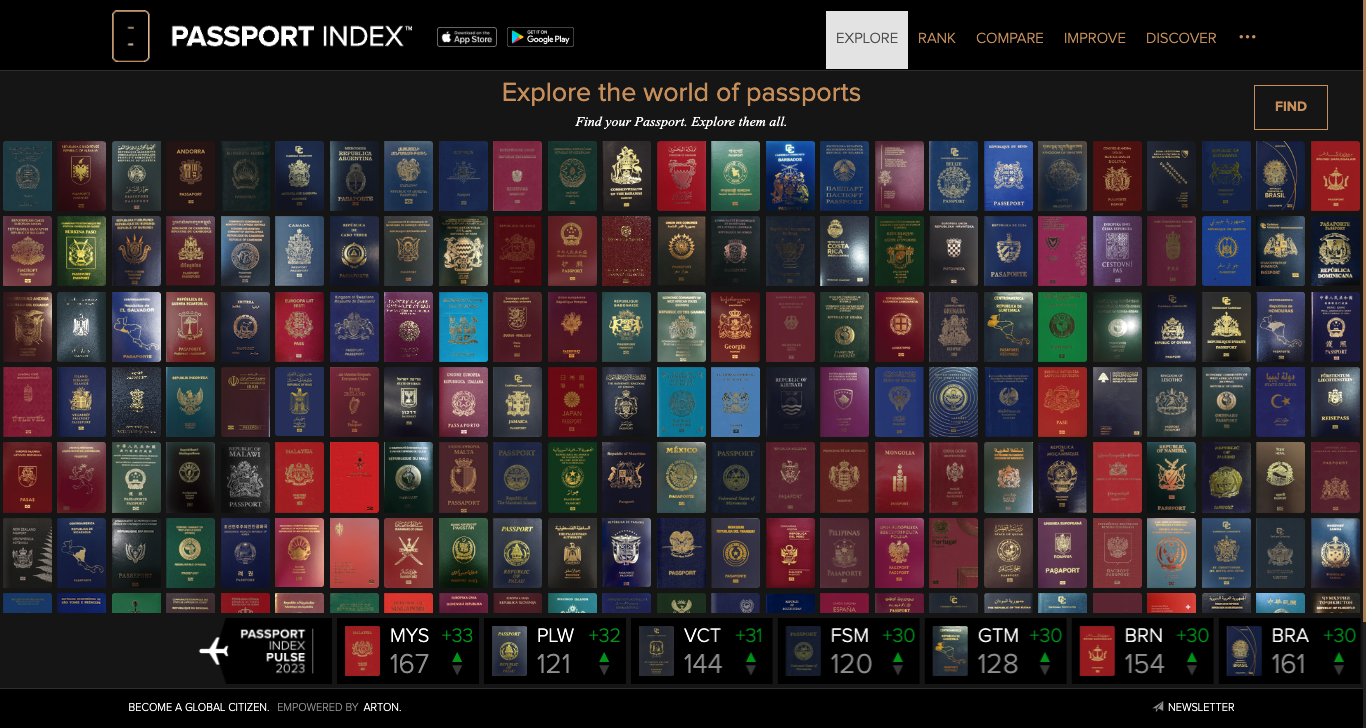
User reviews (0)