
 简体中文
简体中文 English
Website review
This review may include AI-generated content and is not individually verified. Domain, certificate and other facts come from the observed data on this page.
What is St. John's University?
St. John's University is a private Catholic university in New York City, rooted in a Vincentian mission of service. It offers undergraduate and graduate programs across multiple campuses, with flexible online, hybrid and in-person study options.
What it offers
- More than 100 undergraduate majors and programs of study.
- Graduate programs spanning fields such as artificial intelligence and data science.
- Academic opportunities including an honors program and undergraduate research.
- A service-oriented culture: volunteering, fighting injustice and serving those in need.
- Global campuses and study locations, including programs with an international dimension.
Who it suits
- Students who want a values-driven education alongside career preparation.
- Undergraduates seeking a wide choice of majors in a major metropolitan area.
- Graduate students looking for specialized technical or professional degrees.
- Applicants who need schedule flexibility through online or hybrid formats.
A practical next step If you are considering applying, start with the specific program page for your intended major or graduate field, then check admission requirements and visit options. To compare against alternatives, look at Fordham University for another New York City Catholic option, or New York University for a large private research university without a religious affiliation. The trade-off is usually between a mission-centered community and a larger, more secular urban environment.
How do I apply to St. John's University as an undergraduate or graduate student?
Undergraduate and graduate applications both go through the university's Office of Admission, but the requirements differ.
Undergraduate applicants
- Apply online via the university's admission pages or the Common App.
- Submit high school transcripts, and standardized test scores if you choose to include them.
- Expect to provide at least one recommendation and a personal essay.
- International students may need English-proficiency evidence such as TOEFL or IELTS.
Graduate applicants
- Apply through the graduate admission portal for your specific school or program.
- Submit transcripts from every college attended, plus a résumé or CV.
- Many programs require a statement of purpose, letters of recommendation, and sometimes GRE or GMAT scores.
- Some programs have portfolio, audition, or interview components.
Practical next step: Identify your intended program first, because deadlines and required materials vary by school within the university. Then check the program page for its specific checklist before starting your application.
Decision criterion: If you are unsure between undergraduate and graduate entry, note that undergraduate applications are handled centrally, while graduate applications are often managed by the individual college or department. Contact the Office of Admission for undergraduate questions and the program office for graduate questions.
Official site: St. John's University
What undergraduate majors and graduate programs does St. John's University offer?
St. John's University offers more than 100 undergraduate majors and programs of study, plus a range of graduate degrees across several schools and colleges. Its academic areas span computing and technology, business, nursing, pharmacy and health sciences, law, policy and government, and management and entrepreneurship, among others.
Undergraduate examples from the page
- Computer Science, Bachelor of Science
- Finance, Bachelor of Science
- Speech-Language Pathology and Audiology, Bachelor of Arts (also available as a minor)
- Criminal Justice, Bachelor of Science
- Management, Bachelor of Science
Graduate example from the page
- Artificial Intelligence and Data Science, Master of Science (M.S.)
The university also notes additional academic opportunities such as an University Honors Program and undergraduate research assistant roles, and it offers flexible formats: online, hybrid and in-person options.
How to choose
- If you want a technology career, look at Computer Science (BS) for undergraduate study and the AI and Data Science (MS) for graduate study.
- If you are interested in health care, explore Nursing, Pharmacy and Health Sciences, including Speech-Language Pathology and Audiology.
- If business or finance is your goal, Finance (BS) and Management (BS) are direct pathways, with internship examples like Bloomberg and W.R. Berkley Corporation mentioned on the page.
Next step Visit the undergraduate and graduate program pages on St. John's University to compare curriculum, admission requirements and campus options, then connect with the Office of Admission if you need help mapping a pathway.
What financial aid, scholarships, and tuition payment options are available at St. John's University?
St. John's University provides several ways to manage costs, but the page evidence is limited to a single payment-options link under its admission section. That confirms the university has a payment-plan and deposit structure, yet it does not list specific scholarships, aid amounts or tuition figures. Treat the guidance below as general advice for evaluating the university rather than a confirmed catalog of its offers.
Where to start
The university's admission area includes a tuition and financial aid section with a payment-options page, including an enrollment and housing deposit step. That is the logical first stop for deadlines, refund rules and installment schedules.
What to look for
- Need-based aid: Typically requires the FAFSA and sometimes the CSS Profile; check which forms St. John's requires and its priority filing date.
- Merit scholarships: Many private universities award these automatically with admission, but some need a separate application or nomination.
- Payment plans: Monthly installments usually carry an enrollment fee and split the balance across the term rather than reducing it.
- Deposits: Enrollment and housing deposits are generally applied to your bill, not extra charges, but confirm whether either is refundable.
- Outside aid: New York State programs and federal loans can stack with institutional awards; verify how outside scholarships affect your package.
A quick comparison
| Option | What it does | What to check |
|---|---|---|
| Need-based aid | Reduces cost based on family finances | Required forms and deadline |
| Merit scholarships | Rewards academics, talent or service | Automatic vs. separate application |
| Payment plan | Spreads the bill over months | Enrollment fee and schedule |
| Deposits | Holds your place and housing | Refundability and credit to bill |
Practical next step
If you are a prospective student comparing offers, build a simple spreadsheet: total cost of attendance minus grants and scholarships, then divide the remainder by the payment plan's number of months. That shows the real monthly outlay before you commit a deposit.
For official details, use the university's own pages: St. John's University. General federal aid information is available at Federal Student Aid, and New York State residents can check New York State Higher Education Services Corporation.
What is student life like at St. John's University in Queens, New York?
Student life at St. John's University in Queens combines academic study, service, clubs and organizations, and internships, with a campus culture shaped by its Catholic and Vincentian mission. The page frames this as turning passion into purpose: students are shown both in the classroom and in the community, suggesting that life outside class is meant to connect to career and service goals.
What shapes the student experience
- Service is a visible part of the university's identity. The page says students volunteer, fight injustice, and serve those in need, so expect service opportunities to be a regular feature of campus life rather than an occasional add-on.
- Clubs and organizations appear across different majors. The page mentions the President's Society, Women on Wall Street, Student Government Inc., Catholic Scholars, the Multicultural Greek Alliance, Project AIM, the Office of Multicultural Affairs, and Student Ambassador roles.
- Internships are presented as part of student life, not just academics. Examples include Bloomberg, Real Chemistry, and W.R. Berkley Corporation, alongside community projects such as an AI tutor project using generative AI and large language models.
- The student profiles come from a range of places, including Queens, Brooklyn, Bellerose, Florence, and Trinidad and Tobago, which suggests a mix of local and international students.
How different students might experience it
- A commuter student from Queens or Brooklyn may find it easy to attend classes and go home, so clubs, service, and internships become the main way to build a social and professional network.
- A residential or international student may rely more on campus organizations and service programs to settle in and meet people.
- A student in a pre-professional major such as finance, nursing, computer science, or criminal justice may find that internships and clubs tied to those fields matter more than general campus social life.
A practical next step If you are deciding whether the Queens campus fits you, look up the specific clubs and service programs connected to your intended major, then ask the Office of Admission how current students typically balance commuter life, internships, and campus involvement. That will tell you more about daily life than general descriptions of school spirit.
How does St. John's University's Vincentian mission and service commitment shape the student experience?
St. John's University's Vincentian mission is presented as a defining part of the student experience rather than a side activity. On the page, service is listed alongside academics as one of the ways the university describes itself: students are described as volunteering, fighting injustice, and serving those in need. The mission therefore functions as an expectation woven into campus life, shaping how students spend time outside class and how they talk about their education afterward.
Where it shows up in practice
The clearest evidence is in the student stories the university chooses to highlight. Vanessa D., a criminal justice major from Brooklyn, lists Midnight Run among her activities—a direct service commitment rather than a club. Christopher T. in the health sciences pathway lists the University Honors Program and undergraduate research, showing that service-oriented values sit alongside academic rigor rather than replacing it. Across the featured students, the pattern is the same: classroom study, community involvement, and real-world work are presented as one continuous experience.
What this means for different applicants
- If you want service to be central rather than optional, this mission gives you a ready-made structure and like-minded peers.
- If you are primarily career-focused, the service framing still matters: it appears in how students describe internships and professional preparation, not just volunteering.
- If you are not religious or not Catholic, the mission is described in terms of values and service rather than doctrine on this page, so the practical commitment is to community engagement.
A practical next step
Look at the specific service programs and clubs tied to your intended major, then ask an admissions contact how many students participate and whether service is built into coursework or sits outside it. That distinction will tell you whether the Vincentian mission is a genuine part of daily student life or mainly a stated value.
For a fuller picture of programs and campus options, start with St. John's University.
 Cloudflare
 Microsoft 365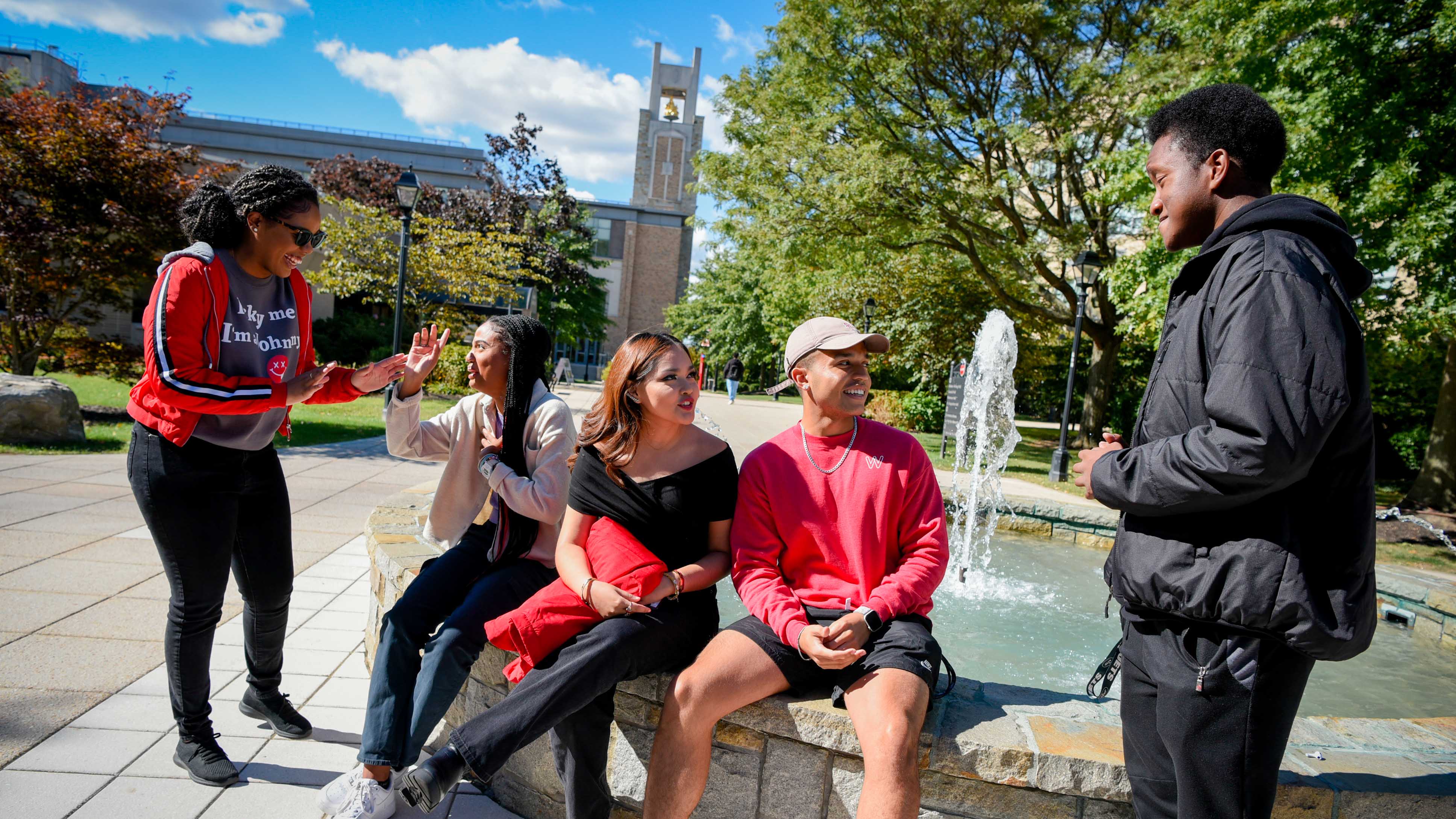

User reviews (0)