

 Paid content
 Visit website
 Updated: 2026-09-22 08:30
 Language: English (default)
 Access: Normal
 Profile views 3
  Outbound visits 0
 Website Review
What is topiary?
Topiary is the practice of clipping and training live plants—usually evergreen shrubs such as box, yew or privet—into clearly defined shapes. These can be simple geometric forms like balls, cones and cubes, or elaborate figures, animals, arches and knot patterns. The plants are trimmed repeatedly over years so that dense foliage holds the intended outline.
It is both a gardening technique and a design tradition. Historically, topiary has been associated with formal gardens, parterres and estate landscapes, where it provides year-round structure when flowers fade. Today it also appears in smaller settings: containers, doorway pairs, hedging and cloud-pruned specimens.
For anyone exploring the subject in Britain, Topiary in the UK lists major gardens with significant topiary and offers details on creating the art form. It can suit garden visitors planning trips, as well as growers looking for practical guidance rather than only historical background.
Key considerations include:
- Plant choice: slow-growing, small-leaved evergreens typically respond best to clipping.
- Maintenance: shapes need regular trimming to stay crisp; neglected plants can lose definition.
- Time: complex or large pieces usually take years to develop.
- Climate: hardiness and local conditions affect which species thrive.
Topiary is therefore a long-term craft as much as a decorative style, valued for durability, formality and sculptural interest.
Which topiary gardens in the UK are worth visiting?
Notable UK topiary gardens
The site Topiary in the UK is a directory-style resource listing major British gardens with significant topiary, alongside notes on how the art form is created. It is suited to gardeners, day-trippers and heritage visitors who want a shortlist rather than a single recommendation.
What it covers
- Well-known formal gardens where clipped yew, box and holly are the main attraction.
- Historic estates, where topiary forms part of a wider designed landscape.
- Practical guidance on shaping and maintaining clipped plants.
How to use it
- Browse by region if you are planning a trip around one area.
- Treat the garden entries as a starting point, then check each garden's own site for opening times and seasonal closures, since these change.
- Read the how-to material if you want to attempt simple shapes at home; it explains techniques rather than selling plants.
Trade-offs
- A curated list favours famous, historically significant gardens, so smaller or newer topiary displays may not appear.
- Directory entries typically lack live visitor details, and the site also has a buying section, so expect some commercial content alongside the garden information.
- For a single visit, choose a garden whose wider planting and setting appeal to you, not topiary alone.
How do you create and maintain topiary?
Creating topiary combines plant selection, patient clipping and long-term shaping. The site Topiary in the UK explains the craft and lists British gardens where mature examples can be seen.
Starting a piece
Choose a species that regrows from old wood and suits your climate; box, yew and privet are traditional in Britain, while rosemary or bay work well in pots. Decide the final form before planting: a simple ball, cone or cube is far easier to maintain than a complex figure. Grow the plant on until it has enough volume, then begin clipping lightly and frequently rather than cutting hard once a year.
Maintenance routine
- Trim during the growing season, typically two or three times for fast growers.
- Use sharp shears or electric trimmers for large hedges, hand shears for detail.
- Cut to a guideline or frame so the silhouette stays true.
- Feed and water adequately; close clipping stresses plants.
- Remove clippings and check for pests and disease.
Trade-offs
Formal shapes need regular attention and can look bare if cut too hard. Free-growing specimens demand less work but lose crispness. A garden visit is useful before committing, since scale and upkeep become obvious in person.
What plants are best for making topiary in the UK?
Choosing plants for topiary in the UK usually comes down to three things: how densely the species grows, how well it tolerates regular clipping, and whether it suits the local climate. Small-leaved evergreens are the classic choice because they form crisp shapes and hold them through winter.
Common choices
- Box (Buxus) – the traditional favourite for tight geometric forms, though box blight and box tree moth have made some gardeners cautious.
- Yew (Taxus baccata) – slower growing but long-lived, tolerant of hard pruning and shade, and well suited to larger architectural pieces.
- Privet (Ligustrum) – fast-growing and forgiving, useful for quick hedges and simple shapes, but it needs frequent trimming.
- Holly, bay and rosemary – good for smaller specimens or containers, with bay and rosemary best in sheltered spots.
- Lonicera nitida – a quick, dense alternative often used where box is problematic.
Trade-offs
Fast growers such as privet and Lonicera give quick results but demand more clipping. Slow growers such as yew take years to fill out yet need less maintenance once established. For a beginner, box or yew in a simple shape is typically easiest to manage.
Topiary in the UK covers British gardens with notable topiary and explains how the art form is created. The RHS also publishes practical guidance on suitable species and clipping.
Can you buy ready-made topiary in the UK?
Yes. Ready-made topiary is widely sold in the UK, and Topiary in the UK points readers towards buying options alongside its garden listings and practical guidance.
What "ready-made" usually means
- Potted trained plants: box, yew, privet or similar shrubs already clipped into balls, cones, spirals or standards.
- Mature specimens: larger, heavier plants that give an instant structure but cost more and need careful planting and watering.
- Frames and kits: shaped wire frames plus a plant, suited to people who want to grow the shape on themselves.
Trade-offs
Ready-made topiary saves years of clipping, which suits instant hedging, doorway pairs, patio containers and formal garden features. The drawbacks are higher cost, limited shape choice at short notice, and the risk that a plant raised in a nursery sulks after transplanting. Bare-root or field-grown stock is typically cheaper but only available in the dormant season; container-grown plants can be bought most of the year.
Practical checks
Look for dense, even growth with no bare patches, check the root ball is not pot-bound, and confirm the species suits your soil and light. Ask how the shape is maintained, since some plants need two clips a year to stay crisp. For period-style gardens, British-grown box and yew remain the classic choices, though disease concerns have led some buyers towards alternatives such as ilex or Japanese holly.
What is the history of topiary in Britain?
Topiary arrived in Britain with the Romans, whose gardens at sites such as Fishbourne are thought to have included clipped evergreens. After the Roman withdrawal the craft largely lapsed, returning in the medieval period through monastery and castle gardens, where low hedges and simple shapes edged beds of herbs and flowers.
The real expansion came in the sixteenth and seventeenth centuries. Tudor and Elizabethan knot gardens used box and thyme clipped into interlacing patterns, and the fashion for evergreens in geometrical forms grew alongside the grand houses of the era. Dutch influence in the late seventeenth century, particularly after William and Mary, brought denser, more architectural clipping, while the eighteenth-century landscape movement swept many formal gardens away in favour of open parkland.
Topiary survived best where it suited the setting: cottage gardens, small parterres and the grounds of older estates. The Victorian period revived it as part of a broader taste for formal bedding and architectural gardening, and twentieth-century owners restored many neglected yew and box pieces.
For anyone tracing this history on the ground, Topiary in the UK lists British gardens with notable topiary and adds practical notes on creating the art form yourself.
 Hosting and Email
 Hosting
 Google LLC
 Location
 City of London, United Kingdom
 Pages, Search and Sharing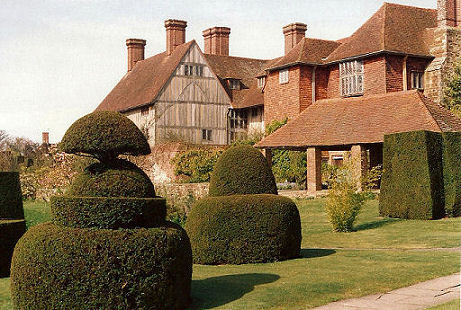



 All bots


 Registration details

 Identified technologies
User reviews (0)