
 简体中文
简体中文 English
Website review
This review may include AI-generated content and is not individually verified. Domain, certificate and other facts come from the observed data on this page.
What is the University of Miami?
The University of Miami is a private research university in Coral Gables, Florida, with more than 16,000 students drawn from around the world. Its homepage presents it as a broad academic community centered on teaching, research and service to South Florida and beyond, and it spans undergraduate, graduate and professional study across many fields.
What it offers
The university is organized into schools and colleges that cover a wide range of disciplines, including architecture, arts and sciences, business, communication, education and human development, engineering, law, marine and atmospheric science, medicine, music, and nursing and health studies. It also includes a graduate school and a division of continuing and international education.
Beyond academics, the site highlights student life, research, athletics and UHealth, the university's health system. Admissions information, campus visits and requests for information are prominent, which is typical of a school that serves prospective students as well as current ones.
A practical way to use the site
If you are considering applying, start with the undergraduate admission section and the visit and request-information options. If you are already part of the university, the tools menu is the more useful area, pointing to services such as CaneLink, myUM, Workday, Canvas/Blackboard, the library, course listings and IT support. The site also links to the university's mobile app, which is handy for checking maps, events and directories on the go.
Where to look next
For official admissions and program details, use the university's own pages at University of Miami. If you want to compare it with another private research university in a different region, Harvard University and Stanford University are useful references for how such institutions present academics and admissions.
How do I apply for undergraduate admission to the University of Miami?
Applying to the University of Miami for undergraduate admission starts on the school's own admissions pages, where you can begin an application, plan a visit, and request information. The university's homepage presents "Apply," "Plan a Visit," and "Request Info" as the main entry points, so those are the first links to follow from University of Miami.
What you'll need to do
- Choose your application route. Miami accepts the Common App and its own application. Pick one and stick with it; don't submit both.
- Gather your materials. Expect to provide your high school transcript, a school report or counselor recommendation, at least one teacher recommendation, and either SAT or ACT scores or a statement that you're applying test-optional. Miami has been test-optional in recent cycles, but confirm the current policy before you decide.
- Write the essays. You'll complete the personal essay plus Miami-specific short answers about why you want to attend and, for some applicants, your intended major.
- Note the deadlines. Early Decision and Early Action typically fall in early November, with Regular Decision in early January. Verify exact dates each year, since they shift.
- Pay the fee or request a waiver. Fee waivers are available for eligible students through the Common App or by request.
- Check your portal. After submitting, you'll get access to a status page where you can track missing documents and decisions.
A practical next step
If you're weighing Miami against other schools, compare financial aid offers side by side rather than sticker price. Miami meets a portion of demonstrated need and offers merit scholarships, so the net cost can differ substantially from the published tuition. Run each school's net price calculator before you commit.
For a broader sense of the university before applying, the main site links to academics, student life, and campus maps, which can help you decide whether the South Florida setting and research focus fit what you want.
What financial aid and scholarship options does the University of Miami offer?
The University of Miami's public site does not lay out its full financial aid and scholarship catalog on the homepage; that information lives in the admissions and student financial assistance sections. What the homepage confirms is the structure you'll navigate: an Apply entry point, a Schools list spanning undergraduate and graduate units, and a Tools area with CaneLink, myUM and the mobile app, which is where applicants and enrolled students typically track aid status.
Where to look, and what each route typically covers
- Undergraduate Admission — the main funnel for first-year and transfer applicants, with the APPLY NOW, PLAN A VISIT and REQUEST INFO actions. Need-based aid and merit awards for incoming undergraduates are normally handled through this office.
- Student Financial Assistance — the office that administers federal and state aid, need-based grants, loans and work-study, and processes the FAFSA. Look here for deadlines, verification steps and disbursement rules.
- Individual schools and colleges — the page lists Architecture, Arts and Sciences, Business, Communication, Education and Human Development, Engineering, Law, the Rosenstiel School, the Miller School of Medicine, Frost School of Music, Nursing and Health Studies, the Graduate School, and Continuing and International Education. Departmental and donor-funded scholarships are frequently awarded at this level, especially for graduate and professional programs.
- CaneLink and myUM — student portals named on the page. These are where award letters, outstanding document requests and disbursements usually appear once you have credentials.
Practical comparison
| Route | Best for | What it usually won't cover |
|---|---|---|
| Undergraduate Admission | First-year and transfer merit and need-based awards | Graduate or professional school funding |
| Student Financial Assistance | FAFSA-driven grants, loans, work-study, appeals | Departmental talent or research awards |
| School/college offices | Major-specific, graduate and donor scholarships | Federal need calculation |
| CaneLink / myUM | Tracking your own award and documents | General eligibility rules |
A realistic next step
If you are applying as a first-year student, file the FAFSA early, then check the financial assistance office's deadline page for any separate institutional form the university requires. If you are eyeing a graduate or professional program, contact that specific school's office directly — the homepage's school list is the fastest way to identify the right one — because funding there is often tied to assistantships and departmental awards rather than the central aid office.
For official details, start at University of Miami and follow the Admission and Financial Assistance links rather than relying on third-party summaries, which frequently lag behind current deadlines and award amounts.
What academic programs and majors are available at the University of Miami?
The University of Miami organizes its academics through schools and colleges rather than publishing a single all-in-one major list on its homepage. The page evidence names these units: the School of Architecture, College of Arts and Sciences, Business School, School of Communication, School of Education and Human Development, College of Engineering, School of Law, Rosenstiel School of Marine, Atmospheric, and Earth Science, Miller School of Medicine, Frost School of Music, School of Nursing and Health Studies, The Graduate School, and the Division of Continuing and International Education.
What that structure means for applicants
Each school sets its own degree programs, so the practical answer depends on your intended field:
- Arts, sciences and general majors: the College of Arts and Sciences is the broadest home for humanities, social sciences, natural sciences and many interdisciplinary programs.
- Pre-professional and specialized fields: architecture, business, communication, education, engineering, law, medicine, music and nursing each sit in their own school with separate admissions paths and requirements.
- Marine, atmospheric and earth science: the Rosenstiel School is the dedicated unit for these fields, which is unusual for a private university and worth noting if that is your interest.
- Graduate study: The Graduate School covers master's and doctoral programs, while professional degrees are handled by the individual schools such as Law and Medicine.
- Continuing and international education: the Division of Continuing and International Education serves non-traditional, visiting and international students.
How to find the exact major list
Start with the Academics section of University of Miami, then open the page for the specific school that matches your interest. Each school lists its own majors, minors and degree options, and admission requirements differ between them. If you are undecided, the College of Arts and Sciences is usually the most flexible entry point, but confirm that before applying.
What is student life like at the University of Miami?
Student life at the University of Miami is built around a compact, energetic campus in Coral Gables with a strong residential core, a prominent athletics culture, and easy access to Miami itself. The university's own site emphasizes a "vibrant and diverse academic community" of more than 16,000 students from around the world, and its student-life navigation points to housing, dining, events, clubs, and campus resources.
What shapes day-to-day life
- Residential campus feel. Most first- and second-year students live on or near campus, which keeps social life centered on dorms, dining halls, and the campus green rather than scattered across a large city.
- Athletics as a social anchor. The Hurricanes compete at the top level of college sports, and game days — especially football and basketball — function as major campus-wide events. The site's "Stay in the Know | Keep up with Miami Hurricane Athletics" link signals how central sports are to the university's identity.
- Clubs and involvement. With more than 16,000 students, there is a wide range of student organizations, from academic and professional groups to cultural, service, and recreational clubs. Expect to find communities tied to each school, from the Frost School of Music to the Rosenstiel School of Marine, Atmospheric, and Earth Science.
- Events and traditions. The homepage's "Events" and "Featured Stories" sections show a steady calendar of speakers, performances, and campus traditions. Family Weekend appears as a recurring event, which gives families a structured way to visit.
- Location as an amenity. Coral Gables is a quiet, walkable neighborhood, while Miami's beaches, arts scene, and international culture are a short drive away. That combination is unusual among private research universities.
A realistic student scenario
A first-year student might start the day in a residential dining hall, attend classes in the College of Arts and Sciences, spend the afternoon at a club meeting or intramural game, and head to a Hurricanes football game on a fall Saturday. On a free weekend, they could take a short trip to the beach or explore Little Havana. The trade-off is that Miami's sprawl and heat can make off-campus life feel less walkable than the campus core, and the city's cost of living is high.
How to decide if it fits
Ask yourself three questions:
- Do you want a campus-centered social life or a city-centered one? Miami offers both, but the campus experience is strongest for students who live on or near campus.
- Does school spirit matter to you? If big-time athletics energizes you, this is a clear fit; if not, you'll want to look at clubs and academic communities instead.
- Are you comfortable with heat and humidity? South Florida's climate shapes daily life from August through May.
A useful next step is to compare this with other private research universities in urban settings, such as New York University or Boston University, to see whether you prefer a contained campus or a distributed city campus.
What research opportunities are available at the University of Miami?
Undergraduate and graduate students at the University of Miami can find research opportunities across marine science, medicine, engineering, communication and the arts, with the strongest signal on the page pointing to work that connects South Florida's environment and health challenges. The homepage highlights a Category 5 hurricane simulator and research asking what dolphins and marine toxin exposure can reveal about brain aging and dementia, which suggests a distinctive niche: environmental science and neuroscience that use the region's ocean access and clinical resources.
Where research tends to cluster
- Marine, atmospheric and earth science — the Rosenstiel School of Marine, Atmospheric, and Earth Science is the natural home for ocean, climate and hurricane work, including the simulator featured on the site.
- Medicine and health — the Miller School of Medicine and UHealth support clinical and biomedical research, with the dementia work above as one example.
- Engineering, nursing, communication, law and music — each school listed on the page has its own research activity, so opportunities are not limited to the sciences.
How students typically get involved
- Ask professors in your department about openings; at a research university, faculty labs are the usual entry point.
- Look for structured undergraduate research programs and summer fellowships, which many departments run alongside lab placements.
- Use the university's research and academic pages to identify faculty by topic, then reach out with a short note about your interests and relevant coursework.
Practical next step
If you are choosing a school or planning a semester, start with the department that matches your field, read two or three faculty profiles, and email one about whether they take undergraduates or graduate students. For broader context on research universities, see U.S. National Science Foundation for funded research areas and National Institutes of Health for biomedical training paths. The University of Miami itself is at University of Miami.
A useful decision criterion: if you want ocean, climate or hurricane research, the Rosenstiel School is the clear draw; if you want clinical or brain-aging work, the Miller School and UHealth are the relevant route. Outside those, check the specific department's research page before applying, since opportunities vary widely by field.
 Akamai Edge DNS
 Proofpoint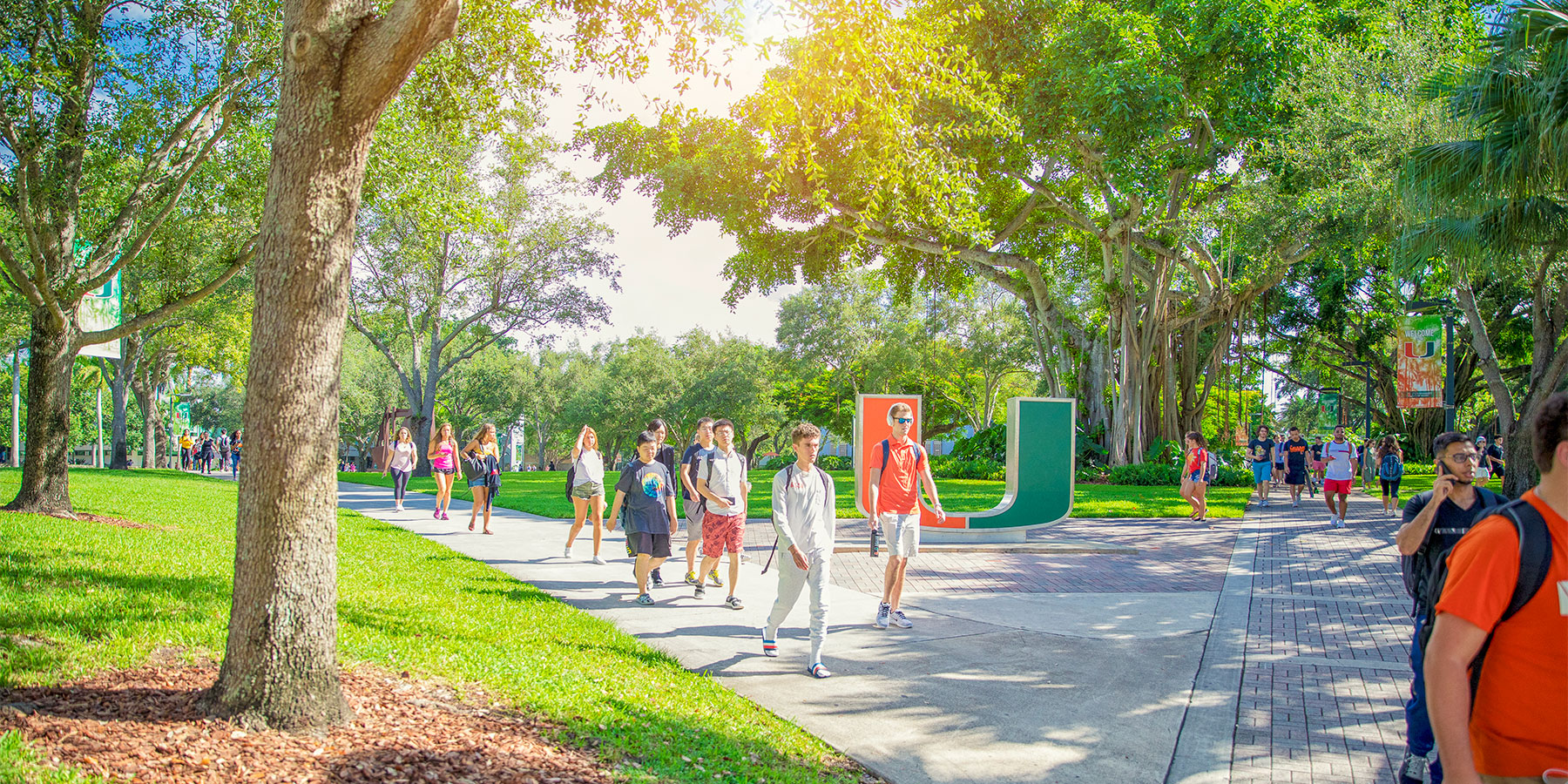
User reviews (0)