
 简体中文
简体中文 English
Website review
This review may include AI-generated content and is not individually verified. Domain, certificate and other facts come from the observed data on this page.
What is World Pistachio Day?
World Pistachio Day is an annual celebration of pistachios held on February 26. The same date is also called National Pistachio Day. It is a food-observation day rather than a public holiday: the point is simply to enjoy pistachios and learn a little about them, and the site encourages eating them all year, not just on the day.
What the day highlights
- Pistachios as a snack and ingredient, from plain salted nuts to pistachio ice cream.
- A bit of history: the first American commercial pistachio crop was harvested in 1976, though Americans had been eating the nut since roughly the 1800s.
- Pistachio growing today: California produces about 98 percent of the domestic crop, with Turkey, Syria, Italy and Greece among other producers.
- Nutrition basics: pistachios are described as heart-healthy, roughly 90 percent unsaturated fat, a good source of fibre (about 12 percent of the daily value per 30 g serving), and rich in antioxidants and phytosterols.
Practical ways to mark it
Use February 26 as a low-effort food day. A few concrete options:
- Buy a bag of in-shell pistachios and share them at home or work.
- Try pistachio ice cream, which the site credits to James W. Parkinson of Philadelphia in the 1940s.
- Cook with them: chop into salads, grain dishes, or desserts, or make pistachio butter.
- Learn one fact to share, such as pistachios being botanically related to cashews and mangoes, or being called the "smiling nut" in Iran.
Who it suits
It is mainly for food lovers, home cooks, parents looking for a simple activity with children, and anyone curious about where everyday foods come from. It is less useful if you want a formal event, a shopping guide, or detailed recipes; the page is an overview and history rather than a how-to.
A useful next step: decide whether you want to eat, cook or learn. If eating, buy in-shell pistachios and portion them out; if cooking, pick one recipe using shelled pistachios; if learning, read the history section and note one fact about California production or the old red-dyed shells. For a broader set of nut-themed food days, see National Day Calendar.
When is World Pistachio Day and how is it celebrated?
World Pistachio Day falls on February 26 each year, and the same date is also known as National Pistachio Day. It is a food-observance day rather than a public holiday: there is no single official ceremony, and most people mark it informally by eating pistachios, cooking or baking with them, or sharing pistachio facts and recipes online.
worldpistachioday.com frames the day as a year-round appreciation of the nut rather than a one-day event, and its "Pistachio 101" section supplies the kind of background people typically post or talk about on the day: the first American commercial pistachio crop in 1976, the earlier popularity of the nut in the 1800s and its wider take-off in the 1930s, and the invention of pistachio ice cream in the 1940s by James W. Parkinson of Philadelphia. It also notes that California now produces roughly 300 million pounds, about 98 percent of the domestic crop, with Turkey, Syria, Italy and Greece among other producers, and that pistachios are botanically related to cashews and mangoes.
How people typically observe it
- Eat them plainly — a bowl of shelled or in-shell pistachios as a snack, which suits the page's emphasis on them as a satisfying, high-fibre nut.
- Cook or bake with them — pistachio ice cream, pastries, pesto-style sauces, or chopped over salads and rice dishes.
- Share the trivia — the red-dyed pistachios once sold to hide shell flaws and stand out in vending machines, the Silk Road trade connection, or the nicknames "smiling nut" in Iran and "happy nut" in China.
- Post or host — social media posts, office snack tables, or a themed dessert at home.
A practical next step
If you want to do something concrete, pick one pistachio recipe you have never tried and make it on February 26, then use the day's trivia as table conversation. If you are organising something for a group, a simple tasting comparison works well: offer plain, salted and shell-on pistachios side by side and let people note the differences in flavour and effort.
Quick reference
| Aspect | Detail |
|---|---|
| Date | February 26, annually |
| Also called | National Pistachio Day, World Pistachio Day |
| Type of event | Informal food observance |
| Common activities | Eating, baking, sharing facts and recipes |
| Good audience | Home cooks, snack lovers, teachers, social media users |
For background material to reuse on the day, the historical and botanical notes on worldpistachioday.com are a convenient starting point.
Why were pistachios dyed red in the past?
Red dye was used to hide flaws on the shells and to make the nuts stand out in vending machines. That is the explanation given on worldpistachioday.com, which notes that pistachios were once dyed crimson and that the practice now seems hard to imagine.
What this means in practice
The two motives worked together:
- Cosmetic cover-up: Dye masked marks, stains or inconsistencies on the shell, so a batch looked more uniform.
- Shelf appeal: A bright red nut was highly visible behind the glass of older vending machines, where plain beige shells would have blended together.
A useful comparison
| Goal | How red dye helped | Why it faded |
|---|---|---|
| Hide shell flaws | Disguised blemishes and uneven colour | Better sorting and handling made flaws less common |
| Stand out in vending | Made pistachios instantly recognisable | Clear packaging and modern retail displays do that job now |
| Signal a treat | Gave the nut a vivid, novelty look | Buyers came to prefer a natural appearance |
Next step
If you are writing about pistachios or planning a February 26 activity, treat the dye as a historical marketing and merchandising detail rather than a flavour or quality feature. A concrete example: when describing pistachios to a modern audience, mention that natural shells are now the norm, then explain the old vending-machine logic as the reason the red version existed.
Are pistachios healthy to eat and what are their nutritional benefits?
Yes—pistachios are a genuinely healthy nut, and the page's "Pistachio 101" section highlights several reasons why. It notes they are heart-healthy tree nuts containing phytosterols, that roughly 90% of their fat is unsaturated (the "good" kind), that they supply antioxidants, and that they are among the highest-fibre nuts, providing 12% of the daily value per 30 g serving. So the short answer is: they are a nutrient-dense snack that fits well into most diets, especially when eaten in place of less nutritious processed snacks.
H3 What those benefits mean in practice
- Heart health: Unsaturated fat and phytosterols are the mechanisms the page credits for pistachios being "good for your ticker." Phytosterols are plant compounds that can help support healthy cholesterol levels.
- Fibre: At 12% of the daily value per 30 g, pistachios are a useful fibre source. Fibre supports digestion, steady energy and satiety, which is why a small handful tends to feel more filling than an equivalent number of calories from crisps or sweets.
- Antioxidants: The page mentions antioxidants that "aid the heart and body." These are general protective compounds rather than a specific cure, so treat them as part of an overall healthy pattern.
- Satisfying fat: Because the fat is mostly unsaturated, it carries flavour and makes pistachios a satisfying snack—useful if you want something small that actually curbs hunger.
H3 A concrete reader scenario
Say you want an afternoon snack that won't leave you hungry an hour later. A 30 g portion of pistachios—roughly a small handful, ideally in-shell so the shelling slows you down—delivers fibre, unsaturated fat and antioxidants together. That combination is why they work well as a swap for biscuits or a chocolate bar rather than as an add-on on top of them.
H3 Trade-offs and decision criteria
- Calorie density: Nuts are energy-dense, so portion size matters. If you are watching calories, measure a serving rather than eating from a large bowl.
- Salt: If you are limiting sodium, choose unsalted or lightly salted varieties.
- Allergies: Pistachios are tree nuts, botanically related to cashews and mangoes (as the page notes), so anyone with a tree-nut allergy should avoid them.
- Whole vs. processed: Plain nuts retain the fibre and fat profile described on the page; honey-roasted, candy-coated or salted versions add sugar, oil or sodium.
Next step: if you want to put this into practice, buy a bag of in-shell pistachios, portion out about 30 g at a time, and use them as your default snack swap for a week. For background on the nut itself and its history, see World Pistachio Day.
How did pistachios become popular in the United States?
Pistachios first reached American tables in the 1800s as an imported snack, but the turning point came in 1976, when the first commercial U.S. crop was harvested. The page also credits a piece of dessert history: pistachio ice cream, invented in the 1940s by James W. Parkinson of Philadelphia, which helped turn the nut into something Americans craved rather than just occasionally encountered.
Two other details from the page explain how pistachios stayed visible and popular:
- Red dye. Earlier generations remember crimson-stained fingers. The coloring was reportedly used to hide shell flaws and make the nuts stand out in vending machines.
- Scale and supply. California now produces roughly 300 million pounds, about 98 percent of the domestic crop, while Turkey, Syria, Italy and Greece are among other world producers.
Next step: If you are planning a Pistachio Day activity for February 26, build it around that American timeline — 1800s imports, 1940s ice cream, 1976 first commercial crop — rather than treating the nut as a recent trend. A simple tasting table comparing plain, salted and dyed pistachios works well for a classroom or office event.
What is the history and cultural significance of pistachios around the world?
Pistachios carry a long history as a prized food, a symbol of good fortune, and a modern everyday snack. The site frames them as an ancient nut with a surprisingly recent American farming story.
Origins and early trade
- Native to western Asia and Asia Minor, pistachio trees grew wild in high desert regions.
- They are among the oldest flowering nut trees and are related botanically to cashews and mangoes.
- Their nutritional value and long storage life made them important sustenance for early explorers and traders, including travellers on the ancient Silk Road connecting China with the West.
- They are one of only two nuts mentioned in the Bible.
Royal and legendary associations
- In the first century A.D., Emperor Vitellius introduced Rome to the pistachio.
- Apicius, described as Rome's Julia Child of the time, included pistachios in his classical cookbook.
- The Queen of Sheba loved pistachios and demanded the entire region's harvest be set aside for her.
- Legend says lovers met beneath pistachio trees on moonlit nights, hoping to hear the nuts crack open as a promise of good fortune.
Names and cultural meaning
- In Iran, pistachios are known as the smiling nut.
- In China, they are called the happy nut.
- The red-dyed pistachios many people remember were coloured to hide shell flaws and make them stand out in vending machines.
From the 1800s to today
- Americans enjoyed pistachios from about the 1800s, but the first commercial crop was not harvested until 1976.
- Love for them took off in the 1930s; pistachio ice cream, invented in the 1940s by James W. Parkinson of Philadelphia, may have helped.
- California now produces about 300 million pounds, roughly 98 percent of the domestic crop. Other producers include Turkey, Syria, Italy and Greece.
Why the celebration exists World Pistachio Day and National Pistachio Day fall on February 26, with the site encouraging enjoyment all year. The health angle supports the occasion: pistachios contain phytosterols, are about 90 percent unsaturated fat, provide antioxidants, and supply 12 percent of the daily value of fibre per 30-gram serving.
If you are planning a tasting or a themed event, use the cultural names as conversation starters: serve a bowl labelled "smiling nut" alongside one labelled "happy nut," and pair them with a simple pistachio ice cream to connect the modern treat to its 1940s origin. For a deeper dive into pistachio history and celebration ideas, see World Pistachio Day.
 Cloudflare
 GoDaddy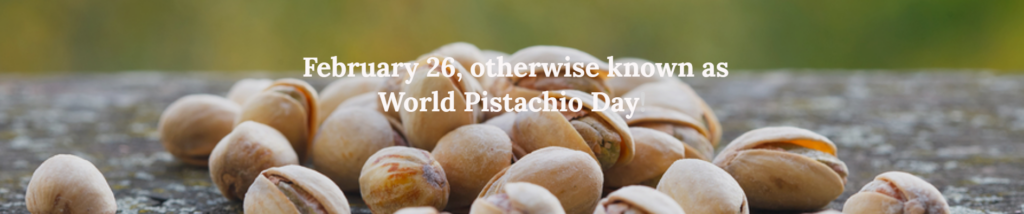
User reviews (0)