Website profiles · Technology insights · Alternatives

gameball.co

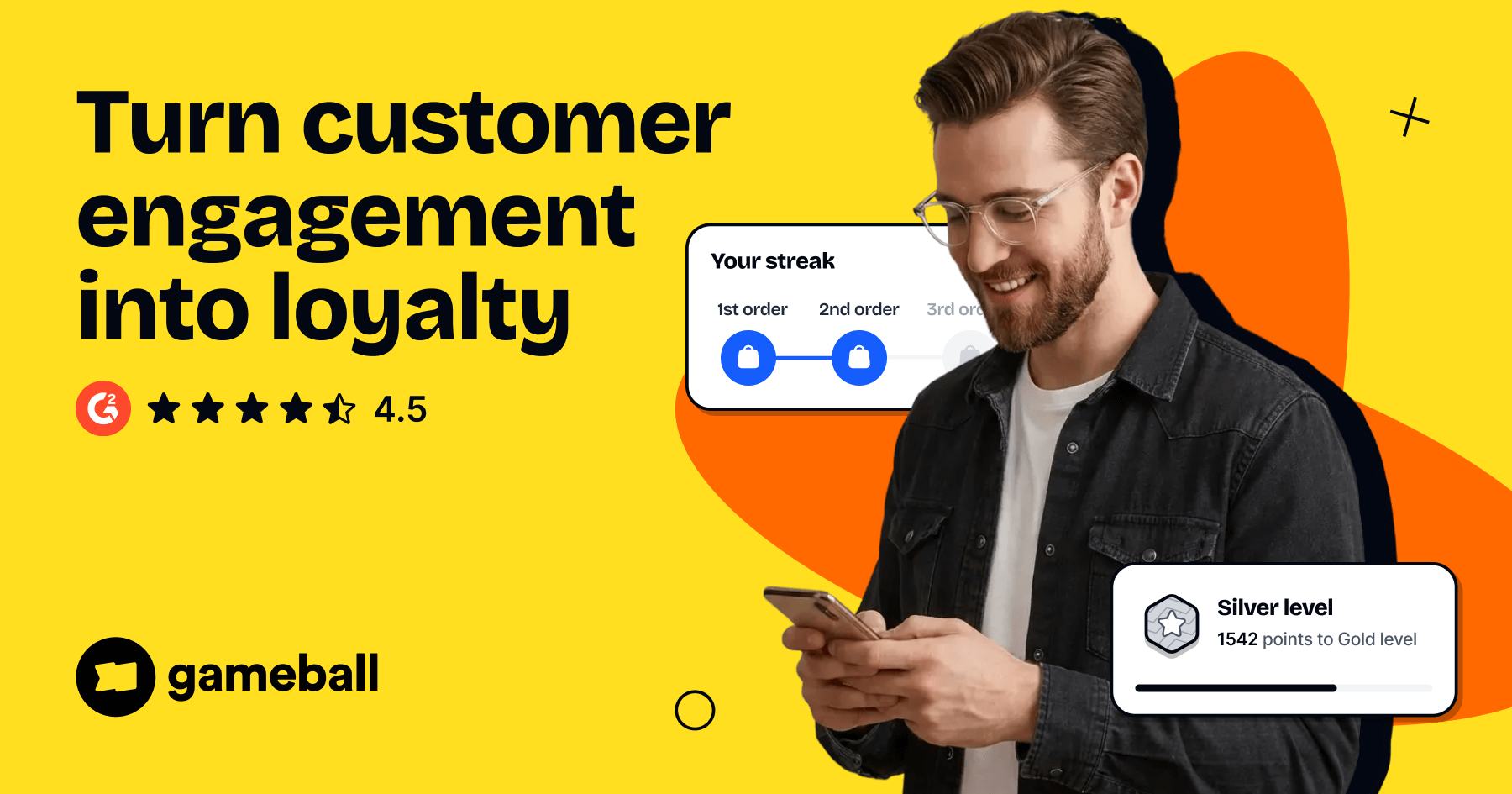
Build loyalty programs with points, cashback, referrals, and gamification. Trusted by 3,000+ brands. Keep customers buying again. See Gameball in action.

Paid content
Visit website
Profile views 5 Outbound visits 1 Normal
Gameball Full homepage screenshot

At a glance

Category
Other
Language
English
Paid-content signal
Paid contentObserved
Registered
2018
Hosting
CloudflareInferred
HTTPS certificate trusted
PassedObserved
Last updated

Website review

This review may include AI-generated content and is not individually verified. Domain, certificate and other facts come from the observed data on this page.

What is Gameball?

Gameball is a customer loyalty and retention platform for consumer brands. It combines points, cashback, VIP tiers, referrals, promotions, and gamification—such as in-app games, missions, streaks, badges, and leaderboards—in one system. The pitch is consolidation: instead of stitching together separate tools for gamification, loyalty, promotions, and referrals, marketing and product teams run them from a single dashboard.

It is designed to sit inside channels you already own: your app, website, and POS, rather than requiring customers to download a separate loyalty app. The page also lists segments and analytics, automated loyalty journeys, a campaign builder, multi-country and multi-brand support, and a family wallet.

Who it fits

  • E-commerce and retail brands wanting repeat purchases, not just one-off discounts.
  • Fintech and telecom companies with app-based customer bases.
  • On-demand and service businesses where frequency and habit matter.
  • Marketing teams that want to launch campaigns without heavy developer involvement; the page notes a ready UI with no dev time.
  • Product and engineering teams that need loyalty embedded via integrations rather than built from scratch.

A practical example: a retail brand with an app and physical stores could give points for in-store purchases via POS, run a weekly streak challenge in the app, and offer tier-based rewards—all tracked in one place.

What to weigh

Gamification is not automatically right for every audience. Games, missions, and leaderboards suit brands with frequent, low-consideration purchases or strong app engagement. A high-ticket B2B or infrequent-purchase business may get more from straightforward points and VIP tiers. The main trade-off is breadth versus depth: a single suite is easier to manage, but you should check whether each module—referrals, promotions, analytics—is as strong as a dedicated tool for your specific needs.

The page claims 3,000+ brands across 70+ countries and cites customer outcomes such as higher spend; treat vendor-reported figures as directional and validate against your own cohort.

Next step

List the two or three loyalty behaviors you most want to change—repeat purchase rate, referral volume, app opens—then map them to specific modules (for example, referrals to word-of-mouth acquisition, streaks to habit-building). Use that list to judge whether Gameball's suite covers your priorities. You can see the module breakdown at Gameball and review pricing details before booking a demo.

How does Gameball's gamification increase customer retention for consumer brands?

Gameball's core retention mechanism is habit formation: in-app games, missions, challenges, streaks, badges, and leaderboards give customers a reason to return between purchases, not just at the moment of a reward. The platform also bundles points, cashback, VIP tiers, referrals, and promotion tools in one system, so the gamified layer sits on top of a conventional loyalty engine rather than replacing it. According to the site, these mechanics can be embedded directly into an existing app, POS, or website — no separate download — which lowers the friction that usually kills gamified loyalty adoption.

Where the retention effect actually comes from

Mechanic Retention logic Best suited to
Streaks and punch cards Creates a small, repeated reason to open the app or visit a store Frequent-purchase categories: food, coffee, everyday retail
Missions and challenges Converts idle browsing into progress toward a reward Apps with existing traffic but low session frequency
Badges and leaderboards Adds status and social comparison Communities, gaming, fitness, younger audiences
VIP tiers and segment rewards Makes spending more feel materially different Brands with a wide spread between casual and high-value customers
Referrals Turns retained customers into acquisition Word-of-mouth-driven consumer brands

What to weigh before committing

Gamification is not automatically retention. If the underlying reward is weak or the games feel bolted on, customers engage once and drift. The site's own framing — "outdated loyalty is over" — signals that Gameball positions itself against simple points-only programs, but the burden of a compelling reward structure still falls on the brand. Gameball's segments and analytics module is the piece that tells you whether the mechanics are working or just generating noise; treat it as essential, not optional.

The most useful next step is to map one specific behavior you want to repeat — a weekly order, a second visit within 30 days — and check whether a streak or mission can realistically drive it without annoying your customers. If your product is bought once a year, gamified loyalty will struggle regardless of the tool. For comparison, established loyalty platforms such as LoyaltyLion and Smile focus more on points and rewards than on games, so the choice depends on whether you want play-driven engagement or straightforward spend-and-earn.

Which types of businesses can use Gameball for their loyalty programs?

Gameball is aimed at consumer-facing brands that want a loyalty program embedded in their own app, website, or point-of-sale rather than run through a separate customer download. Its page evidence lists solutions by industry and by role, and names e-commerce and retail, fintech and telecom, and on-demand and services as the main industry groupings.

Who it fits best

  • E-commerce and retail brands that want points, cashback, VIP tiers, or referrals tied to purchases across web, app, and physical stores.
  • Fintech and telecom companies that need to reward ongoing account activity, top-ups, or repeat usage rather than one-off transactions.
  • On-demand and services businesses — think delivery, booking, or subscription-style services — where repeat visits and habit formation matter more than a single sale.
  • Multi-market or multi-brand operators. The page highlights a family wallet and multi-country/multi-brand features, plus a case study about running one loyalty program across two markets and six verticals.
  • Marketing and product teams inside those companies. Gameball explicitly groups its solutions by role, including marketing, product, and engineering teams, which suggests it is built for teams that want to launch and iterate on loyalty without heavy custom development.

Where it may be a weaker fit

Gameball's positioning is consumer loyalty with gamification — in-app games, missions, streaks, badges, and leaderboards. A B2B business with a small number of high-value accounts, or a company that only wants a simple punch-card discount, would likely find much of the gamification layer unnecessary.

How to decide

Match your business against three criteria: you sell to consumers, you have repeat purchase or engagement behavior worth rewarding, and you can embed loyalty into an existing app, site, or POS. If all three hold, the next step is to check the platform's integration list and pricing page against your current stack. The official site is Gameball, where the integrations and pricing sections give the most concrete starting point.

How does Gameball integrate with existing apps, POS systems, and websites?

Gameball is designed to sit inside the channels you already use rather than requiring customers to adopt a separate app. Its loyalty, gamification, promotions and referral modules are embedded into your existing app, POS and website, so the customer experience stays under your brand.

How the integration works in practice

  • Existing app and website: Loyalty widgets, points balances, challenges, in-app games and referral prompts are embedded directly into your app or site. The page notes ready UI with no development time, which matters if your marketing team wants to launch without waiting on an engineering sprint.
  • POS and retail: The loyalty engine is described as managing loyalty across digital and retail, which is the key requirement for omnichannel programs where in-store purchases and online orders feed the same points balance.
  • One dashboard: Earning and redemption rules, VIP tiers, segments and automated journeys are managed centrally, so you are not reconciling separate tools for points, referrals and promotions.
  • Automated journeys: Loyalty flows and messages can be triggered automatically, which is how programs keep customers engaged between purchases rather than only at checkout.

What to verify before committing

Integration depth is where loyalty platforms differ most, so test the specifics that match your stack:

  1. POS compatibility. Confirm which POS systems have native connectors and which require middleware or custom work. If you run multiple store systems, ask how each one syncs transactions and redemptions.
  2. Data flow direction. Check whether customer profiles, purchase history and redemption events sync in real time or on a schedule. Real-time matters for in-store redemption.
  3. Identity resolution. If the same customer buys online and in store, confirm how accounts are matched, typically by phone, email or a loyalty ID.
  4. Multi-market and multi-brand support. The page highlights multi-country and brand features and a case study on running one program across two markets and six verticals, so ask how currency, language and brand-level rules are configured.
  5. Engineering effort. "No dev time" applies to ready-made widgets; custom placements, data syncing or non-standard POS setups usually still need developer involvement.

A useful next step

Map your own channel list before a demo: app, website platform, each POS system, and any e-commerce backend. Then ask Gameball to show a live example of a purchase in each channel updating the same customer balance. That single test reveals more about integration quality than a feature list.

For comparison, loyalty platforms with strong POS and omnichannel integration include LoyaltyLion and Smile, while Yotpo combines loyalty with reviews and SMS. Each handles POS and app embedding differently, so evaluate them against the same channel map.

What is included in Gameball's pricing plans?

Gameball's published pricing page is the only reliable place to see what each plan includes, because the platform's plan structure changes over time. The site does not list plan tiers, feature gates or prices in the material available here, so any specific inclusion list would be guesswork.

What the product itself covers

From the platform description, a Gameball loyalty program can draw on these modules, which are typically the units plans are built around:

  • Loyalty engine — points, cashback and VIP tiers with custom earning and redemption rules, working across app, website and physical stores
  • Gamification — in-app games, missions, challenges, streaks, badges and leaderboards
  • Promotion engine — coupons and secure discounts
  • Referrals — word-of-mouth acquisition flows
  • Automated journeys — triggered loyalty flows and messages
  • Segments and analytics — behavioural segmentation and reporting
  • Hot features — family wallet, campaign builder, multi-country and multi-brand support, punch cards, loyalty widgets

Which of these sit in a base plan versus a higher tier is exactly what the pricing page decides, and it is common for gamification, multi-brand support and advanced analytics to be the items reserved for upper tiers.

How to read the plans

Compare plans on the axes that match your operation rather than on headline price:

Decide on Why it matters
Channels needed App, web and POS in one program usually costs more than a single-channel setup
Gamification depth Games, missions and streaks are heavier features than a plain points engine
Markets and brands Multi-country or multi-brand programs need separate configuration
Contact or order volume Loyalty pricing often scales with the size of your customer base
Support and onboarding Migration from an existing program is the part teams underestimate

Start at Gameball's pricing page, then map each module you actually intend to launch in the first six months against the tier that contains it. If gamification or multi-brand support is on your roadmap, confirm it is present in the plan you are quoted rather than assumed as an add-on later.

How does Gameball compare to other customer loyalty platforms?

Gameball sits in the gamified-loyalty segment: it bundles points, cashback, VIP tiers, referrals, promotions, and habit-forming mechanics like missions, streaks, badges, and in-app games into one platform rather than treating gamification as an add-on. According to the page, it embeds into an existing app, POS, and website with no separate download, and is positioned for consumer brands across e-commerce, retail, fintech, telecom, and on-demand services. The claimed outcome is customers who spend 3× more, and the page cites 3,000+ brands across 70+ countries.

Where it tends to differ

Dimension Gameball's emphasis What to compare against
Gamification depth Native missions, challenges, streaks, badges, leaderboards, in-app games Many loyalty tools offer points and tiers but bolt on gamification via partners
Channel coverage App, web, and physical stores from one dashboard Some platforms are strong online but weak at POS
Scope Loyalty, promotions, referrals, and automated journeys in one suite Point solutions often require stitching several tools together
Setup Ready-made UI and widgets aimed at low developer effort Custom-built programs can fit better but cost more engineering time

The trade-off is focus versus breadth. A brand whose retention problem is purely transactional — simple points and discounts — may find a lighter, cheaper tool sufficient, and the extra gamification surface adds configuration and program-design work. A brand trying to build habitual app usage, or to run one program across several markets and verticals, gets more value from the combined suite. The page's own case studies point at that second scenario: Mano running one program across two markets and six verticals, and Whites building an omnichannel program.

How to decide

Shortlist two or three platforms and score them against your actual constraints: which channels must share one balance, whether you need in-app games or only points, how much developer time you can give to launch, and whether promotions and referrals must live in the same system. Then run a small pilot on your highest-value segment before committing.

Useful reference points for the wider market include LoyaltyLion, Smile and Yotpo for e-commerce loyalty, and Antavo for enterprise programs that need heavy customization.

Related questions

More questions →
How Does Gameball Use Gamification to Improve Customer Retention?

Gameball is a customer loyalty platform that embeds gamified mechanics — in-app games, missions, challenges, streaks, badges, and leaderboards — directly into a brand's existing app, POS, and website. The retention logic is behavioral: instead of rewarding only purchases, it rewards the habits that lead to repeat purchases, then layers points, VIP tiers, and automated flows on top so those habits convert into revenue. It fits consumer brands with an existing digital or retail touchpoint and a repeat-purchase model; it is less relevant if you sell one-time or purely transactional products.

The retention mechanism: habit first, transaction second

Traditional loyalty programs reward a completed purchase. Gameball's approach, as described on its site, is to make the app or store engaging enough that customers return before they buy. The site frames this as "habit-building play" and "habit-forming design."

The mechanics that drive this:

  • In-app games — play sessions that bring users back into the brand's own environment (no separate download).
  • Missions and challenges — structured tasks that give users a reason to act on a schedule.
  • Streaks and punch cards — reward consistency, so missing a day has a cost.
  • Badges and leaderboards — social and status incentives that sustain engagement beyond a single reward.

The intended outcome is that repeat visits become routine, and routine visits become repeat purchases. Gameball claims customers of its brands "spend 3× more" — that is a vendor claim, not an independently verified figure, so treat it as a directional signal rather than a benchmark for your own program.

Connecting gamification to rewards and segments

Engagement alone doesn't retain customers; it has to be tied to value. Gameball links gamified actions to its loyalty engine so that behavior translates into rewards:

Layer What it does Retention role
Points engine Earn and redeem on any defined action Gives every interaction a measurable value
VIP tiers Segment-based status levels Rewards cumulative loyalty, not just one purchase
Cashback Monetary return on spend Direct incentive to buy again
Segments & analytics Predict behavior from loyalty data Lets you target at-risk or high-value users

The site describes earning and redemption rules as customizable per action, with VIP tiers and segment-based rewards managed from one dashboard. The key design point: because rules attach to any action, not just purchases, you can reward the behaviors that precede retention — opening the app, completing a mission, referring a friend — and reserve tier status for customers who keep coming back.

Automation: triggering the right message at the right moment

Gameball's automated journeys and retention flows trigger messages and rewards based on user behavior. This matters for retention because gamified programs fail when engagement drops silently — a customer stops playing, the streak breaks, and nobody intervenes.

Automation closes that gap: a lapsed user can receive a re-engagement reward, a near-tier user can be nudged toward the next level, and a high-value segment can be routed into a different flow. The site lists "retention flows," "automated journeys," and a "campaign builder" as core modules, alongside a promotion engine for discounts and a referral module for word-of-mouth acquisition.

What the full suite covers

Gameball positions itself as replacing multiple tools rather than adding one. Its stated modules:

  • Loyalty engine — points, cashback, tiers across digital and retail
  • Gamification — games, missions, challenges, streaks, badges, leaderboards
  • Promotion engine — secure discounts and campaigns
  • Referral — customer acquisition through sharing
  • Automated journeys — triggered loyalty flows and messages
  • Segments & analytics — behavioral prediction

It also lists multi-country and multi-brand support, family wallets, and loyalty widgets. The site says it is trusted by 3,000+ brands across 70+ countries, and cites case studies including Mano running one program across two markets and six verticals, and Whites building an omnichannel program.

How to decide whether this fits your retention goal

Use these conditions to judge fit:

  • You have a repeat-purchase model. Gamification compounds over multiple visits; it does little for one-time buyers.
  • You have an owned digital surface (app, website, or POS) to embed into. Gameball emphasizes embedding into existing touchpoints with no separate download.
  • Your problem is engagement, not just discounting. If customers already buy frequently and you only need a points program, the gamification layer may be more than you need.
  • You want one system instead of several. The suite consolidates loyalty, promotions, referrals, and gamification — useful if you'd otherwise stitch tools together.
  • You can act on behavioral data. Segments and automated journeys only pay off if someone configures and monitors them.

If most of these hold, the next step is to check current pricing and plan limits on Gameball's pricing page and request a demo to see the mechanics in your own use case. Pricing details are not specified in the available material, so confirm costs and any usage restrictions directly before committing.

How Do Marketers Use Ahrefs for SEO and Content Research? A Beginner's Walkthrough

Ahrefs is a data platform that helps marketers see what people search for, which pages rank for those searches, and who links to those pages. If you're new to it, the fastest way to learn is to start from a real task rather than browsing menus. This walkthrough uses one common goal — finding content and keyword opportunities for a site — and shows the exact steps, which reports to open, how to read the columns, and how to turn the data into a shortlist of tasks.

The steps below describe the general workflow of the platform. Exact menu labels, limits, and available features can change between plans and over time, so treat the interface as the source of truth and check the in-product help or documentation when a term is unfamiliar.

Step 1: Define the goal before opening any tool

Ahrefs answers questions, so the quality of your output depends on the quality of your question. Write down one sentence before you start. Examples:

  • "I want 20 keyword ideas for a beginner's guide to home coffee brewing."
  • "I want to know which pages on my site have lost the most traffic in the last 6 months."
  • "I want to find sites that link to my competitors but not to me."

Each of these maps to a different report. Marketers who skip this step usually end up staring at a dashboard full of numbers with no decision to make.

Step 2: Enter a domain or a keyword

Most workflows begin in one of two places:

  • Site Explorer — enter a domain or URL. Use this when your question is about a specific website (yours or a competitor's).
  • Keywords Explorer — enter a keyword or phrase. Use this when your question is about a topic or search demand.

A practical habit: start with the competitor or topic you already know is relevant, then expand. If you sell running shoes, entering a well-known running retailer's domain will surface far more useful structure than entering a generic term like "shoes."

Step 3: Read the main columns without over-trusting them

Reports share a common set of columns. Learn what each one actually measures:

Column What it tells you How beginners misread it
Volume Estimated monthly searches for a keyword Treating it as exact traffic you will get
Keyword Difficulty (KD) How hard it looks to rank in the top results Assuming a low KD guarantees a ranking
Traffic / Traffic Potential Estimated visits a page or keyword can bring Confusing page-level and keyword-level numbers
Referring Domains Number of unique domains linking to a page Counting total backlinks instead of unique domains
DR / UR Domain and URL rating on a 0–100 scale Comparing scores across unrelated niches

Two rules of thumb: volume is an estimate, not a promise, and difficulty is a relative signal, not a gate. A keyword with modest volume and low difficulty that exactly matches your offer usually beats a high-volume term you cannot realistically rank for.

Step 4: Filter and sort to surface opportunities

Raw lists are noise. Filters turn them into a to-do list. Useful starting filters:

  • Keyword Difficulty: cap it at a level your site can realistically compete for. A new site should start low; an established site can raise the ceiling.
  • Volume: set a floor so you ignore terms nobody searches.
  • Include / exclude words: remove branded terms, job listings, or irrelevant modifiers.
  • Search intent: separate informational, commercial, and transactional queries so you don't write a blog post for a page that needs a product listing.

Then sort by the metric that matches your goal — traffic potential for content planning, referring domains for link building, or traffic decline for audits.

Step 5: Turn findings into a shortlist

A report is only useful once it becomes a list of tasks. A simple template you can copy:

Opportunity | Target keyword | Intent | Est. volume | KD | Page to create/update | Owner | Status

Fill it with 10–20 rows, not 200. For each row, decide one of three actions:

  1. Create a new page for a keyword gap you can serve.
  2. Update an existing page that already ranks but underperforms.
  3. Ignore it, with a one-line reason, so you don't revisit it next month.

This is where most beginners stall: they collect data but never commit to a decision. Forcing a create/update/ignore choice per row fixes that.

Step 6: Common beginner mistakes

  • Chasing volume only. A high-volume keyword with the wrong intent sends traffic that never converts.
  • Ignoring search intent. Check what actually ranks before deciding what to publish.
  • Comparing DR across niches. A DR 40 in one industry is not equivalent to DR 40 in another.
  • Treating estimates as facts. All third-party search data is modeled, not measured.
  • Skipping the audit loop. Research is not a one-time event; revisit your shortlist and check whether the pages you built actually moved.

Where to get help with terms and metrics

Ahrefs maintains an in-product help center and a glossary of SEO terms, and the platform links to documentation from most reports. When a metric is unclear, open the help entry for that specific term rather than guessing — misreading one column can distort an entire content plan.

A realistic first session

If you have one hour, do this: pick one competitor, open Site Explorer, sort their top pages by traffic, filter to pages relevant to your offer, and write down five topics you could cover better. Then open Keywords Explorer for one of those topics, apply a difficulty and volume filter, and add three supporting keywords. You now have a shortlist of eight items and a clear next action — which is the actual point of using Ahrefs as a marketer.

Which Industries and Teams Is Gameball Designed For?

Gameball is built for consumer-facing brands that want to run a gamified loyalty program inside their existing app, POS, and website rather than through a separate download. According to the site, it serves three industry groups — e-commerce & retail, fintech & telecom, and on-demand & services — and organizes its offering around three team roles: marketing, product, and engineering. It also supports multi-market, multi-brand, and multi-vertical setups, which matters if you operate more than one storefront or region.

Industries Gameball lists

The site groups its solutions by industry rather than by company size:

Industry group Typical fit
E-commerce & retail Brands running points, cashback, VIP tiers, and referrals across web, app, and physical stores
Fintech & telecom Companies that need loyalty mechanics layered onto an existing digital product
On-demand & services Service businesses that want repeat usage driven by missions, streaks, and challenges

The common thread is a consumer brand with an existing digital surface (app, website, or POS) where loyalty can be embedded. If your customers never touch an app or account, the gamification modules — in-app games, challenges, missions, streaks, badges, leaderboards — have less to attach to.

Teams Gameball is organized around

Gameball's site presents solutions by role, which tells you who is expected to use it day to day:

  • Marketing teams — own the program design: earning and redemption rules, campaigns, promotions, referral flows, and retention messaging.
  • Product teams — own the in-product experience: gamification modules, loyalty widgets, and how rewards surface inside the app.
  • Engineering teams — handle the integration into existing app, POS, and website, plus developer docs and platform connections.

A practical read: marketing can configure rules and campaigns from a dashboard without a rebuild, while engineering is still needed for the initial embed. The site advertises "Ready UI, no dev time" for gamification, but that applies to the ready-made interface, not to connecting Gameball to your systems.

Multi-market, multi-brand, and multi-vertical operations

Two capabilities in the feature list matter most for larger organizations:

  • Multi-country & brand — run one loyalty program across several markets or brands instead of separate instances.
  • Family wallet — a shared balance structure, useful where households or groups redeem together.

Gameball's own case studies illustrate this: one covers running a single loyalty program across two markets and six verticals, and another covers an omnichannel program. If you operate a single brand in a single market, these features are not the reason to choose Gameball — the core points, tiers, and gamification modules are.

What to check before deciding

  • Do you have an app, website, or POS to embed into? Gameball is designed to sit inside your existing surfaces, not as a standalone destination.
  • Which modules do you actually need? The core list includes a loyalty engine, full gamification, a promotion engine, referrals, automated journeys, and segments & analytics. Buying the full suite only makes sense if you would otherwise stitch together several tools.
  • Who will run it? If marketing owns the program and engineering only does the initial integration, the role-based structure fits. If every change requires a developer, the value proposition weakens.
  • Do you operate across markets or brands? If yes, the multi-country and multi-brand support is a direct fit. If no, evaluate on the core loyalty and gamification features instead.

For current plan details and limits, check the pricing page directly — the site links to it, but the available material does not specify plan tiers, prices, or what each tier includes.

What Is Gameball and What Does It Do?

Gameball is a customer loyalty and gamification platform for consumer brands. It embeds loyalty mechanics — points, cashback, referrals, promotions, and games — directly into a brand's existing app, website, and POS, so customers earn and redeem rewards without downloading a separate app. It fits teams that already have a customer-facing digital or retail channel and want to consolidate retention tools rather than stitch together several vendors.

What Gameball actually does

The platform is organized around a set of core modules that cover the full retention loop:

  • Loyalty engine — manage loyalty across digital and retail channels, with customizable earning and redemption rules, VIP tiers, and segment-based rewards.
  • Gamification — in-app games, missions, challenges, streaks, badges, and leaderboards designed to build repeat-visit habits.
  • Promotion engine — run discounts and campaigns through a campaign builder and coupons engine.
  • Referral program — acquire customers through word-of-mouth with a ready-made referral module.
  • Automated journeys — trigger loyalty flows and messages automatically.
  • Segments & analytics — predict behavior and act on it with actionable insights.

Supporting features include a points engine, family wallet, multi-country and multi-brand support, retention flows, and embeddable loyalty widgets.

How it fits into a brand's stack

Gameball's stated approach is to embed into channels the brand already owns rather than require a separate download. According to the site, the experience runs across app, web, and stores, with one dashboard for managing rules and rewards. The homepage also notes a "ready UI" that requires no development time — useful if the marketing team wants to launch without waiting on engineering, though engineering teams are listed among the target roles, which suggests deeper integrations are also supported.

Who it's built for

The site lists solutions by industry and by role:

Dimension Examples given
Industries E-commerce & retail, fintech & telecom, on-demand & services
Roles Marketing teams, product teams, engineering teams

If your goal is purely transactional discounts, a promotions tool alone may be enough. Gameball makes more sense when you want habit-forming mechanics — games, streaks, missions — layered on top of a points or tier program.

Scale and proof points

The homepage states Gameball is trusted by 3,000+ brands across 70+ countries, and cites customer stories such as Mano running one loyalty program across two markets and six verticals, and Whites building an omnichannel loyalty program. It also claims customers who engage spend 3× more, alongside review scores of 4.5, 4.9, and 5.0 (the site does not label which platform each score comes from).

What to check before deciding

  • Channel coverage — confirm the modules you need work across your specific app, website, and POS setup.
  • Pricing — Gameball has a pricing page, but the homepage does not state plan costs or whether a free tier exists. Check the pricing page directly for current terms.
  • Evaluation path — the site offers a "Book a demo" option and a login, so you can see the product in action before committing.

If you want a single platform to run points, referrals, promotions, and gamified engagement inside your existing channels, Gameball is built for exactly that. If you only need one of those pieces, compare it against a point solution first.

How to See Gameball Pricing and Try the Platform

Gameball lists a dedicated Pricing page on its website, and you can try the product through a Book a demo request. If you already have an account, use the Login link instead. The site also offers self-serve learning resources — Gameball Academy, a help center, developer docs, and an interactive arcade — so you can evaluate the platform before committing. Note that the pricing page is the only place to see actual plan costs; the homepage itself doesn't display numbers.

How to check Gameball pricing

  1. Go to the Gameball website.
  2. Open the Pricing link in the main navigation.
  3. Review the plans listed there.

The site's navigation confirms a Pricing page exists, but the specific plan tiers, prices, and billing terms are not shown in the material available here — you'll need to open the page itself to see current figures. Treat any pricing you find as subject to change, and confirm details like contract length, usage limits, and included modules directly on that page or with the sales team.

How to try Gameball

There are two entry points, depending on whether you're new or an existing customer:

Your situation What to use Where it leads
Evaluating the platform Book a demo A guided walkthrough with the team
Already a customer Login Your existing account dashboard

The homepage's primary call to action is "Book a demo," which suggests a sales-assisted trial rather than an instant self-serve signup. If you want to see the product working before a call, the site also links to a Gameball Arcade where you can try in-app games of the kind you could add to your own brand.

Explore the product before you talk to sales

If you'd rather understand the platform first, these resources are linked from the site:

  • Gameball Academy — structured learning material
  • Help center — support articles and how-tos
  • Developer docs — technical integration details
  • Tools & calculators — likely useful for estimating program economics
  • Blog and podcast — background on loyalty and retention practice

These are useful for answering the more common pre-purchase questions: what modules exist, how gamification works, and which integrations are supported.

What you'll be evaluating

Knowing what's in the product helps you ask better questions on a demo call. Gameball bundles several modules that are often bought separately elsewhere:

  • Loyalty engine — points, cashback, and VIP tiers across app, web, and retail
  • Gamification — in-app games, missions, challenges, streaks, badges, and leaderboards
  • Promotion engine — discounts and campaign builder
  • Referrals — word-of-mouth acquisition
  • Automated journeys — triggered loyalty flows and messages
  • Segments & analytics — behavior insights and predictions

It also supports multi-country and multi-brand setups, which matters if you operate in more than one market. The site cites 3,000+ brands across 70+ countries as customers.

Practical tips before you book

  • Bring your use case. The demo is more useful if you know which channels you run (app, POS, website) and which modules you actually need.
  • Ask about integration effort. The site claims ready-made UI with no dev time for some features, but confirm what your stack requires.
  • Check the pricing page first. It saves time if the published tiers already rule the platform in or out for your budget.
  • Use the arcade as a preview. Seeing the games in action is the fastest way to judge whether the gamification style fits your brand.

The short version: pricing lives at the Pricing page, a trial starts with Book a demo, and existing users log in directly. Everything else — Academy, docs, help center — is there to help you decide.

Website Overview

An established domain and managed infrastructure suggest continuity of operations and may support dependable delivery, although neither guarantees service quality. Page metadata, canonical configuration and social previews work together to provide more consistent search and sharing presentation.

Domain and Registration

Registered in 2018, this domain has about 8 years of history. That suggests continuity, although ownership and purpose may have changed. Transfer-protection status is present, helping reduce the risk of unauthorized domain transfers. The registrar is NameCheap, Inc., a widely used domain service provider. The domain uses the common .co extension, which is not an independent safety signal.

DNS and Email

Nameservers are provided by Amazon Route 53, indicating managed DNS hosting. DNS and provider evidence indicate traffic passes through the Cloudflare CDN, which may support caching and traffic distribution. MX records point to the Google Workspace email service. SPF and DMARC are configured. DKIM status is unknown. TXT records include verification markers for Google, Microsoft. Such markers may also remain after a service stops being used.

TLS and Certificates

The public key uses EC with 256 bits. The server supplied a complete certificate chain. No organization name is present in the certificate; the available fields are consistent with domain validation. The certificate was issued within the Google Trust Services cloud or CDN ecosystem. The certificate's total validity is about 90 days, consistent with a short renewal cycle.

HTTP and Browser Security

The response lacks these common security headers: CSP, Permissions-Policy. No X-Powered-By header was found, reducing one common source of backend fingerprinting information. The cf-ray response header indicates a CDN or caching proxy in the delivery path. No obvious internal addresses or debug information were found in the headers. The Server header identifies cloudflare without an exact version.

Technology Stack Analysis

The public page identifies Webflow, Google Tag Manager, Cloudflare without precise versions, leaving fewer clues for version-specific scanning.

Search and Social Sharing

The Generator tag identifies Webflow, making the publishing system easier to fingerprint. Twitter Card metadata is configured. JSON-LD includes Organization data, helping describe the organization as an entity. The title has 53 characters, within a common display range. A meta description is present, with 153 characters.

Hosting and Email

DNSAmazon Route 53
HostingCloudflare
EmailGoogle Workspace
Approximate IP geolocation (inferred; a CDN or proxy may differ from the origin server) United States flagUnited States Inferred 2606:4700::6812:a5b

Registration details

RDAP / WHOIS

RegistrarNameCheap, Inc.
Registered2018-02-04
Expires2029-02-04
Domain statusclientTransferProhibited https://icann.org/epp#clientTransferProhibited
Nameserversns-1378.awsdns-44.org、ns-2033.awsdns-62.co.uk、ns-230.awsdns-28.com、ns-978.awsdns-58.net
DNSSECunsigned

DNS records

DNS

TypeNameValueTTLPriority
Awww.gameball.co.cdn.cloudflare.net104.18.10.91300—
Awww.gameball.co.cdn.cloudflare.net104.18.11.91300—
AAAAwww.gameball.co.cdn.cloudflare.net2606:4700::6812:a5b300—
AAAAwww.gameball.co.cdn.cloudflare.net2606:4700::6812:b5b300—
MXgameball.coaspmx.l.google.com3001
MXgameball.coalt1.aspmx.l.google.com3005
MXgameball.coalt2.aspmx.l.google.com3005
MXgameball.coalt3.aspmx.l.google.com30010
MXgameball.coalt4.aspmx.l.google.com30010
MXgameball.coms67587019.msv1.invalid30032767
NSgameball.cons-1378.awsdns-44.org172800—
NSgameball.cons-2033.awsdns-62.co.uk172800—
NSgameball.cons-230.awsdns-28.com172800—
NSgameball.cons-978.awsdns-58.net172800—
TXTgameball.co47257A1A46B577B69E5E3170DE691B40FB042EFF33C676DB352014EACE7CD23F300—
TXTgameball.co<29.09.2022>300—
TXTgameball.coMS=ms41564242300—
TXTgameball.coMS=ms67587019300—
TXTgameball.coMS=ms96587753300—
TXTgameball.cobm6q20e6scru1gn2clv9imfh63300—
TXTgameball.coe700iopdl194jvvlbigcnqchje300—
TXTgameball.cogoogle-site-verification=11vadB1oTEyNGIK5k_4ZZIJ7rYBLnUzvLlnPhDjft24300—
TXTgameball.cogoogle-site-verification=Gpc1rVvMiKLbV1pGlsS1HZKPPkV6ICALgWDCC5wxl2E300—
TXTgameball.cogoogle-site-verification=MztngjOymJDFEweFSli1vQqMl4xKgnHjzQG8s9d6Xbg300—
TXTgameball.cogoogle-site-verification=vhx3LvUx2sjICbcTwLYRG52ck5QIUbk8Zvn_objk8EQ300—
TXTgameball.cogoogle-site-verification=ynBxoEanoNr4RiuvyKML1sPovtladCyksnHZwPj1l2g300—
TXTgameball.coi7sa51kkubj90qcj8pqfk732vf300—
TXTgameball.cok2p963qefffcokp4mtatjng6qc300—
TXTgameball.cololthlgkaq7lglm36d1fjgljli300—
TXTgameball.coqfeiebshai4lofttsv0n31jge8300—
TXTgameball.costripe-verification=c0544d2acc3b612467b6ee77e2b4f6397d935641641524ca222c8a177ed2b4b6300—
TXTgameball.cotiktok-developers-site-verification=27VMa16NtDgx4kbc07fD0ymSnPbg3qE8300—
TXTgameball.cov=spf1 include:_spf.google.com include:9086026.spf05.hubspotemail.net ~all300—
CNAMEwww.gameball.cowww.gameball.co.cdn.cloudflare.net300—
DMARC_dmarc.gameball.cov=DMARC1;p=quarantine;rua=mailto:[email protected];ruf=mailto:[email protected]300—

TLS and certificates

TLS / SSL

AssessmentNormal configuration
Supported protocolsTLSv1.2、TLSv1.3
Negotiated protocolTLSv1.3
Certificate subjectwww.gameball.co
IssuerGoogle Trust Services
Valid until2026-12-24T18:35 · Remaining when checked: 73 days
Verification detailsCertificate trust: Passed · Hostname match: Passed

HTTP response headers

HTTP

HeaderValue
content-typetext/html; charset=utf-8
servercloudflare
strict-transport-securitymax-age=0; includeSubDomains; preload
x-frame-optionsSAMEORIGIN
x-content-type-optionsnosniff
referrer-policysame-origin

Identified technologies

WebflowGoogle Tag ManagerCloudflare

Pages, Search and Sharing

Meta descriptionBuild loyalty programs with points, cashback, referrals, and gamification. Trusted by 3,000+ brands. Keep customers buying again. See Gameball in action.
Canonical URLhttps://www.gameball.co
LanguageEnglish (default)
Twitter Cardsummary_large_image

No rules found

User reviews (0)

  • No reviews yet.