
 简体中文
简体中文 English
Website review
This review may include AI-generated content and is not individually verified. Domain, certificate and other facts come from the observed data on this page.
What is Marc Päpper known for?
Marc Päpper is an AI engineer and entrepreneur who builds and ships AI-powered software products. His site frames him around three overlapping identities: hands-on machine learning engineer, product-focused founder, and technical leader. He describes his work as architecting scalable machine learning systems and digital products, and he writes about his thinking on an associated blog.
What the work actually looks like
The projects listed on his site are mostly small, practical SaaS tools rather than research demos:
- Geo-Autopilot — automates SEO and "GEO" workflows, from research through approval.
- DokuDachs — documents therapy sessions using AI transcription and structured summaries.
- BerichtBiber — helps produce professional reports for reviewers, with AI assistance.
- AI Meme Generator — generates and customizes memes from a text idea.
- This Shirt Exists — AI-generated, one-off t-shirt designs.
- Digital Invoice Creator — a billing tool for creating compliant invoices.
The pattern is telling: each tool targets a narrow, tedious task and wraps AI around it. That is a product sensibility more than a research one.
Career path
| Period | Role | Focus |
|---|---|---|
| 2025–present | AI entrepreneur | Building SaaS businesses; training, applying and integrating AI systems |
| 2019–2025 | CIO, Machine Learning at Mindpeak | Deep-learning tools for pathologists in cancer detection; models deployed as inference APIs using PyTorch, Docker Swarm and Traefik |
| 2009–2018 | Co-founder and CTO, Lemundo | Early machine learning for product recommendations and developer time-estimate forecasting; the company reached seven-digit revenues |
The through-line is applied ML in commercial settings: recommendation systems, forecasting, medical imaging, and now independent AI products.
Who should pay attention
If you are a founder or product lead looking for a concrete example of turning AI capability into small, focused SaaS tools, his project list is the most useful part of the site. If you work in medical imaging or regulated diagnostics, the Mindpeak chapter is the relevant one — it covers model development plus the deployment plumbing that turns models into services. If you are an engineer curious about pragmatic, delivery-oriented ML work, his writing and project breakdowns are the entry point.
His stated positioning is "pragmatic perfection" with rapid delivery and a focus on scaling online businesses with AI. He also notes he is open to cooperation.
A reasonable next step: pick the project closest to your own problem — DokuDachs or BerichtBiber for document-heavy AI workflows, Geo-Autopilot for marketing automation — and study how narrowly each one is scoped. That narrowness is the transferable lesson. You can also browse Marc Päpper directly for the current project list and contact details.
What AI projects has Marc Päpper built?
Marc Päpper's portfolio at Marc Päpper lists six AI-driven projects, spanning SEO tooling, healthcare documentation, and consumer novelty apps. They are presented as his own builds, with short descriptions rather than detailed case studies.
The projects
- Geo-Autopilot — an SEO and "GEO" (generative engine optimization) tool that automates the workflow from research through approval.
- DokuDachs — documentation for therapy sessions, using AI transcription plus structured summaries.
- BerichtBiber — a tool for producing professional reports for reviewers (Gutachter), aimed at speeding up report writing with AI assistance.
- AI Meme Generator — turns a user's idea into a shareable meme, with customization.
- This Shirt Exists — AI-generated t-shirt designs, each created individually for the buyer.
- Digital Invoice Creator — an invoicing platform for producing professional, compliant invoices.
What the mix suggests
Two clusters stand out. The German-language tools (DokuDachs, BerichtBiber, Geo-Autopilot) target regulated or repetitive professional workflows where documentation is the bottleneck — therapy notes, expert reports, search visibility. The English-language tools (Meme Generator, This Shirt Exists, Invoice Creator) are lighter, self-serve products where the AI is the product's core novelty or convenience.
If you are evaluating one of these as a user, start with the workflow you already repeat weekly. DokuDachs and BerichtBiber are the ones where saved minutes per document compound; the meme and t-shirt tools are one-off creative uses, so judge them on output quality in a single trial rather than on long-term fit.
Päpper's background gives context for how these were built: he was CIO for machine learning at Mindpeak, working on deep-learning diagnostics with PyTorch and container-based deployment, and earlier co-founded Lemundo as CTO. That suggests the professional-documentation tools reflect his applied ML experience, while the consumer apps are quicker experiments.
What is Marc Päpper's professional background in machine learning?
Marc Päpper is an AI engineer and entrepreneur who has spent roughly two decades building machine learning systems, first as a technical founder and later as a machine learning lead in medical diagnostics. His background combines hands-on model development with running engineering teams and shipping commercial products.
Career path
- 2009–2018 — Co-founder and CTO, Lemundo GmbH. He led innovation in early machine learning applications, including product recommendations and forecasts of developer time estimates. According to the site, these contributions helped the company reach seven-digit revenues.
- 2019–2025 — CIO, Machine Learning at Mindpeak. Mindpeak builds visual diagnostic tools that use deep learning to help pathologists detect cancer. He led development of the machine learning models and oversaw their deployment as inference APIs, working with PyTorch, Docker Swarm and Traefik.
- 2025–present — Independent AI entrepreneur. He builds SaaS businesses and focuses on training, using and integrating AI systems, with an emphasis on applying AI to scale online businesses.
What the work actually involved
The path shows a shift in emphasis rather than a change of field. At Lemundo the problems were commercial and predictive — recommendations and time estimation. At Mindpeak they were high-stakes and visual, where a model's output supports a clinical decision and therefore has to run reliably as a service, not just perform well in a notebook. That move from model to deployed inference API is a common turning point for ML practitioners: the hard part becomes latency, versioning, monitoring and the surrounding infrastructure.
His current project list reflects the same applied bent, spread across quite different domains: Geo-Autopilot for automated SEO and GEO workflows, DokuDachs for AI-assisted transcription and structured summaries of therapy sessions, BerichtBiber for report writing, plus smaller consumer experiments such as an AI meme generator, AI-generated t-shirt designs and a digital invoice creator.
How to read this profile
Treat the listed ventures as a portfolio of bets rather than a single specialisation. The through-line is pragmatic delivery: pick a narrow, document-heavy or repetitive task, and wrap a model around it. That is useful if you are deciding whether to work with him or learn from his approach — the relevant question is not "which model does he use" but "which workflow does he compress".
As a next step, look at the project that matches your own domain. If you handle clinical or regulated text, the transcription and reporting tools are the closest analogues; if you run an online business, the SEO automation project is the better reference. Note that the site does not publish pricing or detailed technical specifications for these products, so evaluate them on a trial rather than on stated capability.
What services or consulting does Marc Päpper offer?
Marc Päpper presents himself as an AI entrepreneur and engineer who builds SaaS products and works with AI systems. His site is more a portfolio and project hub than a service menu, so the clearest offering is not a packaged consulting rate card but his availability for cooperation and his hands-on product work.
What the site shows
- He says he is open to cooperation and invites visitors to get in touch.
- His stated focus is training, using and integrating AI systems, and leveraging AI to scale online businesses.
- His background includes leading machine learning development as CIO at Mindpeak, where his team built deep learning models and deployed them as inference APIs using PyTorch, Docker Swarm and Traefik.
- Earlier, as co-founder and CTO of Lemundo, he worked on early machine learning solutions such as product recommendations and forecasts of developer time estimates.
- His current projects are mostly AI-enabled software products, including Geo-Autopilot for SEO and GEO automation, DokuDachs for therapy-session documentation, BerichtBiber for report writing, an AI meme generator, an AI t-shirt design tool and a digital invoice creator.
How to read that as a service offer
For a potential client, the practical takeaway is that Marc appears to work at the intersection of AI product building, machine learning engineering and business scaling. That could suit a company that needs help turning an AI idea into a working product, integrating models into an existing system, or applying AI to an online business workflow. It is less clear from the site whether he offers short advisory calls, fixed-scope consulting, fractional technical leadership or partnership-based product work.
Next step
If you have a concrete AI use case, the most useful first message would describe the problem, the data or systems involved, and whether you are looking for advice, implementation or a longer-term collaboration. That gives him enough to say whether it fits his current focus. You can reach him through Marc Päpper.
What topics does Marc Päpper speak about at conferences?
Marc Päpper's site lists conference speaking as one of its main sections, but it doesn't name specific talks, topics, or events. Based on the projects and experience presented there, his speaking naturally centers on applied AI and machine learning rather than academic theory.
Likely topic areas from the page evidence
- Building AI-powered SaaS products: Geo-Autopilot, DokuDachs, BerichtBiber, and the AI Meme Generator are all examples of shipping AI features into real products, so expect product-building and rapid-delivery lessons.
- Machine learning in production: As CIO at Mindpeak he led model development and deployment as inference APIs using PyTorch, Docker Swarm, and Traefik — practical MLOps and serving infrastructure material.
- AI in medical diagnostics: Mindpeak's deep learning tools assist pathologists in cancer detection, a concrete domain for talks on regulated, high-stakes ML.
- Early ML in e-commerce: At Lemundo he worked on product recommendations and developer time-estimate forecasting, useful for talks on recommendation systems and applied prediction.
- Entrepreneurship and bootstrapping: His "About Me" and Skills sections emphasize building impactful products and bootstrapping businesses, so founder-oriented talks are plausible.
What the site does not tell you
There is no speaker bio with past conference names, talk titles, or slides. So if you're evaluating him for an event, treat the list above as inferred from his portfolio, not as a confirmed talk catalog.
Next step
Check the "Speaking at Conferences" section of Marc Päpper directly, and contact him through the site's "Get in Touch" section to ask for a current talk list or a topic tailored to your audience — for example, a practitioner-focused session on deploying medical imaging models versus a founder-focused talk on bootstrapping AI SaaS products.
How can I get in touch with Marc Päpper for collaboration?
The site lists a "Get in Touch" section alongside its Projects, Skills, About Me and Speaking pages, and the About Me text explicitly says he is "Open to cooperation: just get in touch!" That is the intended route for collaboration enquiries — use the contact option on Marc Päpper - AI Engineer & Entrepreneur rather than trying to reach him through one of his product sites.
What to put in a first message
Marc's own description of his work points to two things worth naming up front: building SaaS businesses with AI, and training, integrating and deploying AI systems. A useful opening message therefore states:
- What you want to build or solve, in one or two sentences.
- Which side you bring — domain expertise, distribution, data, capital or engineering capacity.
- The collaboration shape you have in mind, e.g. a co-founder conversation, a paid consulting engagement, or a technical partnership.
- A concrete next step, such as a 20-minute call in a named week.
A reader scenario: a clinician with a therapy-documentation workflow problem wants a technical partner. Rather than a general "let's connect" note, the stronger message names the workflow, the compliance constraints, and the fact that an existing project on the site already addresses adjacent documentation work — then asks whether a short call makes sense.
Choosing the right channel
| If your goal is… | Better route |
|---|---|
| Founding, investing or a joint product | The contact route on the personal site |
| A question about one specific tool | The support or contact path for that product itself |
| Hiring him to speak | The speaking section, with event, date and audience size |
| Following his technical thinking first | His blog, then reference a specific post when you write |
If you are unsure whether your idea fits, read a couple of blog posts and reference one specific argument in your message. It shows you are engaging with his actual work rather than sending a generic pitch, and it gives him something concrete to react to.
 Cloudflare
 Netlify
 Mailgun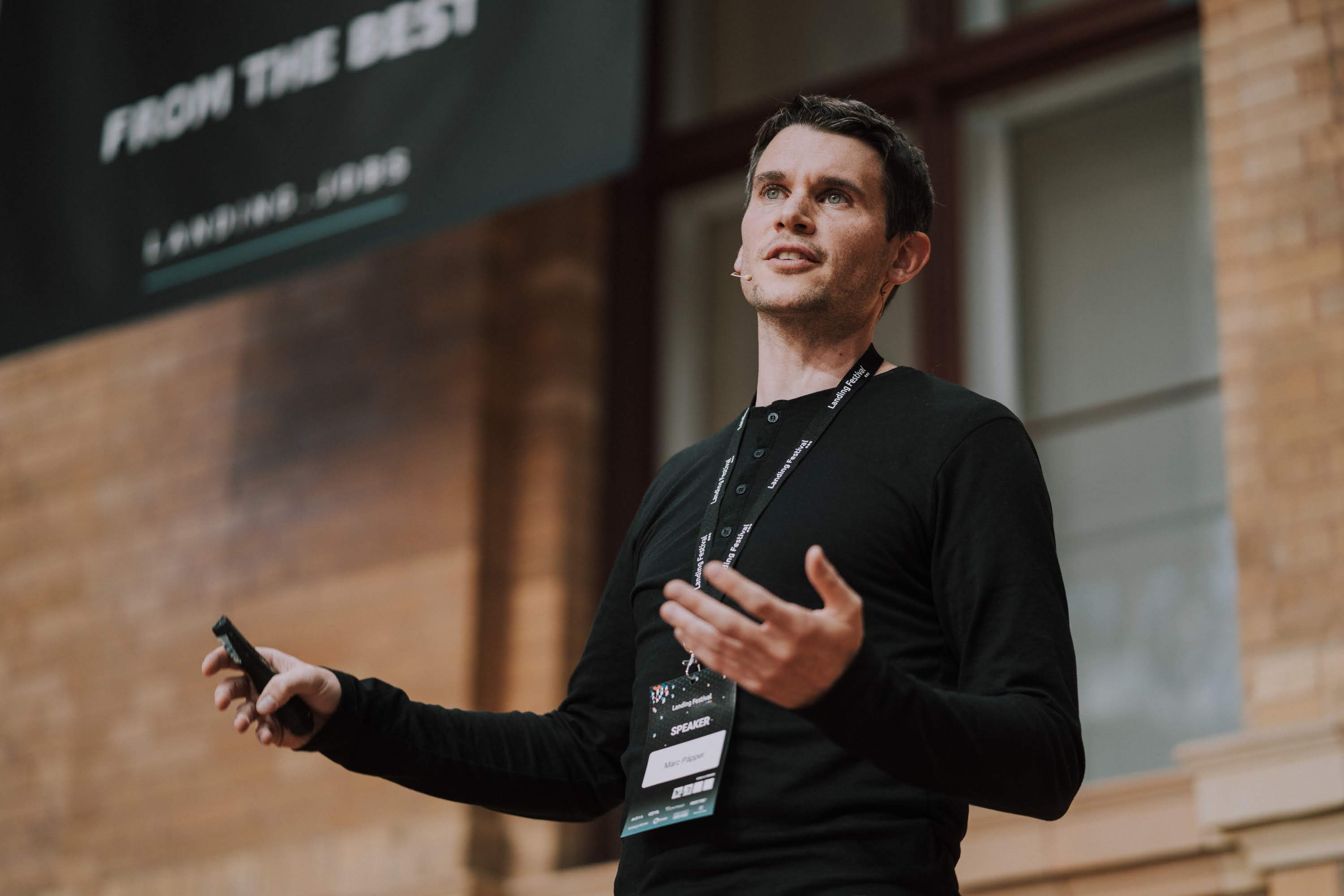
User reviews (0)